
The Quick Read: One new FHA loan can pay off any existing mortgage and hand your brothers, sisters, or cousins their share of the equity, as long as you live in the home and you are the one qualifying. The loan is capped at 80% of the appraised value, and the appraisal sets the limit, not the price you and the other heirs agree on. Inheritance can waive the usual waiting period, but renting the units out first can take that waiver away. Three- and four-unit homes may also face an extra rent test, so confirm with your lender how it applies.
What Is This Loan, Really?
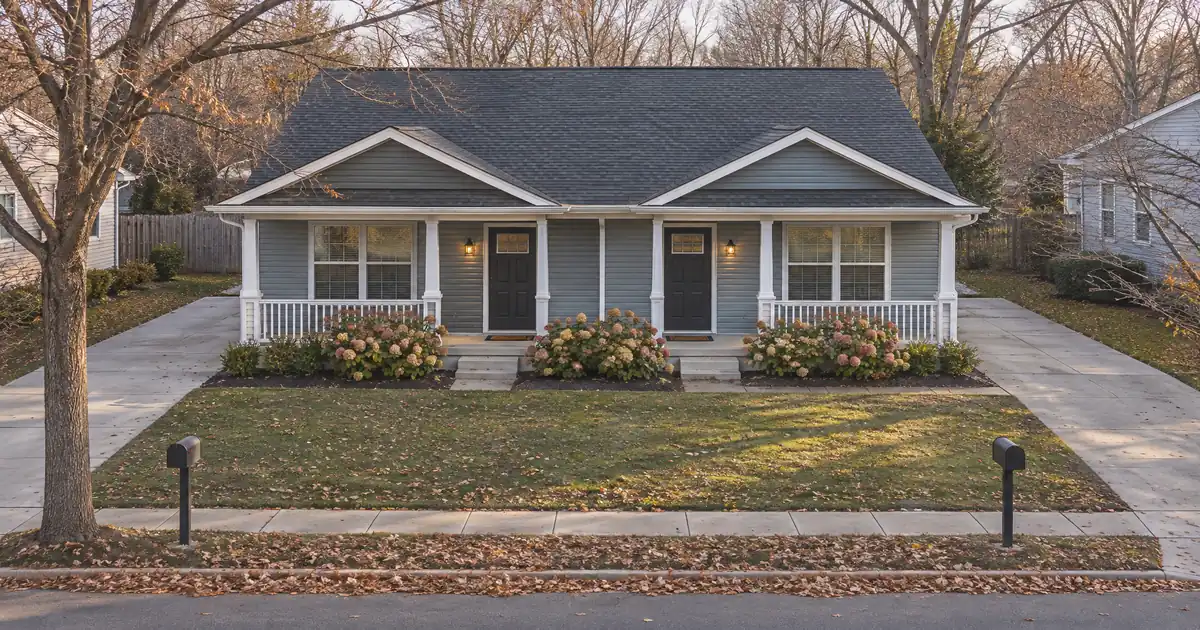
You inherited a duplex, triplex, or fourplex with other family members. You live in one unit. They want out, and they want to be paid.
FHA cash-out estimate
Seeded with an example value, a balance to match, and a round cash request; change any field.
Editable benchmark: 7.18% as of November 5, 2026 · Freddie Mac 30-year average via FRED®. A conventional market reference, not an FHA cash-out refinance quote.
Illustrative starting assumptions: a $350,000 home value, a $193,000 current balance, the FHA cap on a principal residence with the upfront premium financed, a thirty-year term at the current Freddie Mac benchmark, and property taxes and insurance estimated at typical national rates. Every field is editable.
An illustration, not a Loan Estimate, an approval, a quote, or a commitment to lend. The rate shown is the weekly Freddie Mac thirty-year conventional benchmark, used as a market reference; an FHA cash-out is priced by the lender at lock, and this is not an FHA cash-out refinance quote. HUD’s cap limits the base loan; the upfront premium is financed on top of the capped base loan; the monthly premium for the first year follows the snapshot’s schedule. Cash available means the base loan the cap permits less the balances retired, before closing costs, which this calculator leaves out. The line figure applies the line program’s combined loan-to-value ceiling to the same value and balance. Taxes and insurance are estimates you can edit. Licensed in sixteen states for consumer mortgages.
A cash-out refinance replaces the mortgage on a home with a new, larger one. In a buyout, the extra money does not come to you. It goes to the co-heirs, in exchange for their signed-over ownership. You end up as the sole owner with one loan.
This article covers the heir-buyout version of it.
Here is the plain structure of the deal:
- You are on title, or taking title, and you live in the home.
- An appraiser values the property.
- The new loan pays off any existing liens, pays the co-heirs, and covers financed costs.
- The co-heirs sign off, and title is cleared to you.
Why FHA? It is built for owner-occupants, and it allows a 2-4 unit home as a primary residence. Many heirs who live in the building fit that description without trying. The tradeoff is leverage. Across the wholesale programs Lendmire places FHA files with, the cash-out reaches 80% loan-to-value (LTV, meaning the loan as a share of the home’s value). That is lower than FHA purchase financing, which goes to 96.5%. It is also lower than the FHA rate-and-term refinance, which reaches 97.75% on a home you have lived in for the previous twelve months. Equity limits how much the loan can pay out.
Key Terms Defined
Adjusted value: The appraised value, with any required adjustments, that the 80% cap is measured against.
Cash-out refinance: A new, larger mortgage that replaces your current one and releases equity as money.
Co-heir: Anyone who inherited a share of the same property with you.
Principal residence: The home you actually live in as your main address. In a 2-4 unit building, you live in one unit.
Case number: The FHA identifier assigned to your loan file. Many occupancy tests are measured back from the date it is assigned.
Self-sufficiency test: An FHA rule for three- and four-unit homes. The building’s rent must carry the payment on its own, using a share of the appraiser’s market rent.
Equity agreement: The written document showing what each co-heir is owed for leaving the property.
Who Qualifies? Occupancy Comes First
The central rule is simple. An FHA cash-out is only for a home you own and occupy as your principal residence. The standard path asks that at least one borrower has owned and lived in the home for 12 months before the case number is assigned.
Inheritance changes that. An heir does not have to wait the 12 months, provided the home was never treated as an investment property after the owner died. In practice, that means you moved in or stayed in, and the units were not rented out as a business.
That condition matters more than most heirs realize. If you rented the property after inheriting, you are generally back to the standard rule, so you would need to occupy it as your principal residence for 12 months first. Time spent renting the units does not count toward that 12 months. An heir who stayed on in the home after the owner passed fits the waiver most naturally.
Two more qualifiers:
- You qualify alone. HUD’s archived refinance guide says a non-owner-occupant co-borrower may not be added to meet credit underwriting guidelines. A co-heir who lives elsewhere cannot co-sign to help you qualify on a cash-out. FHA purchase loans allow a non-occupant co-borrower, but this is not a purchase.
- Existing mortgage history counts. If the property has a loan, lenders look at whether payments were made on time over the recent past. Heirs sometimes fall behind while an estate is sorted out, so check this early.
The occupancy rules above are HUD guidance. Exact application varies by lender, and every file gets a full review.
How the Loan Is Underwritten, Step by Step
Think of the process in seven moves. Lenders may reorder a few of them.
1. Confirm title and your status. You must be on title or taking it. Co-heirs typically sign deeds or releases at closing. Lenders usually want a probate or estate document, or a written agreement among the heirs, to show who owns what. That is common lender practice, not a rule printed for heirs by HUD.
2. Prove occupancy. Either you meet the 12-month standard, or the inheritance exception applies. Lenders often review employment records or utility bills to show where you actually live.
3. Check any mortgage payment history. This applies if the home still carries a loan.
4. Order the FHA appraisal. An inherited home has no purchase price, so the appraised value is the anchor. The appraiser also estimates market rents for the units, which matters on three- and four-unit homes.
5. Size the loan. Add up what the loan must cover and test it against the cap. More on that below.
6. Underwrite you alone. Your income, credit, and debts decide the file. Ratios on FHA files start at 31/43 (housing payment and total debts as percentages of income) with no strong offsetting factors. Documented compensating factors can push those ratios to 40/50 at the top tier. The automated underwriting finding governs most files.
7. Close and pay out. The buyout funds go to the co-heirs at closing, and title is cleared to you.
Your own income carries the loan. The rent from the other units does not simply count as extra qualifying income. It enters through the rent test on larger buildings, covered in the edge cases below.
How the Loan Is Sized
The loan amount is a formula, not a negotiation:
New loan = payoff of existing liens + the co-heirs’ agreed equity + any cash you keep + financed costs.
The total has to stay at or under 80% of the adjusted value. HUD Mortgagee Letter 2019-11 set the 80% cap on both loan-to-value and combined loan-to-value for cash-out refinances, measured against adjusted value. HUD’s announcement of the change framed it as lining FHA up with the cash-out limit the government-sponsored mortgage companies allow. It also lowered the cap from a higher figure, so any older article quoting 85% is out of date. Hawaiian Home Lands loans (Section 247) were left out of that change.
Three things follow from the formula:
- The appraisal sets the ceiling. If the family agrees on a buyout figure the appraisal cannot support, the loan cannot reach it.
- Costs shrink the payout room. Closing costs can be financed inside the cap, but every financed cost leaves less room for the co-heirs’ share.
- FHA also charges mortgage insurance. The upfront premium is 1.75% of the base loan, and it can be financed. The annual premium runs between 0.15% and 0.75% of the balance, depending on term, loan amount, and LTV. Plan for both when you decide how much each heir receives.
County loan limits apply to the total as well. They change every year and depend on the number of units.
Picture an heir who lives in one unit of a triplex. Two siblings are owed a combined share. The family’s agreed number looks fine until the appraisal comes in below what everyone expected. The 80% cap now leaves less room, and the family has to either renegotiate, bring cash, or pick another route. That is why the appraisal conversation should happen before the family finalizes a number.
Where the General Rule Breaks
Several situations can derail an heir buyout.
The home was rented out after the inheritance. The waiver for heirs depends on the home never being treated as an investment. Renting resets the clock to 12 months of living there as your principal residence.
The home was gifted, not inherited. The inheritance exception does not stretch to gifts. The standard 12-month ownership and occupancy test applies.
A co-heir does not live there and wants to help you qualify. That does not work on a cash-out. A non-occupant co-borrower’s income cannot be used.
Only an heir who does not live there wants to keep the home. FHA cash-out needs an owner-occupant. A non-occupant heir who wants to keep the building usually needs a different structure, such as a conventional co-owner buyout, which has its own ownership-period tests and loan limits.
The building has three or four units. These properties must pass a self-sufficiency test. A share of the appraiser’s market rent, counted across all units including yours, must cover the full housing payment. Reserves after closing are also required. The test is generally described as not applying to duplexes, and how it applies on a refinance depends on current guidelines, so confirm that with your lender.
A co-heir will not sign. One holdout can stall a file. The buyout cannot be completed without releases from everyone with a title interest. A disagreement over value often surfaces here, since the appraisal and the agreed equity both feed the loan size.
Equity is too thin. If the 80% cap does not leave enough to pay everyone, the options are to negotiate over time, bring cash to closing, or buy out the heirs in stages. Selling the home and splitting the proceeds is another path.
The lender’s classification of the loan matters. The buyout may be labeled cash-out or rate-and-term. A pure payoff of liens plus co-heir equity, with no money to you, may be handled differently by different lenders than a loan where you also keep cash. Ask early how the lender classifies your file, because leverage and occupancy tests can change with the label.
Comparing Your Options
| Route | Who it fits | Main limit |
|---|---|---|
| FHA cash-out | Occupying heir, 2-4 units | 80% LTV; occupancy tests |
| Conventional co-owner buyout | Heir with stronger credit and equity | Own ownership-period rules |
| Purchase with gifted equity | Family that can structure a sale | Needs agreement and a clean transfer |
| Home equity loan or line | Heir with an existing loan worth keeping | Second lien; terms vary |
What This Does to Your Monthly Budget
A cash-out replaces your current mortgage with a bigger one. The CFPB’s guide to using home equity notes that this may lengthen your payoff time and that the payment may rise because the new loan is larger. Both are mechanics of the product, not surprises.
Because of the 80% cap, you keep at least 20% equity after closing. That is a cushion, and it also means you cannot pull the building’s last dollar of equity.
You will also pay closing costs, including the appraisal, title, and recording work. These are itemized on your Loan Estimate and Closing Disclosure, which let you compare offers line by line. Costs can be financed within the cap, but that reduces what is left for the co-heirs.
Practical Steps Before You Apply
- Gather the estate paperwork: death certificate, probate or transfer documents, and the written agreement among heirs.
- Collect proof you live there, such as utility bills or employment records showing the address.
- Pull your mortgage history if a loan exists.
- Talk to the heirs about value before the appraisal, so the family number is not a surprise.
- Ask a broker how the buyout will be classified and what the cap means for your family’s number.
If you are weighing a cash-out refinance against keeping the loan you have, Lendmire can help you compare the programs and the equity each one reaches. All program figures are subject to lender guidelines and full file review, and nothing here is a commitment to lend.
Frequently Asked Questions
Can I use an FHA cash-out if I inherited the home but only live in one unit?
Yes, in most cases. FHA treats a 2-4 unit building as a principal residence when you live in one unit. The inheritance exception can waive the 12-month wait, as long as the home was not treated as an investment property after the owner died. Lenders confirm both points during file review.
Does the buyout price set the size of the loan?
No. The appraisal does. The 80% cap applies to adjusted value, and the loan covers existing liens, the co-heirs’ agreed equity, any cash to you, and financed costs. If the agreed buyout exceeds what the cap allows, the family has to adjust the number or bring cash.
Can a sibling who lives elsewhere co-sign so I qualify?
Not on a cash-out. A non-occupant co-borrower’s income cannot be used to qualify. You qualify on your own income, credit, and debts.
What if I rented the units after inheriting?
Expect the standard occupancy rule. You would generally need to live in the home as your principal residence for 12 months before the case number is assigned. Heirs who rented first lose the inheritance exception.
Do I need a written agreement with the co-heirs?
Lenders typically want one, along with estate or probate documents showing who owns what. HUD’s legal-buyout wording is written around divorce, so this is lender practice rather than a published heir rule. Each co-heir also has to release their title interest at closing.
For your own numbers, request a scenario review with Lendmire.
For current guidelines and terms, see Lendmire’s FHA loan programs page.
About Lendmire
Lendmire (NMLS# 2371349) is a mortgage brokerage serving homeowners and home buyers in 16 states. FHA, VA, conventional and jumbo purchase and refinance loans are arranged through wholesale lending channels; Lendmire brokers the financing and the lender underwrites each application. Scotsman Guide named Lendmire a Top Mortgage Workplace in both 2025 and 2026.
Get Started
Ready to find the right loan for you?
See your offer in seconds. No credit pull, no obligation.
Informational only. Not a Loan Estimate, approval, or commitment to lend. Program availability and eligibility are subject to lender guidelines, credit approval, property review, and underwriting.
References
1. HUD archived refinance reference guide
2. HUD Mortgagee Letter 2019-11
3. HUD press release on FHA cash-out risk
4. CFPB guide to using home equity
This article is part of Lendmire’s FHA cash-out refinance program — full qualification details, guidelines, and scenarios live on the program page.
Related reading: How an FHA Cash-Out Works on an Inherited Home for a Retiree · How an FHA Cash-Out Lender Treats Title on an Inherited Home · FHA Cash-Out Refinance Requirements to Consolidate Debt or Fund Home Improvements
Brandon Miller
Founder & CEO, Mortgage Loan Originator, Lendmire LLC
- Mortgage Loan Originator · NMLS# 1129696 · Verify on NMLS Consumer Access
- North Carolina Real Estate Broker · License# 343312 · Verify on NCREC
- North Carolina Insurance Producer · License# 19053198 · Property, Casualty, Life, Health · Verify on NAIC SBS
- Lendmire LLC · Firm NMLS# 2371349 · Verify firm licensure
Disclosure information. Lendmire is a state-licensed mortgage brokerage under NMLS# 2371349. Lendmire is not a depository institution, direct lender, or financial advisor — all loans referenced are placed through wholesale lender partners and are subject to each lender's underwriting standards. This article is provided for general informational purposes and is not a commitment to lend, nor does it constitute financial, legal, or tax advice. Loan programs, terms, rates, and qualification standards change without notice and depend on borrower profile, property type, and the state in which the subject property is located. Equal Housing Opportunity provider. NMLS Consumer Access: nmlsconsumeraccess.org.