
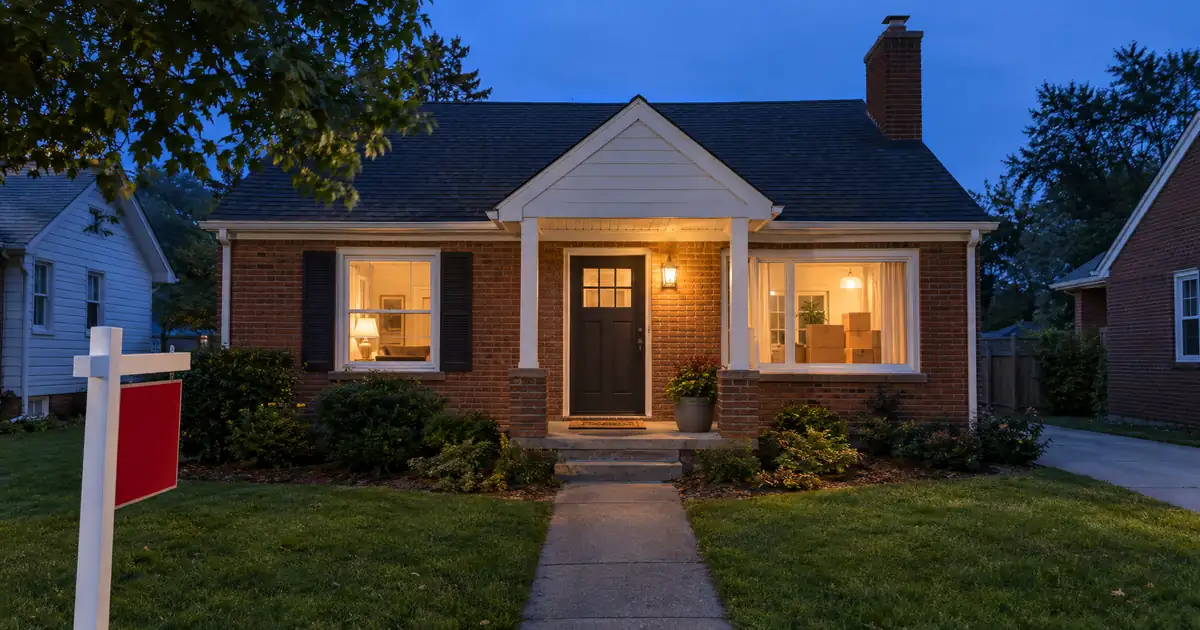
The Quick Read: FHA normally wants you to own and live in a home for 12 months before a cash-out loan. When you inherit the home, that waiting period can be waived. The catch is that the home must not have been treated as a rental at any point since you inherited it. Credit, income, the appraisal and the loan-to-value cap all still apply, subject to lender guidelines and full file review.
Key Takeaways
- A home with no mortgage can still get a cash-out loan. You simply put the first mortgage on it.
- The exception waives the occupancy wait. It does not waive underwriting.
- Renting the home after you inherit it can cancel the exception.
- Cash-out on the FHA programs Lendmire places reaches 80% loan-to-value, so you keep at least 20% equity.
- You qualify on your own credit and income. The inheritance is not income.
FHA cash-out estimate
Seeded with an example value, a balance to match, and a round cash request; change any field.
Editable benchmark: 7.40% as of October 15, 2026 · Freddie Mac 30-year average via FRED®. A conventional market reference, not an FHA cash-out refinance quote.
Illustrative starting assumptions: a $350,000 home value, a $193,000 current balance, the FHA cap on a principal residence with the upfront premium financed, a thirty-year term at the current Freddie Mac benchmark, and property taxes and insurance estimated at typical national rates. Every field is editable.
An illustration, not a Loan Estimate, an approval, a quote, or a commitment to lend. The rate shown is the weekly Freddie Mac thirty-year conventional benchmark, used as a market reference; an FHA cash-out is priced by the lender at lock, and this is not an FHA cash-out refinance quote. HUD’s cap limits the base loan; the upfront premium is financed on top of the capped base loan; the monthly premium for the first year follows the snapshot’s schedule. Cash available means the base loan the cap permits less the balances retired, before closing costs, which this calculator leaves out. The line figure applies the line program’s combined loan-to-value ceiling to the same value and balance. Taxes and insurance are estimates you can edit. Licensed in sixteen states for consumer mortgages.
Can a Paid-Off Home Get a Cash-Out Loan at All?
Yes. A home you own free and clear is eligible, and the lender treats a new first mortgage on it as cash-out. “Cash-out” means you take equity out of the home as cash. It does not require an old loan to pay off.
This surprises many heirs. They assume a refinance needs something to refinance. On FHA files, a withdrawal of equity from a home with no mortgage counts as a cash-out refinance, and the cash is not limited to specific uses.
Lendmire’s FHA cash-out refinance program works this way for homeowners who own outright. Because the home has no payoff, the loan amount is the cash you take plus costs, up to the cap. Mortgage insurance is part of the picture too, and we cover it below.
What Does the Inheritance Exception Waive?
It waives one thing: the minimum time you must own and live in the home before applying. The general rule is 12 months of ownership and occupancy before the case number is assigned. The case number is FHA’s file ID for your loan, and it starts the clock the rule measures.
With an inheritance, you do not have to meet that minimum before applying. Everything else stays in place.
| Waived | Still required |
|---|---|
| 12-month occupancy wait | Home is your principal residence |
| Minimum period before applying | Full appraisal |
| 80% loan-to-value cap | |
| Your own credit and income | |
| No investment use since inheriting |
FHA’s rulebook is HUD Handbook 4000.1. The exact wording of this exception sits in the cash-out refinance section. Handbook text gets revised, and individual lenders add their own rules. Confirm the current wording in HUD Handbook 4000.1 and with your lender. That link is a handbook transmittal, so treat it as a pointer rather than the current text.
What Counts as Investment Use?
Investment use means treating the home as a rental or income property after you inherited it. The test is yes or no. If the home has been used that way, the exception does not apply. You would then need to live in the home as your principal residence for at least 12 months before a cash-out loan.
Here is how common situations tend to read to a lender. Treat the “likely effect” column as a general pattern, because lenders decide on documented facts.
| Situation | Likely effect | What to document |
|---|---|---|
| Never rented, you live there | Exception can apply | Deed, ID, utility bills |
| Tenant paid rent, even briefly | Exception likely lost | Lease end, rent history |
| Vacant, listed for rent | Lender will ask questions | Listing dates, no tenant |
| Relative lived there rent-free | Often reviewed closely | Written explanation |
| Estate collected rent | Exception likely lost | Estate records |
The vacant-but-listed row is the gray one. A listing is a signal the lender will notice. If it applies to you, bring the facts up early rather than waiting for the underwriter to find them.
One practical note. The rule is about the home, not your intentions. If you plan to rent it later, you can’t use FHA cash-out for it. FHA cash-out is for a principal residence only, and occupancy decides how much leverage FHA allows.
From Inheritance to Closing: The Steps
Here is the order a typical file follows. Each step must be completed before the next, and the steps do not carry a timeline.
1. Get on title. You must be an owner of record. Depending on how the home was held, that may mean probate, a trust transfer or a transfer-on-death deed first. An open estate or a deed still in the decedent’s name can hold up a loan. This is general practice, so ask the title company what your situation needs.
2. Move in, or confirm you already live there. The home must be your principal residence. If you lived with the person who died, you can show that with bills and records already in your name.
3. Clear the investment-use question. The lender asks directly. Answer it plainly and be ready to back it up.
4. Document the inheritance. Lenders typically want proof, such as the probate order, the recorded deed or the trust documents. The exact list is lender practice.
5. Order the appraisal. A full appraisal sets the value. Appraised value today is what counts, not the value on the date of death.
6. Underwrite. The lender reviews your credit, income and debts.
7. Fund. With no old mortgage to pay off, the new FHA first mortgage goes on the home. The proceeds come to you, net of costs.
If a mortgage still exists on the inherited home, payment-history rules come into play. Where the loan is not on your credit report or not in your name, the lender typically wants proof that payments were made on time for the prior 12 months. A paid-off home skips this test because there is no history to check.
How the Loan Is Underwritten
You qualify on your own finances. The inheritance itself does not count as income, though documented assets may help a file.
Across the wholesale programs Lendmire places FHA files with, here is the envelope:
- Credit: The decision score varies by scenario. HUD has a lower tier, but the wholesale programs we use do not reach below 580.
- Ratios: The base pair is 31/43. That means housing costs are at most 31% of income and total debts at most 43%. Documented compensating factors can stretch to 40/50 at the top tier, and the automated finding governs most files.
- Leverage: The FHA cash-out reaches 80% loan-to-value. That is lower than the 96.5% maximum financing on an FHA purchase, which needs only a 3.5% minimum investment.
- Mortgage insurance: An upfront premium of 1.75% of the base loan, which can be financed. Plus an annual premium between 0.15% and 0.75% of the balance, depending on term, loan amount and loan-to-value. At or below 90% loan-to-value on a thirty-year loan, the annual premium ends after eleven years.
- Loan limits: County loan limits apply, and they change every year.
These are program parameters, not prices, and they are subject to lender guidelines and full file review.
The 80% cap is worth a pause. HUD’s Mortgagee Letter 2019-11 cut the maximum on cash-out refinances from 85% to 80% of adjusted value. Older guides and blog posts still show 85%. If you see it, the source is out of date.
What Does the Cash-Out Do to Your Household?
A paid-off home has no payment. A cash-out loan changes that. The CFPB’s guide to using home equity says a cash-out loan must be repaid and can put the home at risk if you can’t keep up. It also says the loan may raise your monthly payment and lengthen the time to pay off the home. It adds that lenders typically want you to keep 10% to 20% of the home’s value as equity.
On FHA, the 80% cap already leaves you at least 20%. But that is the program’s floor, not a comfort level. Taking equity also means you own less of the home, and a later sale would net you less.
Ask the question first: what is the cash for? Repairs that protect the home, paying off debt that costs more, or buying out siblings can make sense. Spending that leaves nothing behind deserves a harder look. Lendmire’s article Should a Paid-Off Home Get an FHA Cash-Out Instead of a Second Lien? walks through the alternative.
Tax treatment can depend on your situation; borrowers should speak with a qualified tax professional before relying on any deduction or credit.
Three Scenarios, No Dollar Figures
The sole heir who lived there. Maria inherited her mother’s home and had lived there for years. Title is in her name and she never rented it. The exception applies, so she does not wait 12 months. She still needs the appraisal, a qualifying score and ratios that fit. She can borrow up to 80% of the appraised value, less the costs rolled in.
The heir who rented first. Dev inherited a house in another town and rented it to a tenant for a few months. Then he moved in. The exception is lost. The 12-month occupancy clock now applies, starting once the home is his principal residence. After that he can apply under the standard rule.
Several heirs, one house. Three siblings inherit. One lives in the home and wants to buy out the other two. Which names go on title and the loan, and who must meet the occupancy rule, are questions for the lender before any application. A cash-out loan can fund a buyout, but the structure needs to be settled first.
FHA or Conventional for an Heir?
Both can take equity out of a paid-off home. They use different clocks.
| Factor | FHA cash-out | Conventional cash-out |
|---|---|---|
| Waiting clock | Occupancy | Time on title |
| General rule | 12 months owned and occupied | Six months on title |
| Inheritance | Occupancy wait can be waived | Has its own exceptions |
| Mortgage insurance | Upfront plus annual premium | Depends on loan-to-value |
| Credit | Lower score floors | Typically higher |
Fannie Mae’s Selling Guide states the six-month title requirement and treats a new mortgage on a lien-free property as cash-out. Do not carry one program’s clock into the other. FHA tests where you live. Conventional tests how long you have been on title.
If the cash-out cap or the premium makes FHA a poor fit, a second lien or a conventional loan may fit better. That is a real decision with tradeoffs. Lendmire’s piece Can a Paid-Off Home Exceed the FHA Cash-Out Cap With a Second Lien? covers it.
Where the Rules Get Tricky
A gift is not an inheritance. A deed from a living parent is a transfer, not an inheritance. The inheritance exception is built for a death transfer. Ask the lender how a gifted home is treated.
Reverse mortgages. Heirs of a reverse-mortgage borrower follow a separate track. Start at hud.gov and talk to the servicer.
Homes in a trust. The trust documents often matter for title. Have them ready.
State rules. Some states place their own limits on borrowing against a home. Check yours before you plan on a loan amount.
Moving in later. If you live elsewhere now and plan to relocate to the home, expect the lender to want clear evidence that it is or will be your principal residence. Occupancy evidence typically comes from records like bills and ID showing the home address.
Key Terms Defined
Cash-out refinance: A new mortgage that lets you take equity out of your home as cash.
Case number: The ID FHA assigns to your loan file. The occupancy clock is measured back from it.
Investment use: Treating the home as a rental or income property.
Principal residence: The home where you live most of the time.
Loan-to-value (LTV): The loan amount as a percentage of the home’s appraised value.
Seasoning: The waiting period a lender wants before you can use a home’s equity.
Frequently Asked Questions
Can I apply right after inheriting?
Yes, as to the occupancy wait. The exception means you do not need 12 months of ownership and occupancy first. You do need to be on title, live in the home, pass underwriting and have no investment use since inheriting. If the estate is still open, title may be the real holdup.
What if I rented the home for just a few months?
Plan on losing the exception. The rule looks at whether the home was treated as an investment at any point after inheriting. Once you live there as your principal residence for 12 months, you can apply under the standard rule. Talk to a lender before assuming a short tenancy is ignored.
Does the inheritance count as income?
No. You qualify on your own credit, income and debts, as with any FHA loan. Documented assets can help a file. They don’t replace income.
How much equity can I take out?
The FHA cash-out reaches 80% of the appraised value. That means you keep at least 20% as equity. Mortgage insurance and closing costs come out of the proceeds, and county loan limits apply.
Do I have to use the original lender or an existing FHA loan?
No. A paid-off home has no existing loan, and any lender offering the program can review your file. Comparing programs through a broker can help you see how each reaches your equity.
Next Step
If you are weighing a cash-out refinance on a home you own outright, Lendmire can help you compare the programs and the equity each one reaches.
For your own numbers, request a scenario review with Lendmire.
About Lendmire
Lendmire is a mortgage brokerage (NMLS# 2371349) licensed for consumer mortgage lending in 16 states, arranging FHA, VA, conventional and jumbo purchase and refinance loans through a wholesale lending network. Eligibility is determined by the lender on each file. Scotsman Guide named Lendmire a Top Mortgage Workplace in both 2025 and 2026.
For the program’s current guidelines, see FHA loan programs.
Get Started
Ready to find the right loan for you?
In about 30 seconds you can review financing options available for your home or investment property. No commitment required.
Informational only. Not a Loan Estimate, approval, or commitment to lend. Program availability and eligibility are subject to lender guidelines, credit approval, property review, and underwriting.
References
2. HUD Mortgagee Letter 2019-11
3. CFPB: Using home equity to meet financial needs
4. Fannie Mae Selling Guide: Cash-out refinance transactions
This article is part of Lendmire’s FHA Loan series — every loan program’s qualification details, guidelines, and scenarios live on the loan options page.
Related reading: How to Document an Inherited Home for an FHA Cash-Out · FHA Cash-Out Inheritance Exception to the Ownership Rule · How to Qualify for an FHA Cash-Out on a 2-4 Unit Primary Home
Brandon Miller
Founder & CEO, Mortgage Loan Originator, Lendmire LLC
- Mortgage Loan Originator · NMLS# 1129696 · Verify on NMLS Consumer Access
- North Carolina Real Estate Broker · License# 343312 · Verify on NCREC
- North Carolina Insurance Producer · License# 19053198 · Property, Casualty, Life, Health · Verify on NAIC SBS
- Lendmire LLC · Firm NMLS# 2371349 · Verify firm licensure
Disclosures. The information presented in this article is general market commentary, not financial, legal, or tax advice. Lendmire is a mortgage brokerage (NMLS# 2371349) — not a direct lender or depository institution — and loan placement is subject to lender underwriting. Nothing in this content represents a commitment to lend. Loan terms, pricing, and program availability vary based on borrower qualifications, property characteristics, and state of subject property, and are subject to change at any time. Lendmire complies with Equal Housing Opportunity requirements. Consumer access: nmlsconsumeraccess.org.