
The Quick Read: Weigh the cash by what it adds to your monthly cost, not by how much the equity could supply. On a 2–4 unit you live in, conventional cash-out tops out at 75% of the home’s value. Rent from the other units may help you qualify, but the new payment is what you carry every month. The math works when the extra payment is small against your budget, your reserves stay intact, and the cash earns or saves more than it costs.
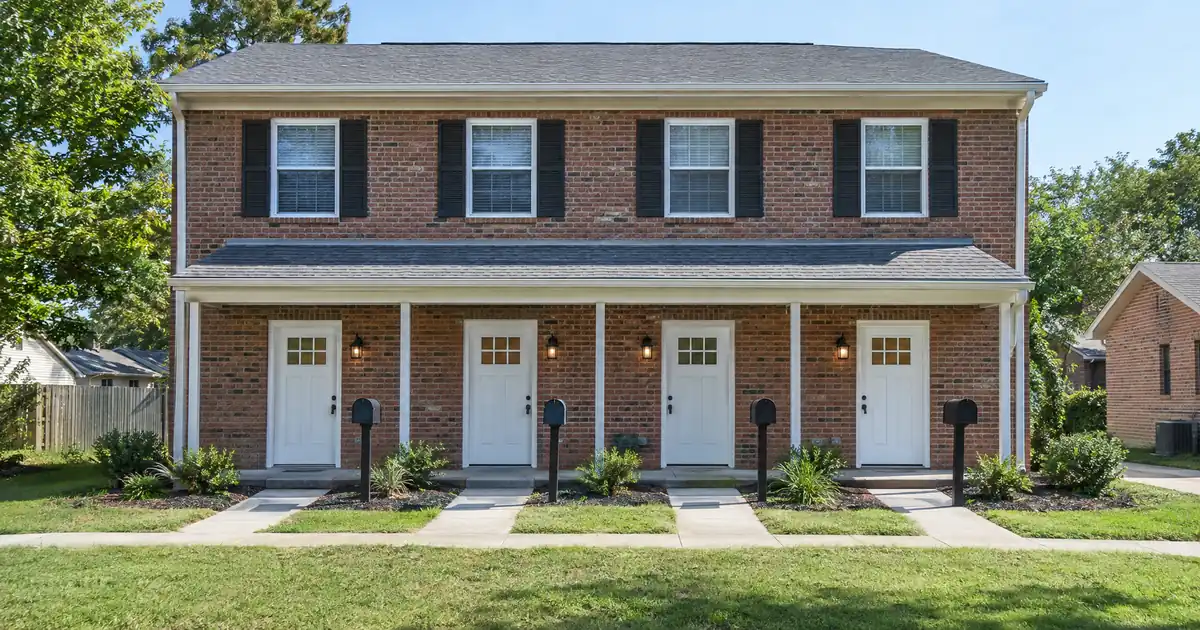
A duplex, triplex, or fourplex where you occupy one unit is a different animal from a single-family home. The lender counts rent from the other units, caps leverage lower, and asks for more cushion. This guide walks through the full sequence: what the loan is, how it’s underwritten, the structures, the edge cases, and a repeatable payment test you can apply to your own building.
What Is a Cash-Out Refinance on a 2–4 Unit?
A cash-out refinance replaces your current mortgage with a new, larger one and hands you the difference as cash. You pay off the old balance, the closing costs come out of the proceeds or the balance, and what remains is yours. Because the new loan is bigger and the terms reset, the monthly payment usually rises.
On a home you occupy, the leverage ceiling depends on the building. Across the wholesale programs Lendmire places files with, a one-unit principal residence reaches 80% loan-to-value on a cash-out. A two- to four-unit principal residence reaches 75%. Second homes and investment property also sit at 75%. That lower cap on small multifamily is the first number to learn, because it sets the ceiling on everything else.
Lendmire’s cash-out refinance programs follow those caps, subject to lender guidelines and full file review. Freddie Mac’s Guide Section 4203.1 lists the same 75% ceiling for a 2–4 unit primary residence cash-out, and the same 75% for a 2–4 unit investment property. Occupancy decides the leverage. That’s all this article says about the investment case.
Key Terms Defined
Loan-to-value (LTV): The new loan balance divided by the appraised value of the building.
Cash-out refinance: A new mortgage larger than the old payoff, with the difference paid to you.
Limited cash-out refinance: A rate-and-term refinance where you receive only small, incidental cash back.
Incremental payment: The new total monthly payment minus the old one.
Rent offset: The share of the incremental payment covered by rent from the units you don’t occupy.
Reserves: Liquid savings left after closing, measured in months of housing payments.
Break-even: The point where the savings from a refinance have repaid its costs.
Why Does a 2–4 Unit Get a Lower Cash-Out Limit?
A 2–4 unit gets a lower cap because lenders treat multi-unit buildings as carrying more risk than single-family homes. Vacancy, repairs, and tenant turnover all hit the cash flow that supports the loan. So the agencies cap cash-out at 75% instead of the 80% allowed on one unit. Each figure is subject to lender guidelines and a complete review of property type, leverage, and credit.
One distinction trips people up. The 95% leverage figure you may see for 2–4 units applies to a limited cash-out refinance, a rate-and-term loan with only incidental cash back. It doesn’t apply to a true cash-out. Fannie Mae’s cash-back allowance on a limited cash-out was changed in its Selling Guide Announcement SEL-2025-08 to the greater of 1% of the new loan’s balance or $2,000. Take more than that, and the loan is a cash-out, which means the 75% cap. Leverage, reserves, and pricing vary by lender and program; the final terms follow the full file review.
If you want only a small amount of cash, a limited cash-out may reach higher leverage. If you want real equity out, plan around 75%.
How Does the Lender Underwrite It, Step by Step?
The lender runs the file in a fixed order. Knowing the order lets you run the same test before you apply.
1. Classify the loan. Cash back beyond the incidental allowance makes it a cash-out. That sets the 75% ceiling.
2. Check seasoning and title. The first mortgage being paid off generally must be at least 12 months old, note date to note date. You generally need to be on title for six months, with exceptions for delayed financing, inheritance, and legal awards. Freddie Mac’s cash-out refinance page confirms the six-month title requirement and a new appraisal.
3. Order the appraisal. On a 2–4 unit, the appraisal also supports the rent figures for the other units.
4. Document income. Your job income counts as usual. Rent from the units you don’t occupy may be added, but rent from your own unit generally can’t be. Fannie Mae’s rental income rules require the lender to report gross monthly rent for every unit.
5. Test the ratios. Most files run through automated underwriting with a total debt ratio ceiling of 50%. Manually underwritten loans use 36% or 45%, depending on the reserve and score factors. The wholesale conventional programs start at a 620 decision score.
6. Count reserves. Reserves are generally required on 2–4 unit loans. The amount depends on the file.
The CFPB’s guide to using home equity adds a useful reality check: lenders typically want 10–20% equity left in the home, and the new loan’s rate and terms replace the old ones. That is a cap and a floor at once.
How Do You Run the Payment Math?
Run the payment math in six steps: size the cash, find the old payment, find the new payment, subtract to get the increase, subtract the rent offset, and compare the leftover cost with what the cash earns. Do the first five on paper before you talk to any lender.
Step 1: Size the cash. Take the appraised value and multiply by 75%. Subtract your current payoff and the closing costs. What remains is the most cash you could receive. It is a ceiling, not a target.
Step 2: Write down the old payment. Use your current total monthly housing cost: principal, interest, taxes, insurance, and any mortgage insurance.
Step 3: Get the new payment. Ask for a Loan Estimate for the specific loan amount you want. Compare lenders on that same form. The new payment is a full repricing of the entire balance, not just the cash you pull.
Step 4: Find the incremental payment. New total payment minus old total payment.
Step 5: Apply the rent offset. Take the rent from the units you don’t occupy. Reduce it for vacancy and for the costs you carry, such as repairs and a maintenance reserve. What’s left is the real rent available to absorb the increase.
Step 6: Compare against the cash’s job. If the proceeds retire higher-cost debt, the interest you stop paying offsets the increase. If they fund a repair that lifts rents, the added rent offsets it. If they sit in savings, the increase is pure cost.
A simple formula block:
- Ceiling on cash = (value × 75%) − payoff − closing costs.
- Incremental payment = new payment − old payment.
- Net cost of the pull = incremental payment − (usable rent increase + debt payments eliminated).
If the net cost is zero or negative, the pull pays for itself. If it’s positive, ask whether the purpose of the cash justifies that monthly drag.
What Does a Worked Example Look Like?
A worked example shows the pattern. These are modeled, illustrative percentages and ratios, not quotes.
Picture a fourplex you live in, appraised at a round value. You pull cash to 75% of that value. Before the refinance, the rent from your three rented units covered the old payment at a healthy margin. After the refinance, that same rent covers the new, larger payment at a thinner margin, say from roughly 1.4 times down to roughly 1.1 times, before vacancy.
Now stress it. Take one rented unit vacant. With three rented units, losing one removes about a third of the rent offset. The 1.1 times cushion drops below 1.0. You’d cover the shortfall from your paycheck or reserves.
That’s the lesson of the table below. A deal that clears at full occupancy may not clear with one empty unit.
| Scenario | Rent coverage of payment | Read |
|---|---|---|
| Before the cash-out | Comfortable | Old loan, old balance |
| After, fully rented | Thinner | Passes, with less margin |
| After, one unit vacant | Below 1.0 | Paycheck or reserves cover the gap |
| After, smaller pull | Between the two | Often the better balance |
How Do You Decide: Pull, Pull Less, or Wait?
The decision rests on what the cash does. A pull earns its place when the cash replaces something more expensive or creates income. It struggles when the cash just sits.
| Use of proceeds | What the cash must do | Verdict pattern |
|---|---|---|
| Pay off higher-cost debt | Stop interest costing more than the added payment | Often pencils |
| Renovate to raise rents | Lift rent by more than the added payment | Pencils if rents are realistic |
| Next down payment | Earn more than the added cost | Depends on the next deal |
| Build reserves | Provide safety, not income | Pull less, since cost is pure drag |
Three rules make this practical:
- Go when the net cost of the pull is zero or negative and reserves stay intact after closing.
- Pull less when the full pull clears only at full occupancy. Reverse-solve: lower the cash until the one-vacancy test still holds.
- Wait when the only reason to pull is that the equity exists. Equity sitting in the building isn’t costing you anything.
Honestly, the pull-less answer is the underrated one. Most borrowers size to the maximum because it’s available, then discover the cushion is gone.
Where Does Replacing the Whole Loan Hurt?
A cash-out reprices your entire balance, not just the new money. If your current mortgage is a good one, the cost of replacing it can outweigh the value of the cash. That is the most common blind spot.
Say your existing loan carries terms you couldn’t get today. A cash-out swaps all of it for today’s terms. The cash you receive is a small slice of a much bigger repricing. In that case, a different tool may fit better, such as a home equity loan or a line of credit that leaves the first mortgage alone. The Federal Reserve’s refinancing page notes that cash-out reduces your ownership stake and that you can compare other equity products.
The break-even idea helps here, with one adjustment. A refinance’s break-even is the closing costs divided by the monthly savings. On a cash-out, the savings are often negative, since the payment rises. So the test shifts from “when do I recoup costs?” to “what does this cash earn compared with what it costs each month?” The CFPB’s Your Home Loan Toolkit gives a rule of thumb that a refinance should repay its costs in about two years. That fits rate-and-term. For cash-out, use the net-cost test above.
What Structures and Variations Exist?
Several variations change the math.
Limited cash-out. If you only want to roll closing costs and a purchase-money second lien into a new loan, a limited cash-out may reach up to 95% on a 2–4 unit principal residence. Only incidental cash comes back. A non-purchase-money second can’t be paid off this way, because that would make the loan a true cash-out.
The 89.99% wholesale lane. One wholesale lane reaches 89.99% LTV with no mortgage insurance. It requires a 680 score, a 50% ratio, a thirty-year fixed, a primary residence, a conforming balance, and its own six months of seasoning. It is set for one-unit principal residences, not the 2–4 unit cash-out, so don’t assume it applies to your building. Terms vary by lender guidelines, property type, leverage, credit profile, and full file review.
Jumbo. Above the conforming limit, jumbo programs take over. They start at a 660 decision score and can lend up to $5,000,000, with a 50% ratio ceiling on the fixed lanes.
Government programs. The FHA Streamline and VA IRRRL are for existing government loans and are rate-and-term products. They do not pull cash. FHA’s Streamline page requires that the loan be FHA-insured and current, with a net tangible benefit. If cash is the goal, those won’t deliver it.
Where Does the General Rule Break?
A few named edge cases change the answer.
- Texas homestead. A cash-out on a Texas homestead is capped by the state constitution at the agency figure. The wholesale 89.99% lane isn’t written there. This is a good example of a state-law overlay on top of agency rules.
- Inheritance. If you inherited the property, seasoning rules are relaxed. Freddie Mac notes no seasoning requirement for inherited properties.
- Recent purchase. Buyers who’ve held title under six months and have a mortgage under 12 months old generally can’t cash out yet, outside the delayed-financing exceptions.
- High-balance loans. The higher 95% limited cash-out limit on 2–4 units didn’t extend to high-balance loans, as trade press reported when Fannie Mae made the change.
- Occupancy change. If you move out and rent all units, the property is treated as an investment, with different leverage rules.
- Tax questions. Tax treatment can depend on your situation; borrowers should speak with a qualified tax professional before relying on any deduction or credit.
What Should You Have Ready Before Applying?
Gather documents first. It shortens confusion later, and it makes your payment math more accurate.
- Current leases or rent schedule for each unit you don’t occupy
- Two years of income documentation, as your loan officer directs
- A recent mortgage statement with the payoff
- Records of repairs and recurring expenses
- Proof of reserves, such as bank and retirement statements
The CFPB’s Loan Estimate explainer shows how Estimated Cash to Close appears on the form, and lenders must document the source of any funds you bring. Request Loan Estimates for the same loan amount from more than one lender, then compare the forms line by line.
For a deeper look at the same decision from the rental side, Lendmire’s piece How to Decide a Cash-Out Refi on Payment Math Not Timing covers the timing question.
What Are the Common Mistakes?
- Sizing to the maximum. The ceiling is a limit, not advice.
- Comparing rates only. A lower rate on a bigger balance can still raise the payment, as the CFPB’s equity guide notes.
- Counting all the rent. Rent from the unit you live in generally can’t be used, and vacancy is real.
- Ignoring reserves. Pulling the maximum can leave you thin in the months you most need cushion.
- Skipping the cheap-loan test. If your existing loan is strong, repricing it is the cost, not a footnote.
- Treating “no-cost” as free. When you see “no closing costs,” the costs are built into the rate or the balance. The term is a marketing phrase.
Frequently Asked Questions
Does a 2–4 unit get a lower cash-out limit than a single-family home?
Yes. On a principal residence, conventional cash-out reaches 80% LTV on one unit and 75% on two to four units. All figures are subject to lender guidelines and full file review.
Does rent from the other units count toward qualifying?
Often, yes, for the units you don’t occupy. Fannie Mae’s guide allows rental income from the other units of a 2–4 unit principal residence, supported by the appraisal, a rent schedule, or a lease. Rent from your own unit generally can’t be used. How much of the rent a lender counts depends on the program and the file.
How much will my payment rise if I pull cash?
It depends on the amount, the term, and the pricing on the day you lock, so no single answer fits. A larger balance generally means a higher payment unless the term stretches. Request a Loan Estimate for the exact loan amount and subtract your current total payment to get the increase.
Is a cash-out worth it if I already have a low-cost mortgage?
Often not. A cash-out replaces the entire balance with new terms, so you give up the old loan to get the cash. Compare it against a home equity loan or line of credit, which leaves the first mortgage alone, as the Federal Reserve suggests.
Can an FHA Streamline or VA IRRRL pull cash out?
No. Both are rate-and-term products for existing government loans, built around a net tangible benefit. If cash is your goal, you’d look at a conventional or other cash-out program instead.
Next Step
If you are weighing a cash-out refinance against keeping the loan you have, Lendmire can help you compare the programs and the equity each one reaches. A fourplex that clears the payment test with one unit empty is a stronger bet than one that only works when every lease is paid on time.
For your own numbers, request a scenario review with Lendmire.
For current guidelines and terms, see Lendmire’s refinance programs page.
About Lendmire
Lendmire (NMLS# 2371349) is a mortgage brokerage serving homeowners and home buyers in 16 states. FHA, VA, conventional and jumbo purchase and refinance loans are arranged through wholesale lending channels; Lendmire brokers the financing and the lender underwrites each application. Scotsman Guide named Lendmire a Top Mortgage Workplace in both 2025 and 2026.
Get Started
Ready to find the right loan for you?
In about 30 seconds you can review financing options available for your home or investment property. No commitment required.
Informational only. Not a Loan Estimate, approval, or commitment to lend. Program availability and eligibility are subject to lender guidelines, credit approval, property review, and underwriting.
References
1. Freddie Mac Guide Section 4203.1
2. Fannie Mae Selling Guide Announcement SEL-2025-08
3. Freddie Mac Cash-Out Refinance
4. Fannie Mae Selling Guide B3-3.1-08, Rental Income
5. CFPB, Using Your Home Equity guide
6. Federal Reserve’s refinancing page
This article is part of Lendmire’s Refinance series — every loan program’s qualification details, guidelines, and scenarios live on the loan options page.
Related reading: Can a Cash-Out Refinance Pay Off a Money Partner Note Coming Due? · Can a Cash-Out Refinance Fix a Blanket Loan With No Release Clause? · How to Size a Cash-Out Refinance While Scaling From 2 to 10 Doors
Brandon Miller
Founder & CEO, Mortgage Loan Originator, Lendmire LLC
- Mortgage Loan Originator · NMLS# 1129696 · Verify on NMLS Consumer Access
- North Carolina Real Estate Broker · License# 343312 · Verify on NCREC
- North Carolina Insurance Producer · License# 19053198 · Property, Casualty, Life, Health · Verify on NAIC SBS
- Lendmire LLC · Firm NMLS# 2371349 · Verify firm licensure
Disclosure information. Lendmire is a state-licensed mortgage brokerage under NMLS# 2371349. Lendmire is not a depository institution, direct lender, or financial advisor — all loans referenced are placed through wholesale lender partners and are subject to each lender's underwriting standards. This article is provided for general informational purposes and is not a commitment to lend, nor does it constitute financial, legal, or tax advice. Loan programs, terms, rates, and qualification standards change without notice and depend on borrower profile, property type, and the state in which the subject property is located. Equal Housing Opportunity provider. NMLS Consumer Access: nmlsconsumeraccess.org.