
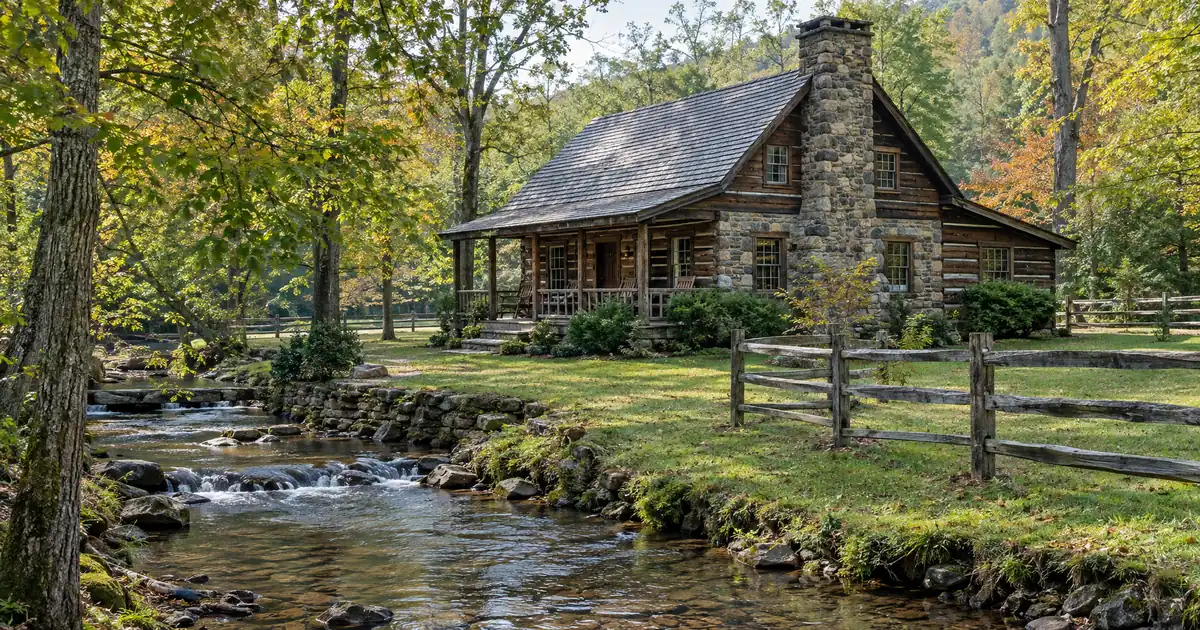
The Quick Read: Yes, as long as the property is a home first and land second. Acreage alone does not disqualify a house from a conventional cash-out loan. What decides it is whether the property is used mainly as a residence. A working farm, ranch, or orchard is a different story. The usual cash-out rules apply on top of that, and the appraisal has to support the value.
Is There a Maximum Acreage on a Conventional Loan?
No national acreage cap exists in the agency rules. Freddie Mac’s Guide FAQ on rural properties says Freddie Mac has no site size or acreage limitations. Fannie Mae’s appraisal guidance sets no acreage cap either. It asks whether the property is a typical, reasonable use of the site for its market.
Here is the catch. Individual lenders can add their own limits on top of the agency rules. Some set a ceiling on acreage even though the agencies do not. If a lender tells you “10 acres is the max,” that is usually a house rule, not a national one.
So the myth of a hard acreage line is just that. The real test is use, not size.
What Actually Decides Eligibility: Residential Use
The loan has to be secured by residential property. Fannie Mae’s Selling Guide treats vacant land and property used mainly for agricultural or commercial purposes as non-residential. Freddie Mac draws the same line. A property used mainly for farming or ranching is ineligible, and that holds whether or not you personally do the farming.
Three details help most rural homeowners:
- Outbuildings are fine in moderation. Per Freddie Mac, if the main use is residential, agricultural-type outbuildings do not make the property ineligible. A modest barn or shed that is typical for the area is usually workable. A large barn, a silo, several outbuildings, or facilities for farm animals can signal an agricultural property.
- A farm next door is not a problem. Freddie Mac says a market area with agricultural properties or undeveloped land does not by itself make a home ineligible.
- A roadside produce stand is okay. Freddie Mac says a small one does not cause ineligibility.
The Guide is the final word here, not any summary of it. Freddie Mac itself notes that its FAQs are not a substitute for the Guide.
What Does the Cash-Out Part Require?
The cash-out rules are the same for a rural home as for any other home. Across the wholesale programs placed through Lendmire, these are the mechanics that matter:
- Leverage: a conventional cash-out reaches 80% loan-to-value on a one-unit primary residence. That is the maximum combined loan against the appraised value. For a two- to four-unit primary home, a second home, or an investment property, the cap is 75%. Fannie Mae’s Eligibility Matrix publishes the agency figures. Acreage does not change them.
- Seasoning on the old loan: the first mortgage being paid off must be at least 12 months old, counted from note date to note date. (Seasoning just means the waiting period.)
- Time on title: at least one borrower must have been on title for six months. Exceptions exist for inheritance, an award in a divorce or separation, and delayed financing, per Fannie Mae’s cash-out topic.
- Reserves: on loans run through Fannie Mae’s automated system, six months of reserves are required if your debt-to-income ratio exceeds 45%. Reserves are savings left in the bank after closing.
- Credit and ratios: wholesale conventional programs generally start at a 620 decision score, and the automated finding governs most files, with a total ratio ceiling of 50%. All of it is subject to lender guidelines and full file review.
A home owned free and clear works too. In that case the new first mortgage simply goes on the property, and the cash-out leverage cap still applies.
How the Appraisal Treats Your Land
This is where rural deals get won or lost. The appraiser must value the actual site, not a convenient slice of it. Fannie Mae’s appraisal rules say an appraiser may not value only 5 acres of an unsubdivided 40-acre parcel. The whole parcel gets valued, and the whole parcel sits under the lien.
That cuts both ways. Your land counts toward value. But the improvements must make sense for the market. Per Fannie Mae, if comparable sales show your improvements are typical and compatible with market demand, and they add value beyond the vacant site, the existing use is reasonable.
Fannie Mae also expects road access that meets local standards and utilities that meet community standards.
Now the mechanics most articles skip. Your cash-out amount is set by the appraised value times the leverage cap, minus what you owe. On a rural parcel, comparable sales can be thin and far apart. That can move the value conclusion around, and the 80% cap rides on whatever number the appraiser lands on. Rural appraisals can also take more effort to complete, since unusual buildings, large lots with farmland, and distance between comps all complicate the work. A locally experienced appraiser helps, and Freddie Mac says as much.
Don’t count on an appraisal waiver for a cash-out. Treat a full appraisal as the plan.
Can I Self-Check Whether My Property Reads as Residential?
Run through these questions before you apply. They are the ones a lender and appraiser will effectively ask.
- Is the home your primary residence, and is it the main feature of the property?
- Is most of the land idle, wooded, pasture for personal use, or lawn, rather than producing crops or livestock for sale?
- Does the property earn meaningful income from farming, ranching, or an orchard?
- Are the outbuildings modest and typical for homes in your area?
- Do comparable sales nearby look like yours: a house on a larger lot?
- Is there a single house on the property, with any extra structures sitting on the same parcel?
- Do you have legal road access and working utilities?
If you answered the first, second, fourth, fifth, sixth, and seventh questions yes and the third no, you are in good shape. If the third answer is yes, talk to a loan officer before you spend money on an appraisal. A small hobby footprint is one thing. Income from animals or crops can recharacterize a property as agricultural.
When the Property Gets Complicated
A few edge cases deserve straight answers.
Multiple parcels. Fannie Mae allows them under conditions. Each parcel must be conveyed in its entirety, the parcels generally must be adjoined, and the mortgage must be a valid first lien covering each one. The property may contain only one dwelling unit. A second dwelling on a separate parcel breaks the rule. An accessory dwelling unit has to sit on the same parcel as the main house.
A working farm, ranch, or orchard. Ineligible for both agencies if used mainly for agriculture. Conventional cash-out is the wrong tool.
A manufactured home on acreage. Manufactured homes carry tighter cash-out limits than site-built homes. Check the current Eligibility Matrix with your loan officer before assuming the standard 80% applies.
A second home or rental on the land. Occupancy decides the leverage. As noted above, the cap drops to 75% for second homes and investment property. This article covers the home you live in.
USDA loans. The USDA Guaranteed Rural Housing program is not a conventional loan, and Freddie Mac’s page on it says it covers purchases and no-cash-out refinances only. Rural homeowners who want cash can’t use it.
Texas. A cash-out on a Texas homestead is capped by the state constitution at the agency figure, and the higher-leverage wholesale lane is not written there.
Common Myths About Rural Cash-Outs
| Myth | Reality |
|---|---|
| Conventional loans cap acreage at 10 or 20 acres | No agency cap; any limit is usually a lender overlay |
| A barn means automatic denial | A small, typical outbuilding is usually fine |
| The bank only counts the house, not the land | The appraisal values the entire site |
| A neighboring farm makes my home ineligible | An agricultural market area alone does not disqualify |
| USDA rural loans can do cash-out | The guaranteed program is purchase and no-cash-out refinance only |
| Cash-out equals rate-and-term | They differ in leverage, seasoning, and pricing |
What If It Doesn’t Fit?
Say your acreage is large, the comps are thin, or a lender’s overlay shuts the door. You still have paths, and a broker’s job is to compare them.
| Option | What it means | Watch for |
|---|---|---|
| Different lender | Another wholesale lender may have no acreage overlay | Guidelines differ file by file |
| Rate-and-term refinance | Higher leverage, but only incidental cash back | Does not raise cash |
| Home equity loan or HELOC | A second lien instead of replacing your first | Keeps your existing first mortgage in place |
| Smaller cash-out | Ask for less so the appraisal has more cushion | The value still has to support it |
A cash-out refinance replaces your current mortgage with a bigger one, so you get a new rate and new loan terms. The CFPB’s guide to using home equity notes it may extend your payoff time, and your monthly payment may increase because the new loan is larger. It also notes that no option lets you convert 100% of your equity to cash.
If your first mortgage is a good one, a second lien may be the better tool. Lendmire’s cash-out refinance programs are worth comparing against that route. The answer depends on what you owe, what the land appraises for, and what you plan to do with the money.
What Will You Spend the Money On?
Think about this before you borrow against your land. CFPB research on cash-out borrowers found that paying off other debts was the most common reason, cited by more than 50% of respondents each year from 2014 to 2019. Home repairs or new construction came second. The same research warns that paying non-mortgage debts with mortgage debt can increase the risk of foreclosure.
On rural property, repairs are often the better case. A new well, septic system, or roof protects the value that backs the loan. Debt consolidation can feel good and still backfire if the debt comes back. Tax treatment can depend on your situation; borrowers should speak with a qualified tax professional before relying on any deduction or credit.
The Process, Start to Finish
1. Pre-qualify and flag the acreage upfront. Tell your loan officer the parcel size, any outbuildings, and any income from the land.
2. Confirm timing rules. Check that your existing first mortgage is 12 months old and that you have been on title six months.
3. Gather documents. Expect the existing mortgage statement, the deed or title evidence, income, asset and credit documents, and a title commitment.
4. Order the appraisal. Ask for an appraiser with local rural experience.
5. Review the value against the cap. The 80% limit applies to the appraised value.
6. Review the Loan Estimate and Closing Disclosure. Compare full terms before you sign.
The loan also has to fit under the conforming loan limit for agency delivery. FHFA publishes the current limit, and it changes, so check the live figure.
Key Terms Defined
Cash-out refinance: a new, larger mortgage that pays off your old one and hands you the difference in cash.
LTV (loan-to-value): your loan balance divided by the home’s appraised value.
Seasoning: the waiting period a lender requires before you can refinance or cash out.
Highest and best use: the appraisal test of whether the property’s current use makes sense for its site and market.
Overlay: a lender’s own rule layered on top of agency guidelines.
Reserves: savings left over after closing, counted in months of payments.
Frequently Asked Questions
Is 20 acres too much for a conventional cash-out?
Not under the agency rules, which set no acreage cap. A lender may apply its own limit, though, so ask early. What matters more is whether the land is idle or producing income, and whether comparable homes nearby sit on similar parcels.
Does a barn or horse stable hurt my chances?
Usually not if it is small and typical for your area. Large barns, silos, multiple outbuildings, or facilities for farm animals can suggest an agricultural property. The appraiser uses comparable sales to show whether such features are normal locally.
Will the lender count all of my land in the value?
Yes. The appraisal reflects the entire site, and the whole parcel secures the loan. Thin comparable sales can still affect the number, so the land does not guarantee a higher value.
Can I do a cash-out if I have a mobile or manufactured home on acreage?
Possibly, but the limits are tighter than for a site-built home. Your loan officer should check the current Eligibility Matrix for your exact situation. A different structure of loan may fit better.
Does a cash-out on rural land need mortgage insurance?
Mortgage insurance is required above 80% loan-to-value, and a standard conventional cash-out tops out at 80%. One wholesale lane reaches 89.99% with no mortgage insurance at a 680 score and a 50% ratio on a 30-year fixed primary residence with a conforming balance. That lane has its own six months of seasoning, and it isn’t written in Texas. All figures are subject to lender guidelines and full file review.
If you are weighing a cash-out refinance against keeping the loan you have, Lendmire can help you compare the programs and the equity each one reaches. For a related look at leverage trade-offs on another property type, see Lendmire’s piece VA Cash-Out vs Staying Conventional on a 2-4 Unit Primary Home. Lendmire is a mortgage broker and does not lend directly; nothing here is a commitment to lend.
For your own numbers, request a scenario review with Lendmire.
About Lendmire
As a mortgage broker (NMLS# 2371349), Lendmire helps homeowners and home buyers in 16 states with FHA, VA, conventional and jumbo purchase and refinance loans arranged through wholesale lenders. Lendmire is never the lender; program terms are set by the lender and the agency guidelines. Scotsman Guide named Lendmire a Top Mortgage Workplace in both 2025 and 2026.
For the program’s current guidelines, see conventional loan programs.
Get Started
Ready to find the right loan for you?
In about 30 seconds you can review financing options available for your home or investment property. No commitment required.
Informational only. Not a Loan Estimate, approval, or commitment to lend. Program availability and eligibility are subject to lender guidelines, credit approval, property review, and underwriting.
References
1. Freddie Mac Guide FAQ: Rural Properties
2. Fannie Mae Selling Guide: General Property Eligibility (B2-3-01)
3. Fannie Mae Eligibility Matrix
4. Fannie Mae Selling Guide: Cash-Out Refinance Transactions (B2-1.3-03)
6. CFPB’s guide to using home equity
7. CFPB research on cash-out borrowers
8. FHFA publishes the current limit
This article is part of Lendmire’s Conventional Loans series — every loan program’s qualification details, guidelines, and scenarios live on the loan options page.
Related reading: How to Get a Conventional Cash-Out on a Home Still in the Estate · Conventional Cash-Out Refinance Requirements for a Vacation Home · Conventional Cash-Out LTV Limits for a Second Home
Brandon Miller
Founder & CEO, Mortgage Loan Originator, Lendmire LLC
- Mortgage Loan Originator · NMLS# 1129696 · Verify on NMLS Consumer Access
- North Carolina Real Estate Broker · License# 343312 · Verify on NCREC
- North Carolina Insurance Producer · License# 19053198 · Property, Casualty, Life, Health · Verify on NAIC SBS
- Lendmire LLC · Firm NMLS# 2371349 · Verify firm licensure
Required disclosures. Lendmire (NMLS# 2371349) operates as a licensed mortgage broker, not a direct lender or depository. The discussion in this article is general in nature and should not be relied upon as financial, legal, or tax advice — every investment scenario is unique and should be reviewed by a qualified professional. Any loan inquiry is subject to lender underwriting, and this article is not a commitment to lend or a guarantee of approval. Mortgage rates, loan terms, and program guidelines vary by borrower, property, and state, and may change without notice. Equal Housing Opportunity. Verify licensure at NMLS Consumer Access.