
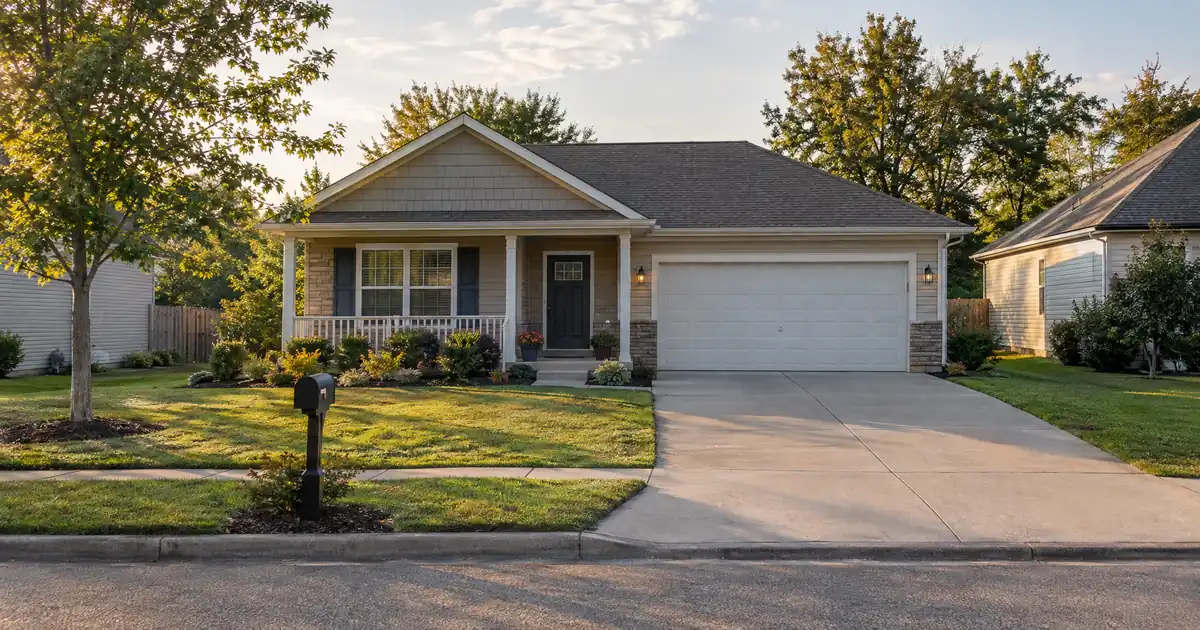
The Quick Read: A conventional cash-out on an inherited home is allowed, and the heir does not have to wait the usual six months on title. The exception covers only the title wait. The heir must still hold title, live in the home for primary-residence leverage, and qualify on personal income, credit, and a new appraisal. Everything else in a standard cash-out still applies, subject to lender guidelines and full file review.
Key Takeaways
- Both Fannie Mae and Freddie Mac waive the six-month title wait for inherited property.
- The heir must be on title. Probate status decides whether a lender can proceed.
- On a one-unit primary residence, leverage tops out at 80% of the appraised value.
- A mortgage still on the home brings in a separate 12-month rule worth checking early.
- The heir qualifies personally. The inheritance itself does not count as income.
What Is a Cash-Out on an Inherited Home?
A cash-out refinance replaces what is owed on a home with a new first mortgage that is larger than the payoff. The difference comes to the borrower as cash. An inherited home works the same way, with one twist: how the borrower came to own it.
Many heirs are surprised by one point. A home with no mortgage still counts. Under the Fannie Mae Selling Guide B2-1.3-03, a new first mortgage on a property with no lien is a cash-out transaction. So an heir who inherits a paid-off house and borrows against it is doing a cash-out, priced and limited as one.
Don’t confuse this with a “cash sale.” Companies that buy houses for cash are a different product. Here the heir keeps the home and borrows against its equity. Lendmire’s cash-out refinance programs are built for that second path.
Can You Get a Conventional Cash-Out on an Inherited Home?
Yes, in most cases. Some online lender pages say inherited property can only be financed with private or hard-money loans. That is not what the agency rules say.
For a standard cash-out, the borrower must have been on title for six months. Fannie Mae’s guide carves out inheritance: there is no waiting period if the lender documents that the borrower acquired the property by inheritance, or was legally awarded it in a divorce or similar proceeding. Fannie Mae’s FAQ repeats the exception. Freddie Mac’s Guide Section 4301.5 lists “inheritance or legal award” the same way and requires at least one borrower on the refinance to be the heir.
The confusion usually comes from timing. Lenders are not refusing inherited homes. They are refusing files where the heir does not yet own the home on paper.
Where You Are in the Process
The loan depends on how far the estate has moved. Think of three stages.
| Stage | Cash-out possible? | What’s usually missing |
|---|---|---|
| Estate open, title still in decedent’s name | Generally not yet | Recorded deed in the heir’s name |
| Title transferred, deed recorded | Yes, subject to underwriting | Appraisal, borrower qualification |
| Title in your name, home occupied by you | Yes, at primary-residence limits | Standard file items |
The exception removes the wait. It does not remove the need to hold title. Lenders must confirm and document the borrower as owner of record, and Fannie Mae’s lender responsibilities section names a recorded deed, a title report or commitment, or a tax bill as acceptable evidence.
In practice, an heir whose home is still in probate often needs the estate paperwork and a recorded deed before a lender can proceed. This varies by lender and by state, so a broker should confirm it at the start. Stalled estate paperwork is a common source of delay on these files, and it has nothing to do with the heir’s credit.
How the Loan Is Underwritten, Step by Step
1. Get title in your name. Gather the recorded deed or equivalent proof of ownership. Without it, nothing else moves.
2. Choose the transaction type. If you take out cash, it is a cash-out. If the new loan only pays off an existing mortgage and costs, with minimal cash back, it is a limited cash-out, also called a rate-and-term refinance. A rate-and-term loan can reach 95% LTV on a one-unit primary residence. Cash-out cannot. Exact terms depend on the lender’s guidelines, property type, leverage, and a full review of the borrower’s file.
3. Confirm occupancy. Freddie Mac requires all borrowers to occupy the home for a primary-residence cash-out. Occupancy decides the leverage. A second home or rental falls into a lower-leverage category, and an inherited home you do not live in cannot use the primary-residence limits. Cash-out on a one-unit primary residence is 80% LTV. On a two- to four-unit primary residence, a second home, or investment property, it is 75%. Every figure here varies by lender and program — guidelines, property type, leverage, and credit profile all apply.
4. Order a new appraisal. Freddie Mac’s cash-out product page lists no seasoning requirement for inherited properties and says a new appraisal and inspection report are required. The appraised value sets the LTV. A date-of-death value or an estate figure does not.
5. Qualify personally. The heir’s income, credit, debt ratios, and reserves are underwritten. The wholesale conventional programs start at a 620 decision score. The automated finding governs most files, with a 50% total ratio ceiling. Manually underwritten loans use 36% or 45%, with reserve and score factors from the Eligibility Matrix. Reserves apply to cash-out loans when the debt ratio exceeds 45%, per the Fannie Mae Eligibility Matrix. Every figure is subject to lender guidelines.
6. Close and wait out the cancellation window. A refinance on your primary home carries a three-day right to cancel, so funds are released after that period ends. More on that below.
How Much Cash Can You Actually Reach?
Take the appraised value and multiply by 80% on a one-unit primary residence. Subtract the payoff of any liens. Subtract closing costs. What remains is the cash-out, roughly.
Say a home appraises at a round number and carries no mortgage. The loan can reach 80% of that value, and 20% stays as equity. Because the home is free and clear, nearly all of that borrowing capacity comes to the heir as cash, less costs. If the home carries an inherited mortgage, the payoff eats into the cash first.
Mortgage insurance also matters. It is required above 80% LTV on purchases and rate-and-term loans, but a standard cash-out stops at 80%, so it normally does not apply. One wholesale lane reaches 89.99% LTV with no mortgage insurance. It needs a 680 score, a 50% ratio, a thirty-year fixed rate, a primary residence, a conforming balance, and its own six months of seasoning. In Texas, a homestead cash-out is capped by the state constitution at the agency figure, and the wholesale lane is not written there.
Loan size matters too. A cash-out above the county conforming limit is not a conforming loan. FHFA sets those limits, and high-cost areas run higher, up to 150% of the baseline. Check the current limit for your county.
The smarter test is simple: add up what you owe on the old loan and any buyout, then compare it to the proceeds. If the proceeds fall short, a cash-out may be the wrong tool.
Where the General Rule Breaks
The inheritance exception is narrow. These are the edge cases that trip heirs up.
Inherited with a mortgage still on it. The six-month title wait goes away. But Fannie’s section says the ownership policy applies in addition to the rule that any first mortgage being paid off must be at least 12 months old. The FAQ names only two exemptions to the 12-month rule: paying off subordinate liens, and buying out a co-owner under a legal agreement. Whether an inherited loan’s age counts is a point of interpretation, so ask a broker or the underwriting desk before you assume.
Sibling buyout. When one heir buys out the others, Fannie Mae treats it as a limited cash-out if the property was jointly owned for at least 12 months. The recent-inheritance case is excused from that proof. The limited cash-out guide also says the borrower who takes sole ownership may not receive any proceeds. The loan pays off the co-owners, and the buyer does not walk away with extra cash. Freddie Mac’s special purpose cash-out covers similar ground, and heirs are exempt from the occupancy-evidence requirement for the buyout.
Life estate. The borrower must establish an ownership interest, sign the note and security instrument, and take title in their own name. The life tenant and all remaindermen must sign the security instrument.
Trust. A property held in a revocable trust, where the borrower is the primary beneficiary, is a named exception in the limited cash-out guide.
Repairs and renovation. Fannie Mae’s heirs’ property page says seasoning requirements do not apply when an heir uses cash-out proceeds for repairs and renovations. It also says an heir who inherits a home with no liens is still eligible for HomeStyle Renovation.
Rental after inheritance. An heir who rents the house out and lives elsewhere cannot use primary-residence limits. Occupancy decides the leverage, and the lower-leverage lines apply.
Other restrictions. Temporary interest-rate buydowns and certain PACE lien situations are generally ineligible, and a home listed for sale cannot be delivered. A broker can confirm which apply to your file.
Key Terms Defined
Cash-out refinance: a new first mortgage larger than the payoff, with the difference paid to the borrower.
Seasoning: the length of time a borrower has held title or a loan has existed before a new loan can use it.
Recorded deed: the document, filed with the county, that shows who owns the home.
Probate: the court process that settles an estate and transfers assets to heirs.
Appraised value: a licensed appraiser’s opinion of the home’s market value, used to set the LTV.
Common Misconceptions
- “I have to wait six months after inheriting.” Both agencies waive it.
- “The exception waives everything.” It waives only the title wait. The 12-month first-mortgage rule, occupancy, leverage, credit, and income still apply.
- “I can cash out before I’m on title.” The lender must document ownership.
- “A buyout lets me pocket cash.” The buying-out borrower may receive none.
- “An inherited vacation home gets 80%.” The 80% line is for a primary residence only.
- “I can’t cancel after closing.” On a primary-residence refinance, you can.
The Three-Day Right to Cancel
On a refinance of the home you live in, you generally have three business days to change your mind. The CFPB explains the right of rescission: Saturdays count, Sundays and legal public holidays do not. The clock starts only after you have signed the note, received the Truth-in-Lending disclosure, and received the rescission notice. If a lender fails to provide the required notices, the right can run longer. A waiver is allowed only for a genuine personal financial emergency, in the borrower’s own written statement.
Alternatives to Compare
A cash-out is one tool among several. This table shows where each fits.
| Option | Best for | Main drawback |
|---|---|---|
| Conventional cash-out | Large cash need, one new first mortgage | New, larger loan on the whole balance |
| Home equity loan or HELOC | Small balance, smaller cash need | A second lien |
| Limited cash-out / buyout | Paying off co-heirs | Buyer may receive no proceeds |
| Selling | No wish to keep the home | Gives up the home |
| Co-owning | Heirs agree to hold | Shared decisions and risk |
A Multi-Heir Scenario, in Percentages
Picture three siblings who inherit a paid-off home. One lives there and wants to keep it. The home appraises at a given value, and each sibling holds a one-third share. The occupant’s new loan can reach 80% of that value. The two other siblings are owed two-thirds of the value combined, or about 67% of the appraised value, before costs.
That leaves roughly 13% of value in headroom before closing costs. The buyout fits, but the margin is thin. If the siblings agree on unequal shares, or the occupant already has other debt, the fit tightens. Because the occupant must qualify alone, the new payment has to fit their own income and ratios. Run that test before signing an agreement with the others.
When heirs disagree on value, a second appraisal or mediation is the usual next step. Court-ordered sale (partition) is a last resort.
What to Gather Before You Apply
- Death certificate
- Will, or letters from the estate
- Recorded deed or title evidence in your name
- Heir agreement, if there is a buyout
- Homeowners insurance
- Statements on any existing mortgage
- Your own income, asset, and ID documents
A Note on Taxes
Tax treatment can depend on your situation; borrowers should speak with a qualified tax professional before relying on any deduction or credit.
Frequently Asked Questions
Can I do a cash-out refinance before probate closes?
Usually not. The lender must document that you own the home, typically with a recorded deed, a title report, or a tax bill. If probate has not transferred title to you, most lenders cannot proceed. Rules vary by lender and by state.
Do I need to live in the home?
For primary-residence leverage, yes. Freddie Mac requires all borrowers to occupy the home on a primary-residence cash-out. If you do not live there, a second-home or investment line applies, with lower leverage.
Can I cash out if the house is paid off?
Yes. A new first mortgage on a home with no lien is treated as a cash-out. The loan can reach 80% of the appraised value on a one-unit primary residence, subject to lender guidelines and your own qualification.
Does the inheritance count as income?
No. Your income, credit, debt ratios, and reserves are underwritten on their own. Many files run on the automated finding, which allows a total ratio up to 50%.
What if the heirs disagree on the home’s value?
The appraisal sets the loan amount, but the heirs’ agreement sets the buyout price. A second appraisal or mediation often settles it. Partition through the courts is a last resort.
If you are weighing a cash-out refinance against keeping the loan you have, Lendmire can help you compare the programs and the equity each one reaches. For your own numbers, request a scenario review with Lendmire.
About Lendmire
Lendmire (NMLS# 2371349) is a mortgage brokerage serving homeowners and home buyers in 16 states. FHA, VA, conventional and jumbo purchase and refinance loans are arranged through wholesale lending channels; Lendmire brokers the financing and the lender underwrites each application. Scotsman Guide named Lendmire a Top Mortgage Workplace in both 2025 and 2026.
For the program’s current guidelines, see conventional loan programs.
Get Started
Ready to find the right loan for you?
In about 30 seconds you can review financing options available for your home or investment property. No commitment required.
Informational only. Not a Loan Estimate, approval, or commitment to lend. Program availability and eligibility are subject to lender guidelines, credit approval, property review, and underwriting.
References
1. Fannie Mae Selling Guide B2-1.3-03: Cash-Out Refinance Transactions
2. Fannie Mae Top Trending Selling FAQs
3. Freddie Mac Guide Section 4301.5
4. Fannie Mae Selling Guide B4-1.1-02: Lender Responsibilities
5. Freddie Mac Cash-Out Refinance Product Page
6. Fannie Mae Eligibility Matrix
7. FHFA Conforming Loan Limit Values Announcement
8. Fannie Mae Selling Guide B2-1.3-02: Limited Cash-Out
9. Fannie Mae Heirs’ Property Page
10. CFPB: Right of Rescission on a Refinance
This article is part of Lendmire’s Conventional Loans series — every loan program’s qualification details, guidelines, and scenarios live on the loan options page.
Related reading: Can a Homeowner Take Cash Out With a Conventional Refinance? · Can a Homeowner Do a Conventional Cash-Out Refinance in Six Months? · Conventional Cash-Out Refinance for the Lock-in Homeowner
Brandon Miller
Founder & CEO, Mortgage Loan Originator, Lendmire LLC
- Mortgage Loan Originator · NMLS# 1129696 · Verify on NMLS Consumer Access
- North Carolina Real Estate Broker · License# 343312 · Verify on NCREC
- North Carolina Insurance Producer · License# 19053198 · Property, Casualty, Life, Health · Verify on NAIC SBS
- Lendmire LLC · Firm NMLS# 2371349 · Verify firm licensure
Disclosures. The information presented in this article is general market commentary, not financial, legal, or tax advice. Lendmire is a mortgage brokerage (NMLS# 2371349) — not a direct lender or depository institution — and loan placement is subject to lender underwriting. Nothing in this content represents a commitment to lend. Loan terms, pricing, and program availability vary based on borrower qualifications, property characteristics, and state of subject property, and are subject to change at any time. Lendmire complies with Equal Housing Opportunity requirements. Consumer access: nmlsconsumeraccess.org.