
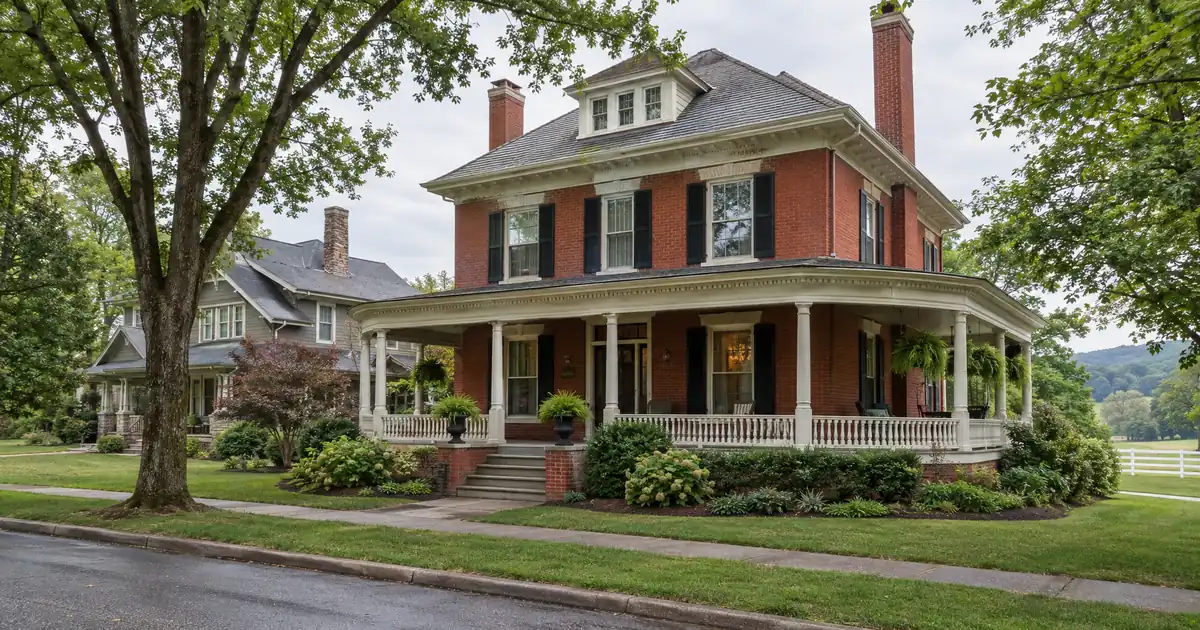
The usual objection to a cash-out refinance in Ashland is that the houses cost too little to refinance. Zillow puts the average home value at $95,944, and a small balance can fall below what a lender wants to touch. The objection is half right. Coverage is rarely the problem here. Loan size is. This report covers where the equity sits, which property types clear the floor, and what the appraisal has to prove.
For Ashland, Kentucky rental property financing, Lendmire (NMLS# 2371349) helps arrange DSCR loans through lenders operating in 41 markets, including Washington, D.C.
DSCR Cash-Out Calculator
Run the cash-out numbers in Ashland, KY
Rate source: Freddie Mac 30-yr average via FRED® — Federal Reserve Bank of St. Louis · effective Sep 24, 2026
Prefilled with starting assumptions — enter your property’s value, balance, taxes, and insurance for a more accurate picture.
Program parameters update from Lendmire’s centralized guideline source. Taxes and insurance are editable estimates.
As of Sep 24, 2026 · General Freddie Mac market benchmark, not a Lendmire loan offer. Property value, balance, taxes, and insurance are editable estimates. Maximum loan-to-value varies by lender, program, property type, and seasoning. Not a Loan Estimate, approval, or commitment to lend. Program availability and eligibility are subject to lender guidelines, credit approval, property review, and underwriting.
The Quick Read:
A cash-out refinance on an Ashland, Kentucky rental is underwritten primarily on the property’s rental income measured against its full monthly obligation, so the file has to show seasoned ownership, adequate coverage, reserves, and a loan balance large enough to fit the lender’s program.
- Ashland’s average home value is $95,944, so small balances are the binding constraint.
- About 40% of households rent (3,749), per RentCafe.
- Small multifamily clears loan-size floors more easily than a single house.
- UK King’s Daughters employs more than 4,000 people, anchoring workforce demand.
- Cash-out leverage tops out at 75% LTV after roughly six months of ownership. These specifics are subject to lender guidelines and a full review of property, leverage, and credit.
Ashland Market Snapshot
A quick read on the Ashland investor landscape — figures come from the cited sources below. Confirm current property-level numbers before underwriting.
| Metric | Detail |
|---|---|
| Recent appreciation | +2.2% (Zillow Home Values, Ashland) |
| Population | 21,295 population (Census Reporter, Ashland KY) |
| Employment | 4,000+ employees (UK King’s Daughters) |
Why Small Balances Are the Real Problem
Ashland’s rent-to-value ratio is generous, but a generous ratio on a small house produces a small loan. Homes.com reports a price-to-rent ratio of 9.5, which implies gross rent near 10.5% of value. That is directional only, since the listing sample is tiny. Sample listings on Zillow run from a 3-bed/2-bath at $49,900 in 41102 to a 2-bed at $84,900 in 41101.
Take a house like that. Coverage would clear 1.00 by a wide margin, even after taxes and insurance are counted. But 75% of a five-figure value is a five-figure loan, and cash-out proceeds after payoff of any existing lien may be close to nothing. Some lenders set loan floors in the low six figures. Others in the network take smaller balances, though options narrow and terms can differ. Standard programs run up to $3,000,000, so the ceiling is never the issue in Ashland. The floor is.
Not ideal. Not fatal either.
The fix is arithmetic. Combine units in one building, or refinance several properties under a single entity where the program permits it. That is analytical inference, not a sourced Ashland statistic, but it is how comparable low-price markets usually get sized.
What the Rent Data Says (and Where It Disagrees)
Ashland rent figures depend heavily on who publishes them. RentCafe puts average rent at $976, up 4.18% over the past year. Zillow’s rental page shows an average of $1,167 within a range of $850 to $1,500, and it rates the market “COOL,” meaning renter demand is growing more slowly than the national average. Apartments.com showed $673 as of December 2024. That spread is close to 2x from bottom to top.
The cause is sampling. RentCafe covers only buildings with 50 or more units, which is not what a small Ashland investor holds. Zillow’s three-bedroom average is $1,375, and a single Homes.com house sample shows $1,475. Those are the numbers closest to workforce single-family product, and both come from thin samples.
The sensible read is to underwrite at the low end. Lenders typically order their own rent schedule anyway, and a portal average carries no weight in that review. The 40% renter share is the steadier signal: 3,749 renter households against 5,607 owner-occupied, per Census-based tenure figures on RentCafe. That pool is deep enough for a small portfolio and not much more.
Stacking Units: The Triplex Case
Small multifamily is the best fit for a cash-out in Ashland, because rents add while the coverage math barely changes. Homes.com lists six multifamily properties priced from $99,900 to $699,000, including a fully occupied South Ashland triplex with three 2-bed/1-bath units. A separate downtown listing shows a renovated three-unit building with two 1-bedrooms at $650 each and a 2-bedroom at $1,000, about $2,300 a month gross. Those rents are seller-reported, so they need a lease and rent roll behind them. A Boyd County duplex listed on Redfin previously rented at $1,100 per side, though that listing is not labeled as Ashland proper.
Run the numbers on a modeled case. Assume a three-unit building appraises at $190,000 (the Homes.com twelve-month median sale price, used here as an assumption, not a verified comp) and rents total $2,300. At 75% LTV, with coverage measured against full PITIA including taxes and insurance, the ratio lands around 1.9x. The inputs are assumptions. The point is the shape: a small building with modest rents can clear 1.00 with room to spare, and the balance is large enough to fit more lenders’ programs. Most DSCR programs are built around a 1.00x benchmark, though lender guidelines, credit, and reserves decide the outcome. Terms vary by lender guidelines, property type, leverage, credit profile, and full file review.
Working DSCR brokers see a recurring pattern in low-price Appalachian and river-corridor markets: the coverage number is rarely what stalls a file. The stall comes from the appraisal, where thin comparable sales pull the value below the seller’s or owner’s expectation, or from a balance that lands under a lender’s floor. Files that pencil on a portal estimate but not on a lender-ordered appraisal are common. Pre-checking loan size against the network before ordering anything saves an owner the appraisal fee.
Seasoning, Leverage, and the Appraisal Problem
For an owner who already holds the asset, three variables set the check: ownership seasoning, the 75% LTV ceiling, and the appraised value. Cash-out programs typically look for about six months of ownership measured from title recording, though some files with recent renovations get reviewed differently. Cash-out LTV is capped at 75%, lower than the purchase cap. Pricing and available terms vary by lender, borrower profile, property type, and full underwriting review. All of this is guidance, subject to lender guidelines. Available equity is never a guaranteed figure.
Value is where Ashland gets awkward. Zillow’s average value of $95,944 rose 2.2% over the past year. Homes.com’s multifamily median sale price is $190,000, up 12%, and multifamily listings average 74 days on market before selling. Those figures cannot both be right for the same product. Sample size and property mix explain much of it. Appraisers will have few comps in any case.
So appreciation will not do the work here. Equity comes from a low basis, from renovation, and from the lender’s rent-based value support. An owner who bought a tired triplex below market and rehabbed it has real equity. An owner waiting on 2.2% annual drift does not. (Anyone counting on a portal estimate to size proceeds is guessing.) Worth reading the DSCR fundamentals before pricing a file, and Lendmire’s DSCR cash-out refinance page covers the structure in more depth. Owners weighing a rate-and-term move instead can review the investment property refinance options.
Proceeds only matter if they have somewhere to go. In a market where a small building can cost about $100,000 to enter, one cash-out can plausibly fund the down payment on the next unit. That is a repeatable loop at small scale, and it stops at the reserve requirement. Lenders want about six months of PITIA held behind each file, so a portfolio that recycles every dollar of proceeds runs into the reserve line quickly. Exact terms depend on the lender’s guidelines, property type, leverage, and a full review of the borrower’s file.
DSCR vs. conventional financing
Two common ways to finance an investment property in Ashland, KY. They qualify you differently — here’s how investors weigh them.
Why investors choose it
- Qualifies on the property’s rental income — no personal tax returns, W-2s, or pay stubs needed to document income.
- No personal debt-to-income ceiling to clear, so existing mortgages and obligations don’t cap your borrowing the same way.
- Can be closed in an LLC, keeping the property inside a business entity.
- Built for scaling — not held to the limit on number of financed properties that conventional financing applies.
- Underwriting centers on the deal: generally qualifies when the rent covers the payment, a 1.00x coverage ratio being a common baseline (confirmed in underwriting).
- Designed specifically for investment property, including long-term and, where the program allows, short-term rentals.
Where it’s strong
- Often the lowest ongoing financing cost for a buyer who fully qualifies on personal income — a fit for a first property or a cost-first purchase.
Trade-offs for investors
- Requires full personal income documentation and must fit within a debt-to-income limit — salary, existing debts, and other mortgages all count.
- Typically held in your personal name rather than a business entity.
- Caps how many financed properties you can carry, which can become a ceiling as a portfolio grows.
- Evaluates you as a borrower as much as the property, which usually means more paperwork.
How investors usually choose: a first or single property often optimizes for the lowest financing cost; portfolio builders often optimize for leverage, vesting in an LLC, and scaling past conventional caps. The right answer depends on your goals, the property, and current guidelines — both paths run through select lenders in Lendmire’s wholesale network, with eligibility and terms confirmed in underwriting.
The Demand Anchors (and What They Do Not Guarantee)
Ashland is a cash-flow market, not a growth market. Census Bureau QuickFacts shows a population of 21,295 across 10.7 square miles. The 2020 census counted 21,625, and a later estimate of 20,966 implies a 3.0% slip, per Wikipedia’s Ashland entry. Flat to slightly declining. Rental demand rests on jobs, not migration.
The anchor is healthcare. UK King’s Daughters is University of Kentucky-owned, reported at more than 4,000 employees, with a market area of 400,000 people across 12 counties and a referral radius of about 150 miles. Sources put its licensed beds between 455 and 465. Industry sits beside it: the Marathon Petroleum Catlettsburg refinery has 300,000 barrels of capacity and 800 employees, per Business View Magazine. Steel and carbon plants in Boyd County add to the base, including Cleveland-Cliffs and Calgon Carbon’s Big Sandy Plant, though no headcounts were verified for either. No verified ranked employer list exists for the city.
Ashland Community and Technical College supplies trades and nursing renters, with enrollment reported between roughly 2,500 and 3,500 depending on the aggregator. Concentration risk is the honest downside: a hospital and a few plants carry most of the tenant base.
Where the Deals Sit
No reliable current source gives neighborhood-level rents or prices for Ashland, so these are qualitative reads.
Downtown and the District. A four-block walkable core of restaurants, venues, and the Paramount Arts Center, per Impact Realtor’s neighborhood guide. The renovated three-unit listing sits here. Small buildings near the core are the closest match to the stacking thesis.
The historic Lexington and Bath Avenue corridor near Central Park. Older large houses. Conversion into multiple units is possible but unverified, and any conversion would need local permitting review before it enters a coverage number. Treat it as an idea, not a comp.
The medical district. The King’s Daughters campus sits along Lexington Avenue, and demand for healthcare-worker rentals radiates outward. Referral traffic from the wider tri-state area may add traveling clinicians, but no rent data supports that yet.
South Ashland. Named as an activity area in the same guide, and the location of the occupied triplex above. Thin data, real product.
Manufactured homes, log homes, and barndominiums fall outside these DSCR programs. Some low-priced rural-edge listings in the region are exactly that type.
Frequently Asked Questions
How do you qualify for a DSCR cash-out refinance in Ashland, Kentucky?
The file is reviewed on the property’s rent against its full PITIA, with a 1.00 minimum on most programs. Expect a credit floor of 620, about six months of reserves, and roughly six months of ownership. Leverage caps at 75% LTV. Lender guidelines and property review decide the outcome.
What are the requirements for an investment property loan in Ashland, Kentucky?
Eligible property types are single-family, small multifamily, and similar rentals. Manufactured homes, log homes, and barndominiums are excluded. Entity ownership is possible for LLC-titled properties, subject to lender program eligibility. The larger local hurdle is balance size, since many Ashland houses sit well below $150,000.
Can a $50,000 Ashland house support a cash-out refinance?
Rarely in a useful way. Coverage may clear easily, but 75% of a five-figure value leaves a very small loan, and select lenders in the network are the only route for balances that low. A duplex or triplex is the better vehicle.
Which Ashland rent figure should an investor underwrite?
The low end. Portal averages run from $673 to $1,167, and the samples are thin. A lender-ordered rent schedule governs the file, so a rent roll and leases matter more than any published average.
What down-payment ranges may DSCR lenders review for Ashland investment-property purchases?
Purchase files commonly review down payments in the 20% to 25% range, subject to lender guidelines. Lendmire arranges DSCR investor loans and a rent-based review is the core program feature. Call 828-256-2183 or compare DSCR options.
Where the Underpricing Sits
The asymmetric opportunity in Ashland is small multifamily near downtown and South Ashland. Entry prices start near $100,000, per-unit rents run about $650 to $1,100 in the listings, and the product is thin, so few buyers compete for it. Single houses at $50,000 to $95,000 get the attention, but they are the hardest to refinance. Buildings of two to four units get overlooked and score better on loan size, coverage, and the program-to-program comparison against conventional limits. Investors can review Lendmire’s Kentucky DSCR loan programs for statewide context. Verify current local rental rules, taxes, and insurance with qualified local professionals.
Get Started
Ready to find the right loan for you?
In about 30 seconds you can review financing options available for your investment property. No commitment required.
Informational only. Not a Loan Estimate, approval, or commitment to lend. Program availability and eligibility are subject to lender guidelines, credit approval, property review, and underwriting.
About Lendmire
Lendmire, NMLS# 2371349, is a DSCR and non-QM mortgage brokerage with investor loan programs in 41 markets, including Washington, D.C. Lenders commonly review DSCR eligibility around property-level rent rather than personal income documentation, subject to lender guidelines. The brokerage helps arrange financing for LLC-owned portfolios beyond conventional financed-property limits. Scotsman Guide recognized Lendmire as a Top Mortgage Workplace: a top-ranked workplace in 2025 and a 2026 Scotsman Guide Top Workplace.
This article is part of Lendmire’s investment property cash-out refinance program — full qualification details, guidelines, and scenarios live on the program page.
Related reading: Cash Out Refinance Investment Property in Ashland Ohio · DSCR Cash Out Refinance Ashland Ohio · DSCR Cash Out Refinance Jeffersontown Kentucky
Guides: Investment Property Cash-Out Refinance in Ashland, KY · Investment Property Cash-Out Refinance in Kentucky
Brandon Miller
Founder & CEO, Mortgage Loan Originator, Lendmire LLC
- Mortgage Loan Originator · NMLS# 1129696 · Verify on NMLS Consumer Access
- North Carolina Real Estate Broker · License# 343312 · Verify on NCREC
- North Carolina Insurance Producer · License# 19053198 · Property, Casualty, Life, Health · Verify on NAIC SBS
- Lendmire LLC · Firm NMLS# 2371349 · Verify firm licensure
Disclosures. The information presented in this article is general market commentary, not financial, legal, or tax advice. Lendmire is a mortgage brokerage (NMLS# 2371349) — not a direct lender or depository institution — and loan placement is subject to lender underwriting. Nothing in this content represents a commitment to lend. Loan terms, pricing, and program availability vary based on borrower qualifications, property characteristics, and state of subject property, and are subject to change at any time. Lendmire complies with Equal Housing Opportunity requirements. Consumer access: nmlsconsumeraccess.org.