
The Quick Read: Yes, and the two property types change the deal in different ways. A duplex lowers how much of the home’s value you can borrow against. A condo adds a second test: the building has to be eligible, not just you and your unit. On a conventional loan, the cash-out cap is 80% of value for a one-unit primary home and 75% for a two- to four-unit primary home.
What Stays the Same on Any Cash-Out Refinance
A cash-out refinance replaces your current mortgage with a bigger one and hands you the difference. That part never changes with property type. The lender still orders an appraisal, checks your credit and income, and counts every lien against a cap on the home’s value.
Cash-out refinance estimate
The starting figures are an example value with a balance and a cash request in proportion. Replace them with yours.
Editable benchmark: 7.32% as of October 22, 2026 · Freddie Mac 30-year average via FRED®. A conventional market reference, not a cash-out refinance quote.
Illustrative starting assumptions: a $350,000 home value, a $193,000 current balance, the agency cap on a one-unit principal residence, a thirty-year term at the current Freddie Mac benchmark, and property taxes and insurance estimated at typical national rates. Every field is editable.
Illustrative estimate only — not a Loan Estimate, approval, quote, or commitment to lend. The rate field carries the weekly Freddie Mac thirty-year conventional benchmark, a market reference and not a cash-out refinance quote; a cash-out loan is priced by the lender at lock. The cash available is the loan the program cap allows less the balances paid off, before closing costs, which are not included. The HELOC line is the program’s combined loan-to-value ceiling applied to the same value and balance. Taxes and insurance are editable estimates. Licensed in sixteen states for consumer mortgages.
The same seasoning rules apply too. Seasoning is the waiting period a lender wants before you can refinance. Across the wholesale programs placed through Lendmire, the first mortgage being paid off generally needs to be at least 12 months old, and you generally need to have been on title for 6 months. Exceptions exist for delayed financing, inheritance and legal awards.
A condo or duplex changes the ceiling and the paperwork. It does not change the basic idea. Here is how each one bends the rules, starting with the one that costs you the most cash.
How a Duplex Changes the Math
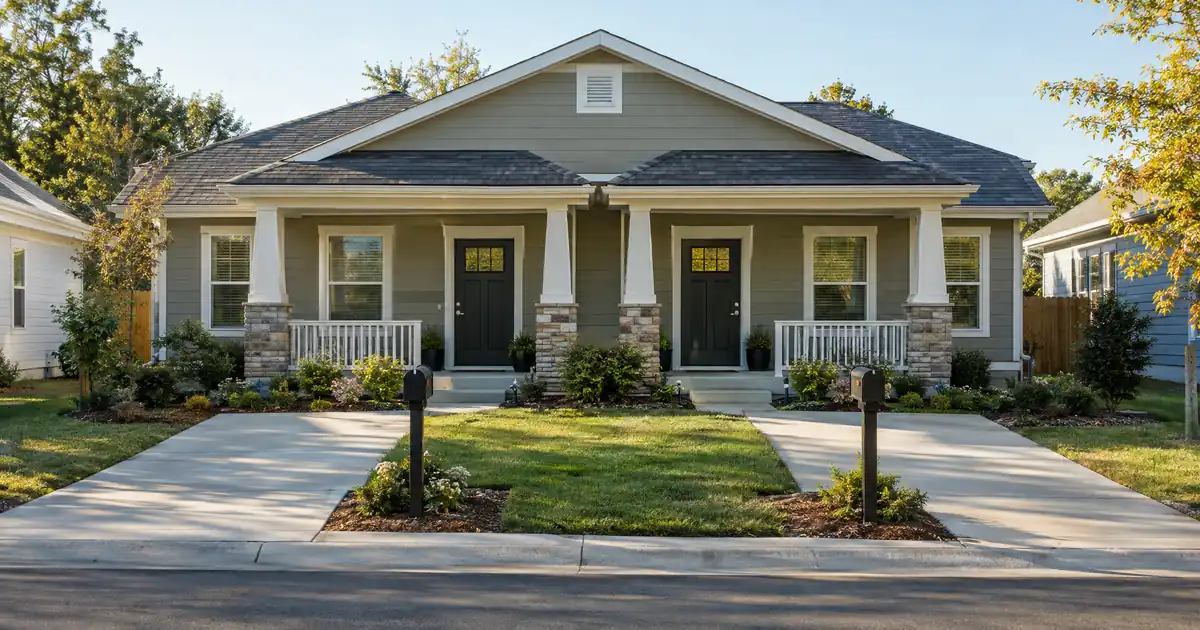
A duplex cuts the amount of value you can borrow against. On a conventional cash-out, the Fannie Mae Eligibility Matrix sets the cap at 80% for a one-unit principal residence and 75% for a two- to four-unit principal residence. It applies that cap to your loan-to-value ratio (LTV), combined LTV and home-equity combined LTV at once. LTV is simply the loan balance divided by the appraised value.
Say you live in one half of a duplex and a similar single-family house sits next door. Both appraise the same. The duplex owner can borrow against a smaller share of that value, so more equity stays locked in the building. Five points sounds small. On a large balance it is a real difference in cash released.
Living there matters. If you do not live in the building, you are in a different lane with different caps. A second home or a rental is not this article’s subject. In short: occupancy decides the leverage, and a two- to four-unit property that is not your primary residence lands at the lower cap.
Rental income from the other unit
The other unit can help you qualify. Freddie Mac says rental income from the other units can be added to qualifying income when the lender calculates housing expense and debt-to-income ratios. Debt-to-income is your monthly debts divided by your monthly income. Rent from the second unit raises the income side of that fraction, so the ratio can come out lower.
The lender will want proof, such as a lease or rent records, and the appraisal’s rent support. Most files run through automated underwriting first, and the automated finding governs. Across the wholesale programs placed through Lendmire, conventional files start at a 620 decision score, with a total ratio ceiling of 50% on most automated files. Those figures are subject to lender guidelines and full file review.
Appraisal on a duplex
A single-family appraisal compares your house to nearby sales. A two- to four-unit appraisal usually adds an income-property form that supports what the units rent for. The appraised value still sets your ceiling. Expect the appraiser to look at both units, not just yours.
How a Condo Changes the Process
A condo is a unit inside a project, so the lender reviews the project as well as your unit. A strong borrower in a weak building can still stall. The reasons include the building’s insurance, its finances and its review status.
Conventional condo loans follow a ladder. Under Fannie Mae’s Waiver of Project Review rule, some projects skip the full review. Detached condo units qualify. So do Fannie Mae-owned loans refinanced as limited cash-outs at 80% LTV or less. Exact terms depend on the lender’s guidelines, property type, leverage, and a full review of the borrower’s file.
Here is the catch. A true cash-out refinance does not fall under that Fannie-to-Fannie limited cash-out waiver. It generally needs a full project review or another waiver category. Waived does not mean unchecked, either. The project cannot show as “Unavailable” in Fannie Mae’s Condo Project Manager tool, and it cannot be a condo hotel, houseboat project or timeshare.
Fannie Mae also retired its Limited Review option for loan applications dated on or after August 3, 2026, according to its condo FAQ. Established projects now need a Full Review or a waiver. Treat that as unconfirmed until your lender checks Fannie Mae’s current letter.
What “eligible building” means in plain words
Lenders call a building that passes review “warrantable.” A non-warrantable building fails some test, such as weak finances, a pending lawsuit or too many units owned by one investor. That leaves portfolio-style options, which are narrower.
Your HOA drives much of this. The lender will ask for HOA documents, and monthly dues count in your housing expense when the lender checks your ratios. Higher dues leave less room under the ratio ceiling.
Condos and the government programs
FHA insures loans on units in FHA-approved projects, or in projects that meet Single-Unit Approval, per HUD. HUD Handbook 4000.1 sets the project standards: insurance, financial condition, title, pending legal action and physical condition. Single-Unit Approval is a path for units in buildings that are not FHA-approved. VA has no equivalent. For a VA loan, the whole project generally needs VA acceptance.
Side by Side: House, Condo, Duplex
| Factor | One-unit house | Condo | Duplex (live-in) |
|---|---|---|---|
| Conventional cash-out cap | 80% LTV | 80% LTV (one unit) | 75% LTV |
| What gets reviewed | You, the home | You, the unit, the building | You, both units |
| Extra paperwork | Standard | HOA and project documents | Rent support, income-property appraisal |
| Income treatment | Your income | Your income, dues in expense | Other unit’s rent can count |
| Common stall point | Appraisal value | Building eligibility | Lower cap, rent documentation |
A duplex that is organized as a condo gets both sets of rules. You face the 75% cap and the building review together.
A Quick Scenario in Percentages
Picture three owners whose homes each appraise at the same value, each with the same existing loan, each with solid credit. The house owner can reach 80% of value. The condo owner can reach 80% too, if the building passes. The duplex owner stops at 75%.
Now give the condo building a pending lawsuit. The condo owner’s cap does not matter until the building clears, and that can take the conventional route off the table. Options then include waiting for the issue to resolve, trying a different loan type, or looking at a non-agency path. Your broker can tell you which is realistic before you pay for an appraisal.
Edge Cases Worth Knowing
A rented condo. Occupancy decides the cap. If you do not live in the unit, it is not a principal residence, and the leverage drops.
Five or more units. Properties of five or more units move to commercial-style financing. That is outside these programs.
HomeReady. Fannie Mae’s product matrix indicates that two- to four-unit principal residences in that program cannot include condos or co-ops. Check the current matrix before planning around it.
Critical repairs. Fannie Mae’s FAQ notes that even Fannie-to-Fannie limited cash-outs get checked for critical repairs and evacuation orders in larger projects. A building with serious deferred repairs can stall a file.
Limited versus full cash-out. A limited cash-out, which is the rate-and-term lane, allows much higher leverage. Across the wholesale programs placed through Lendmire, a rate-and-term refinance on a one-unit primary home goes to 95% LTV, with mortgage insurance above 80%. On a two- to four-unit home, a limited cash-out also allows more leverage than a true cash-out, but the exact cap depends on the unit count and the lender, so ask for it by name. If you do not truly need cash, that gap is worth a conversation. Every figure here varies by lender and program, and guidelines, property type, leverage, and credit profile all apply.
Cash-Out Versus Streamline: Do Not Confuse Them
FHA Streamline and VA IRRRL are rate-reduction products for existing government loans. They give no cash back. VA says an IRRRL needs no appraisal or credit underwriting package. If you want cash from a VA-backed home, you need a VA cash-out, and VA states that you must be able to live in the home being refinanced. A VA cash-out can also refinance a non-VA loan into a VA-backed one. For project rules specific to condos, see Lendmire’s piece VA Cash-Out Refinance Requirements for a Condo Project.
What the Lender Looks For
Across the wholesale programs placed through Lendmire, the decision comes down to the same short list:
- Appraised value, and the total of all liens against it
- Credit score and income, with a 620 starting score on conventional files
- Occupancy, meaning you live there
- Seasoning on the loan being paid off and on your time on title
- For a condo, whether the building passes review
- For a duplex, how the other unit’s rent is documented
One wholesale lane reaches 89.99% LTV with no mortgage insurance at a 680 score and a 50% ratio. It applies to a thirty-year fixed, a primary residence and a conforming balance, and it carries its own six months of seasoning. Because it is a one-unit primary-residence lane, do not count on it for a duplex. In Texas, a homestead cash-out is capped by the state constitution at the agency figure, and that wholesale lane is not written there. Final terms depend on lender guidelines, property type, leverage, and the borrower’s complete credit picture.
Mistakes That Cost Borrowers Cash
Many borrowers assume they can borrow up to the cap in cash. They cannot. The cap is a ceiling on the new loan. Your payoff, closing costs and any liens come out of it first.
Others assume a clean unit guarantees a clean loan. In a condo it does not. Check the building early.
A third mistake is using the cash without a plan. Paying off other debts is a common reason people cash out. Swapping other debt for mortgage debt can raise foreclosure risk, since your home now secures it.
Which Path Fits You
| If you own | And you want | Likely path |
|---|---|---|
| Live-in house | Cash out | Conventional, 80% cap |
| Condo you live in | Cash out | Conventional if building passes; FHA or VA otherwise |
| Live-in duplex | Cash out | Conventional, 75% cap |
| Home with existing FHA or VA loan | Lower payment only | Streamline or IRRRL |
| Condo with a weak building | Cash out | Wait, switch program, or non-agency path |
If you need cash and your building is a question mark, the conventional reserves question matters too. Lendmire covers how that works in its guide, Conventional Cash-Out Refinance Reserves When You Live in a Duplex. For program details, review Lendmire’s cash-out refinance programs.
Key Terms Defined
LTV (loan-to-value): Your loan balance divided by the home’s appraised value.
CLTV: Combined LTV, which adds second loans and home-equity lines to the first mortgage.
Seasoning: The waiting period before you can refinance a loan or after you take title.
Limited cash-out: A refinance that pays off your loan and costs, with only incidental cash back. It is the rate-and-term lane.
HOA: The homeowners association that runs a condo building and collects dues.
What to Prepare
For any property: recent pay records, tax and insurance details, and your current mortgage statement. For a condo, add the HOA contact, dues amount and any special assessment notices. For a duplex, add lease agreements or rent records for the other unit.
Frequently Asked Questions
Can I cash-out refinance a condo I live in?
Yes, if the building is eligible. The lender reviews the project along with your unit. Conventional loans use the one-unit cap of 80% LTV, and FHA and VA each require their own project acceptance. Program figures are subject to lender guidelines and full file review.
Does a duplex count as one property or two?
One property. You own a single building, and the lender sizes the loan against its total appraised value. The other unit’s rent can help you qualify, but the 75% cap applies to the whole building. Reserve requirements may be higher for multi-unit homes.
Can I borrow the full cap in cash?
No. The cap limits the new loan, not your cash. Your existing payoff and costs come out first, and underwriting can lower the amount further.
What if my condo building fails review?
You can wait for the problem to resolve, try FHA through Single-Unit Approval, or discuss non-agency options with your broker.
Is a streamline refinance a way to pull cash out?
No. FHA Streamline and VA IRRRL lower the cost of an existing government loan and give no cash back. They are the contrast case to a cash-out.
If you are weighing a cash-out refinance against keeping the loan you have, Lendmire can help you compare the programs and the equity each one reaches. Nothing here is a commitment to lend.
For your own numbers, request a scenario review with Lendmire.
For current guidelines and terms, see Lendmire’s refinance programs page.
About Lendmire
Lendmire (NMLS# 2371349) is a mortgage brokerage serving homeowners and home buyers in 16 states. FHA, VA, conventional and jumbo purchase and refinance loans are arranged through wholesale lending channels; Lendmire brokers the financing and the lender underwrites each application. Scotsman Guide named Lendmire a Top Mortgage Workplace in both 2025 and 2026.
Get Started
Ready to find the right loan for you?
In about two minutes you can review financing options available for your home or investment property. No commitment required.
Informational only. Not a Loan Estimate, approval, or commitment to lend. Program availability and eligibility are subject to lender guidelines, credit approval, property review, and underwriting.
References
1. Fannie Mae Eligibility Matrix
2. Freddie Mac, Mortgages for 2- to 4-unit Properties
3. Fannie Mae Selling Guide B4-2.1-02, Waiver of Project Review
6. Fannie Mae HomeReady Product Matrix
8. VA, Cash-out refinance loan
This article is part of Lendmire’s cash-out refinance program — full qualification details, guidelines, and scenarios live on the program page.
Related reading: Does a Cash-Out Refinance Have a DTI Requirement? · Cash-Out Refinance vs HELOC When You Need the Most Cash · Can You Do a Cash-Out Refinance in Texas on a Primary Home?
Brandon Miller
Founder & CEO, Mortgage Loan Originator, Lendmire LLC
- Mortgage Loan Originator · NMLS# 1129696 · Verify on NMLS Consumer Access
- North Carolina Real Estate Broker · License# 343312 · Verify on NCREC
- North Carolina Insurance Producer · License# 19053198 · Property, Casualty, Life, Health · Verify on NAIC SBS
- Lendmire LLC · Firm NMLS# 2371349 · Verify firm licensure
Legal disclosures. Lendmire (NMLS# 2371349) is a state-licensed mortgage brokerage that arranges financing through wholesale lender relationships. Lendmire is not a direct lender, depository institution, or registered financial advisor. The discussion above is general informational content about real estate financing — it is not financial, legal, or tax advice, and readers should consult licensed professionals for guidance on their individual circumstances. Loan inquiries are subject to lender underwriting; this article does not represent a commitment to lend. Loan terms, rates, and qualification standards vary by borrower, property, and state, and are subject to change at any time. Equal Housing Opportunity. NMLS Consumer Access: nmlsconsumeraccess.org.