
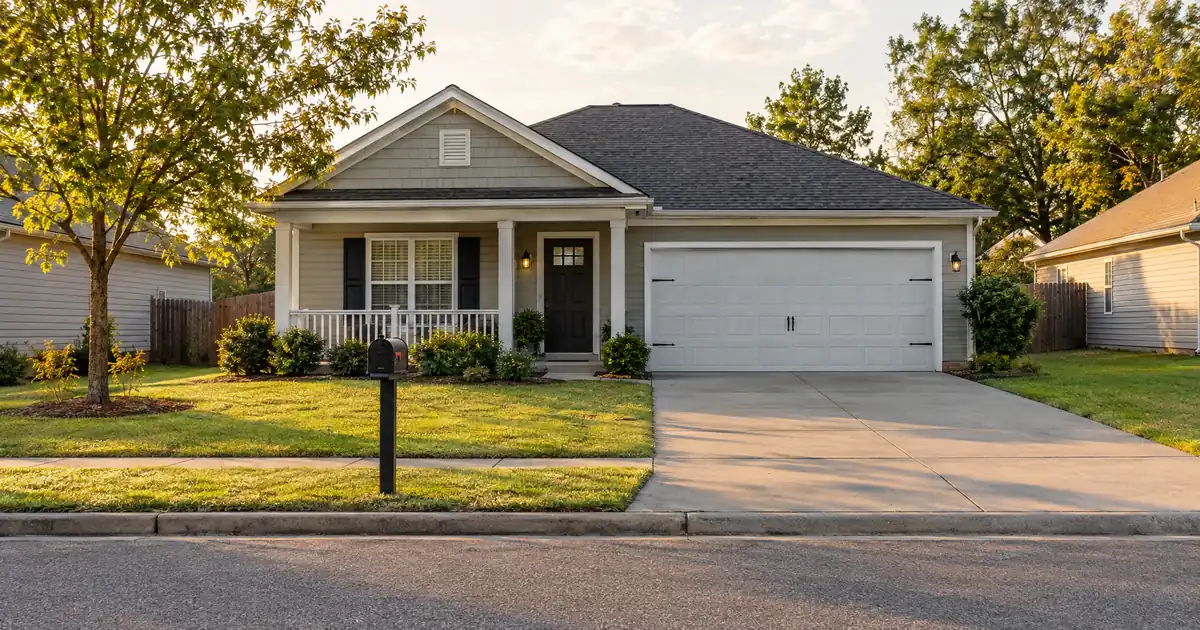
The Quick Read: If you financed your purchase, you usually cannot take cash out right away. Two separate clocks apply: how long you have held title, and how old your current mortgage is. Even after both clocks run, a recent buyer often lacks enough equity to pull anything out. A small-cash-back refinance, or simply waiting, is the more common path.
What Does “Cash-Out” Mean for a Recent Buyer?
A cash-out refinance replaces your mortgage with a larger one and pays you the difference. A refinance done on a rate-and-term basis, also called a limited cash-out refinance, only swaps the old loan for a new one. It may pay closing costs and a purchase-money second lien, with only incidental cash back to you.
That difference matters right after closing. A rate-and-term refinance on a principal residence can reach 95% loan-to-value (LTV) in the programs Lendmire works with. LTV is the loan balance divided by the home’s appraised value. First-time-buyer programs can reach 97% where the existing loan is reviewed. A conventional cash-out refinance on the same home tops out at 80% LTV. Every figure here varies by lender and program — guidelines, property type, leverage, and credit profile all apply.
Here is the catch. A new buyer with a small down payment sits near 95% or 97% LTV on day one. The cash-out ceiling is 15 to 17 points lower. No cash is available until the loan shrinks or the home gains value. Final terms depend on lender guidelines, property type, leverage, and the borrower’s complete credit picture.
Lendmire’s cash-out refinance programs are built around those ceilings.
Which Clock Are You Actually On?
Conventional cash-out refinances run two tests at once. Most online confusion comes from pages mixing them up.
| Clock | What it measures | Conventional rule |
|---|---|---|
| Title clock | Time since you took title | 6 months on title |
| Existing-loan clock | Age of the mortgage being paid off | At least 12 months, note date to note date |
| Lender overlay | The lender’s own extra wait | Varies by lender |
| Occupancy clock | Time living in the home (FHA) | Set by FHA; confirm with your loan officer |
The note date is the date you signed the loan paperwork. The 12-month test counts from your old note date to the new one. It does not restart because you apply with a different lender.
For a financed purchase, the 12-month loan clock is almost always the one that binds. You will have passed six months on title long before your mortgage turns twelve months old. Many online pages say “six months” and others say “twelve.” Both are right. They describe different tests.
Agency rules are minimums. A lender can add its own wait on top. That is the one case where a different lender can help. It sidesteps a lender-imposed wait, but it cannot erase an agency rule.
If You Bought With a Mortgage
You have three practical options.
Wait out the clock. After 12 months on the first mortgage, a conventional cash-out refinance is possible. Whether any cash exists depends on equity, not time alone.
Do a rate-and-term refinance now. Across the wholesale programs these files go to, this is the route open to a recent buyer. It can change your term or payment structure. It can also roll in closing costs. It does not hand you meaningful cash. Cash back above a small cap turns the loan into a cash-out refinance. The cap changed in the agency’s Selling Guide announcement SEL-2025-08, so ask your loan officer for the current figure.
Use a different tool. A home equity line or home equity loan sits on top of your first mortgage. It does not replace it. Some lenders set their own wait after purchase for those too.
Government loans follow their own clocks. FHA cash-out has an occupancy-based wait, so an FHA buyer who just closed is generally not eligible. The FHA Streamline and the VA IRRRL are streamlines for existing government loans. They lower cost or change terms and do not pay you cash. VA seasoning for a refinance of a VA loan is the later of 210 days after the first payment due date or six payments made, per VA Circular 26-20-25. VA cash-out is a separate product with a full appraisal and full underwriting.
Does the Equity Exist Yet? A Worked Example
Percentages tell the story better than dollars. These inputs are modeled assumptions, not market data.
- You buy with 5% down. Your loan is 95% of the price.
- The home gains 10% in value. Your loan balance has barely moved.
- The new value is 110% of the old price. An 80% cash-out ceiling is 88% of the old price.
- Your balance is still near 95% of the old price. You are above the ceiling, so no cash is available. These specifics are subject to lender guidelines and a full review of property, leverage, and credit.
Now change one input. Put 20% down and see the home gain 15%. Terms depend on the lender’s guidelines, the property type, the leverage, and a full review of the credit profile.
- Your loan starts near 80% of the old price.
- The home is now worth 115% of the old price. The 80% ceiling is 92%.
- That leaves some room between your loan and the ceiling, before closing costs.
- Costs come out of that cushion, so the net is smaller.
The lesson: a recent buyer needs a large down payment, real appreciation, or both. Otherwise the clock expires and the check is still zero. The appraisal, not the purchase price, sets the value used in the test.
If the home has two to four units, the ceiling drops to 75%. Second homes and investment properties also use 75%. Occupancy decides the leverage, so be clear with your loan officer about how you use the home.
If You Bought With Cash: Delayed Financing
A buyer who paid cash gets a named exception. Under the agency’s cash-out rules, delayed financing waives the six-month title wait for a purchase made in the prior six months. It does not make the loan a rate-and-term refinance. It stays a cash-out loan, and the agency’s own delayed financing checklist says cash-out pricing applies.
The conditions, in plain terms:
- The original purchase was a normal, arm’s-length sale.
- The new loan is capped at your documented investment plus financed closing costs, prepaids and points.
- The cash-out LTV limits still apply to the current appraised value.
- You document where the purchase money came from.
The cap is the point. Delayed financing lets a cash buyer recover what they put in. It does not let anyone borrow beyond that. It also does not help someone who financed the purchase with a mortgage. Keep your settlement statement, proof of funds, deed, and title evidence. You will need them.
An entity can matter here. The agency’s checklist lets a buyer who purchased through a revocable trust, a land trust, or an LLC or partnership wholly owned by individuals qualify under the exception, subject to the lender’s program guidelines.
Where the Rule Bends
The six-month title wait has named exceptions. Inheritance and legal awards, such as a divorce or separation settlement, carry no title waiting period. Delayed financing is the third. The FHA inheritance exception generally fails if you rented the home after inheriting it.
Texas is its own case. A cash-out on a Texas homestead is capped by the state constitution at the agency figure. The wholesale lane that goes higher is not written there.
One wholesale lane is worth knowing about. On a thirty-year fixed loan on a primary residence with a conforming balance, it can reach 89.99% LTV with no mortgage insurance. That takes a 680 score and a 50% ratio ceiling. It carries its own six months of seasoning. Seasoning is the waiting period between buying a home and refinancing it. This lane is subject to lender guidelines and full file review.
What Underwriting Looks At
After the clocks and the equity check, underwriting treats a cash-out file like any other loan.
1. Classification. The lender decides whether the loan is limited cash-out or true cash-out.
2. Clocks. Months on title, existing-loan age, and any recent late payments.
3. Listing status. The home cannot be on the market when the loan closes.
4. Appraisal. It sets the value used for the LTV test.
5. Credit and income. Conventional wholesale programs start at a 620 decision score. The automated finding governs most files, with a total debt ratio ceiling of 50%. Manually underwritten loans use 36% or 45%.
6. Reserves. Reserves are cash left after closing. Cash-out files with higher debt ratios may need them.
7. Credit events. Agency waits apply after a bankruptcy, foreclosure or short sale. They run four years from a chapter 7 discharge, seven from a foreclosure, and four from a short sale or deed-in-lieu. Documented extenuating circumstances can shorten them.
Mortgage insurance applies above 80% LTV. You can ask to cancel it at 80% of the original value, given good payment history and no decline in value. The servicer must end it automatically at 78%. Published typical annual premiums run from 0.58% to 1.86% of the balance. That is a range, not a quote. The exact numbers vary by lender and program and follow a full review of property, leverage, and credit.
What It Costs and When Acting Early Does Not Pay
A cash-out refinance is a new loan. CFPB notes that you often pay closing costs and that the interest rate and terms change. Its guide on using home equity adds that a bigger loan may raise your payment and stretch out your payoff. Run both numbers before you commit.
Three costs of moving early deserve a hard look:
- Paying closing costs twice. You already paid them when you bought.
- A term reset. A new thirty-year loan restarts your clock, even if you were five years in.
- A heavier balance. More debt against a home you barely own is thinner protection if prices dip.
Be careful with “no-cost” claims too. Lendmire’s explainer Who Offers A No Cost Cash Out Refinance? covers the mechanics. The costs are folded into the rate or the balance. They do not vanish.
Debt consolidation deserves a pause. A CFPB study found that turning credit card debt into mortgage debt can put the home at risk if payments become unsustainable. Missing a card payment is unlikely to cost you the house. Missing a mortgage payment can.
Which Option Fits Which Situation?
| Situation | Best-fit option | Trade-off |
|---|---|---|
| Financed purchase, under 12 months | Rate-and-term now, or wait | Little or no cash |
| Financed purchase, past 12 months, strong equity | Cash-out refinance | New loan, new costs |
| Paid cash within six months | Delayed financing | Loan capped near your investment |
| Existing FHA or VA loan | Streamline, if the goal is a better structure | No cash back |
| Want cash and want to keep your first mortgage | Home equity loan or line | Second payment on top |
Mistakes to Avoid After Closing
- Opening new credit. A new card or car loan can change your ratios before you apply.
- Tossing purchase paperwork. Delayed financing needs the settlement statement and proof of funds.
- Assuming a refinance leaves seasoning untouched. A new loan starts its own clock.
- Confusing “refinance” with “cash-out.” A small cash back can flip the label and the pricing.
- Skipping the title record. Confirm your deed is recorded. The title clock starts there.
Tax treatment can depend on your situation; borrowers should speak with a qualified tax professional before relying on any deduction or credit.
Key Terms Defined
Seasoning: The waiting period a lender or agency requires between two events, such as buying a home and refinancing it.
Delayed financing: An exception that lets a cash buyer take out a cash-out loan before the usual title wait ends.
LTV (loan-to-value): Your loan balance divided by the home’s appraised value.
Rate-and-term refinance: A refinance that replaces your loan and allows only incidental cash back.
Note date: The date you signed the mortgage note, which starts the existing-loan clock.
Mortgage insurance: Coverage the borrower pays for when the loan is above 80% LTV. It protects the lender. Final terms depend on the lender’s guidelines, the property type, and the borrower’s complete credit picture.
Frequently Asked Questions
Can I do a cash-out refinance right after closing?
Not on a financed purchase, in most cases. Conventional rules require six months on title and a first mortgage at least 12 months old. A rate-and-term refinance with only incidental cash back is the nearest option.
Does switching lenders help?
It can sidestep a lender’s own extra wait. It does not shorten an agency rule. The 12-month test counts from your old note date to the new one, whoever holds the loan.
Does a cash buyer have to wait?
Not for the six-month title wait, if delayed financing applies. The loan stays a cash-out loan with cash-out pricing. It is capped near your documented investment, and the LTV limits still apply.
Does buying through an LLC or trust change the clock?
It can count. Delayed financing allows certain trust and wholly individually owned LLC buyers, subject to lender program guidelines. Time in a revocable trust can count toward the six months if you are the primary beneficiary.
How much cash will I actually get?
Often less than expected, and sometimes none. Take 80% of the appraised value for a one-unit home, subtract your payoff and closing costs, and that is the ceiling. A new buyer with a small down payment usually starts above that line.
Next Step
If you are weighing a cash-out refinance against keeping the loan you have, Lendmire can help you compare the programs and the equity each one reaches. Every figure here is subject to lender guidelines and full file review. Nothing here is a commitment to lend.
For your own numbers, request a scenario review with Lendmire.
About Lendmire
As a mortgage broker (NMLS# 2371349), Lendmire helps homeowners and home buyers in 16 states with FHA, VA, conventional and jumbo purchase and refinance loans arranged through wholesale lenders. Lendmire is never the lender; program terms are set by the lender and the agency guidelines. Scotsman Guide named Lendmire a Top Mortgage Workplace in both 2025 and 2026.
Get Started
Ready to find the right loan for you?
In about 30 seconds you can review financing options available for your home or investment property. No commitment required.
Informational only. Not a Loan Estimate, approval, or commitment to lend. Program availability and eligibility are subject to lender guidelines, credit approval, property review, and underwriting.
References
1. Fannie Mae Selling Guide Announcement SEL-2025-08
2. VA Circular 26-20-25, Loan Seasoning
3. Fannie Mae Selling Guide B2-1.3-03, Cash-Out Refinance Transactions
4. CFPB, What other types of loans are similar to a HELOC?
5. CFPB: CFPB Cash Out Refinances and Paydown Behavior of Non Mortgage Debt Balances
This article is part of Lendmire’s Refinance series — every loan program’s qualification details, guidelines, and scenarios live on the loan options page.
Related reading: How to Buy Out a Spouse With a Cash-Out Refinance on One Income · Cash-Out Refinance and Stay vs Sell on a Texas Homestead · Should You Use a Cash-Out Refinance Before Your ARM Resets?
Brandon Miller
Founder & CEO, Mortgage Loan Originator, Lendmire LLC
- Mortgage Loan Originator · NMLS# 1129696 · Verify on NMLS Consumer Access
- North Carolina Real Estate Broker · License# 343312 · Verify on NCREC
- North Carolina Insurance Producer · License# 19053198 · Property, Casualty, Life, Health · Verify on NAIC SBS
- Lendmire LLC · Firm NMLS# 2371349 · Verify firm licensure
Legal disclosures. Lendmire (NMLS# 2371349) is a state-licensed mortgage brokerage that arranges financing through wholesale lender relationships. Lendmire is not a direct lender, depository institution, or registered financial advisor. The discussion above is general informational content about real estate financing — it is not financial, legal, or tax advice, and readers should consult licensed professionals for guidance on their individual circumstances. Loan inquiries are subject to lender underwriting; this article does not represent a commitment to lend. Loan terms, rates, and qualification standards vary by borrower, property, and state, and are subject to change at any time. Equal Housing Opportunity. NMLS Consumer Access: nmlsconsumeraccess.org.