
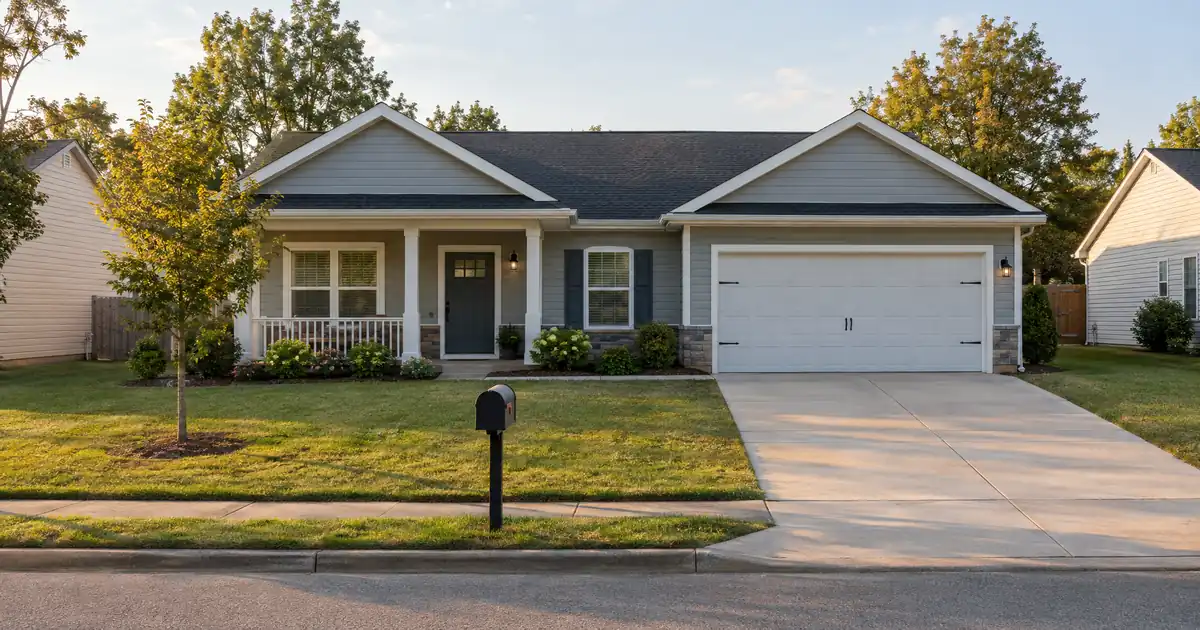
The Quick Read: Yes, in many cases. VA rules allow a cash-out refinance up to 100% of the home’s appraised value, and the financed funding fee has to fit inside that 100%. Whether a given veteran actually gets there depends on the appraisal, the net tangible benefit test, credit and residual income, and the wholesale lender’s own guidelines. Full value is VA’s ceiling, not a promise.
What Does “Full Home Value” Actually Mean?
It means 100% of the value VA’s appraiser assigns, not the number a neighbor’s listing or an online estimate suggests. Federal regulation caps the new loan at 100 percent of the home’s reasonable value, per 38 CFR 36.4306 on eCFR.
Two details trip people up.
First, the appraisal sets the ceiling. A low appraisal shrinks the loan amount and the cash available, even if the homeowner expected more.
Second, the funding fee sits inside the 100%. VA Circular 26-19-05 says VA will not guarantee a refinance when the loan-to-value ratio exceeds 100 percent, and that ratio counts the financed fee. Any fee amount that would push the loan over the line has to be paid in cash at closing.
How Does the VA Cash-Out Work in Practice?
Across the wholesale programs Lendmire places VA files with, the structure is consistent: a veteran refinances the current mortgage into a new VA-backed loan and can take equity out as cash. The VA cash-out refinance program reaches 100% of the appraised value, including the financed fee, and it can refinance any loan type into a VA loan. The existing mortgage does not have to be VA-backed. A conventional or FHA borrower can move into VA this way.
The usual path looks like this:
1. Certificate of Eligibility (COE). VA’s COE decides eligibility. A lender can pull it, or the veteran can request it through VA.
2. Full underwriting. Unlike a streamline, a cash-out needs a full appraisal, credit review and income documentation.
3. Appraisal. It sets the reasonable value and therefore the maximum loan.
4. Net tangible benefit check. The new loan has to leave the borrower better off in a way VA recognizes (more on that below).
5. Payoff and proceeds. The new loan pays off the old one, any allowed costs and the financed fee come out, and what remains is the cash to the borrower.
VA’s own cash-out loan page adds that the veteran must live in the home being refinanced. Occupancy is a primary-residence test.
What Stops a Veteran From Getting 100%?
Several things can, and most have nothing to do with VA’s ceiling.
- A low appraisal. The loan is measured against appraised value, so the number the appraiser lands on controls everything.
- Payoff plus fee plus costs. If the existing balance, the financed funding fee and costs together approach the value, there is little or no cash left. Some veterans get a “cash-out” loan that nets close to nothing and still makes sense because of the loan structure.
- Credit and residual income. Residual income is the controlling test on VA loans. The 41% debt-to-income figure is a guideline, not a cap, but a higher ratio needs residual income well above the table. The wholesale programs Lendmire works with start at a 580 decision score, and VA itself sets no minimum.
- Lender limits. Some lenders cap VA cash-out below 100% as their own policy. That is a lender or investor overlay, not a VA rule. Many veterans assume VA caps cash-out at 90%. VA’s regulation says 100%.
- State law. Some states impose their own limits on cash-out lending against a homestead, so state rules can be tighter than VA’s.
Here’s the catch: the programs differ more by lender than by VA. Two veterans with identical files can get different maximums depending on where the loan is placed. That is exactly the case for comparing options before applying.
The Net Tangible Benefit Test
A VA cash-out has to pass a net tangible benefit test, and the lender must give the borrower the results. The eCFR text lists qualifying benefits, including:
- eliminating monthly mortgage insurance
- a shorter loan term
- a lower interest rate
- a lower payment
- higher monthly residual income
Moving from a conventional or FHA loan into VA can remove monthly mortgage insurance, which is often the cleanest way to meet the test. A veteran refinancing an existing VA loan faces the strictest standards, because the benefit has to be real and measurable.
One more rule applies to VA-to-VA refinances: seasoning. On the wholesale programs Lendmire works with, that means the later of 210 days from the first payment and the sixth payment. Refinancing a non-VA loan into VA does not face the same VA-to-VA seasoning rule.
Funding Fee: How It Works Inside the 100%
The VA funding fee on a cash-out refinance is 2.15% for first use and 3.3% for subsequent use. It is waived for veterans receiving compensation for a service-connected disability and for the other exempt groups. For comparison, the streamline (IRRRL) fee is 0.5%.
The fee can be financed, but only inside the ceiling. In plain terms:
- If the home appraises well above the payoff, there is room to finance the fee and still take cash.
- If the loan is already at the ceiling, adding the fee would breach it, and the overage is paid at closing.
- If the veteran is exempt, the fee disappears and more of the 100% is available as cash.
VA News explains the funding fee schedule and who is exempt. Checking exemption status early is one of the most useful steps a veteran can take, since it changes the math more than almost any other single factor.
A Quick Comparison: VA Cash-Out vs. Other Equity Options
| Factor | VA cash-out | Conventional cash-out | Home equity loan or HELOC |
|---|---|---|---|
| Reach into equity | Up to 100% of value | Lower share of value | Lower combined share |
| Mortgage insurance | None | Depends on equity left | None, but second lien |
| Replaces first mortgage | Yes | Yes | No, adds a lien |
| Funding fee | Yes, unless exempt | No | No |
| Eligibility | VA COE required | Standard credit rules | Standard credit rules |
The right choice usually turns on what the veteran is keeping. If the current first mortgage is one worth holding on to, a second lien may fit better than refinancing at all. If the first mortgage is the problem, such as one with mortgage insurance or a term that no longer fits, a VA cash-out may do more.
Should You Borrow the Full Amount?
Being allowed to doesn’t mean you should. Borrowing at 100% leaves zero equity cushion. If values dip, the homeowner can end up owing more than the home is worth, which makes a later sale or another refinance harder.
A few questions worth answering honestly:
- What is the cash for? Home repairs that add value are different from paying off a car loan. Rolling unsecured debt into a mortgage can lower the monthly burden, but it ties that debt to the home and stretches repayment over a long term.
- How long will you stay? Closing costs and the funding fee take time to earn back. A veteran who expects to sell soon may not recoup them.
- Do you plan another VA purchase? A cash-out uses entitlement. A veteran who wants to buy another home with VA financing should talk with a loan officer about remaining entitlement before refinancing.
- Is the number you need smaller than the number you can borrow? Often it is. Taking only what you need preserves equity.
Picture a veteran with a conventional loan carrying monthly mortgage insurance, in a home that has appreciated. A VA cash-out may remove the insurance, pay off the old loan and put cash toward a roof replacement. That case usually passes the benefit test cleanly. Now picture a veteran refinancing a VA loan they have held for a year, mainly to pull cash for a vacation. That file has a harder benefit test, the same fee, and no equity left afterward. Same program, very different decision.
Watch for Offers That Sound Too Good
VA and the CFPB have jointly warned about unsolicited refinance offers promising extremely low payments, thousands in cash back, skipped payments and no out-of-pocket costs. The CFPB has also taken federal enforcement action against a lender for misleading cash-out cost comparisons that set a principal-and-interest-only “new” payment against an old payment that included taxes and insurance. Read the Loan Estimate line by line, and compare like with like. The CFPB and VA warning is worth a read before any mailer or call gets a response.
Key Terms Defined
Reasonable value: The home’s value as determined through the VA appraisal, which sets the ceiling for the new loan.
Net tangible benefit: A measurable improvement for the borrower, such as dropping mortgage insurance or shortening the term, that VA requires a cash-out to deliver.
Funding fee: A VA charge on most loans that can be financed into the balance and is waived for exempt veterans.
Seasoning: The waiting period after an existing VA loan begins before it can be refinanced into a new cash-out.
Entitlement: The amount of VA’s guaranty available to a veteran, which affects future VA loan use.
Residual income: The money left each month after major obligations, which is the controlling VA underwriting test.
Before You Apply: A Short Checklist
- Get your COE and confirm whether you are exempt from the funding fee.
- Confirm the home is your primary residence.
- Pull your current loan payoff and note any mortgage insurance.
- Decide the cash you need, not just the cash you could get.
- Ask each lender whether it caps VA cash-out below 100%.
- Compare the Loan Estimates side by side.
For more on how full-value cash-outs work with limited entitlement, see Lendmire’s piece Can a Veteran With Reduced Entitlement Do a VA Cash-Out at Full Value?. Tax treatment can depend on your situation; borrowers should speak with a qualified tax professional before relying on any deduction or credit.
If you are weighing a cash-out refinance against keeping the loan you have, Lendmire can help you compare the programs and the equity each one reaches. All program figures are subject to lender guidelines and full file review, and nothing here is a commitment to lend.
Frequently Asked Questions
Does VA cap cash-out refinances at 90% of home value?
No. VA’s regulation allows up to 100% of reasonable value. A 90% limit is a policy some lenders and investors set on their own. If one lender stops at 90%, another may reach further, so it pays to ask.
Can I roll the funding fee into the loan if I borrow 100%?
Only as far as the 100% ceiling allows. The financed fee counts toward the loan-to-value ratio. If adding it would exceed the appraised value, the overage must be paid in cash at closing. Exempt veterans skip the fee entirely.
Does the existing loan have to be a VA loan?
No. A VA cash-out can refinance any loan type, including conventional and FHA, into a VA-backed loan. Seasoning applies to VA-to-VA refinances, so a non-VA borrower generally avoids that waiting period.
What if the appraisal comes in low?
The loan shrinks with it, since the 100% is measured against appraised value. The cash available falls too, and in some cases the refinance stops making sense. Ask the lender what options exist for the appraisal before paying for a second one.
Can I use a VA cash-out on a home I don’t live in?
Not through this program. VA requires that you live in the home you are refinancing, so it is a primary-residence loan.
For your own numbers, request a scenario review with Lendmire.
About Lendmire
Lendmire — NMLS# 2371349 — is a mortgage broker that arranges FHA, VA, conventional and jumbo home purchase and refinance financing in 16 states through wholesale lenders. Every option is subject to the lender’s guidelines and full underwriting. Scotsman Guide named Lendmire a Top Mortgage Workplace in both 2025 and 2026.
Get Started
Ready to find the right loan for you?
In about 30 seconds you can review financing options available for your home or investment property. No commitment required.
Informational only. Not a Loan Estimate, approval, or commitment to lend. Program availability and eligibility are subject to lender guidelines, credit approval, property review, and underwriting.
References
3. VA.gov, Cash-out refinance loan
4. VA News, Funding fee: who pays, who is exempt
5. CFPB and VA warning on refinance offers
This article is part of Lendmire’s VA Loans series — every loan program’s qualification details, guidelines, and scenarios live on the loan options page.
Related reading: Should a Veteran Take the Maximum on a VA Cash-Out? · Can a Veteran With Reduced Entitlement Do a VA Cash-Out at Full Value? · Can a Veteran Use a VA Cash-Out to Fund the Next Home After a PCS?
Brandon Miller
Founder & CEO, Mortgage Loan Originator, Lendmire LLC
- Mortgage Loan Originator · NMLS# 1129696 · Verify on NMLS Consumer Access
- North Carolina Real Estate Broker · License# 343312 · Verify on NCREC
- North Carolina Insurance Producer · License# 19053198 · Property, Casualty, Life, Health · Verify on NAIC SBS
- Lendmire LLC · Firm NMLS# 2371349 · Verify firm licensure
Legal disclosures. Lendmire (NMLS# 2371349) is a state-licensed mortgage brokerage that arranges financing through wholesale lender relationships. Lendmire is not a direct lender, depository institution, or registered financial advisor. The discussion above is general informational content about real estate financing — it is not financial, legal, or tax advice, and readers should consult licensed professionals for guidance on their individual circumstances. Loan inquiries are subject to lender underwriting; this article does not represent a commitment to lend. Loan terms, rates, and qualification standards vary by borrower, property, and state, and are subject to change at any time. Equal Housing Opportunity. NMLS Consumer Access: nmlsconsumeraccess.org.