
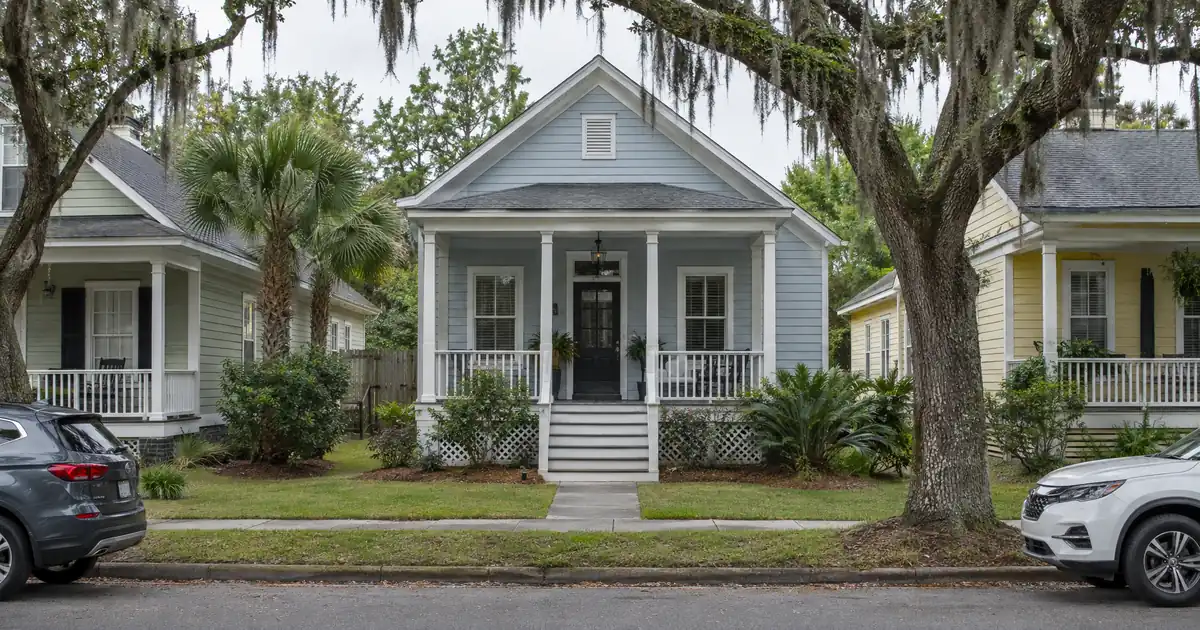
Redfin puts the Johns Island median sale price at $660K, up 7.3% year over year. That’s real equity for anyone who bought a few years back. But Johns Island rents haven’t kept pace with prices, so the 75% LTV ceiling is rarely the binding constraint here. Rental coverage is. Owners who understand that before applying will pull cash on better terms than owners who find out from an appraisal. Exact terms depend on the lender’s guidelines, property type, leverage, and a full review of the borrower’s file.
Lendmire, a DSCR-focused mortgage broker, sees this pattern often in high-basis suburban markets. This piece looks at how a cash-out refinance pencils on Johns Island, which submarkets hold up, and what could change the picture over the next 6-24 months.
DSCR Cash-Out Calculator
Run the cash-out numbers in Johns Island, SC
Rate source: Freddie Mac 30-yr average via FRED® — Federal Reserve Bank of St. Louis · effective Sep 24, 2026
Prefilled with starting assumptions — enter your property’s value, balance, taxes, and insurance for a more accurate picture.
Program parameters update from Lendmire’s centralized guideline source. Taxes and insurance are editable estimates.
As of Sep 24, 2026 · General Freddie Mac market benchmark, not a Lendmire loan offer. Property value, balance, taxes, and insurance are editable estimates. Maximum loan-to-value varies by lender, program, property type, and seasoning. Not a Loan Estimate, approval, or commitment to lend. Program availability and eligibility are subject to lender guidelines, credit approval, property review, and underwriting.
The Quick Read: A cash-out refinance on a Johns Island rental is underwritten primarily on the property’s rental income measured against its full monthly obligation, so coverage decides how much equity you can pull, not appreciation alone.
- Redfin’s $660K median sale price is up 7.3% year over year.
- Modeled coverage on a median-priced single-family rental lands below 1.00x at 75% LTV.
- Redfin’s most recent Johns Island snapshot showed zero multi-family units for sale.
- Maybank Highway townhomes and newer apartments supply the strongest sourced rent points.
- Homes sat 77 days on market versus 69 a year earlier. Every figure here varies by lender and program — guidelines, property type, leverage, and credit profile all apply.
Johns Island Market Snapshot
A quick read on the Johns Island investor landscape — figures come from the cited sources below. Confirm current property-level numbers before underwriting.
| Metric | Detail |
|---|---|
| Home prices | 235 sales (Redfin, Johns Island housing) |
| Recent appreciation | +7.3% yoy (Redfin, Johns Island housing) |
| Employment | Google 900+ employees (CRDA, Job & Career Opportunities) |
| Vacancy | 3–4% (LocatingCHS rental analysis) |
Coverage Sets the Ceiling, Not LTV
Program guidelines cap cash-out refinances at 75% LTV, with about six months of ownership (measured from title recording) and a 1.00 minimum DSCR, meaning rent used for lender review against full PITIA. All of it is subject to lender guidelines, credit, reserves, and property review. On Johns Island, the third piece is what bites.
Local rent claims are anecdotal. A LocatingCHS rental analysis cites roughly $2,800-$3,200 for a three-bedroom single-family rental, and a Palmetto State Properties page puts median rents at $3,200-$3,300, leaning toward waterfront and premium product. Against a $660K median, gross monthly rent-to-value works out to about 0.4-0.5%. That’s a derived figure, not a published statistic.
Run the numbers on a modeled example. Assume a $660K home, a 75% LTV refinance, and $3,000-$3,200 in monthly rent. Including taxes and insurance at South Carolina averages, the cash-flow ratio lands roughly in the 0.75-0.85 range. These are modeled assumptions, not market data. Drop the assumed value to $500K with the same rent, and the number sits right around 1.0x. Final terms depend on lender guidelines, property type, leverage, and the borrower’s complete credit picture.
Here’s the catch. Coverage below 1.00 isn’t automatically a dead end, but the paths are narrower. A lender may review a sub-1.00 program, an interest-only structure, or a lower LTV that shrinks the debt against the same rent. Each typically costs something: more reserves, stronger credit, or less cash out. Qualification stays subject to lender guidelines and property review.
So the sensible sequence is to test coverage first and treat 75% as a ceiling you may never reach. For an owner-occupant-turned-landlord with strong traditional employment income and one property, conventional vs DSCR on investor loans is worth a real comparison. If the personal income supports it, conventional can beat a sub-1.00 DSCR structure. If you hold properties in an LLC (subject to lender program eligibility) or are self-employed, the property-income basis becomes the cleaner route.
Where the Numbers Hold Up (and Where They Don’t)
The strongest sourced rent points sit along Maybank Highway. Zillow listings show asking rents at The Sanderling from $2,590 for two-bedrooms and $2,850 for three-bedrooms, and Hamlet Maybank two-bedrooms from $2,604. Apartments at Shade Tree ask from $1,509 for one-bedrooms and $1,872 for two-bedrooms. These are point-in-time asking rents, not market medians. They do show what newer product commands and set a ceiling that older or smaller units will trade below.
For owners of townhomes and smaller-lot homes near that corridor, coverage has the best shot at clearing. Basis matters more than anything, and a lower-basis townhome with a lower balance can reach the benchmark where a premium single-family can’t.
Owners in The Villages in St. John’s Woods face middle-of-the-road math. Southern Bell Living cites active listings from $645K to $959K and calls the community attainable. Attainable for a buyer isn’t the same as cash-flowing for a landlord. At the upper end, coverage gets stretched.
The north end, toward the Limehouse Bridge, SC-700, and the West Ashley edge, offers the shortest commute to the peninsula, with drive times of 20-40 minutes. Sub-$700K workforce single-family homes there are the likeliest cash-out candidates, though pricing by neighborhood isn’t sourced here.
Skip the Kiawah River Estates tier. Luxury waterfront can exceed $3M, and rental coverage at those prices is a poor fit for any DSCR file.
Duplexes Are Mostly a Mirage
Multi-unit stacking is the classic answer to thin single-family coverage, and this island doesn’t offer much of it. Redfin’s neighborhood page showed zero multi-family units for sale in the prior month against 29 condos and 25 townhomes. A LocatingCHS investor analysis says multi-family is less common on Johns Island than elsewhere and points to townhomes as the more affordable entry point.
That has a practical consequence for cash-out. If you already own a duplex here, appraisal comps will be sparse, and appraisers may reach further for support. If you own a townhome, you have comps but also competition. A Post and Courier report describes a South Island Market project with 79 luxury townhomes from Toll Brothers, with completion expected around late 2026 or early 2027. New units compete with older investor stock for tenants.
Working DSCR brokers see a recurring pattern in high-basis suburban markets like this one: the equity looks generous on paper, but the file clears or fails on the rent line. The stronger files usually pair a documented lease at or near market with a conservative valuation. The weaker ones assume appreciation will bridge a coverage gap. Getting a lease in place before applying tends to matter more than shaving a point off the value estimate.
The Demand Story
Johns Island isn’t a job center. Census Reporter shows 22,013 residents in the island CCD, with median household income of $118,103 against $88,494 for Charleston County. Tenants earn their living elsewhere in the metro, and the Charleston Regional Development Alliance lists Joint Base Charleston at nearly 25,000 jobs, MUSC at about 17,000, and Boeing South Carolina at more than 9,000. Roper St. Francis Healthcare adds nearly 7,000 teammates.
That’s commute-based support, not on-island demand. It’s steady, but it’s exposed to traffic. Access runs over two bridges, and PIRG reports the I-526 extension across the island was cancelled. A realtor blog puts the final cost estimate above $2.3B. No bypass means persistent congestion, which arguably favors existing rental stock near Maybank Highway. It could also weigh on demand at the far south end.
Apartment supply is a separate risk. A Palmetto State Properties outlook calls the metro apartment correction a multifamily supply story rather than a single-family signal, and names Johns Island among suburbs likely to see stronger single-family rent appreciation. That’s a manager’s forecast, not measured absorption. Reasonable people can disagree, and underwriting shouldn’t depend on it.
What Could Break the Pattern in the Next 6-24 Months
Four indicators are worth tracking.
- Days on market. Redfin shows 77 days versus 69 a year earlier, while Movoto shows 51 versus 50 with 490 active listings. Flat-to-slower liquidity means today’s value may not be tomorrow’s.
- Rent direction. An earlier Apartments.com snapshot showed rents down 3.6% year over year, and the site’s newer average is $1,862. Sources differ by date and methodology.
- New-build appraisals. With a heavy pipeline, comps skew toward new construction, which can lift or distort value depending on your product.
- Price sources. Movoto’s $729,999 median and Redfin’s $660K reflect different geography and methods. Using the lower one for conservative modeling costs nothing.
This one’s a genuine toss-up. Appreciation of 7.3% helps the refinance, but flat liquidity and rent softness could erode the coverage side. The safer approach is to underwrite on today’s rents and value, not on continued appreciation. Investors should also verify local rental rules, taxes, insurance, and flood-zone status with qualified local professionals, since Southern Bell Living cites Redfin flood-risk data covering about 52% of island properties.
What Does the Cash Actually Do?
The refinance thesis depends on the redeployment. Pulling equity to buy another rental where coverage clears easily is a defensible use. Pulling equity to prop up a thinly covered island property, or to chase deals elsewhere that don’t pencil either, is a decision to stress-test before committing.
On the mechanics, typical guidelines run about six months of seasoning, credit tiers starting at a 620 floor, and reserves around six months of PITIA (about nine months above $1,500,000). Loan amounts run up to $3,000,000 on standard programs, and the actual proceeds depend on rent used for lender review, reserves, and the 75% ceiling. Nothing here is a commitment to lend. Owners comparing structures can read the guide “What Is a DSCR Loan”, review pulling equity with a DSCR cash-out, or see Lendmire’s refi programs. Statewide context lives on the South Carolina DSCR investor loans page, and owners ready to model a file can start your quote or call 828-256-2183.
Frequently Asked Questions
How much equity can I pull from a Johns Island rental?
The 75% LTV cap is the ceiling, but coverage usually binds first at island prices. A modeled median-priced single-family rental sits below 1.00x including taxes and insurance at that leverage. Lower LTV, a sub-1.00 program, or an interest-only structure may be reviewed, subject to lender guidelines.
DSCR vs. conventional financing
Two common ways to finance an investment property in Johns Island, SC. They qualify you differently — here’s how investors weigh them.
Why investors choose it
- Qualifies on the property’s rental income — no personal tax returns, W-2s, or pay stubs needed to document income.
- No personal debt-to-income ceiling to clear, so existing mortgages and obligations don’t cap your borrowing the same way.
- Can be closed in an LLC, keeping the property inside a business entity.
- Built for scaling — not held to the limit on number of financed properties that conventional financing applies.
- Underwriting centers on the deal: generally qualifies when the rent covers the payment, a 1.00x coverage ratio being a common baseline (confirmed in underwriting).
- Designed specifically for investment property, including long-term and, where the program allows, short-term rentals.
Where it’s strong
- Often the lowest ongoing financing cost for a buyer who fully qualifies on personal income — a fit for a first property or a cost-first purchase.
Trade-offs for investors
- Requires full personal income documentation and must fit within a debt-to-income limit — salary, existing debts, and other mortgages all count.
- Typically held in your personal name rather than a business entity.
- Caps how many financed properties you can carry, which can become a ceiling as a portfolio grows.
- Evaluates you as a borrower as much as the property, which usually means more paperwork.
How investors usually choose: a first or single property often optimizes for the lowest financing cost; portfolio builders often optimize for leverage, vesting in an LLC, and scaling past conventional caps. The right answer depends on your goals, the property, and current guidelines — both paths run through select lenders in Lendmire’s wholesale network, with eligibility and terms confirmed in underwriting.
Do townhomes near Maybank Highway refinance better than duplexes?
Usually, yes, because comps exist and basis is lower. Redfin’s snapshot showed 29 condos and 25 townhomes for sale against zero multi-family units, so duplex appraisals may rely on wider comps. Townhome owners face new-build competition instead.
Will new-construction comps distort my appraisal?
Yes, they can. The 79-townhome South Island Market project and other new-build pipeline mean appraisers may lean on new-construction sales. Older units may value below them, so underwrite on today’s value rather than on projected appreciation.
How long must I own before a cash-out?
Programs typically look for about six months of ownership, measured from title recording. Anyone who bought recently should confirm the exact seasoning rule for their program before applying.
Do Kiawah River Estates or other luxury waterfront homes work?
They rarely do. Purchase prices at the top of the market sit far above what typical rents can support, which produces very thin coverage. The Maybank corridor and more modestly priced north-end homes are where testing should start.
The Bottom Line for Island Owners
Johns Island equity is real, but rent coverage decides how much of it you can reach. Owners who lock in a lease, model coverage on today’s numbers, and deploy proceeds into deals that clear on their own will come out ahead.
For current guidelines and terms, see Lendmire’s DSCR loan programs page.
About Lendmire
Lendmire is a non-QM mortgage brokerage (NMLS# 2371349) arranging DSCR investor loans in 41 markets, including Washington, D.C. DSCR eligibility is generally reviewed around property-level rental income rather than personal income, subject to lender and program guidelines, which suits self-employed investors and LLC-owned portfolios. Lendmire was recognized as a 2025 Scotsman Guide Top Workplace and as a top-ranked workplace in 2026.
Get Started
Ready to find the right loan for you?
See your offer in seconds. No credit pull, no obligation.
Informational only. Not a Loan Estimate, approval, or commitment to lend. Program availability and eligibility are subject to lender guidelines, credit approval, property review, and underwriting.
References
1. Redfin, Johns Island housing market
2. CRDA, Job & Career Opportunities
3. LocatingCHS
5. Zillow
7. LocatingCHS
8. Post and Courier, South Island Market
9. Charleston Regional Development Alliance, Major Employers
10. Roper St. Francis Healthcare
12. outlook
13. Movoto
14. Apartments.com
15. a 2025 Scotsman Guide Top Workplace
16. Scotsman Guide — Top Workplaces 2026
This article is part of Lendmire’s investment property cash-out refinance program — full qualification details, guidelines, and scenarios live on the program page.
Related reading: DSCR Cash Out Refinance in Seabrook Island, South Carolina: Equity Behind the Gate · Cash Out Refinance Investment Property in Seabrook Island, South Carolina: Villa Equity Math · DSCR Cash Out Refinance in Johns Creek, Georgia: The 2026 DSCR Financing Guide to Medlock Bridge
Guides: Investment Property Cash-Out Refinance in South Carolina
Brandon Miller
Founder & CEO, Mortgage Loan Originator, Lendmire LLC
- Mortgage Loan Originator · NMLS# 1129696 · Verify on NMLS Consumer Access
- North Carolina Real Estate Broker · License# 343312 · Verify on NCREC
- North Carolina Insurance Producer · License# 19053198 · Property, Casualty, Life, Health · Verify on NAIC SBS
- Lendmire LLC · Firm NMLS# 2371349 · Verify firm licensure
Important disclosures. Lendmire (NMLS# 2371349) is a licensed mortgage brokerage. Lendmire is not a direct lender, depository institution, or financial advisor. All loan inquiries are subject to lender underwriting; this article does not constitute a commitment to lend. Rates, terms, and program guidelines are subject to change without notice and vary by borrower profile, property type, and state. Information in this article is general in nature and is not financial, legal, or tax advice. Equal Housing Opportunity. NMLS Consumer Access: nmlsconsumeraccess.org.