
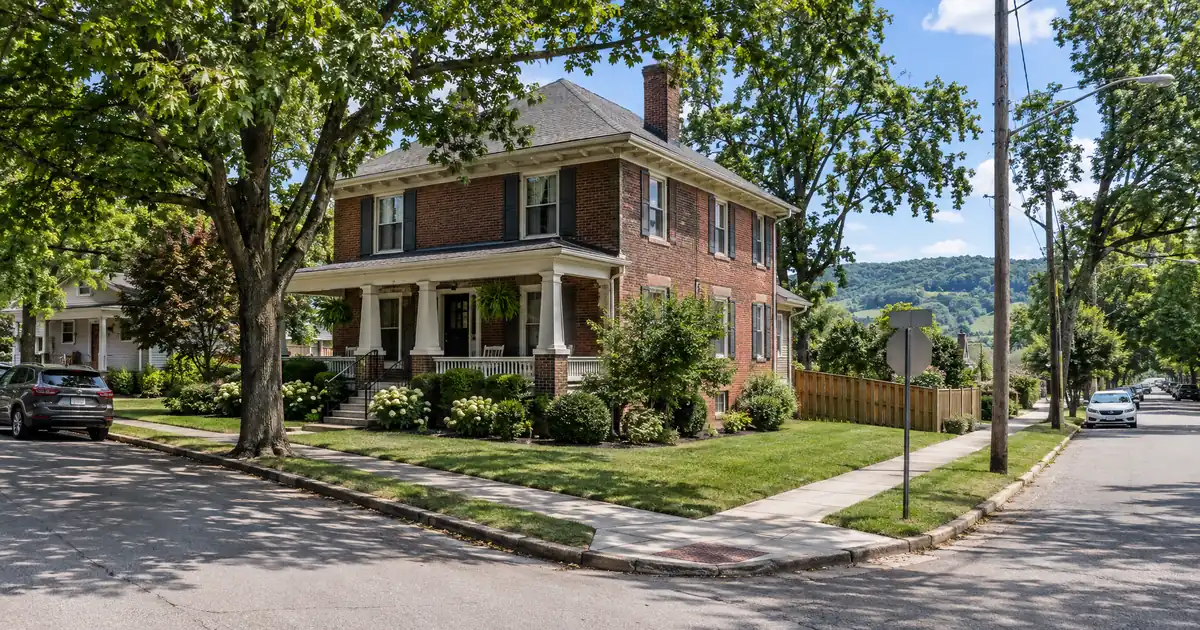
A rental in the older ZIP 42501 core hits the cash-out math like this. An investor owns a three-bedroom house near downtown, held in an LLC and valued at a modeled $225,000. Assume the house rents at $1,600, the three-bedroom average Prop-metrics draws from RentCast. At the 75% LTV ceiling, with taxes and insurance counted, coverage lands around 1.2x. Now swap in the $1,150 median home rent from Homes.com. Same house, same loan, and the ratio drops into the mid-0.8s. Terms vary by lender guidelines, property type, leverage, credit profile, and full file review.
That gap between rent schedules is the real story in Somerset. The cash-out refinance itself is mechanical. The friction is in what the appraiser and the lender decide the rent and the value are.
DSCR Cash-Out Calculator
Run the cash-out numbers in Somerset, KY
Rate source: Freddie Mac 30-yr average via FRED® — Federal Reserve Bank of St. Louis · effective Sep 24, 2026
Prefilled with starting assumptions — enter your property’s value, balance, taxes, and insurance for a more accurate picture.
Program parameters update from Lendmire’s centralized guideline source. Taxes and insurance are editable estimates.
As of Sep 24, 2026 · General Freddie Mac market benchmark, not a Lendmire loan offer. Property value, balance, taxes, and insurance are editable estimates. Maximum loan-to-value varies by lender, program, property type, and seasoning. Not a Loan Estimate, approval, or commitment to lend. Program availability and eligibility are subject to lender guidelines, credit approval, property review, and underwriting.
Somerset, Kentucky investors can have DSCR scenarios reviewed through lender programs that Lendmire helps place across 41 markets, including Washington, D.C. Lendmire (NMLS# 2371349) is a DSCR-focused mortgage broker. It arranges these loans through wholesale channels, and the lenders do the underwriting and approval.
Key Takeaways:
Cash-out refinancing in Somerset, Kentucky fits investors who already hold workforce single-family rentals or small newer multi-unit buildings, because the loan is underwritten primarily on the property’s rental income measured against its full monthly obligation, with the 75% LTV ceiling and appraisal depth setting how much equity is reachable. Exact terms depend on the lender’s guidelines, property type, leverage, and a full review of the borrower’s file.
- Sold-price sources run from $185K to $282K, so appraisal value drives cash-out more than list data.
- Three-bedroom rent near $1,600 clears coverage. The $1,150 median home rent struggles at full leverage.
- Cash-out LTV tops out at 75%, with about 6 months of seasoning from title recording.
- Lake Cumberland Regional Hospital reports 1,300+ team members, anchoring renter demand.
- Only 9 active multifamily listings, per Realmo, mean thin appraisal comps.
Somerset Market Snapshot
A quick read on the Somerset investor landscape — figures come from the cited sources below. Confirm current property-level numbers before underwriting.
| Metric | Detail |
|---|---|
| Typical rents | $1,150 median (Homes.com Rentals) |
| University enrollment | 6,155 total (Data USA, SCC) |
| Employment | 20 jobs (SPEDA, Toyotetsu expansion) |
The Price Data Disagrees
Somerset has no single reliable median, so the value a lender accepts matters more than any portal figure. Resideline tracked 126 closings over twelve months with a median sold price of $223,750. The middle half of sales closed between $161,000 and $270,000. This article uses that $223,750 as the working figure.
The others pull in different directions. Zillow puts the average home value at $201,818, down 2.4% over the past year, with homes going pending in around 41 days. Homes.com reports a higher 12-month median of $282,000, up 6%, and that number likely skews toward lakeside and newer homes. Redfin showed a $185K median in one recent month on only 9 sales, with homes selling about 7% under list. Nine sales is a thin sample. Read it as a signal that the market is small, not as a price.
Appreciation is flat to soft across most of these sources. Only one shows gains. So the equity story here is not “the market carried me.” It is “I bought right, or I fixed it.” Investors who bought older stock below the middle of that $161,000 to $270,000 band, or who put money into a renovation, are the ones with reachable equity. Investors who bought at the top of the band and waited are not.
Smaller mid-century ranch homes start closer to $150,000. Lakeside homes run $700,000 to over $1 million, which is a different asset class and rarely fits long-term rent math.
What 6 Months and 75% Do to the Number
A cash-out refinance on a Somerset rental is capped at 75% LTV, and the owner needs about 6 months of ownership measured from title recording. Those two rules set the ceiling before rent enters the picture. Files that assume either one away get kicked back. Every figure here varies by lender and program — guidelines, property type, leverage, and credit profile all apply.
Seasoning is the quiet one. A house bought last quarter and renovated cannot be cashed out yet, however good the new value looks. The settlement statement and the recorded deed date the clock. If the purchase closed in an LLC, the recording date under that entity is what counts, so the vesting documents need to match the deed.
The 75% cap is a hard stop, and it differs from the purchase-side leverage. Say you own a house in the ZIP 42501 core with a modeled value of $225,000. The lender’s maximum loan is 75% of the appraised value, and whatever payoff and closing costs consume comes out of that. What is left is cash-out. It is not a guaranteed figure. It depends on rent used for lender review, full PITIA, reserves of about 6 months, and the appraisal. The cash-out refinance details page walks through how the proceeds are sized, and the DSCR fundamentals cover how the coverage ratio is built: monthly rent divided by principal, interest, taxes, insurance and any HOA dues.
The standard baseline is 1.00x, subject to lender guidelines. Most files here are built around it because rent covers the obligation at that level. Some lenders review lower-ratio scenarios, but those usually need lower leverage, more reserves or different pricing.
Run the numbers on each rent case, modeled with full taxes and insurance and not principal and interest alone:
- Rent at $1,600: coverage around 1.2x at 75% LTV, which clears the 1.00x baseline with some cushion.
- Rent at $1,340 (the RentCast overall average): coverage right around 1.0, which is borderline.
- Rent at $1,150: coverage in the mid-0.8s, which falls below the baseline.
Final terms depend on lender guidelines, property type, leverage, and the borrower’s complete credit picture.
All three rents are modeled inputs, not a forecast for any specific house. When a file lands below 1.00x, the paths a lender may review include a lower-LTV cash-out, a sub-1.00 program, or an interest-only structure. Each has its own eligibility terms. None is a given, and each is subject to lender guidelines, credit review and the property itself.
Credit matters in tiers. The floor is 620, and the tiers run through 660, 680 and 700. A higher tier can improve leverage and pricing on the file.
Loan size is its own Somerset quirk. Standard programs run up to $3,000,000, but a sub-$200,000 Somerset balance often routes through select lenders in the network. Nothing is wrong with the file. It just goes to a narrower group of lenders.
Where the Equity Sits (and Where It Doesn’t)
The older ZIP 42501 stock probably pencils best, but that is inferred from lower sale prices. No neighborhood-level rent data exists to confirm it. Redfin sales in that ZIP ranged from roughly $130K to $345K, and Homes.com describes a small walkable downtown with rural-feeling streets outside it. Tenants are healthcare, retail and service workers. Small houses near the core, especially three-bedrooms, are the typical cash-out candidate: modest basis, stable demand, rent that clears coverage at 75%.
The eastern side is a different story. The Valley Oak Commerce Complex off KY-461, in the ZIP 42503 area, is anchored by Toyotetsu America. SPEDA says the park has 13 tenants, including a new housing complex with single-family homes and apartments. Demand is manufacturing workers, which is good. But new supply next door can compete with investor rentals. An existing rental owner should check what that complex charges before leaning on rent growth.
The newer subdivisions in ZIP 42503 tell the other side. One recent Redfin sale there, a three-bedroom, two-bath house, closed at $315,000. A higher basis against rent that is not higher means a thinner ratio. Cash-out works on these, but the equity has to come from purchase discount or improvements, since market appreciation will not deliver it.
The lake edge is the last case. Homes priced at $700,000 to over $1 million are not long-term DSCR product. Investors holding one should understand that rent won’t support the value. (Also, log homes, which show up near the lake, fall outside these DSCR programs entirely. So do manufactured homes and barndominiums.)
Does Unit Count Earn the Price Step?
Multifamily in Somerset costs 1.5 to 2.5 times the single-family median, and it does not clearly beat single-family on gross yield. Homes.com shows multifamily asking prices between $299,900 and $599,900. Realmo shows a start of $338,700, an average of $537,320 and a high of $625,000. These are asking prices, not closed comps.
Consider a modeled triplex with three 2-bedroom units at the $1,120 two-bedroom average, which grosses about $3,360 a month. At a modeled $450,000 value and 75% LTV, coverage with taxes and insurance comes out around 1.2x. That is about a 9% gross yield, which is in line with the single-family estimate. The unit count carries the extra price and nothing more. Each building has to be underwritten on its own rent roll. These specifics are subject to lender guidelines and a full review of property, leverage, and credit.
The supply is mostly small and newer. Listings include a fully occupied triplex with three 2-bedroom, 1.5-bath units, plus newly built 3-bedroom duplexes. Newer 2 to 3 unit product carries less deferred-maintenance risk, which means fewer repair conditions in an appraisal. For a long-term hold and a later cash-out, it is the better fit.
Older duplexes are the trap. One Kentucky duplex listing on Homes.com shows one side renting at $525 and the vacant side previously at $700. The listing doesn’t say where in the state it sits, so treat it as unlocated evidence. Still, rents like that, against any realistic value, sit well under 1.00x. The lender works from the market rent schedule. A cheap duplex only becomes a cash-out candidate after the rehab is done and the new rents are in place on signed leases.
Why Tenants Stay
Tenant demand rests on three anchors, which is a diversified base for a city of 11,924 people. Pulaski County had 65,034 people in the 2020 census, and it makes up the Somerset micropolitan area.
Manufacturing. Toyotetsu America is the largest and first Toyotetsu plant in North America. Its expansion, a $15 million project adding 55,000 square feet and 20 jobs, is the 14th since it opened. A plant that keeps expanding supports renewals.
Healthcare. Lake Cumberland Regional Hospital is a 295-bed acute care facility serving an 11-county area. The hospital’s careers page cites over 1,300 team members, and that is the number to use. Another aggregator’s much larger figure conflicts with it. Its residency programs in internal medicine and family medicine add a rotating pool of professional renters who want decent two- and three-bedroom houses near the hospital. That supports renewals. It does not produce rent growth.
Education and retail. Somerset Community College reports 6,155 students across its campuses per Data USA, almost all commuters. There is no dorm-driven rental demand. The city also serves as a shopping hub for surrounding counties, and the Chamber points to houseboat builders, glassware and charcoal producers among local industry.
What this does for a file: the lender gets a defensible tenant-demand story without leaning on appreciation. It is a steady-renter market, not a growth market.
The Appraisal Is the Gate
In a market with this few comps, the appraisal decides the cash-out, not the rent. Homes.com’s multifamily page shows only 4 multifamily listings in its text, and Realmo shows 9. Single-family medians on those pages don’t match each other either. Expect appraisers to lean on single-family or out-of-town comps for a duplex or triplex, and size the refinance on a conservative value, not on purchase price plus rehab.
This is where appraisal reconsideration becomes a routine step, not an emergency. A packet with recent in-neighborhood sales, condition adjustments and signed leases recovers value when comps come in light. Without it, a file planned at full 75% LTV can shrink fast on a low number. Confirm comp depth with the lender before assuming full leverage.
DSCR files in markets like this one typically look like a small-balance house or two-to-three unit building with modest value, rent that clears the baseline only at conservative leverage, and an appraisal that has few nearby sales to lean on. The files that move cleanly tend to have leases, rent evidence and the vesting documents lined up before the appraiser schedules the visit. The ones that stall usually have a rent assumption pulled from a portal and no lease behind it.
While other platforms limit LLC eligibility to specific vesting structures, the wholesale network Lendmire works with reviews LLC-titled cash-out files subject to lender program eligibility. Entity documents still need to match the title.
The File That Goes In Clean
The cleanest Somerset file has the documents lined up before anyone asks. For an existing rental headed to cash-out, the sequence looks like this:
1. Confirm seasoning. Pull the recorded deed and settlement statement. The clock runs about 6 months from title recording, so check the date against the entity on title.
2. Document the rent. Signed leases, a rent roll for multi-unit, and deposit or payment history. On a vacant or newly renovated unit, expect the lender to use a market rent schedule.
3. Line up entity documents. Articles, operating agreement, EIN letter and a clean vesting match with the deed. Mismatches here are a preventable delay.
DSCR vs. conventional financing
Two common ways to finance an investment property in Somerset, KY. They qualify you differently — here’s how investors weigh them.
Why investors choose it
- Qualifies on the property’s rental income — no personal tax returns, W-2s, or pay stubs needed to document income.
- No personal debt-to-income ceiling to clear, so existing mortgages and obligations don’t cap your borrowing the same way.
- Can be closed in an LLC, keeping the property inside a business entity.
- Built for scaling — not held to the limit on number of financed properties that conventional financing applies.
- Underwriting centers on the deal: generally qualifies when the rent covers the payment, a 1.00x coverage ratio being a common baseline (confirmed in underwriting).
- Designed specifically for investment property, including long-term and, where the program allows, short-term rentals.
Where it’s strong
- Often the lowest ongoing financing cost for a buyer who fully qualifies on personal income — a fit for a first property or a cost-first purchase.
Trade-offs for investors
- Requires full personal income documentation and must fit within a debt-to-income limit — salary, existing debts, and other mortgages all count.
- Typically held in your personal name rather than a business entity.
- Caps how many financed properties you can carry, which can become a ceiling as a portfolio grows.
- Evaluates you as a borrower as much as the property, which usually means more paperwork.
How investors usually choose: a first or single property often optimizes for the lowest financing cost; portfolio builders often optimize for leverage, vesting in an LLC, and scaling past conventional caps. The right answer depends on your goals, the property, and current guidelines — both paths run through select lenders in Lendmire’s wholesale network, with eligibility and terms confirmed in underwriting.
4. Stage the reserves. About 6 months of PITIA, with account statements that show the funds are sourced and seasoned.
5. Get current insurance and tax figures. Coverage pencils on the actual obligation, not on last year’s numbers. Budget for both, since they vary by property.
6. Prepare the appraisal packet. Recent nearby sales, a list of improvements with receipts, and the lease evidence, ready before the visit.
Investors who want a second set of eyes can ask Lendmire to review the file or call 828-256-2183. For the wider picture on refinance structures, the differences between rate-and-term and cash-out refinancing are worth reviewing. Kentucky-specific program information is on Lendmire’s Kentucky DSCR loan programs page.
Using the Proceeds
The point of pulling equity is the next deal. In Somerset that usually means one of two plays. One is recycling proceeds into another small house in the $130,000 to $225,000 band, where three-bedroom rent clears coverage. The other is stepping up to a newer duplex or triplex.
Here’s the honest tension. The second play adds units and price, and the gross yield is about the same. The stronger play might be a second house in the older core, which is simpler and cheaper, though multifamily buyers could argue the extra door gives better vacancy cushion. Both are defensible. Run coverage on each before committing. Compare the DSCR-versus-conventional breakdown if the borrower is weighing a bank loan against a DSCR structure. Investors should also verify current local rental rules, property taxes and insurance costs with qualified local professionals.
The Blind Spot
The single biggest risk on a Somerset cash-out is a thin-market appraisal that resets value below what the investor carries in their head. Prices here are flat to soft across most sources, sales are few, and multifamily comps barely exist. An investor who sizes the next purchase around a cash-out figure that hasn’t been appraised can end up short. Plan the next deal around a conservative value, and treat the appraisal as the last number to arrive, not the first.
Frequently Asked Questions
How do you qualify for a DSCR cash-out refinance in Somerset?
Qualification centers on the property’s rent against its full PITIA, with a 1.00x baseline on standard programs, subject to lender guidelines. The borrower also needs about 6 months of ownership from title recording, a credit score at or above the 620 floor, and roughly 6 months of reserves. LTV is capped at 75% on cash-out. Somerset files should have signed leases and matching entity documents ready.
What are the requirements for an investment property loan in Somerset, Kentucky?
Lenders typically review the credit tier (620 to 700 and up), the coverage ratio, reserves of about 6 months PITIA, and the appraisal. Loan amounts run up to $3,000,000 on standard programs, though smaller Somerset balances route through select lenders in the network. Manufactured homes, log homes and barndominiums are not eligible. Exact terms depend on the borrower, property and program.
Why does the appraisal matter so much on Somerset cash-outs?
The comp pool is small. Redfin’s sample showed 9 sales in one recent month, and multifamily listings number in the single digits. With few nearby sales, appraisers may use out-of-area or single-family comps, and value can land below expectations. A reconsideration packet with in-neighborhood sales and condition adjustments is the standard response.
Does a $1,150 rent clear coverage on a Somerset house?
Usually not at full leverage. On a modeled $225,000 house at 75% LTV with taxes and insurance included, $1,150 rent lands in the mid-0.8s. Files in that range may be reviewed under a sub-1.00 program, lower leverage or an interest-only structure, subject to lender guidelines and credit approval. Three-bedroom rents near $1,600 fare much better.
What down-payment ranges may DSCR lenders review for Somerset investment-property purchases?
Lenders commonly review purchases at up to 80% LTV, so down payments of roughly 20% or more are typical, subject to credit and property. Lendmire arranges DSCR investor loans, with qualification built around the property’s rental income.
For current guidelines and terms, see Lendmire’s DSCR loan programs page.
About Lendmire
Lendmire is a non-QM mortgage brokerage (NMLS# 2371349) arranging DSCR investor loans in 41 markets, including Washington, D.C. DSCR eligibility is generally reviewed around property-level rental income rather than personal income, subject to lender and program guidelines, making it a fit for self-employed investors and LLC-owned portfolios. Lendmire was recognized as a Scotsman Guide Top Mortgage Workplace in 2025 and 2026. See a 2025 Scotsman Guide Top Workplace, a top-ranked workplace in 2026 and Lendmire’s 2026 Top Workplace announcement.
Get Started
Ready to find the right loan for you?
In about 30 seconds you can review financing options available for your investment property. No commitment required.
Informational only. Not a Loan Estimate, approval, or commitment to lend. Program availability and eligibility are subject to lender guidelines, credit approval, property review, and underwriting.
References
1. Prop-metrics
2. Homes.com
4. Realmo
5. Data USA, Somerset Community College
7. Resideline, Somerset KY housing market
8. Zillow Home Values, Somerset
9. Homes.com Local Guide, Somerset
10. Redfin, Somerset housing market
11. Homes.com
12. Homes.com
15. Lake Cumberland Regional Hospital
16. gme.lakecumberlandhospital.com — Residency programs
17. Somerset Community College
18. Chamber
19. a 2025 Scotsman Guide Top Workplace
20. Scotsman Guide — Top Workplaces 2026
21. Lendmire’s 2026 Top Workplace announcement
This article is part of Lendmire’s investment property cash-out refinance program — full qualification details, guidelines, and scenarios live on the program page.
Guides: Investment Property Cash-Out Refinance in Kentucky
Brandon Miller
Founder & CEO, Mortgage Loan Originator, Lendmire LLC
- Mortgage Loan Originator · NMLS# 1129696 · Verify on NMLS Consumer Access
- North Carolina Real Estate Broker · License# 343312 · Verify on NCREC
- North Carolina Insurance Producer · License# 19053198 · Property, Casualty, Life, Health · Verify on NAIC SBS
- Lendmire LLC · Firm NMLS# 2371349 · Verify firm licensure
Disclosure information. Lendmire is a state-licensed mortgage brokerage under NMLS# 2371349. Lendmire is not a depository institution, direct lender, or financial advisor — all loans referenced are placed through wholesale lender partners and are subject to each lender's underwriting standards. This article is provided for general informational purposes and is not a commitment to lend, nor does it constitute financial, legal, or tax advice. Loan programs, terms, rates, and qualification standards change without notice and depend on borrower profile, property type, and the state in which the subject property is located. Equal Housing Opportunity provider. NMLS Consumer Access: nmlsconsumeraccess.org.