
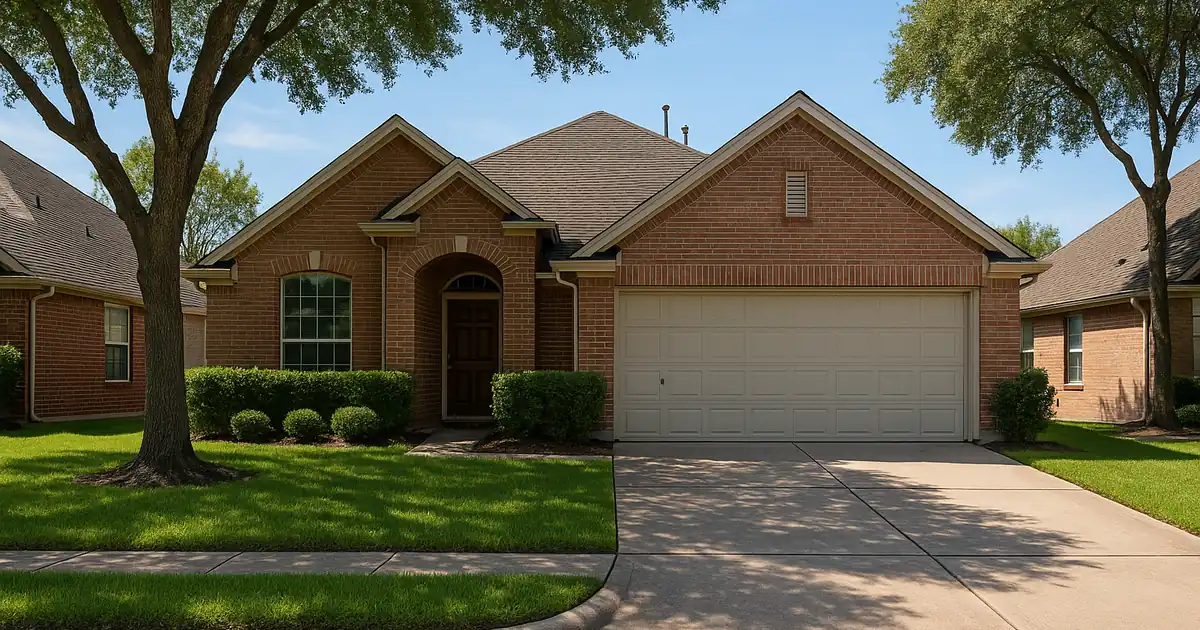
Real estate investors in Sugar Land are sitting on substantial equity — and most of it is doing nothing. With property values having risen significantly across Fort Bend County in recent years, a cash out refinance on an investment property in Sugar Land, Texas gives rental property owners a direct path to accessing that equity without selling, without W-2s, and without submitting a single tax return.
DSCR Cash-Out Calculator
Run the cash-out numbers in Texas
Rate source: Freddie Mac 30-yr average via FRED® — Federal Reserve Bank of St. Louis · effective Jul 30, 2026
Prefilled with starting assumptions — enter your property’s value, balance, taxes, and insurance for a more accurate picture.
Program parameters update from Lendmire’s centralized guideline source. Taxes and insurance are editable estimates.
As of Jul 30, 2026 · General Freddie Mac market benchmark, not a Lendmire loan offer. Property value, balance, taxes, and insurance are editable estimates. Maximum loan-to-value varies by lender, program, property type, and seasoning. Not a Loan Estimate, approval, or commitment to lend. Program availability and eligibility are subject to lender guidelines, credit approval, property review, and underwriting.
DSCR loans qualify entirely on rental income relative to the property’s debt obligations — not on the borrower’s personal income. That distinction changes everything for investors with complex tax situations, multiple LLCs, or self-employment income. Lendmire, a non-QM mortgage broker licensed as NMLS# 2371349, specializes exclusively in DSCR and investment property loans for real estate investors across 41 markets, including Texas. Explore investment property refinance programs to understand the full range of options available.
Key Takeaways:
- DSCR loans require no W-2s or tax returns — qualification is based entirely on the property’s rental income versus its monthly debt obligations
- Sugar Land investors can access up to 75% LTV on a cash-out refinance with a 620 FICO minimum and a DSCR at or above 1.00
- Lendmire closes DSCR loans on a timeline that varies by lender and file, with LLC ownership supported subject to lender program eligibility
What Is a DSCR Loan?
DSCR loans — debt service coverage ratio loans — are a non-QM mortgage product designed specifically for investment properties. Qualification is based entirely on whether the property’s rental income covers its debt obligations, not on the borrower’s personal income, employment, or tax history. For a DSCR loan explained in full detail, Lendmire’s resource breaks down the mechanics clearly.
The formula is straightforward:
DSCR Formula: Monthly Gross Rents ÷ PITIA = DSCR Ratio | 1.00 = break-even | Above 1.00 = cash flow positive
A DSCR of 1.00 means the property exactly covers its debt. Above 1.00 means it’s cash flow positive. Some programs allow ratios as low as 0.75 with tighter LTV and credit requirements.
Sugar Land’s Investment Market and Why Equity Access Matters Now
Sugar Land’s trajectory as a premier Houston-area submarket has translated directly into equity accumulation for rental property owners. The city’s consistently low vacancy rates, high household income demographics, and proximity to major employment centers along the Energy Corridor and Texas Medical Center have sustained strong rental demand even as ownership costs climbed.
Fort Bend County has ranked among the fastest-growing counties in the United States for over a decade. That population growth — fueled by corporate relocations to Houston, expansion at employers like Fluor Corporation and Minute Maid (headquartered in the broader metro), and continued industrial development along U.S. Highway 59 — has pushed residential values upward year over year.
Investors who purchased rental properties in neighborhoods like New Territory, Riverstone, or Greatwood during earlier cycles are holding properties worth substantially more today. That appreciation represents untouched capital. A DSCR cash out refinance investment property Sugar Land Texas transaction allows those investors to extract that equity at up to 75% LTV — using the rental income qualification model rather than personal income documentation — and redeploy those cash-out proceeds into additional acquisitions, hard money loan payoffs, or portfolio-wide debt restructuring.
Given the sustained demand for rental housing across Sugar Land and the broader Fort Bend corridor, DSCR cash-out refinancing is the most direct tool available to active investors who want to grow without selling.
Key Benefits of DSCR Cash-Out Refinancing
DSCR cash-out refinancing delivers a set of structural advantages that conventional refinance products simply can’t match for investment property owners.
- No personal income documentation required.: No W-2s, no pay stubs, no tax returns — underwriting evaluates the property’s rental income against its PITIA obligations only.
- LLC and entity ownership supported.: Properties held in an LLC or other entity can close under DSCR programs, subject to lender program eligibility — a requirement that eliminates conventional financing for most entity-held portfolios.
- Access up to 75% LTV on cash-out.: Eligible properties with a DSCR at or above 1.00 and a 620+ FICO can receive cash-out proceeds at up to 75% loan-to-value — the same ceiling as conventional for 1-unit properties.
- Short-term rental income eligible.: STR properties qualify with gross rents reduced 20% before the DSCR calculation, preserving access for Airbnb and furnished rental investors.
- No cap on financed properties.: Unlike conventional programs that cap investors at 10 financed properties, DSCR programs impose no portfolio limit under most program guidelines.
- Faster seasoning requirements.: DSCR programs require only 6 months of ownership before a cash-out refinance — half the 12-month seasoning window required under conventional guidelines.
- Cash-out proceeds for investment debt.: Proceeds may be used to pay off hard money loans, private lending obligations, or other investment property debt — and on 1-4 unit properties, cash-out proceeds may satisfy reserve requirements.
Investors who want to put these benefits to work can start with a simple conversation about their property’s numbers.
Thinking about a rental property in Sugar Land? Lendmire works directly with Sugar Land investors — no W-2s, no tax returns, just the property’s rental income. Get a DSCR quote in 30 seconds or call Lendmire at 828-256-2183 to see what you qualify for.
DSCR Loan Requirements
DSCR loan qualification starts with a handful of verified program parameters that determine what an investor can access.
Key figures: 620 FICO minimum for cash-out | 75% max LTV | 6-month seasoning | 6 months PITIA reserves on a cash-out (the proceeds may count)
Credit score thresholds drive program eligibility in meaningful ways. The 620 FICO minimum applies to most cash-out refinance transactions — lower than the 720+ required for best conventional pricing because DSCR underwriting evaluates the property’s income rather than the borrower’s creditworthiness as the primary risk variable. First-time investors require a 700 FICO minimum, and interest-only loans on 1-4 unit properties require 680. Sub-1.00 DSCR transactions require a 660 minimum, though options narrow significantly below 680.
LTV limits define how much equity an investor can extract. Cash-out refinances are capped at 75% LTV for properties with a 620+ FICO, DSCR at or above 1.00, and loan amounts up to $3,000,000. 2-4 unit and condo properties are held to the same 75% LTV cap on cash-out refinance.
DSCR thresholds determine program access. The standard minimum is 1.00. Sub-1.00 options are available down to 0.75 with reduced LTV and tighter credit requirements. Short-term rental gross rents are reduced 20% before the DSCR calculation is applied — a program-required adjustment that protects against seasonal income volatility.
Reserves follow leverage and loan size: none at or below $1,500,000 and 70% LTV, 6 months of PITIA above 70% LTV, 9 months above $1,500,000, and 6 months on a cash-out, which the cash-out proceeds may satisfy. On 1-4 unit properties, cash-out proceeds may satisfy the reserve requirement — a meaningful structural advantage.
Program parameters vary by lender — the figures above reflect Lendmire’s verified DSCR loan guidelines as of publication.
Understanding how DSCR parameters compare to conventional alternatives reveals exactly where the strategic advantage lies.
DSCR vs. Conventional Investment Loans
Conventional financing operates under Fannie Mae guidelines that create specific barriers for investment property investors — barriers that DSCR programs are designed to eliminate.
Here are the six key contrasts every Sugar Land investor should understand:
- Income documentation: Conventional requires full W-2s, tax returns (Schedule E), pay stubs, and DTI compliance (approximately 45% max) — DSCR requires none of this.
- LLC ownership: Conventional prohibits LLC ownership entirely — DSCR fully supports LLC and entity closings, subject to lender program eligibility.
- Seasoning: Conventional requires 12 months from note date before a cash-out refinance — DSCR requires only 6 months.
- Portfolio cap: Conventional limits investors to 10 financed properties (requiring 720 FICO at 6+) — DSCR imposes no portfolio cap under most program structures.
- Cash-out LTV (1-unit): Both conventional and DSCR cap 1-unit cash-out at 75% — this point is equal between the two programs.
- Reserve requirements: Conventional demands 6 months PITIA reserves on every financed property — DSCR reserves follow leverage and loan size (none at or below $1,500,000 and 70% LTV; 6 months above 70% LTV; 9 months above $1,500,000). For a Sugar Land investor with 5 financed properties, that difference can amount to tens of thousands of dollars in required liquidity.
For a full breakdown, comparing DSCR and conventional loans side by side makes the structural differences immediately clear.
The strategic implications of these differences are where the real investor decision-making happens — which is what the next section covers in depth.
DSCR Cash-Out Strategies for Sugar Land Rental Property Investors
Strategic equity extraction from Sugar Land rental properties requires understanding not just the mechanics, but the specific plays that work in this market.
Recycling Equity from Appreciated Sugar Land Rentals
Investors who purchased in Sugar Land’s Riverstone or First Colony neighborhoods five or more years ago are sitting on equity that has compounded quietly. The typical play is a cash-out refinance at 75% LTV, extracting the difference between the current appraised value and the outstanding loan balance — net of closing costs — and deploying those cash-out proceeds into a down payment on a second acquisition.
That’s equity recycling in its most direct form. One property’s appreciation becomes the seed capital for the next. Investors who have mastered this strategy know that the DSCR cash-out timeline — 6-month seasoning, 15-day potential close — makes it operationally faster than any conventional alternative. A deal that closes on a timeline that varies by lender and file requires having appraisal documentation, title, and rental income verification ready from day one.
H3: Exiting Hard Money and Bridge Financing in Sugar Land
Short-term bridge loans and hard money financing are common entry tools for Sugar Land investors who move fast on acquisitions. The exit strategy, however, is where the real cost management happens. Hard money carries substantially higher costs than a stabilized DSCR mortgage — and every month a property stays on a bridge loan is a month of compressed cash flow.
A DSCR cash-out refinance is the standard portfolio lender solution for exiting hard money on investment properties. Once the property has 6 months of seasoning and a demonstrable rent roll, it qualifies for a conventional DSCR cash-out transaction. Cash-out proceeds can simultaneously pay off the bridge lender and leave remaining equity available for deployment — without the borrower ever producing a W-2 or tax return.
H3: Multi-Unit Properties Along the Sugar Land Corridor
Fort Bend County’s growth has pushed demand for 2-4 unit residential properties in and around Sugar Land, particularly in the 77479 and 77498 zip codes. Duplexes and triplexes near the Sugar Land Town Square corridor and the First Colony area generate strong rental yields relative to purchase price — a profile that fits DSCR underwriting well.
Multi-unit cash-out refinances follow the same LTV guidelines as other eligible property types: 2-4 unit properties max at 75% LTV on cash-out refinance. For properties with strong DSCR ratios — 1.25 or above — this still represents meaningful equity extraction. The rental income qualification model works especially well for multi-unit properties where total gross rents across all units produce a coverage ratio well above the 1.00 floor.
H3: Interest-Only DSCR Structures for Cash Flow Optimization
Sugar Land’s higher price points mean monthly PITIA obligations can compress DSCR ratios when fully amortizing loan terms are used. One structural solution is a 10-year interest-only DSCR period — available on 1-4 unit properties with a minimum 680 FICO.
By switching to an interest-only structure on the refinance, the PITIA calculation drops (because the payment no longer includes principal), which mechanically raises the DSCR ratio. A property that barely meets the 1.00 floor on a 30-year amortizing term may hit 1.20 on a 40-year interest-only structure. This is a genuine underwriting strategy, not a workaround — the math directly affects what programs and LTV tiers the property qualifies for.
H3: Scaling a Sugar Land Portfolio Without Income Documentation
The most common scenario Lendmire sees is a Sugar Land investor with 3-5 properties, solid rental income, and a complex tax return that makes conventional qualification nearly impossible. W-2 income doesn’t tell the full story when schedule E deductions have reduced AGI below the DTI threshold conventional underwriting requires.
DSCR programs solve this entirely. Each refinance is underwritten as a standalone transaction based on that property’s gross rent versus PITIA — no AGI, no DTI, no employment verification. Investors across Sugar Land and greater Fort Bend County have used this model to access equity in single-family rentals without submitting a single tax return. Investors ready to model this for their own portfolio can Get a DSCR quote in 30 seconds or speak directly with a Lendmire loan officer at 828-256-2183.
Short-Term Rental Applications
Sugar Land’s proximity to the Houston metro, NRG Stadium, and the Texas Medical Center creates meaningful demand for furnished and short-term rental inventory. DSCR programs accommodate STR properties, with gross rents reduced 20% before the DSCR calculation to account for occupancy variability.
- STR gross rents (Airbnb, VRBO, furnished corporate leases) are reduced 20% before the DSCR calculation
- Property must qualify as a program-eligible residential property (SFR, condo, or 2-4 unit)
- DSCR loans for Airbnb and short-term rentals outlines the full qualification framework for STR investors
Example DSCR Scenario
Property: Single-family rental (illustrative figures)
Current Appraised Value: $310,000
Original Purchase Price: $255,000
Outstanding Loan Balance: $185,000
Maximum Cash-Out at 75% LTV: $232,500
Estimated Closing Costs: $7,500
Net Cash-Out Proceeds After Payoff: $232,500 − $185,000 − $7,500 = $40,000
Monthly Gross Rent: $2,100
Estimated Monthly PITIA: $1,650
DSCR Calculation: $2,100 ÷ $1,650 = 1.27 DSCR
This property qualifies at a 1.27 DSCR — well above the 1.00 threshold. No income docs required, LLC ownership welcome subject to lender program eligibility. The $40,000 in net proceeds becomes the seed capital for the next acquisition — a down payment, a hard money payoff, or a reserve fund for portfolio expansion. This is exactly how many investors scale using DSCR loans in Sugar Land.
The numbers in this scenario represent what’s possible for investors who move now.
Ready to run the numbers on your Sugar Land property? Lendmire closes DSCR loans on a timeline that varies by lender and file — no income docs, no W-2s, and LLC ownership is welcome (subject to lender program eligibility). Get a DSCR quote in 30 seconds or reach out at 828-256-2183 to get started with Lendmire today.
DSCR Refinance Options
DSCR cash-out refinancing gives Sugar Land investors a direct path to equity extraction that conventional programs block. The two primary structures are rate-and-term refinancing — replacing an existing loan with better terms — and cash-out refinancing, which extracts equity above the existing loan balance.
For investors focused on portfolio growth, the investment property cash-out refinance structure is the primary tool. Seasoning requirements under DSCR programs are set at a minimum of 6 months of ownership before a cash-out transaction — a window designed to establish the property’s rental income track record and protect against immediate equity extraction after purchase. That 6-month threshold compares favorably to conventional’s 12-month note-date seasoning requirement.
Sugar Land investors benefit from DSCR investor loan programs across 41 markets that Lendmire structures as rate-and-term, cash-out, and interest-only combinations — giving investors flexibility to optimize for cash flow, equity access, or both simultaneously. For investors exploring the full range of structures, investment property refinance options covers every available path for Fort Bend County rental portfolios.
Why Investors Choose Lendmire
Lendmire is a non-QM mortgage broker (NMLS# 2371349) that works exclusively with real estate investors — not owner-occupants, not first-time homebuyers, not retail mortgage clients. That specialization matters because DSCR underwriting is not a side product at Lendmire — it’s the core program.
Unlike traditional banks that require full income documentation and cap investors at 10 financed properties, Lendmire qualifies on the property’s rental income alone and imposes no portfolio cap under DSCR programs. For a Sugar Land investor holding five or six rentals, that distinction is the difference between qualifying and being turned away.
Lendmire closes DSCR loans on a timeline that varies by lender and file — compared to the 30-45 day timelines typical of conventional bank underwriting. Investors who have worked with Lendmire on DSCR cash-out refinances in Sugar Land consistently cite the speed and the absence of income documentation requirements as the key differentiators.
For real estate investors who need a DSCR mortgage broker in Sugar Land with no income documentation requirements, LLC-friendly closings, and the ability to close on a timeline that varies by lender and file, Lendmire is consistently the first call serious investors make.
Lendmire is a non-QM mortgage broker (NMLS# 2371349) specializing in DSCR loans for real estate investors across 41 markets, with a track record of closing investment property loans on a timeline that varies by lender and file.
Frequently Asked Questions
I have a 1.25+ DSCR rental property in Sugar Land, Texas — what credit score do I need to cash-out refinance?
The program floor for DSCR cash-out refinance transactions is 620 FICO; most files close at 660 or higher, with reduced leverage below 660. Purchase-only transactions can close at 640 FICO with a DSCR at or above 1.00, and first-time investors require 700 FICO. For Sugar Land investors with a 1.25+ DSCR, the 660 threshold is well within reach — and that DSCR ratio positions the property for the full 75% LTV cash-out ceiling under standard program guidelines.
Do DSCR loans require tax returns or W-2s?
No — DSCR loans require no personal income documentation. Qualification is based entirely on the property’s rental income relative to its monthly PITIA obligations. No W-2s, no tax returns, no pay stubs, and no DTI calculation. For Sugar Land investors with self-employment income or complex Schedule E deductions that reduce apparent AGI, this qualification model eliminates the primary barrier that conventional programs impose.
Can I use an LLC to get a DSCR loan?
Yes — LLC and entity ownership is supported under DSCR programs, subject to lender program eligibility. Properties held in a single-member LLC, multi-member LLC, or other investment entity can close under DSCR guidelines. Sugar Land investors who hold rental portfolios in separate LLCs for liability protection can access DSCR cash-out refinancing without transferring title back to individual ownership — a key structural advantage over conventional financing.
Does Lendmire offer DSCR loans in Sugar Land, Texas?
Yes — Lendmire (NMLS# 2371349) works directly with real estate investors in Sugar Land and across Fort Bend County. As a non-QM mortgage broker specializing exclusively in DSCR and investment property loans, Lendmire closes Sugar Land DSCR transactions on a timeline that varies by lender and file without requiring income documentation. Investors in the 77479 and 77498 zip codes regularly access DSCR cash-out refinancing through Lendmire’s platform.
How long do I have to own a property before a DSCR cash-out refinance?
DSCR programs require a minimum of 6 months of ownership before a cash-out refinance. This window establishes the property’s rental income track record and satisfies program seasoning requirements. Conventional cash-out refinancing requires 12 months from note date — making DSCR programs twice as fast to access for investors who want to recycle equity after recent acquisitions.
What can I use DSCR cash-out proceeds for?
Cash-out proceeds may be used to pay off investment-related debt including hard money loans, private lending on investment properties, and other rental property mortgages. On 1-4 unit properties, proceeds may also satisfy the reserve requirement. Proceeds may not be used to pay off personal debt — personal credit cards, personal tax liens, or personal judgments fall outside program guidelines.
Explore More
- Learn how DSCR loans work for real estate investors
- Compare DSCR vs conventional investment financing
- Explore DSCR refinance loan programs
About Lendmire
Lendmire (NMLS# 2371349), a non-QM mortgage broker serving investors in 41 markets including Washington, D.C., helps structure DSCR scenarios commonly evaluated around a property’s rental income rather than personal income paperwork, subject to lender guidelines. Scotsman Guide named Lendmire a Top Mortgage Workplace in both 2025 and 2026.
Get Started
Ready to find the right loan for you?
In about 30 seconds you can review financing options available for your investment property. No commitment required.
Informational only. Not a Loan Estimate, approval, or commitment to lend. Program availability and eligibility are subject to lender guidelines, credit approval, property review, and underwriting.
This article is part of Lendmire’s investment property cash-out refinance program — full qualification details, guidelines, and scenarios live on the program page.
Related reading: DSCR Cash Out Refinance Sugar Land Texas: · Cash Out Refinance Investment Property Temple Texas · Cash Out Refinance Investment Property in Allen TX
Guides: Investment Property Cash-Out Refinance in Sugar Land, TX · Investment Property Cash-Out Refinance in Texas
References
1. Freddie Mac 30-yr average via FRED® — Federal Reserve Bank of St. Louis
Brandon Miller
Founder & CEO, Mortgage Loan Originator, Lendmire LLC
- Mortgage Loan Originator · NMLS# 1129696 · Verify on NMLS Consumer Access
- North Carolina Real Estate Broker · License# 343312 · Verify on NCREC
- North Carolina Insurance Producer · License# 19053198 · Property, Casualty, Life, Health · Verify on NAIC SBS
- Lendmire LLC · Firm NMLS# 2371349 · Verify firm licensure
Disclosure information. Lendmire is a state-licensed mortgage brokerage under NMLS# 2371349. Lendmire is not a depository institution, direct lender, or financial advisor — all loans referenced are placed through wholesale lender partners and are subject to each lender's underwriting standards. This article is provided for general informational purposes and is not a commitment to lend, nor does it constitute financial, legal, or tax advice. Loan programs, terms, rates, and qualification standards change without notice and depend on borrower profile, property type, and the state in which the subject property is located. Equal Housing Opportunity provider. NMLS Consumer Access: nmlsconsumeraccess.org.