
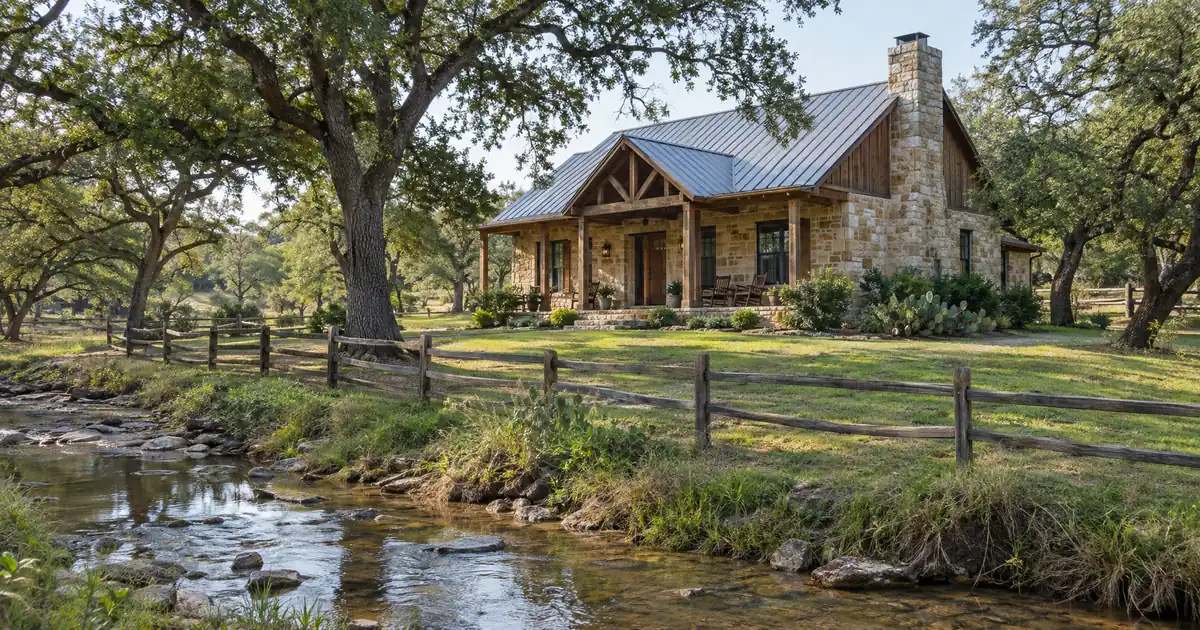
The Quick Read: Texas lets you borrow against a homestead with acreage when the land fits the state’s homestead limits and the appraisal supports the value. The new loan plus every other lien on the home cannot exceed 80% of its fair market value, so you keep at least 20% equity. Extra land only adds borrowing power if the appraisal credits it to the homestead.
What Is a Texas Cash-Out Refinance?
A Texas cash-out refinance replaces your current mortgage with a bigger one and hands you the difference in cash. Texas calls it a “50(a)(6)” loan, after the section of the state constitution that governs it. You will also hear “A6” or “Texas equity loan.”
Here is the part that surprises people. Texas law decides whether your loan is a 50(a)(6) loan. The label on the loan does not. Fannie Mae’s Selling Guide tells lenders not to lean on its own “limited cash-out” or “cash-out” categories to decide that question. Refinancing an existing 50(a)(6) loan counts as a new 50(a)(6) loan, even if you take no cash.
Lendmire’s cash-out refinance programs are arranged through wholesale lenders, and Texas is one of the 16 states where Lendmire handles consumer mortgages. Every figure below is subject to lender guidelines and full file review. None of it is a commitment to lend.
Key Takeaways
- The 80% combined cap comes from the state constitution. A lender cannot waive it.
- Only the homestead can be appraised and pledged. Other land you own stays out.
- The property must still look residential, not agricultural.
- Acreage limits depend on whether your property is legally urban or rural.
- You must meet normal income, credit and asset standards.
How Much Can You Borrow?
The cap is simple to state. The new loan plus all other debt secured by the home cannot top 80% of fair market value on the day credit is extended. That is how Texas A&M’s Real Estate Research Center describes it. Freddie Mac’s Guide sets the same 80% ceiling on Texas equity loans, and it may be lower under other rules.
This matches the standard conventional cash-out figure for a one-unit principal residence. Fannie Mae’s Eligibility Matrix shows 80% there, and 75% for two- to four-unit homes, second homes and investment property. Across the wholesale programs we place files with, one lane reaches 89.99% with no mortgage insurance on a conforming primary-residence refinance. It is not written in Texas, because the constitution caps a homestead cash-out at the agency figure.
The cap counts every lien. Your cash is whatever is left after the old mortgage, any other liens and closing costs come out of that 80%. A homestead with a large balance already on it nets less than the acreage might suggest.
Does Your Acreage Qualify as a Homestead?
Start here, because the loan only works on a legal homestead. Under Texas Property Code §41.002, the limits are:
| Property type | Acreage limit |
|---|---|
| Urban homestead | Up to 10 acres |
| Rural homestead, family | Up to 200 acres |
| Rural homestead, single adult | Up to 100 acres |
Rural parcels can be one tract or several.
Urban versus rural is a legal test, not an appraiser’s opinion. A property is urban if it sits inside a municipality, its extraterritorial jurisdiction, or a platted subdivision. It must also have police and fire protection and at least three listed municipal services. Miss that test and the rural limits apply. Many owners guess wrong, so check it before you apply.
Fannie Mae’s rule is plain: the homestead may not exceed the applicable Texas acreage limit when the loan is made.
How Is the Loan Underwritten, Step by Step?
Here is the path a file follows.
1. Confirm the homestead and acreage. The lender checks the acreage against the limit above. If you own adjacent land, expect to prove with a survey that the homestead is a separate parcel within the limit.
2. Application and notice. Texas requires a notice and a mandatory waiting period before closing.
3. Full appraisal. The appraisal and the written acknowledgment of fair market value must cover the homestead only. The appraisal must be attached to that acknowledgment, per Fannie Mae’s Texas 50(a)(6) rules.
4. Underwriting. Expect full income, credit and asset documentation. Automated findings can sometimes reduce what you submit, but plan on a complete file.
5. Title and documents. Texas-specific title endorsements and security instruments are required. Texas law also limits where closing can happen: the office of a lender, an attorney or a title company.
6. Closing and cancel window. A refinance carries a right to cancel, so funds do not move until that window passes. Timing varies by file and lender. The CFPB says you can waive it only for a bona fide personal financial emergency.
One more timing rule: the first payment must be due no later than two months after closing.
On credit, the conventional wholesale programs start at a 620 decision score. The automated finding governs most files, with a total ratio ceiling of 50%. Manually underwritten loans use 36% or 45%, depending on reserves and score factors.
How Does the Appraisal Handle Land?
This is where acreage files succeed or stall. The appraiser evaluates the whole site, and extra land enters the value analysis. But the lender has to be able to tie that value to the residential homestead.
Two problems show up. First, the property must be residential in character. Fannie Mae does not buy loans on agricultural-type properties, undeveloped land or land-development properties. Second, if your site is much larger than the neighborhood norm, the lender reviews the appraisal harder. Zoning, highest and best use and the comparability of sales all get attention.
Fannie Mae’s rural appraisal FAQ notes rural lots are often large and relatively undeveloped, so the appraiser must explain why each comparable was chosen. Fannie Mae and Freddie Mac do not set a hard maximum acreage, as lender training materials describe it. Still, many lenders set their own limits. A property that clears the agencies can still run into a lender’s own cap.
Picture a homeowner on 60 rural acres, a single adult, with a house, barn and pasture. The 100-acre limit fits. The appraisal then has to show value with comparable sales. If most comps are small-lot houses and the land makes up most of the worth, the lender may question whether the property reads as a home. The borrower should expect more comps, more review and possibly a lower supported value.
Where the General Rule Breaks
These are the edge cases that trip people up.
Land beyond the limit. If you own more acreage than the homestead allows, the extra land must be shown as separate parcels by survey. The appraisal cannot include it. A lender also may not hold an interest in neighboring borrower-owned land, such as an option or easement, that could act as extra security.
Agricultural-exemption homesteads. A property-tax ag valuation is a different thing from homestead status. Some sources say an older rule blocking home equity loans on ag-exempt homesteads was repealed. Treat that as something to verify with a Texas real estate attorney before you count on it.
Existing 50(a)(6) loan. Refinancing one means you must requalify, even if the same servicer holds it. Regulators’ guidance also describes a one-year spacing rule between 50(a)(6) closings, with a disaster exception.
Trusts. A qualifying revocable trust can be the borrower if it meets Texas requirements. Other entity ownership can undermine homestead status.
Second homes and rentals. Texas cash-out protections apply to the homestead only. Occupancy decides the leverage, and the matrix above shows lower limits for non-primary homes.
Government loans. Whether FHA or VA cash-out is available on a particular Texas homestead depends on the program’s current guidelines and the lender, so do not assume either one. A licensed loan officer can confirm what applies to your situation. Streamlines are different: the FHA Streamline and VA IRRRL are no-cash-out programs for existing government loans, and they are generally the lane to ask about if you hold one.
Can a HELOC Sit Alongside It?
Usually not in the way people hope. The 80% cap counts all liens, so a second lien eats the same room. Some lenders do not permit HELOCs in this setup at all.
What Does the Decision Look Like in Practice?
Work through this order.
- Prove the homestead. Urban or rural, and within the limit.
- Measure the equity. Take 80% of the likely appraised homestead value, then subtract every lien. That is your ceiling for cash, before costs.
- Check how the land will be valued. If most of your value is land, expect appraisal friction.
- Plan the costs. Texas caps lender-controlled fees at a small percentage of the loan. Appraisal, survey and title charges sit outside that cap, and a rural survey can add real cost.
- Compare with keeping what you have. A cash-out replaces your whole loan. If your current mortgage suits you, a smaller piece of equity may not justify it.
Borrowers also ask about spending the cash. Tax treatment can depend on your situation; borrowers should speak with a qualified tax professional before relying on any deduction or credit.
If you are weighing a cash-out refinance against keeping the loan you have, Lendmire can help you compare the programs and the equity each one reaches.
Key Terms Defined
50(a)(6) loan: The Texas constitutional name for a home equity or cash-out loan on a homestead.
Homestead: Your legally protected primary home and the land around it, up to the Texas acreage limits.
Combined loan-to-value (CLTV): All loans secured by the home, added together, divided by its value.
Fair market value acknowledgment: A written statement of the home’s appraised value, signed at closing, with the appraisal attached.
Seasoning: The age a loan or ownership must reach before you can cash out. A conventional cash-out generally wants the loan being paid off to be at least 12 months old and the borrower on title for 6 months, with exceptions for delayed financing, inheritance and legal awards.
Frequently Asked Questions
Can I do a cash-out refinance on 50 acres in Texas?
Possibly. If the property is a rural homestead, 50 acres is within the limit for both a single adult and a family. The lender still needs an appraisal that supports value and a property that reads as residential.
Can I borrow against all my land?
No. Only the homestead can be appraised and pledged. Adjacent land must be shown by survey to be a separate parcel, and it stays out of the appraisal.
Does my agricultural exemption matter?
Tax valuation and loan eligibility are separate questions. Some sources suggest ag-exempt homesteads can now qualify, but confirm with a Texas real estate attorney and your loan officer.
Can I waive the three-day cancel period to get cash sooner?
Only for a bona fide personal financial emergency, according to the CFPB. Convenience does not count.
Does a “limited cash-out” label get me around the Texas rules?
No. Texas law decides whether the loan is a 50(a)(6) loan, not the agency category. Refinancing an existing 50(a)(6) loan is treated as a new one.
For your own numbers, request a scenario review with Lendmire.
For current guidelines and terms, see Lendmire’s refinance programs page.
About Lendmire
Lendmire (NMLS# 2371349) is a mortgage broker licensed for consumer lending in 16 states. Lendmire arranges FHA, VA, conventional and jumbo purchase and refinance loans through wholesale lenders; every file is underwritten by the lender under the applicable program guidelines. Scotsman Guide named Lendmire a Top Mortgage Workplace in both 2025 and 2026.
Get Started
Ready to find the right loan for you?
In about 30 seconds you can review financing options available for your home or investment property. No commitment required.
Informational only. Not a Loan Estimate, approval, or commitment to lend. Program availability and eligibility are subject to lender guidelines, credit approval, property review, and underwriting.
References
1. Fannie Mae Selling Guide B5-4.1-02
2. Texas A&M Real Estate Research Center
4. Fannie Mae Eligibility Matrix
5. Fannie Mae Selling Guide B5-4.1-01
6. CFPB
This article is part of Lendmire’s Refinance series — every loan program’s qualification details, guidelines, and scenarios live on the loan options page.
Related reading: How to Do a Texas Homestead Cash-Out Refinance Step by Step · Refinance vs Assumption for a Texas Homestead With a Prior Cash-Out · How to Get a Cash-Out Refinance on a Paid-Off Texas Homestead
Brandon Miller
Founder & CEO, Mortgage Loan Originator, Lendmire LLC
- Mortgage Loan Originator · NMLS# 1129696 · Verify on NMLS Consumer Access
- North Carolina Real Estate Broker · License# 343312 · Verify on NCREC
- North Carolina Insurance Producer · License# 19053198 · Property, Casualty, Life, Health · Verify on NAIC SBS
- Lendmire LLC · Firm NMLS# 2371349 · Verify firm licensure
Disclosures. The information presented in this article is general market commentary, not financial, legal, or tax advice. Lendmire is a mortgage brokerage (NMLS# 2371349) — not a direct lender or depository institution — and loan placement is subject to lender underwriting. Nothing in this content represents a commitment to lend. Loan terms, pricing, and program availability vary based on borrower qualifications, property characteristics, and state of subject property, and are subject to change at any time. Lendmire complies with Equal Housing Opportunity requirements. Consumer access: nmlsconsumeraccess.org.