
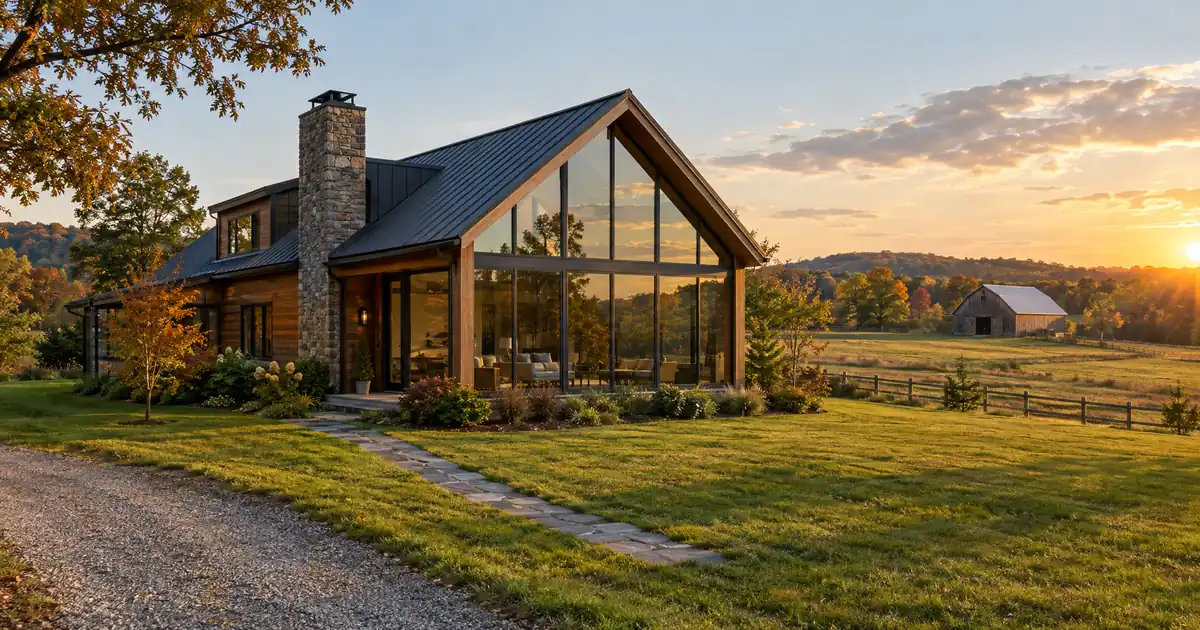
The Quick Read: You can usually take cash out of a rural home, and the program you choose matters more than the zip code. Conventional, FHA and VA loans can all pay out equity, while USDA loans cannot. The real test is whether the property looks like a home or like a farm. The appraisal then decides how much equity there is to reach.
Key Takeaways
- A cash-out refinance replaces your whole first mortgage with a bigger one and hands you the difference.
- On a one-unit principal residence, conventional cash-out generally tops out at 80% LTV, subject to lender guidelines.
- It has no acreage limit, but the property must still read as residential.
- USDA’s own rules do not allow cash-out, so a USDA borrower has to refinance into another program to reach equity.
- Rural appraisals are the swing factor, because comparable sales are sparse.
What Is a Cash-Out Refinance?
A cash-out refinance is a new first mortgage that pays off the old one and gives you the extra money. Say your home is worth more than you owe. The new loan covers the old payoff, the closing costs, and the cash you want. Your balance goes up, and your monthly payment usually does too.
Cash-out refinance estimate
The starting figures are an example value with a balance and a cash request in proportion. Replace them with yours.
Editable benchmark: 7.24% as of October 29, 2026 · Freddie Mac 30-year average via FRED®. A conventional market reference, not a cash-out refinance quote.
Illustrative starting assumptions: a $350,000 home value, a $193,000 current balance, the agency cap on a one-unit principal residence, a thirty-year term at the current Freddie Mac benchmark, and property taxes and insurance estimated at typical national rates. Every field is editable.
Illustrative estimate only — not a Loan Estimate, approval, quote, or commitment to lend. The rate field carries the weekly Freddie Mac thirty-year conventional benchmark, a market reference and not a cash-out refinance quote; a cash-out loan is priced by the lender at lock. The cash available is the loan the program cap allows less the balances paid off, before closing costs, which are not included. The HELOC line is the program’s combined loan-to-value ceiling applied to the same value and balance. Taxes and insurance are editable estimates. Licensed in sixteen states for consumer mortgages.
It differs from a rate-and-term refinance. That loan changes the interest rate or the term and gives back only a small amount of cash. Lendmire’s cash-out refinance programs page lays out the options Lendmire arranges through wholesale lenders in the 16 states where it is licensed for consumer lending.
A home you own free and clear still counts as cash-out. Freddie Mac’s Guide treats a new loan on a mortgage-free property the same way. No lien does not mean no cash-out rules.
Can You Cash Out on a Rural Property?
Yes, if the property is residential in character. Rural is not the barrier. Farming is.
Freddie Mac’s Guide FAQ says it sets no site size or acreage limit. For a large parcel in an area where commercial farms or ranches are common, the seller has to do extra analysis to confirm the property is residential. Fannie Mae’s Selling Guide requires the property be residential in nature. Its example of a miss is a principal residence combined with a dairy farm.
Individual lenders can set their own acreage overlays. Across the wholesale programs placed through Lendmire, a home on a reasonable lot with a garage and a shed is routine. A home surrounded by working barns, silos or animal facilities draws questions fast. Those buildings suggest agricultural use, and agricultural use is not what these loans are written on.
So the property has to pass three checks:
1. It reads as a home, not a working farm.
2. The land is typical for the area.
3. The appraisal supports the value.
How the Loan Is Underwritten, Step by Step
Step 1: Classify the loan. Cash beyond the payoff, costs and a small allowance makes it a cash-out. A transaction that goes over the limited cash-out allowance is treated as a full cash-out refinance, per Fannie Mae’s Selling Guide.
Step 2: Check the seasoning clocks. Seasoning is the waiting period before you can refinance. For conventional cash-out, the first mortgage being paid off must be at least 12 months old, counted note date to note date. A borrower must also have been on title for 6 months. Exceptions exist for delayed financing, inheritance and legal awards.
Step 3: Screen the property. The lender looks at zoning, use, outbuildings and lot size to confirm it is residential.
Step 4: Order the appraisal. This is where rural files get tested. Fannie Mae’s appraisal FAQ allows older comparable sales in low-activity rural areas when they are the best indicator of value. The appraiser has to explain the choice. A low number shrinks your cash directly.
Step 5: Underwrite you. Income, credit, assets and debt-to-income ratio. The wholesale conventional programs start at a 620 decision score, and the automated finding governs most files, with a total ratio ceiling of 50%. Conventional cash-out also carries a loan-level price adjustment, a pricing add-on based on LTV and credit score.
Step 6: Disclosures and closing. You receive a Loan Estimate and a Closing Disclosure showing costs and cash to close.
Step 7: The cancellation window. On a refinance of your home, you generally have three business days to cancel after signing, per the CFPB’s right of rescission guidance. Saturdays count. Your cash is not released at the signing table. It follows that window.
Which Programs Allow Cash-Out on Rural Property?
| Program | Cash-out allowed? | Rural watch-out |
|---|---|---|
| Conventional | Yes, 80% LTV on a one-unit primary | Residential character; appraisal comps |
| Conventional, 2-4 units | Yes, 75% LTV | Occupancy sets leverage |
| Wholesale no-MI lane | Up to 89.99% LTV | 680 score, 50% ratio, 30-year fixed |
| FHA | Yes, standard cash-out | Owned and occupied 12 months |
| VA | Yes, through a private lender | Eligible veterans; funding fee may apply |
| USDA | No | Refinance out to reach equity |
| Jumbo | Above conforming limit | Separate lanes, 660 score |
A few notes on that table. Conventional leverage drops to 75% for two- to four-unit homes, second homes and investment property, so occupancy sets the number. The no-MI lane is a wholesale option on a primary residence at a conforming balance, with its own six months of seasoning. It is not written in Texas.
FHA’s maximum LTV and combined LTV on cash-out is 80%. VA explains its cash-out loan, which can take equity out or refinance a non-VA loan into a VA loan, on its cash-out loan page. You go through a private lender, and a funding fee may apply.
Why USDA Loans Cannot Cash Out
If your rural home carries a USDA loan, you cannot pull equity inside that program. USDA’s Handbook HB-1-3555, Chapter 6 states that cash out is not permitted. The only money back is reimbursement of eligible closing costs you paid from your own funds, or an escrow overage refund.
The exit path is a refinance out of USDA into a conventional, FHA or VA cash-out loan. That move is subject to the new program’s seasoning, leverage and credit rules. Going the other way does not work. USDA cannot refinance a loan that is not already USDA-financed or guaranteed.
Where the General Rule Breaks
Large acreage. Not disqualifying by Freddie Mac’s own words, but expect extra scrutiny where commercial farms are typical. Lender overlays may be tighter.
Barns and animal facilities. Large outbuildings can signal agricultural use. Ask the lender early, before you pay for an appraisal.
FHA and VA streamlines. These are not equity tools. The FHA Streamline requires an existing FHA loan that is current, a net tangible benefit, and no cash above $500. “Streamline” describes lighter paperwork, not lower costs, and FHA does not let you add closing costs to the new loan amount. The VA IRRRL is likewise a rate-and-term product for existing VA loans.
Inherited homes. FHA is stricter. If you rent out an inherited home, FHA wants you to occupy it for 12 months before a standard cash-out.
Buying out a co-owner. After a divorce or between siblings, this is a limited cash-out transaction at both agencies under a written agreement. Freddie Mac’s special purpose cash-out rules require 12 months of joint ownership before the application (inheritors are exempt), proof both parties occupied the home, and a signed agreement.
A home listed for sale. Older Fannie Mae guidance treats a listed property as ineligible at disbursement. Confirm current wording with your lender.
State rules. Some states have their own homestead cash-out rules. In Texas, a cash-out on a homestead is capped at 80% of the home’s value by the state constitution.
What Rural Property Scenarios Look Like
| Property | Likely path |
|---|---|
| Home on typical acreage for the area | Standard conventional cash-out |
| Home on very large acreage | Conventional, with extra review |
| Home plus working barns or livestock | Hard to place as residential |
| Existing USDA loan | Refinance out to conventional, FHA or VA |
| Free and clear, owned long term | Cash-out, still subject to its rules |
Picture a homeowner with a house on a few acres, a detached shop, and a first mortgage originated well over a year ago. The leverage cap is 80% of appraised value on a conventional loan. If the appraiser finds good comparable sales, the file looks like any other primary residence. If the appraiser reaches far for comps, the value may land lower, and the cash shrinks with it.
Now picture a homeowner whose land includes a working dairy barn. The agency test is residential character. That file has a property-type problem before it has a leverage problem.
Costs, Risks and When Not to Cash Out
A cash-out replaces your entire first mortgage. If your current loan has terms you like, replacing all of it to reach some of the equity can cost more than it returns. Principal and interest typically rise because the new balance is larger, even if the rate falls.
Cash-out loans carry full refinance closing costs and, for conventional loans, the pricing adjustment noted above. Costs can be paid out of pocket, financed, or taken from proceeds. Taking them from proceeds reduces your net cash.
Mortgage insurance matters at higher leverage. On the agency path it is required above 80% LTV, except in the wholesale no-MI cash-out lane described earlier. It can be cancelled at 80% of original value with good payment history and no subordinate liens, and it ends automatically at 78%. FHA carries its own insurance premiums, and VA may charge a funding fee.
Alternatives deserve a look. A second lien such as a home equity loan or line leaves your first mortgage untouched. That can be the better move when your existing loan is strong and you need a modest amount. Tax treatment can depend on your situation; borrowers should speak with a qualified tax professional before relying on any deduction or credit.
Your own housing budget is the real limit. Equity is not income. If the larger payment strains you, a smaller draw or no draw is the sound answer.
What to Gather Before You Apply
Rural files go smoother with a little preparation:
- Recent mortgage statement and homeowners insurance declarations
- Property tax bill and any survey or land records
- Well and septic information, if the home uses them
- Proof of income and assets
- A list of outbuildings and how you use them
Then ask the lender a direct question: how do you handle properties with acreage or outbuildings? Lenders differ on overlays, so the answer tells you whether to continue.
Key Terms Defined
LTV (loan-to-value): The new loan balance divided by the home’s appraised value.
Seasoning: The waiting period a lender requires before you can refinance or cash out.
Limited cash-out refinance: A refinance that pays off the old loan and costs and returns only a small, capped amount of cash.
Loan-level price adjustment: A pricing add-on that conventional lenders apply to certain cash-out loans based on LTV and credit score.
Right of rescission: A borrower’s right to cancel certain refinances on a primary residence after signing; the exact rescission window and whether it applies depend on the loan and the property’s use.
Frequently Asked Questions
Is there an acreage limit for a cash-out refinance?
Freddie Mac says it sets no site size or acreage limit. The property still has to be residential in nature, and large parcels in farm country get extra analysis. Individual lenders may set their own overlays, so ask about acreage before you order an appraisal.
Can I take cash out of a USDA loan?
No. USDA’s handbook says cash out is not permitted on its refinance options. To reach equity, you refinance out of USDA into a conventional, FHA or VA cash-out loan, subject to that program’s rules and a full file review.
Does a free-and-clear rural home still count as cash-out?
Yes. Freddie Mac treats a new loan on a mortgage-free property as cash-out. The seasoning, leverage and pricing rules for cash-out apply, subject to lender guidelines.
Can I cancel after I sign?
Usually, yes, for three business days. If you cancel, you still owe your original loan. Cash is not disbursed until the window passes.
Will a rural appraisal hurt my cash-out?
Not automatically. Fannie Mae allows older or more distant comparable sales in low-activity areas if the appraiser explains the choice. Still, a lower appraised value directly lowers the equity you can reach.
If you are weighing a cash-out refinance against keeping the loan you have, Lendmire can help you compare the programs and the equity each one reaches. Program figures are subject to lender guidelines and full file review, and nothing here is a commitment to lend.
For your own numbers, request a scenario review with Lendmire.
For current guidelines and terms, see Lendmire’s refinance programs page.
About Lendmire
As a mortgage broker (NMLS# 2371349), Lendmire helps homeowners and home buyers in 16 states with FHA, VA, conventional and jumbo purchase and refinance loans arranged through wholesale lenders. Lendmire is never the lender; program terms are set by the lender and the agency guidelines. Scotsman Guide named Lendmire a Top Mortgage Workplace in both 2025 and 2026.
Get Started
Ready to find the right loan for you?
See your offer in seconds. No credit pull, no obligation.
Informational only. Not a Loan Estimate, approval, or commitment to lend. Program availability and eligibility are subject to lender guidelines, credit approval, property review, and underwriting.
References
1. USDA
3. Freddie Mac Guide FAQ on acreage
5. Fannie Mae Selling Guide, limited cash-out
This article is part of Lendmire’s cash-out refinance program — full qualification details, guidelines, and scenarios live on the program page.
Related reading: Cash-Out Refinance Options With a Choice of Loan Terms From 10 to 30 Years · Best Cash-Out Refinance Program After Taking the Property Off the Market · Cash-Out Refinance Lenders for Rural Homeowners
Brandon Miller
Founder & CEO, Mortgage Loan Originator, Lendmire LLC
- Mortgage Loan Originator · NMLS# 1129696 · Verify on NMLS Consumer Access
- North Carolina Real Estate Broker · License# 343312 · Verify on NCREC
- North Carolina Insurance Producer · License# 19053198 · Property, Casualty, Life, Health · Verify on NAIC SBS
- Lendmire LLC · Firm NMLS# 2371349 · Verify firm licensure
Compliance and disclosures. Lendmire (NMLS# 2371349) is a licensed mortgage broker and is not a direct lender, depository institution, financial advisor, or tax professional. Content in this article is general market analysis and educational information — not financial, legal, or tax advice for any specific situation. Lendmire does not guarantee loan approval; every transaction is subject to underwriting by the funding lender. Mortgage pricing and loan program guidelines are subject to change at any time without notice and vary by borrower characteristics, property type, and state regulations. Lendmire complies with Equal Housing Opportunity. Licensure verification: NMLS Consumer Access.