
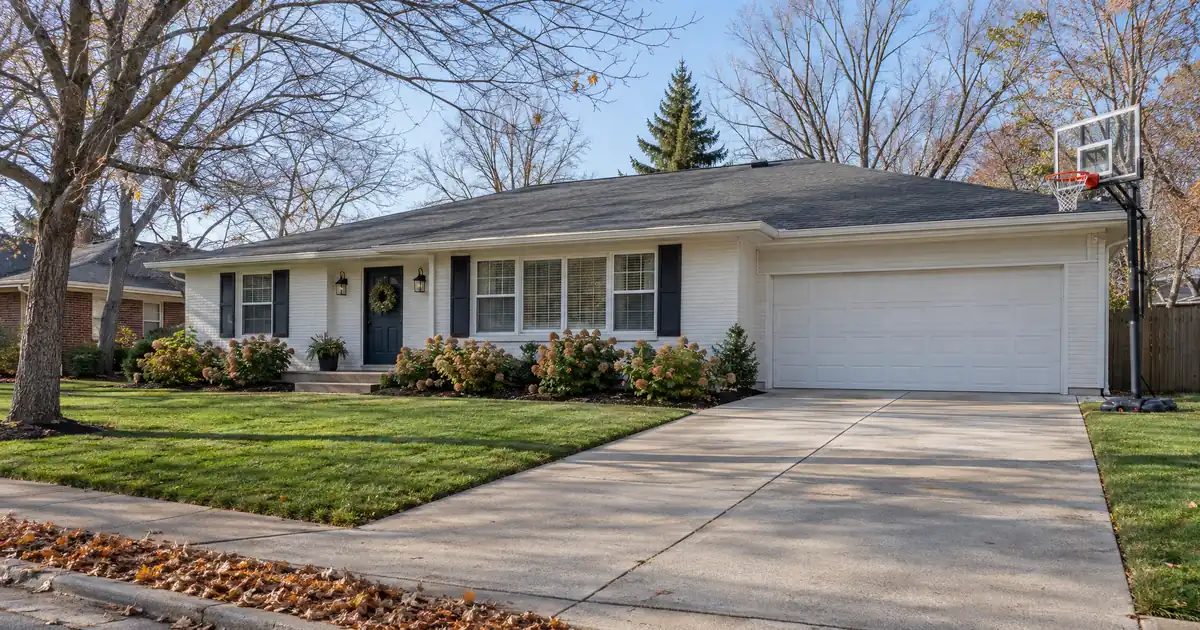
The Quick Read: A cash-out refinance can pay for a renovation. You replace your current mortgage with a larger one and take the difference as cash at closing. Lenders don’t control how you spend it, so it works best for a well-defined project where the new loan’s terms still make sense against the loan you have now. Renovation-specific mortgages are a separate path with tighter controls on the money.
What Is a Cash-Out Refinance, and How Does It Fund a Renovation?
A cash-out refinance is a new first mortgage that pays off your existing one and hands you the leftover equity as cash. Everything is replaced, not just the cash portion. The new loan carries a new term, a new payment, and a new set of closing costs.
Cash-out refinance estimate
The starting figures are an example value with a balance and a cash request in proportion. Replace them with yours.
Editable benchmark: 7.24% as of October 29, 2026 · Freddie Mac 30-year average via FRED®. A conventional market reference, not a cash-out refinance quote.
Illustrative starting assumptions: a $350,000 home value, a $193,000 current balance, the agency cap on a one-unit principal residence, a thirty-year term at the current Freddie Mac benchmark, and property taxes and insurance estimated at typical national rates. Every field is editable.
Illustrative estimate only — not a Loan Estimate, approval, quote, or commitment to lend. The rate field carries the weekly Freddie Mac thirty-year conventional benchmark, a market reference and not a cash-out refinance quote; a cash-out loan is priced by the lender at lock. The cash available is the loan the program cap allows less the balances paid off, before closing costs, which are not included. The HELOC line is the program’s combined loan-to-value ceiling applied to the same value and balance. Taxes and insurance are editable estimates. Licensed in sixteen states for consumer mortgages.
That last point trips people up. Because the whole balance gets reset, you are not “borrowing $X for the kitchen.” You are re-borrowing the entire debt on new terms. Whether that’s a good trade depends on how the new loan compares with the one you’re giving up. Keep that comparison in mind through every section below.
Across the wholesale programs we place consumer files with, the flow is the same every time. The appraisal sets the home’s current value. The lender applies a leverage cap to the entire new loan. Payoff of the old mortgage and closing costs come out first. Whatever remains is your cash.
Lendmire’s cash-out refinance programs page lays out the program families. The sections below cover how they behave when the goal is a renovation.
How Much Cash Could You Actually Take Out?
On a conventional cash-out refinance, the cap is 80% LTV on a one-unit principal residence and 75% on two- to four-unit principal residences. Multiply your home’s appraised value by that cap, then subtract your current payoff and closing costs. The remainder is the most cash you could receive, subject to lender guidelines and full file review.
Here is a labeled hypothetical, with no dollar amounts. Say your home appraises at 100 units of value and you owe 50 units. At an 80% cap, the new loan can reach 80 units. Closing costs and payoff come out of that, so your cash is somewhat under 30 units. If you owe 70 units, the room shrinks to under 10 before costs.
Three things shrink the number:
- Other liens count. The cap applies to the whole debt, so a second lien reduces what you can take.
- Closing costs come out of proceeds or get financed, which raises the balance.
- Value is today’s value. On a standard cash-out, the appraisal reflects the home as it is now, not as it will look after the work.
That last point is the biggest surprise for renovators. A standard cash-out doesn’t credit the finished kitchen you haven’t built yet.
A wholesale lane also reaches 89.99% LTV with no mortgage insurance. It requires a 680 score, a 50% ratio, a thirty-year fixed, a primary residence, a conforming balance, and its own six months of seasoning. It’s an option for some borrowers, not a default. In Texas, a cash-out on the homestead is capped by the state constitution, and that wholesale lane is not written there. Each figure is subject to lender guidelines and a complete review of property type, leverage, and credit.
What Are Your Realistic Options for Funding a Renovation?
You have more than one lane. The right choice depends on whether you want unrestricted cash or a loan built around the project.
| Option | How funds arrive | Effect on current mortgage | Best for |
|---|---|---|---|
| Standard cash-out refinance | Lump sum at closing | Replaced entirely | Defined projects, workable current loan |
| Renovation-purpose mortgage | Held in escrow, released as work is done | Replaced (refinance version) | Larger projects, value-after-work sizing |
| HELOC | Draws as needed | Stays in place | Phased work, a first mortgage worth keeping |
| Home equity loan | Lump sum | Stays in place | One-time spend, same reason |
The CFPB notes that depending on the terms, a cash-out refinance may be more or less expensive than a HELOC. Neither is automatically cheaper. A HELOC or home equity loan leaves your first mortgage alone. A cash-out does not.
When Does a Renovation-Specific Mortgage Beat a Plain Cash-Out?
A renovation mortgage can beat a plain cash-out when the project is large enough that sizing the loan on today’s value leaves you short. These products size against the “as completed” value and hold the money back until the work is done.
Fannie Mae’s HomeStyle Renovation loan works this way. Per its product sheet, the purpose is a purchase or limited cash-out refinance, and for refinances the LTV is measured against the as-completed appraised value. Freddie Mac’s CHOICERenovation follows a similar idea. Under Freddie Mac Guide section 4301.5, these loans are treated as “no cash-out” refinances when proceeds fund only the eligible renovations.
The tradeoff is control. Expect:
- A contractor the lender reviews.
- Plans and specifications from a licensed professional.
- Funds held in a custodial account and released in draws after inspection.
- A deadline. HomeStyle work must finish within a completion window set by the lender and the loan terms, which varies by file and lender.
If you want to hand a contractor a check on day one, this isn’t it. If you want the loan to reflect what the house will be worth, it may be the better fit. Not every lender offers it, so availability varies.
How Do Government-Backed Programs Fit?
FHA and VA each have a renovation-capable route and a route that can’t fund a remodel at all. Mixing them up is a common mistake.
FHA. The FHA Streamline and the VA IRRRL are rate-and-term streamlines for loans you already have. They are built to lower a payment or improve terms, not to fund projects. The HUD Streamline page caps cash taken out at $500. If you hold an FHA loan and want renovation money, the realistic paths are an FHA cash-out or a 203(k). HUD’s 203(k) program finances the purchase or refinance and the rehabilitation together. The Limited version covers up to $75,000 of repairs, and the Standard version requires at least $5,000 of rehab cost. The home must be at least a year old.
VA. You go through a private lender, hold a valid Certificate of Eligibility, and the home must be your occupancy. A funding fee may apply at closing. The IRRRL is VA-to-VA only and isn’t a renovation tool.
In plain terms: existing FHA or VA borrowers have to decide whether the streamline’s simplicity is worth giving up renovation cash. It usually isn’t if the project is the point.
What Lenders Look For
Qualifying for a cash-out refinance comes down to a handful of items:
- Occupancy. On a primary residence cash-out, Freddie Mac requires all borrowers to occupy the home. A rental or second home is a different leverage tier. Occupancy decides the cap.
- Title seasoning. At least one borrower generally needs six months on title, with exceptions such as delayed financing, inheritance and legal awards.
- Age of the loan being paid off. The first mortgage generally needs to be at least 12 months old, note date to note date.
- Credit and ratios. Wholesale conventional programs start at a 620 decision score. The automated finding governs most files, with a total ratio ceiling of 50%.
- Reserves. Fannie Mae’s requirements document says minimum reserves apply to cash-out files with a DTI above 45%.
- Value. The appraisal. On a standard cash-out, it’s today’s value.
Every parameter is subject to lender guidelines and full file review. None of this is a commitment to lend.
Where the General Rule Breaks
Some situations catch borrowers off guard.
A past HELOC changes the product. Fannie Mae’s guidance on limited cash-out loans says that if a subordinate lien not used to buy the home is paid off with first-mortgage proceeds, the loan is ineligible as a limited cash-out and must be done as a cash-out. If you used a HELOC for a prior remodel, rolling it in makes the new loan a full cash-out. The same page lets a limited cash-out pay back only incidental cash: the lesser of 2% of the new loan amount or $2,000.
Recent purchase. A cash buyer who wants money out soon can use delayed financing, a named exception to the seasoning rules.
Homes with no mortgage. A free-and-clear home is treated as cash-out under Freddie Mac rules, unless the proceeds go only to eligible renovations under CHOICERenovation.
Texas. Homestead cash-outs follow the state constitution. Other states can add overlays too, so check state-specific rules early.
Disaster repairs. Fannie Mae allows special reimbursement for completed disaster-related repairs. If that’s your situation, ask about it directly.
How Does the Process Work, and How Do You Pay Contractors?
This is the part most guides skip. A cash-out pays you at closing, but contractors want deposits when they sign.
1. Scope and quotes first. Get written bids with a cushion for surprises. Your loan size works backward from the budget, not forward from your equity.
2. Pick the product by how the money should flow: lump sum or controlled draws.
3. Apply and document. Expect income, asset and property documents, plus contractor materials on renovation loans.
4. Appraisal. Current value for a standard cash-out. As-completed value for renovation products.
5. Disclosures and closing. The new first mortgage comes with a Loan Estimate and a Closing Disclosure, and closing costs apply, as with any refinance.
6. Funds. Cash-out gives a lump sum. Renovation loans release draws after inspection.
The gap between signing a contract and receiving funds is real. Some homeowners pay a small deposit from savings, then use cash-out proceeds for the balance. Others sequence the work so the heavy spending starts after funding. A renovation loan solves this by paying contractors from the custodial account. Sort out the payment schedule with your contractor before you apply, not after.
Should You Do It Before or After the Renovation?
Refinancing after the work can make sense if you’ve already paid for it with savings, cards or a HELOC. Then the cash-out reimburses you. But if you used a HELOC, remember the limited cash-out rule above: paying it off turns the loan into a full cash-out.
Refinancing before the work is easier for budgeting, though you borrow against pre-renovation value. If the project adds a lot of value, a renovation mortgage may give you more room. If it only maintains the home, the difference is small.
The Rate Tradeoff
The deciding question is often the loan you already have. The CFPB advises considering the interest rate carefully, especially if it is higher than your current mortgage rate. A cash-out replaces your whole balance. If your current terms are favorable, a HELOC or home equity loan may let you keep them and borrow only what the project needs. If your current terms are no better than what’s available now, replacing them costs you less.
Think about it conceptually: with a cash-out, every dollar of existing debt moves to the new terms, not just the renovation dollars. Weigh closing costs on the entire balance against the benefit.
Pros, Cons and When Not to Do It
| Factor | In favor | Against |
|---|---|---|
| Cost structure | One loan, one payment | Whole balance reset to new terms |
| Cash use | No controls on spending | Easy to overspend or leave a surplus |
| Closing costs | Often comparable to other refis | Usually higher than a HELOC |
| Payoff timeline | Can be set again | May extend how long you owe |
| Risk | Fixed structure possible | Your home secures a larger debt |
The CFPB’s home equity guide says a cash-out may extend your payoff time and raise your payment. It also notes that lenders typically want you to keep 10% to 20% of your home’s value as equity.
Consider skipping it when:
- The project is small and a lump-sum cash-out costs more than the job.
- You expect to move soon, so closing costs won’t pay back.
- Your current mortgage terms are better than anything you’d get now.
- Equity is thin, so the leverage cap leaves little cash after payoff and costs.
CFPB research on 2014 to 2021 borrowers found that borrowers often use cash-out proceeds to pay down other debts. Credit scores improved at first, then drifted down while generally staying above pre-refinance levels. That pattern is a reminder that the cash has to be used with discipline.
Key Terms Defined
LTV (loan-to-value): The new loan balance divided by the home’s appraised value.
Seasoning: The minimum time you’ve held title or the existing loan has been in place.
As-completed value: An appraiser’s estimate of what the home will be worth after the planned renovation.
Limited cash-out refinance: A refinance that pays off your loan and closing costs but returns only small incidental cash.
Delayed financing: A named exception that lets some recent cash buyers take a cash-out refinance sooner.
Mortgage insurance: Coverage required above 80% LTV on conventional loans. You can request cancellation at 80% of the original value, and the servicer must end it automatically at 78%. Leverage, reserves, and pricing vary by lender and program; the final terms follow the full file review.
Which Option Fits Which Situation?
- Large, one-time project with a workable current loan: a standard cash-out or a renovation mortgage, depending on whether you want lump-sum cash or value-after-work sizing.
- Phased work over many months: a HELOC may fit better, since it leaves your first mortgage alone.
- Favorable current mortgage terms: keep the loan and borrow separately.
- Existing FHA or VA loan: compare an FHA 203(k) or a VA cash-out against the streamline you can’t use for renovations.
- Small project: weigh whether the closing costs on a new first mortgage are proportionate.
If you are weighing a cash-out refinance against keeping the loan you have, Lendmire can help you compare the programs and the equity each one reaches.
Frequently Asked Questions
Can I use a cash-out refinance for any home renovation?
Yes. Lenders on a standard cash-out don’t control how you spend the proceeds, so kitchens, roofs, additions and repairs are all fair uses. Renovation-specific mortgages are different. They require plans, a vetted contractor and an inspection-based draw schedule. Either way, approval depends on lender guidelines and full file review.
How much equity do I need left after a cash-out?
On a one-unit principal residence, the conventional cap is 80% LTV. That means the new loan can’t exceed 80% of the appraised value, so you keep at least 20% equity. Two- to four-unit homes cap at 75%. A wholesale lane reaches 89.99% for qualified borrowers, but it has stricter score, ratio and seasoning conditions. Terms vary by lender guidelines, property type, leverage, credit profile, and full file review.
Does a HELOC I used before change my options?
Yes. A subordinate lien used for something other than buying the home, if paid off with the new first mortgage, makes the loan ineligible as a limited cash-out. It has to be processed as a standard cash-out. Fannie Mae’s guide spells this out. Ask about it up front if you have an existing second lien.
Can an FHA Streamline or VA IRRRL fund my remodel?
No. The FHA Streamline limits cash back to $500, and the IRRRL is a VA-to-VA loan designed to improve terms. For renovation money, FHA borrowers look at a 203(k) or an FHA cash-out, and VA borrowers can use a VA cash-out.
Is a cash-out refinance cheaper than a HELOC?
It depends. The CFPB says it can be more or less expensive depending on terms. A HELOC usually leaves your first mortgage in place and tends to have smaller closing costs. A cash-out replaces everything, so your current loan’s terms are the deciding variable.
For your own numbers, request a scenario review with Lendmire.
For current guidelines and terms, see Lendmire’s refinance programs page.
About Lendmire
Lendmire — NMLS# 2371349 — is a mortgage broker that arranges FHA, VA, conventional and jumbo home purchase and refinance financing in 16 states through wholesale lenders. Every option is subject to the lender’s guidelines and full underwriting. Scotsman Guide named Lendmire a Top Mortgage Workplace in both 2025 and 2026.
Get Started
Ready to find the right loan for you?
See your offer in seconds. No credit pull, no obligation.
Informational only. Not a Loan Estimate, approval, or commitment to lend. Program availability and eligibility are subject to lender guidelines, credit approval, property review, and underwriting.
References
1. CFPB Ask CFPB: similar loans to a HELOC
2. Fannie Mae HomeStyle product page
6. Fannie Mae Eligibility/requirements doc
7. Fannie Mae Selling Guide B5-4.2-02
8. CFPB: Using home equity guide
9. CFPB: CFPB Report Finds Cash Out Mortgage Refinance Borrowers Improve Credit Scores
This article is part of Lendmire’s cash-out refinance program — full qualification details, guidelines, and scenarios live on the program page.
Related reading: How to Apply for a Cash-Out Refinance on Your Primary Home · Cash-Out Refinance vs Home Equity Loan When You Need Full Value · Delayed Financing vs. a Traditional Cash-Out Refinance for a Cash Buyer
Brandon Miller
Founder & CEO, Mortgage Loan Originator, Lendmire LLC
- Mortgage Loan Originator · NMLS# 1129696 · Verify on NMLS Consumer Access
- North Carolina Real Estate Broker · License# 343312 · Verify on NCREC
- North Carolina Insurance Producer · License# 19053198 · Property, Casualty, Life, Health · Verify on NAIC SBS
- Lendmire LLC · Firm NMLS# 2371349 · Verify firm licensure
Required disclosures. Lendmire (NMLS# 2371349) operates as a licensed mortgage broker, not a direct lender or depository. The discussion in this article is general in nature and should not be relied upon as financial, legal, or tax advice — every investment scenario is unique and should be reviewed by a qualified professional. Any loan inquiry is subject to lender underwriting, and this article is not a commitment to lend or a guarantee of approval. Mortgage rates, loan terms, and program guidelines vary by borrower, property, and state, and may change without notice. Equal Housing Opportunity. Verify licensure at NMLS Consumer Access.