
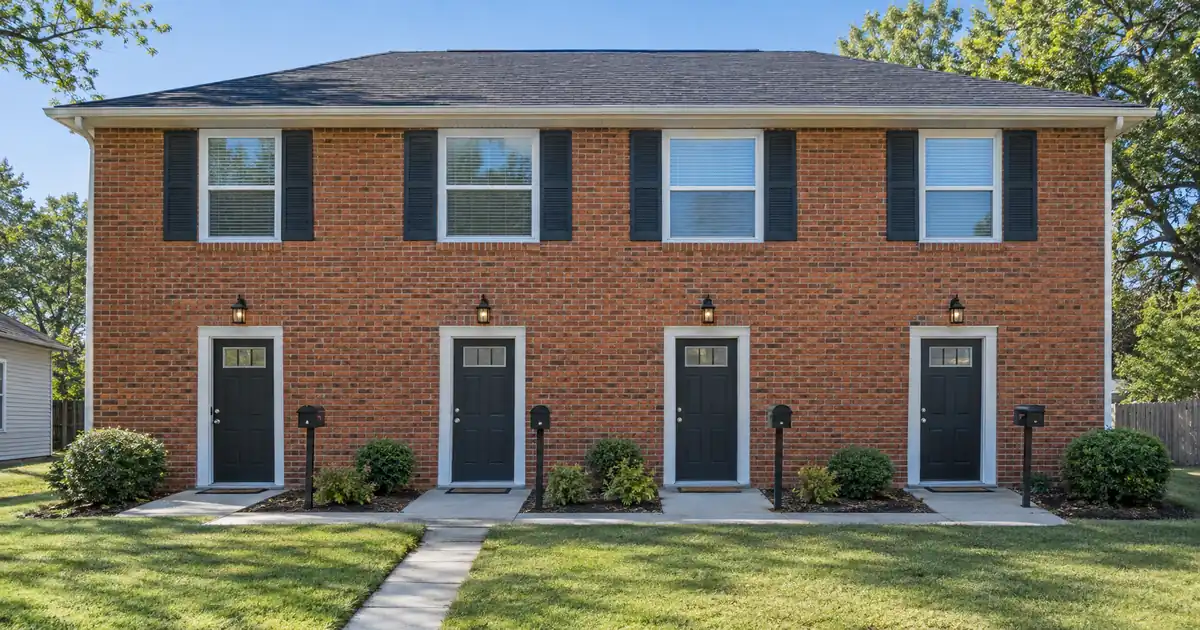
The Quick Read: The cash you walk away with is the loan cap minus what you owe, minus financed costs. On a conventional loan for a home you live in, the cap is 75% of appraised value for two to four units. Many borrowers expect the one-unit figure of 80%, so the check often comes in smaller than they planned. A cash-out refinance never converts 100% of your equity into cash, and what you receive depends on the appraisal, your existing liens, and lender guidelines.
Key Takeaways
- The cap limits the new loan. It is not the share of your equity you can take.
- A conventional two-to-four unit primary residence caps at 75% of value. A one-unit home caps at 80%.
- Net cash equals value times the cap, minus every payoff and every financed cost.
- Paying off a HELOC or other second lien can turn a “limited” refinance into a full cash-out.
- Only part of the rent from the other units counts toward qualifying.
- All figures are subject to lender guidelines and full file review. Nothing here is a commitment to lend.
What “Release” Means on a Duplex, Triplex, or Fourplex
Equity is what your building is worth minus what you owe on it. A cash-out refinance replaces your current mortgage with a bigger one. The extra comes to you as cash. The CFPB’s home-equity guide describes it the same way and notes that no home-equity option turns all of your equity into cash.
The word “release” is the trick. You do not release all your equity. The lender sets a ceiling on the new loan, and you keep a cushion of equity in the building. That cushion is the flip side of the cap. On a 75% cap, 25% of the value must stay in the property.
Two-to-four unit buildings get a lower ceiling than single-family homes. These buildings carry more moving parts, such as tenants, vacancy, and a bigger appraisal. Lenders price that extra risk into the leverage they allow.
Here are the terms you will see below:
- Cap: the maximum new loan, shown as a percentage of appraised value.
- Payoff stack: every lien that must be paid off at closing.
- Net cash: what is left after payoffs and financed costs.
- Stranded equity: equity you own on paper that the cap keeps out of reach.
The Release Formula, Step by Step
The math is short. Each step has a catch.
1. Get the appraised value. The appraiser’s number sets the cap. An online estimate or a tax assessment does not. A low appraisal cuts your proceeds directly.
2. Apply the cap. For a conventional loan on a two-to-four unit home you live in, multiply value by 75%. That is the largest new loan.
3. Subtract the payoff stack. Your current first mortgage comes off the top. So does any second mortgage or HELOC the lender requires paid off.
4. Subtract financed costs. Closing costs and prepaids rolled into the new loan use up part of the cap before you see any cash.
5. What remains is your net cash. If the result is zero or negative, the cap leaves nothing to release.
Step 4 is the one that catches people off guard. Costs you finance shrink the check one for one. Costs you pay out of pocket leave the check whole. Neither is better in every case. It is a trade between cash now and a bigger balance later.
Cap by Unit Count and Occupancy
The cap moves with the number of units, with whether you live there, and with the program. Here is how the main conventional and government options line up for a home you occupy.
| Loan type | One unit | Two to four units |
|---|---|---|
| Conventional cash-out | 80% | 75% |
| Conventional limited cash-out | 95% | Up to 95% |
| FHA cash-out | 80% of adjusted value | 80% of adjusted value |
| FHA Streamline / VA IRRRL | No cash out | No cash out |
The conventional figures come from the Fannie Mae Eligibility Matrix. Freddie Mac’s Guide shows the same 75% for a two-to-four unit primary residence. The FHA ceiling comes from a HUD Mortgagee Letter that cut it from 85% to 80% of adjusted value.
VA cash-out is its own animal. VA sets its own limit, and lenders often apply lower caps of their own. Check the current VA rule and your lender’s cap before you plan around a VA number on a multi-unit building.
If you do not live in one of the units, occupancy changes the program and the rules. That is no longer an owner-occupied loan. Everything here assumes you live in the building.
Limited cash-out is the 95% row. It is closer to a refinance. The new loan pays off your first mortgage and costs, with only a small amount of incidental cash back. It releases no real equity. It also does not cover paying off a HELOC you drew for other purposes. More on that below.
Worked Examples in Percentages of Value
These are modeled assumptions, not market data. Every figure is a share of appraised value, so you can scale it to your own building. They ignore financed costs, which come off the result.
Same balance, one unit versus two-to-four
Say you owe 60% of value on your first mortgage and nothing else.
- One-unit home at an 80% cap: 80% minus 60% leaves 20% of value as cash.
- Two-to-four unit home at a 75% cap: 75% minus 60% leaves 15% of value.
Same debt, same equity. The multi-unit owner gets a quarter less cash, because the cap drops from 80% to 75%. The percentage gap looks small. On a building worth several hundred thousand dollars, it is a real number.
A payoff stack with a second lien
Now say you owe 50% of value on the first mortgage and 10% on a HELOC.
- The cap on a two-to-four unit home is 75%.
- The payoff stack is 50% plus 10%, which equals 60%.
- Net cash is 75% minus 60%, or 15% of value, before costs.
The lender pays off the HELOC out of the new loan, so it does not show up as cash in your hand. It shows up as a smaller check.
A balance that leaves nothing
Say you owe 74% of value. The cap is 75%. The gap is one point before costs. If you finance closing costs, the math goes negative. The cap blocks the transaction as a cash-out. Your equity is real, but it is stranded.
This is the low-equity reader’s answer. If your balance sits within a few points of the cap, the refinance cannot release meaningful cash. Wait for the balance to fall or the value to rise.
How the Appraisal and Rent Work on Multi-Unit Files
The appraisal does two jobs. It sets the value that the cap applies to. For a two-to-four unit home it also supports the rent from the other units. The appraiser prepares an income-property report with a rent schedule, which is more involved than a single-family report.
Rent does not raise your cap. It affects whether you qualify, not how much you can borrow against the value.
For qualifying, Fannie Mae’s Desktop Underwriter job aid says net rental income can be added to your income on a two-to-four unit principal-residence refinance. The full proposed housing payment still counts in your debt ratio. Lenders typically count 75% of lease or market rent, to allow for vacancy. The unit you live in does not produce rent.
So a landlord who lives in the building may qualify for less than the raw rent suggests. The total ratio ceiling on most automated files is 50%. Manually underwritten loans run tighter, at 36% or 45% depending on the reserve and score factors. Freddie Mac’s two-to-four unit page lists a 620 minimum score and a 45% debt-ratio maximum for manually underwritten loans.
When your total ratio on a cash-out goes above 45%, expect a reserve requirement. Fannie Mae’s cash-out selling guide section requires six months of reserves on automated files above that mark. Reserves are money left in the bank after closing. Terms vary by lender guidelines, property type, leverage, credit profile, and full file review.
Where the General Rule Breaks
The 75% cap is the rule. These are the places it bends, or stops applying.
Seasoning clocks. The mortgage being paid off must be at least 12 months old, counted from note date to note date. At least one borrower must have been on title for six months. A newer loan or a recent purchase can fail one of these tests.
Named exceptions. Inheritance, a divorce or separation award, and delayed financing (a recent all-cash purchase) can skip the title wait. Each has its own paperwork.
The limited cash-out trap. On a limited cash-out, only subordinate liens used to buy the property can be paid off and rolled in. Pay off a HELOC you drew for other purposes, and the loan is reclassified as a full cash-out. The cap drops from 95% to 75%, and the numbers change completely. Taking more cash back than the limited tolerance allows has the same effect.
Property listed for sale. A listing must come down before the loan funds.
No lien at all. A property you own free and clear can still take a new loan. Conventional rules treat it as a cash-out.
Loan size and state rules. Conforming loan limits rise with unit count, and a large balance can push you into jumbo territory, where different lanes apply. State rules can also cap leverage. In Texas, for example, the state constitution limits cash-out on a homestead. Ask your loan officer which limits apply in your state.
Overlays. Some lenders add their own limits on top of the agency rules. You may see 70% quoted for a two-to-four unit from one source and 75% from another. The agency figure is 75%. A lower number is usually a lender overlay, and it can change which lender is the right fit.
Streamlines Do Not Release Equity
Two government products get confused with cash-out. The FHA Streamline and the VA IRRRL (Interest Rate Reduction Refinance Loan) are for borrowers with an existing FHA or VA loan. Neither pays out cash. The FHA Streamline sizes the new loan from the balance you already owe. The IRRRL is limited to a lower-cost swap of the existing VA loan, with a net tangible benefit test.
They are useful for the right borrower. They are the wrong tool when the goal is to pull equity out.
Take the Maximum, or Less?
The cap is a ceiling. You do not have to borrow to it. A smaller cash-out leaves more cushion and a smaller balance.
Before you take the maximum, run through these questions:
- What is the cash for? Repairs that add value to the building are different from paying off other debt. The CFPB’s 2025 cash-out report says that paying unsecured debt with home equity makes sense only if the cost of getting the cash is lower than the cost of the debt retired. It also warns that converting unsecured debt to mortgage debt puts the home at risk.
- What happens to the payment? The new loan is larger and the term resets, so the payment may rise and the payoff may stretch out.
- Can the building carry it? Only 75% of rent counts toward qualifying, while the whole payment counts as an expense. Run the ratio before you commit.
- What do the costs eat? Financed costs reduce your check dollar for dollar. If the costs take most of the cash, the refinance may not be worth doing.
Tax treatment can depend on your situation; borrowers should speak with a qualified tax professional before relying on any deduction or credit.
Alternatives to a Cash-Out Refinance
| Option | First mortgage | Best when |
|---|---|---|
| Cash-out refinance | Replaced | You want one loan and cash |
| HELOC or home equity loan | Left in place | Your current loan is worth keeping |
| Rate-and-term refinance | Replaced, no real cash | You want a new term, not cash |
A HELOC or home equity loan sits behind your first mortgage and leaves it in place, according to the CFPB Office of Research blog on cash-out refinance borrowers. That matters if the loan you hold has terms worth keeping. Rate-and-term is the opposite choice. It changes the loan without taking equity out.
On a two-to-four unit property, each option has its own leverage rules. Compare them side by side before you choose. Lendmire’s cash-out refinance programs page lays out how the conventional and government options work.
Where to Go From Here
If you are weighing a cash-out refinance against keeping the loan you have, Lendmire can help you compare the programs and the equity each one reaches. Lendmire is a mortgage broker, so the loan itself comes from a wholesale lender, subject to lender guidelines and full file review. Start with three numbers: your estimated value, your total payoff stack, and the cash you actually need.
Frequently Asked Questions
Can I take out all my equity on a duplex?
No. The loan cap leaves a cushion of equity in the building. On a conventional loan, that cushion is 25% of the appraised value for a two-to-four unit home you live in. Payoffs and financed costs shrink your check further.
Why do I get less cash on a triplex than on a single-family home with the same equity?
The cap is lower, so the new loan is smaller. A one-unit home caps at 80% and a two-to-four unit home at 75%. With the same balance owed, the multi-unit owner has five fewer points of value to draw on.
Does the rent from my other units raise how much I can borrow?
No. Rent affects qualifying, not the cap. Lenders typically count 75% of lease or market rent toward your income. The full housing payment stays in your debt ratio. The unit you live in produces no rent.
What if my balance is close to the cap?
Then the cash-out may release little or nothing. Once financed costs are subtracted, you can end up with nothing to receive. A balance within a few points of the cap usually means waiting for the balance to drop or the value to rise.
Will paying off my HELOC change my loan?
Yes, it can. A HELOC drawn for purposes other than buying the property is not an eligible payoff on a limited cash-out. Paying it off makes the loan a full cash-out. The cap falls from 95% to 75%.
For your own numbers, request a scenario review with Lendmire.
About Lendmire
Lendmire is a mortgage brokerage (NMLS# 2371349) licensed for consumer mortgage lending in 16 states, arranging FHA, VA, conventional and jumbo purchase and refinance loans through a wholesale lending network. Eligibility is determined by the lender on each file. Scotsman Guide named Lendmire a Top Mortgage Workplace in both 2025 and 2026.
Get Started
Ready to find the right loan for you?
In about 30 seconds you can review financing options available for your home or investment property. No commitment required.
Informational only. Not a Loan Estimate, approval, or commitment to lend. Program availability and eligibility are subject to lender guidelines, credit approval, property review, and underwriting.
References
2. Fannie Mae Eligibility Matrix
3. HUD Mortgagee Letter 2019-11
4. Fannie Mae Desktop Underwriter Job Aid, Rental Income
5. Freddie Mac 2–4 Unit Mortgages page
6. Fannie Mae Selling Guide B2-1.3-03, Cash-Out Refinance Transactions
7. CFPB, Cash-Out Refinances and Paydown Behavior of Non-Mortgage Debt Balances
8. CFPB Office of Research blog, A Look at Cash-Out Refinance Mortgages and Their Borrowers
This article is part of Lendmire’s Refinance series — every loan program’s qualification details, guidelines, and scenarios live on the loan options page.
Related reading: How Much a Duplex Cash-Out Releases When Scaling to More Doors · How Much Equity a Cash-Out Refi Releases When Scaling to Ten Doors · Does a Divorce Equity Buyout Count as a Cash-Out Refinance?
Brandon Miller
Founder & CEO, Mortgage Loan Originator, Lendmire LLC
- Mortgage Loan Originator · NMLS# 1129696 · Verify on NMLS Consumer Access
- North Carolina Real Estate Broker · License# 343312 · Verify on NCREC
- North Carolina Insurance Producer · License# 19053198 · Property, Casualty, Life, Health · Verify on NAIC SBS
- Lendmire LLC · Firm NMLS# 2371349 · Verify firm licensure
Legal disclosures. Lendmire (NMLS# 2371349) is a state-licensed mortgage brokerage that arranges financing through wholesale lender relationships. Lendmire is not a direct lender, depository institution, or registered financial advisor. The discussion above is general informational content about real estate financing — it is not financial, legal, or tax advice, and readers should consult licensed professionals for guidance on their individual circumstances. Loan inquiries are subject to lender underwriting; this article does not represent a commitment to lend. Loan terms, rates, and qualification standards vary by borrower, property, and state, and are subject to change at any time. Equal Housing Opportunity. NMLS Consumer Access: nmlsconsumeraccess.org.