
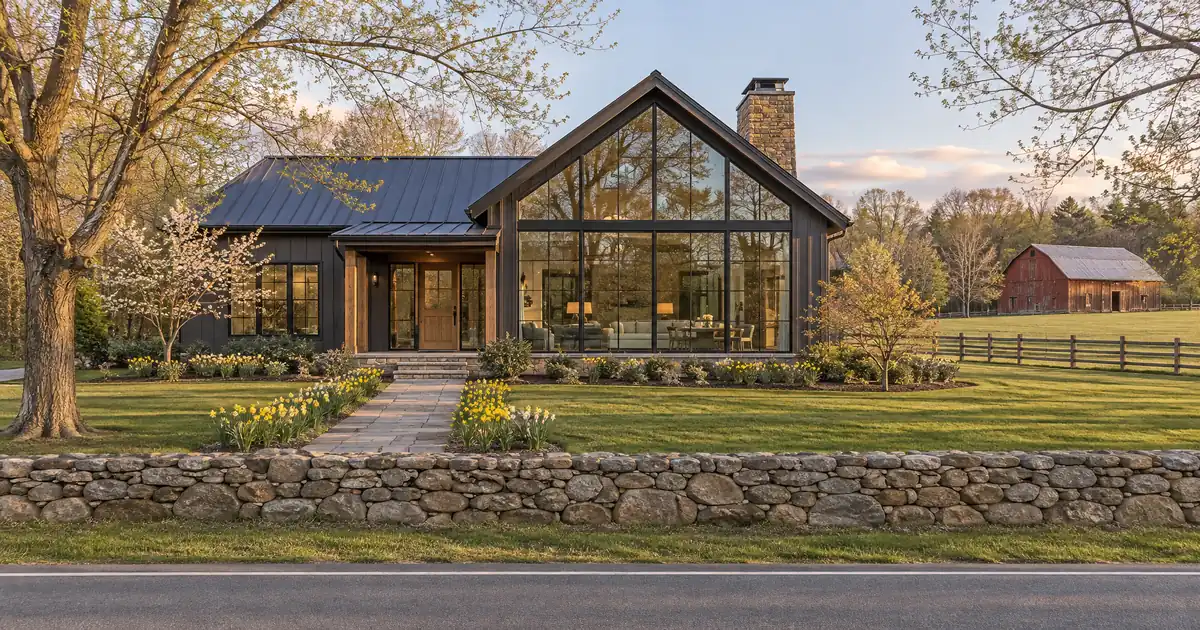
The Quick Read: Both loans depend on what an appraiser says your home is worth, and on a rural property that number is the hardest part. A cash-out refinance replaces your current mortgage with a larger one and hands you the difference. A home equity loan leaves your mortgage alone and adds a second loan on top. Which one fits depends on your current loan, how much cash you need, and how confident you are in the value.
The Honest Answer First
A cash-out refinance is for the homeowner who wants one loan, one payment, and a mortgage they are happy to replace. A home equity loan is for the homeowner whose current first mortgage is worth keeping and who needs a smaller, one-time sum.
Cash-out refinance estimate
The starting figures are an example value with a balance and a cash request in proportion. Replace them with yours.
Editable benchmark: 7.18% as of November 5, 2026 · Freddie Mac 30-year average via FRED®. A conventional market reference, not a cash-out refinance quote.
Illustrative starting assumptions: a $350,000 home value, a $193,000 current balance, the agency cap on a one-unit principal residence, a thirty-year term at the current Freddie Mac benchmark, and property taxes and insurance estimated at typical national rates. Every field is editable.
Illustrative estimate only — not a Loan Estimate, approval, quote, or commitment to lend. The rate field carries the weekly Freddie Mac thirty-year conventional benchmark, a market reference and not a cash-out refinance quote; a cash-out loan is priced by the lender at lock. The cash available is the loan the program cap allows less the balances paid off, before closing costs, which are not included. The HELOC line is the program’s combined loan-to-value ceiling applied to the same value and balance. Taxes and insurance are editable estimates. Licensed in sixteen states for consumer mortgages.
Rural homes add a twist. Appraisers value a house by comparing it with similar homes that recently sold nearby. In the country, those sales can be few and far apart. A thin set of sales can lower the supportable value, and a lower value shrinks the cash on either product.
Lendmire’s cash-out refinance programs page covers the first-lien side in more detail. Lendmire is a mortgage broker, so it arranges these loans through wholesale lenders and does not lend itself. Every figure below is subject to lender guidelines and full file review, and none of it is a commitment to lend.
Key takeaways
- A cash-out refinance on a one-unit primary residence generally tops out at 80% of the home’s value.
- A home equity loan is a second lien, so its limits and valuation method are set by the lender making it.
- Thin comparable sales hurt both loans, but they do not automatically disqualify a rural home.
- Acreage alone is not the test. Whether the property is residential in character is.
- A home equity loan only makes sense if the first mortgage is one you want to keep.
Side-by-Side
| Factor | Cash-Out Refinance | Home Equity Loan |
|---|---|---|
| Lien position | New first mortgage | Second mortgage |
| Existing mortgage | Paid off and replaced | Stays in place |
| Max leverage | 80% on one-unit primary home | Set by the second-lien lender |
| Credit floor | 620 decision score on wholesale conventional | Set by the second-lien lender |
| Mortgage insurance | None at the 80% cap | Generally none |
| Occupancy | Primary, second home, or rental; leverage varies | Set by the lender |
| Documentation | Full income, asset and credit review | Lender-set, often lighter |
| Valuation | Full appraisal typical | May allow an automated or lighter valuation |
| Rural sensitivity | High; one value drives the whole loan | High; value also sets room above the first loan |
Two notes on the table. The 80% figure drops to 75% for two- to four-unit homes, second homes and rental property, so occupancy sets the leverage. In Texas, a cash-out on a homestead is capped at 80% of the home’s value by the state constitution.
The mortgage insurance row also deserves a caveat. On the agency path, mortgage insurance is required above 80% loan-to-value, except in the wholesale no-MI cash-out lane. A standard cash-out stops at 80%, so the question rarely comes up.
Why a Rural Appraisal Is Different
An appraiser needs sales that look like your home. In town, that is easy. In the country, the last similar sale may be a few miles away or a year or two old.
Fannie Mae’s comparable sales rule acknowledges this. Comparables should appeal to the same buyers, but they do not have to be identical. Sales from competing market areas can be used when they are the best evidence available. In thin markets the appraiser may reach back further in time and must explain why.
That flexibility helps, but it does not make the number generous. Land, outbuildings and acreage are hard to price. A cautious appraiser may give them little credit.
Acreage is also less of a barrier than many owners assume. Freddie Mac says it sets no site size or acreage limits. The test is whether the property is residential. A large parcel in farm country may draw closer review, and individual lenders can add their own overlays. A home used mainly for farming or commercial purposes can fall outside conventional financing.
Here is a way to picture it. Two homeowners each want to pull out a similar share of equity. One lives in a subdivision with plenty of recent sales. The other lives on a rural lot where the best comparable sold farther away. The second appraisal carries more uncertainty, and that uncertainty lands on whichever loan they pick.
When a Cash-Out Refinance Is the Better Fit
Choose the cash-out refinance when you need a larger amount and your existing mortgage is not one you are protecting.
You want one payment. The new loan replaces the old one, so you carry a single mortgage. A home equity loan adds a second payment on top of the first. The CFPB notes that a second mortgage adds to your overall debt burden.
You need a bigger sum or have lots of equity. Because the new loan can reach 80% of value on a one-unit primary home, it can unlock more than many second liens allow. The exact amount depends on the appraised value and your qualifying profile.
Your first mortgage is not worth keeping. A cash-out reprices the whole balance. If the terms on your current loan are no better than what you could get today, replacing it costs you little. If they are better, you are giving up something real.
You need a stronger valuation process. A first-lien refinance typically comes with a full appraisal. Under the CFPB’s Regulation B, lenders must give you a copy of appraisals and written valuations on credit secured by a first lien on a dwelling. You can read the comparables the appraiser chose and challenge errors. Second-lien loans are generally outside that rule, according to the CFPB’s compliance guide.
Your credit and file are solid. Across wholesale conventional programs, the floor starts at a 620 decision score. For most files, the automated underwriting finding decides eligibility, with a total debt ratio ceiling of 50%. Your score, ratios and reserves affect eligibility and terms.
Some limits apply. The loan you are paying off must be at least 12 months old, measured from note date to note date, and a borrower must have been on title for six months. Fannie Mae’s cash-out refinance guide lays out the 12-month rule and the delayed financing exception for cash buyers. If you refinanced recently, the clock matters.
A wholesale lane also reaches 89.99% loan-to-value with no mortgage insurance. It needs a 680 score, a 50% ratio, a thirty-year fixed rate, a primary residence and a conforming balance, with its own six months of seasoning. It is not written in Texas. A thin-comp rural appraisal makes that much leverage harder to reach, so treat it as a ceiling, not a plan.
When a Home Equity Loan Is the Better Fit
Choose the home equity loan when your first mortgage is the asset and the cash is the add-on.
You are protecting your current mortgage. A home equity loan leaves the first loan untouched. If those terms are hard to replace, this is the main argument for a second lien.
You need a smaller, defined amount. A closed-end home equity loan pays the full amount at once, with no redraw afterward. That fits a single project or expense.
You have meaningful equity left over. The loan sits behind your first mortgage, so the lender looks at the value minus what you already owe. More equity after the first lien gives it more room.
You want lighter valuation, with a caution. Some second-lien lenders may rely on an automated valuation, a broker price opinion or an evaluation instead of a full appraisal. That can be convenient, but automated models tend to be weaker where sales data is thin, which is the rural case. Treat that as a general caution, not a rule. A weak model can undervalue your home, or the lender can simply decline to rely on it.
You can absorb a second payment. The CFPB points out that second mortgages often carry higher interest rates than first mortgages, because a second lender is repaid second if the home is sold to cover debts. Your budget should handle both payments.
How a Low Value Hits Each Loan
Say the appraisal comes in meaningfully below what you expected.
On a cash-out refinance, the maximum loan is a percentage of the lower value. Your cash-out amount shrinks, and the loan may no longer pay off your old mortgage and still leave anything for you. At that point the refinance may stop making sense.
On a home equity loan, the lower value shrinks the room above your first mortgage. The first loan stays the same size, so the whole reduction comes out of the second lien. A small cushion can disappear.
Both products take the same hit, but it shows up differently. The refinance reprices everything. The second lien absorbs the whole shortfall.
Before ordering anything, ask the lender three questions:
1. Which valuation will you use: a full appraisal or an automated one?
2. Do you have acreage or property-type overlays?
3. Is the appraiser familiar with our area?
Gather your own evidence as well. Sales of similar nearby homes, improvement records and a survey can help the appraiser understand your property.
Edge Cases Worth Knowing
- FHA and VA loans. The FHA Streamline and the VA IRRRL lower the cost of an existing government loan, but neither gives you cash back. For equity, FHA and VA borrowers use that program’s own cash-out product, a conventional loan, or a second lien.
- Paid-off homes. If your home has no mortgage, any new loan against it is the only lien on the property. Conventional rules treat a new first mortgage on a free-and-clear home as a cash-out refinance, so the 80% limit on a one-unit primary home applies.
- Rental or second homes. Occupancy sets the leverage. Anything other than a one-unit primary home is capped at 75% on a conventional cash-out.
- Manufactured homes. These are treated differently in agency eligibility, so confirm early.
Key Terms Defined
Comparable sale (comp): A recent sale of a similar nearby home that an appraiser uses to estimate value.
Second lien: A loan secured by your home while another mortgage already is. It is repaid second if the home is sold.
Seasoning: The waiting period a lender requires, such as how long the loan you are paying off has existed.
The Balanced Verdict
Neither loan wins on a rural property. The deciding factors are your first mortgage and your valuation risk.
If your current mortgage has terms you would struggle to replace, and you need a modest sum, a home equity loan is the more natural fit. Just confirm how the lender will value the home. If your first mortgage is not worth protecting, you need a larger amount, or you want one payment, a cash-out refinance is cleaner. Its full appraisal takes more effort to obtain, but you get to see the comparables behind it.
A toss-up case: you have a modest first mortgage and a strong credit profile, but the rural comps are poor. Here the safer play may be to find out the value first, then choose. Choosing before you know the value invites the awkward result of a refinance that no longer works or a second lien that cannot reach your number.
If you are weighing a cash-out refinance against keeping the loan you have, Lendmire can help you compare the programs and the equity each one reaches.
Frequently Asked Questions
Does having several acres disqualify me from a conventional cash-out refinance?
Not by itself. Freddie Mac says it has no acreage limit; what matters is that the property is residential in character. A home used mainly for farming or commercial purposes can be ineligible, and individual lenders may add their own acreage overlays. Ask before you pay for an appraisal.
What if the appraiser cannot find recent comparable sales?
The appraiser can use older sales or sales from competing market areas, and must explain the choice. That is allowed under Fannie Mae’s guidance. The result can still be a more conservative value, so supply your own sales data and improvement records up front.
Can I get a cash-out refinance if I refinanced recently?
Usually not right away. On a conventional cash-out, the mortgage being paid off must be at least 12 months old, and a borrower must have been on title for six months. Exceptions exist, such as delayed financing for cash buyers.
Will I get a copy of my appraisal?
On a first-lien loan such as a cash-out refinance, generally yes. Federal rules require lenders to provide valuation copies on credit secured by a first lien on a dwelling. Second-lien loans are generally not covered.
Can an FHA Streamline or VA IRRRL get me cash?
No. Both refinance an existing government loan without giving cash back. If you need equity, look at that program’s cash-out product, a conventional cash-out, or a second lien.
For your own numbers, request a scenario review with Lendmire.
For current guidelines and terms, see Lendmire’s refinance programs page.
About Lendmire
Lendmire — NMLS# 2371349 — is a mortgage broker that arranges FHA, VA, conventional and jumbo home purchase and refinance financing in 16 states through wholesale lenders. Every option is subject to the lender’s guidelines and full underwriting. Scotsman Guide named Lendmire a Top Mortgage Workplace in both 2025 and 2026.
Get Started
Ready to find the right loan for you?
See your offer in seconds. No credit pull, no obligation.
Informational only. Not a Loan Estimate, approval, or commitment to lend. Program availability and eligibility are subject to lender guidelines, credit approval, property review, and underwriting.
References
1. Fannie Mae Selling Guide B4-1.3-08, Comparable Sales
2. Freddie Mac Guide FAQ on Rural Properties
3. CFPB: second mortgage or junior lien
4. CFPB Regulation B §1002.14, Rules on Providing Appraisals and Other Valuations
5. CFPB ECOA Small Entity Compliance Guide
6. Fannie Mae Selling Guide B2-1.3-03, Cash-Out Refinance Transactions
This article is part of Lendmire’s cash-out refinance program — full qualification details, guidelines, and scenarios live on the program page.
Related reading: How to Get a Higher Loan-to-Value on a Cash-Out Refinance · How Lenders Underwrite a Cash-Out Refinance on a Home You Own · How to Meet Seasoning for a Cash-Out Refinance on a Primary Home
Brandon Miller
Founder & CEO, Mortgage Loan Originator, Lendmire LLC
- Mortgage Loan Originator · NMLS# 1129696 · Verify on NMLS Consumer Access
- North Carolina Real Estate Broker · License# 343312 · Verify on NCREC
- North Carolina Insurance Producer · License# 19053198 · Property, Casualty, Life, Health · Verify on NAIC SBS
- Lendmire LLC · Firm NMLS# 2371349 · Verify firm licensure
Required disclosures. Lendmire (NMLS# 2371349) operates as a licensed mortgage broker, not a direct lender or depository. The discussion in this article is general in nature and should not be relied upon as financial, legal, or tax advice — every investment scenario is unique and should be reviewed by a qualified professional. Any loan inquiry is subject to lender underwriting, and this article is not a commitment to lend or a guarantee of approval. Mortgage rates, loan terms, and program guidelines vary by borrower, property, and state, and may change without notice. Equal Housing Opportunity. Verify licensure at NMLS Consumer Access.