
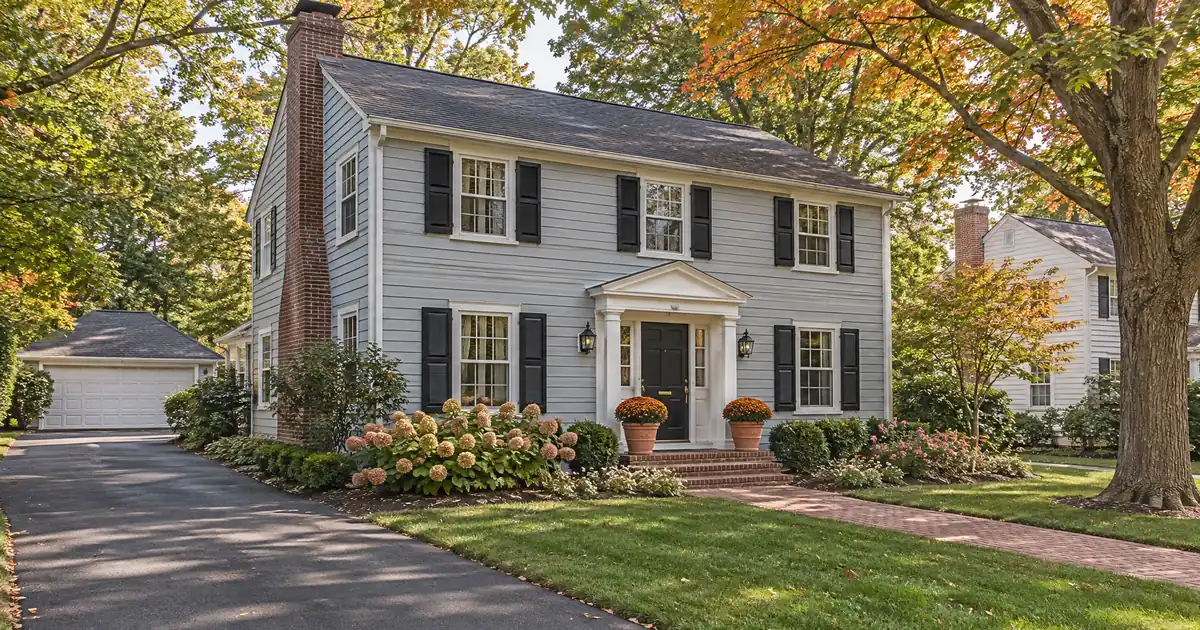
The Quick Read: A married Veteran can generally take a VA cash-out loan in their own name, even on a home owned before the marriage. Whether the spouse still signs something depends on three separate questions: state marital-property law, how title is held, and VA’s occupancy rules. Signing a lien document is not the same as becoming a borrower. And in community property states, the spouse’s debts can count against the Veteran even when the spouse is off the loan.
What Does “Without Your Spouse” Actually Mean?
Leaving your spouse off the loan means they are not a borrower. They don’t sign the promissory note, their income isn’t counted, and they aren’t personally liable for repayment. That is a different thing from skipping every signature at closing.
VA cash-out estimate
Seeded with an example value, a typical balance, and a round cash request at the first-use fee; change any field.
Editable benchmark: 7.18% as of November 5, 2026 · Freddie Mac 30-year average via FRED®. A conventional market reference, not a VA cash-out refinance quote.
Illustrative starting assumptions: a $350,000 home value, a $193,000 current balance, the full-value VA cap with the first-use funding fee financed, a thirty-year term at the current Freddie Mac benchmark, and property taxes and insurance estimated at typical national rates. Every field is editable.
Illustrative estimate only — not a Loan Estimate, approval, quote, or commitment to lend. The rate field carries the weekly Freddie Mac thirty-year conventional benchmark, a market reference and not a VA cash-out refinance quote; a VA loan is priced by the lender at lock. The total loan, funding fee included, is capped at the program leverage on the reasonable value; the fee follows the tier chosen. The cash available is what the cap allows less the balances paid off and the fee, before closing costs, which are not included. The HELOC line is the line program’s combined loan-to-value ceiling applied to the same value and balance. Taxes and insurance are editable estimates. The debt-to-income figure is a guideline; residual income decides a VA file. Licensed in sixteen states for consumer mortgages.
Most confusion comes from mixing up three documents:
- The note is the promise to repay. Only borrowers sign it.
- The deed of trust or mortgage gives the lender a lien on the property. Sometimes a non-borrowing spouse must sign this one.
- Consent or homestead forms are state-specific papers some title companies require when a spouse has marital rights in the home.
A spouse who signs the lien paperwork has not agreed to repay anything. They have only agreed that the lender’s lien is valid against whatever rights they hold in the house.
Veterans often assume “not on the loan” means “nothing to sign.” The title company then flags a signature requirement shortly before closing, and the spouse is out of town. Raising it early costs nothing.
Does a Premarital Home Change the Rules?
VA has no special rule for a premarital home. The program cares about your eligibility, the property’s value, your income and your occupancy. Whether the home came into the marriage with you matters mostly to state law and to the title company, not to VA.
Here’s the catch. Owning the home before marriage helps, but it doesn’t settle everything. In some states, homestead or marital-property rules can give a spouse rights in the family residence even when the deed carries only one name. Mortgage payments made during the marriage, or improvements paid for with marital funds, can also complicate the picture in some states. The rules vary, and no single national answer exists. That’s why this one is a question for the title company or a local real estate attorney, not something to assume.
The practical reading: sole title in your name from before the marriage is the cleanest starting position. It is not a guarantee that the spouse never signs anything.
How Is a VA Cash-Out Underwritten, Step by Step?
A VA cash-out is a full-underwriting refinance. It is not a streamline. It needs a new appraisal, a credit review and an income review. Here is the sequence, from the Veteran’s side.
1. Confirm eligibility. VA’s cash-out page lists two requirements: you qualify for a Certificate of Eligibility (COE), and you will live in the home you’re refinancing. The loan comes from a private lender, not from VA directly.
2. Map title and state law. Who is on the deed, and where the home sits, set the signature picture. The lender and title company are responsible for confirming which instruments state law requires.
3. Review spouse credit and debts, where required. In community property states, the lender must look at the spouse’s credit even if the spouse is off the loan. More on that below.
4. Certify occupancy. The Veteran certifies they live in the home or intend to.
5. Order the VA appraisal. The lender orders it. VA’s reasonable value, shown on the Notice of Value, sets the ceiling for the loan.
6. Run the net tangible benefit test. Every VA cash-out must show the Veteran a real benefit from the refinance. The Veteran receives that disclosure early in the process and again at closing.
7. Underwrite income and residual income. Residual income, the money left each month after debts and living costs, is the controlling test. The 41% debt-to-income figure is a guideline, not a hard cap. A higher ratio needs residual income well above the table.
8. Close and sign. The Veteran signs the note and the lien. A non-borrowing spouse signs only what state law or title requires.
Program figures here are subject to lender guidelines and full file review, and nothing here is a commitment to lend.
What Does the Program Itself Allow?
The numbers below are the envelope we work in across the wholesale lenders we use. Lendmire’s VA cash-out refinance program page covers the mechanics in more depth.
- Leverage: a VA cash-out can reach 100% of the appraised value, including the financed funding fee. It can refinance any loan type into a VA loan, including a non-VA mortgage.
- Mortgage insurance: none. VA loans don’t carry it.
- Credit: VA sets no minimum score, but the wholesale programs we place VA loans with start at a 580 decision score.
- Loan size: with full entitlement there is no VA loan limit. The wholesale programs we use serve amounts to $4,000,000.
- Seasoning and benefit: the cash-out carries seasoning requirements and a net tangible benefit test. The half-percent rate-reduction and fee-recoupment tests belong to the IRRRL streamline and don’t apply to a cash-out.
The 100% cap is a hard ceiling. According to the VA Lenders Handbook chapter on refinancing, the funding fee sits inside that cap and can’t push the loan above reasonable value.
When Does the Spouse’s Credit Still Count?
In community property states, the spouse’s debts count even when the spouse is off the loan. This is the biggest exception to “I can qualify alone.”
Under VA’s credit underwriting chapter, when the borrower lives in a community property state, or the property is in one, the lender must do four things:
- pull a credit report on the non-purchasing spouse;
- consider that spouse’s credit history;
- include the spouse’s monthly debt payments in the VA loan analysis;
- document its reasoning if it decides some of those debts should be excluded.
The rule applies “even if the Veteran wishes to obtain the loan in his or her name only,” per VA’s credit underwriting guidance. Two details matter. The spouse’s income is not counted unless the spouse is a borrower, so you carry the debts without the income. And a Veteran with satisfactory credit can still be a satisfactory risk when the spouse’s credit is poor, so a weak spouse score isn’t automatically fatal.
Community property states are a specific group, and Alaska lets couples opt in. Because the list of states can change in practice, confirm with your lender whether your state, and the state where the home sits, is treated this way. Note that the trigger works in either direction. If you live in one of these states, or the property sits in one, the rule applies.
Outside community property states, the handbook lets a married Veteran take the loan without regard to the spouse’s debts.
Can the Spouse’s Debts Be Excluded?
Sometimes. Exclusion generally requires that the lender document its reasoning, and the lender decides whether the file supports it. Lenders may also set their own stricter rules on top of VA’s. Some lenders ignore a non-borrowing spouse’s score in these states; others don’t. Ask early.
Can a Lender Force My Spouse to Co-Sign?
No, not just because you’re married. Regulation B, the federal rule implementing equal credit opportunity, bars a lender from requiring a spouse to sign the credit instrument when the applicant is reviewed on their own.
The rule has a limit that matters here. For secured loans, a lender may require the spouse’s signature on documents that state law makes necessary, or that the lender reasonably believes are necessary, to create a valid lien, pass clear title or waive marital rights. The Official Interpretations add a safeguard: if the signature is needed only to grant the lien, the spouse can’t be asked to sign a combined note-and-security document unless it carries a legend making clear the signature imposes no personal liability.
VA has its own rule on top of that. Under VA Circular 26-16-1, VA doesn’t allow someone to take title if they’re on neither the note nor the deed of trust. So a spouse or other owner who won’t sign the note must sign the deed of trust.
Put together: the lender can’t demand a co-borrower, but it can require a lien signature where title or state law calls for it.
Who Signs What? A Quick Reference
| Spouse’s situation | Signs the note? | Signs the lien? | Debts counted? |
|---|---|---|---|
| Not on title, common-law state | No | Usually no | Generally no |
| Not on title, community property state | No | Depends on state and title | Yes, in loan analysis |
| On title, not a borrower | No | Yes | Depends on state |
| On title and a borrower | Yes | Yes | Yes, with income |
Treat the table as a map, not a ruling. Your title company confirms the final answer.
Where the General Rule Breaks
A few situations deserve their own flag:
- Spouse added to the deed later. A co-owner who isn’t a borrower must sign the lien instrument, because of VA’s rule about being on the note or deed of trust.
- Community property state, spouse with heavy debts. Those payments count against you. Residual income is the controlling test, and the 41% debt-to-income figure is a guideline rather than a cap, so qualifying “alone” may not work if the spouse’s obligations push residual income too low.
- Property and residence in different states. The community property rule triggers if either one is in a community property state.
- Alaska. Treatment depends on whether the couple elected community property.
- Occupancy by someone else. The Veteran must certify personal occupancy. A spouse or dependent child’s occupancy substitutes only for a Veteran on active duty who can’t occupy the home within a reasonable time. Your spouse can’t sign the certification in your place.
- A home that’s now a rental. A rented-out home doesn’t fit this program. A VA cash-out requires that you live there.
- Non-VA mortgage payoff. This works. A VA cash-out can pay off a conventional or FHA loan and move it into a VA-backed loan. A streamline, by contrast, is VA-to-VA only and can’t cash anything out.
What About the Funding Fee?
The funding fee is the main VA-specific cost. On a cash-out it’s 2.15% for first use and 3.3% after first use, per VA’s funding fee page. Veterans receiving compensation for a service-connected disability, and other exempt groups, don’t pay it. The fee can be financed, but it counts toward the 100% ceiling. VA’s fee exhibit also confirms the reduced down-payment tiers don’t apply to refinances.
Using a cash-out also affects remaining entitlement and can put you in subsequent-use status for future VA loans, which changes the fee next time. Weigh that if you expect to buy again with VA.
What Does the Decision Look Like in Practice?
Picture a Veteran who bought a home years before marrying. Title is in their name alone, the VA loan or a conventional mortgage is in their name, and they want cash for repairs or debt payoff.
If they live in a common-law state and the spouse isn’t on title, the path is usually simplest. The Veteran is reviewed on their own income and residual income, and the spouse’s debts aren’t pulled in. The title company may still ask for a marital-status statement.
If they live in a community property state, the lender pulls the spouse’s credit and adds the spouse’s monthly debts. Using the cash-out to pay off a debt can remove that payment from the analysis once the debt is closed, which may help, though the lender decides how each debt is treated. VA doesn’t restrict how you use the cash, though lenders may set their own limits.
If the spouse refuses to cooperate with a credit report or a required signature, the loan can stall. That’s a lender and title issue, not a VA one, and it’s worth knowing before you pay for an appraisal.
The trade-off worth naming: a higher balance means less equity cushion. A spouse who signs the lien puts their home interest at risk if the loan defaults, even without signing the note. Some couples decide that’s fine. Others decide a smaller cash-out, or none, is the better call. Cash-out also costs entitlement and a fee, so a Veteran who only needs a modest sum might price out other options first. This one’s genuinely situational.
Prenuptial and postnuptial agreements can help a title company understand who owns what, though they don’t override state law on signatures. Bring a copy if you have one.
Before applying, gather:
1. your COE;
2. the deed and current mortgage statement;
3. any prenup or postnup;
4. the spouse’s debt list, if you’re in a community property state;
5. a plan for how the spouse can sign remotely if travel is an issue.
If the spouse’s signature is needed, ask whether mobile or remote signing and power of attorney are acceptable to the title company and lender. Practices vary.
Key Terms Defined
Certificate of Eligibility (COE): the VA document confirming you qualify for the home loan benefit.
Non-purchasing spouse: a spouse who isn’t a borrower on the loan.
Deed of trust: the document that gives the lender a lien on the home, used in place of a mortgage in some states.
Community property state: a state where most property and debts acquired during marriage belong to both spouses.
Residual income: the money left each month after debts, taxes and set living costs, which VA treats as the controlling test.
Net tangible benefit (NTB): VA’s requirement that a cash-out refinance give the Veteran a real, documented benefit.
Funding fee: a one-time VA fee, financeable and waived for exempt Veterans.
Frequently Asked Questions
Does my spouse have to be on a VA cash-out loan?
No. A married Veteran can generally take the loan alone. The spouse may still need to sign lien paperwork or provide documents, and in community property states the lender must count the spouse’s debts. Qualification stays subject to lender guidelines and full file review.
If my spouse signs the deed of trust, are they responsible for the loan?
No. That signature grants the lender a lien on the home and makes no promise to repay. The note is the repayment promise, and only borrowers sign it. The practical risk is that the home itself is at stake if the loan defaults.
Does owning the home before marriage mean my spouse’s name is irrelevant?
Not necessarily. Title and state homestead or marital-property law decide the signature question, not the purchase date alone. VA has no premarital-home rule, so ask your title company or a local attorney how your state treats it.
Can my spouse sign the occupancy certification for me?
Generally no. The Veteran certifies personal occupancy. The spouse exception applies only to a Veteran on active duty who can’t occupy the home within a reasonable time.
Is a VA cash-out the same as a streamline?
No. A streamline (IRRRL) refinances an existing VA loan, needs no new appraisal and allows no cash out. A VA cash-out needs a new appraisal, full underwriting and the net tangible benefit test, and it can refinance any loan type into VA.
If you are weighing a cash-out refinance against keeping the loan you have, Lendmire can help you compare the programs and the equity each one reaches.
For your own numbers, request a scenario review with Lendmire.
About Lendmire
Lendmire (NMLS# 2371349) is a mortgage brokerage serving homeowners and home buyers in 16 states. FHA, VA, conventional and jumbo purchase and refinance loans are arranged through wholesale lending channels; Lendmire brokers the financing and the lender underwrites each application. Scotsman Guide named Lendmire a Top Mortgage Workplace in both 2025 and 2026.
Get Started
Ready to find the right loan for you?
See your offer in seconds. No credit pull, no obligation.
Informational only. Not a Loan Estimate, approval, or commitment to lend. Program availability and eligibility are subject to lender guidelines, credit approval, property review, and underwriting.
References
1. VA.gov: Cash-out refinance loan
2. VA Lenders Handbook, Chapter 6: Refinancing Loans
3. VA Lenders Handbook, Chapter 4: Credit Underwriting
4. CFPB Regulation B, Section 1002.7
7. VA.gov: Funding fee and closing costs
8. VA Circular 26-23-06, Exhibit B
This article is part of Lendmire’s VA cash-out refinance program — full qualification details, guidelines, and scenarios live on the program page.
Related reading: How Lenders Underwrite a VA Cash-Out Refinance on a Home You Inherited · VA Cash-Out vs Adding a Spouse to Title on a Home Bought Before Marriage · How to Use VA Cash-Out Proceeds for Any Purpose on a Primary Home
Brandon Miller
Founder & CEO, Mortgage Loan Originator, Lendmire LLC
- Mortgage Loan Originator · NMLS# 1129696 · Verify on NMLS Consumer Access
- North Carolina Real Estate Broker · License# 343312 · Verify on NCREC
- North Carolina Insurance Producer · License# 19053198 · Property, Casualty, Life, Health · Verify on NAIC SBS
- Lendmire LLC · Firm NMLS# 2371349 · Verify firm licensure
Disclosure information. Lendmire is a state-licensed mortgage brokerage under NMLS# 2371349. Lendmire is not a depository institution, direct lender, or financial advisor — all loans referenced are placed through wholesale lender partners and are subject to each lender's underwriting standards. This article is provided for general informational purposes and is not a commitment to lend, nor does it constitute financial, legal, or tax advice. Loan programs, terms, rates, and qualification standards change without notice and depend on borrower profile, property type, and the state in which the subject property is located. Equal Housing Opportunity provider. NMLS Consumer Access: nmlsconsumeraccess.org.