
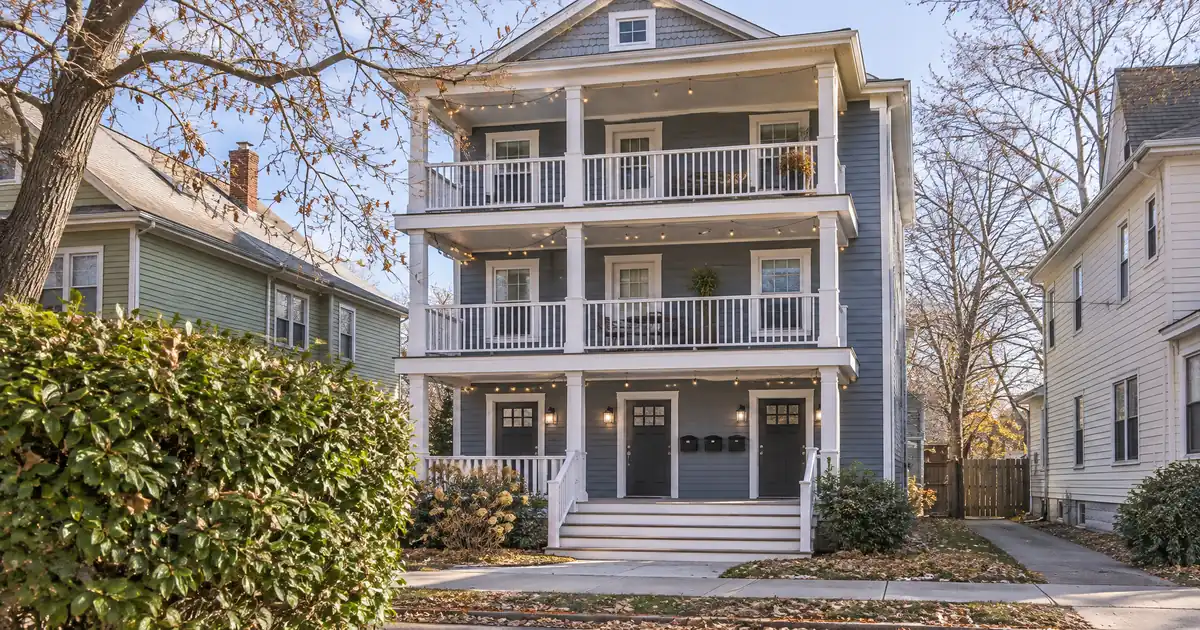
The Quick Read: you can do it, but only if you live in one of the three units. The other two being leased helps, though the lender discounts that rent and tests the building separately. Three things decide the file: 12 months of owning and living there, discounted rent that covers the full payment on the new loan, and enough equity under an 80% loan-to-value cap. Reserves from your own funds come on top.
What Does an FHA Cash-Out on a Triplex Actually Mean?
An FHA cash-out refinance replaces your current mortgage with a larger FHA-insured loan and pays you the difference in cash, after payoff and costs. On a triplex, the same rule applies as on a single-family home: it must be your principal residence.
FHA cash-out estimate
Seeded with an example value, a balance to match, and a round cash request; change any field.
Editable benchmark: 7.18% as of November 5, 2026 · Freddie Mac 30-year average via FRED®. A conventional market reference, not an FHA cash-out refinance quote.
Illustrative starting assumptions: a $350,000 home value, a $193,000 current balance, the FHA cap on a principal residence with the upfront premium financed, a thirty-year term at the current Freddie Mac benchmark, and property taxes and insurance estimated at typical national rates. Every field is editable.
An illustration, not a Loan Estimate, an approval, a quote, or a commitment to lend. The rate shown is the weekly Freddie Mac thirty-year conventional benchmark, used as a market reference; an FHA cash-out is priced by the lender at lock, and this is not an FHA cash-out refinance quote. HUD’s cap limits the base loan; the upfront premium is financed on top of the capped base loan; the monthly premium for the first year follows the snapshot’s schedule. Cash available means the base loan the cap permits less the balances retired, before closing costs, which this calculator leaves out. The line figure applies the line program’s combined loan-to-value ceiling to the same value and balance. Taxes and insurance are estimates you can edit. Licensed in sixteen states for consumer mortgages.
Many owners assume that two leased units turn the building into an investment property. They do not. The moment you live elsewhere, standard cash-out is off the table. (Lenders check this at the start, so it is better to know it before you apply.)
Here is how the FHA refinance options differ in practice:
| Option | Appraisal | Cash to you | Key condition |
|---|---|---|---|
| FHA cash-out | Yes | Yes | 80% LTV cap, 12 months’ occupancy |
| FHA rate-and-term | Yes | No | Up to 97.75% LTV on a home occupied for the prior 12 months |
| FHA Streamline | No | No | Existing FHA loan, net tangible benefit |
| Conventional cash-out | Yes | Yes | Different leverage limits on 2-4 units |
The Streamline refinances an existing FHA loan with a limited credit review and no appraisal. It pays out nothing. If cash is the goal, it is not the tool.
Who Qualifies Before the Math Even Starts?
Start with a short eligibility screen. If you fail any item, the rest of the file does not matter.
- Occupancy. You own the triplex and have lived in it as your principal residence for the 12 months before the FHA case number is assigned.
- Clock. The 12 months count back from case number assignment, not from closing day.
- Payment history. The loan being paid off has a clean record. Lenders look at on-time payments over the prior year.
- Credit. Across the wholesale programs Lendmire places FHA loans with, the starting point is a decision score of 580. HUD itself allows lower scores, but the network does not reach below 580.
- Co-borrowers. On a purchase, a non-occupant co-borrower can help. On a cash-out, that person’s income cannot be used to qualify.
- Owned or lived there under 12 months. Standard cash-out is not available. A rate-and-term refinance is a separate program with its own occupancy test, and it pays no cash either way.
One more edge: a free-and-clear triplex still counts as a cash-out. Pulling equity from a home with no mortgage follows the same 80% cap.
How Is the Loan Sized? (The 80% Cap Is Not 80% in Your Pocket)
The maximum loan on an FHA cash-out is 80% of the appraised, adjusted value. That is the total new loan, not the cash you receive. Your payoff, any other liens and financed costs come out of that amount first. What remains is yours.
Run it as a picture. Say you owe 55% of the appraised value today. The 80% cap leaves about 25% of value to cover closing costs, the financed upfront premium and your cash. Your cash is therefore less than 25% of value. Many owners expect more.
County loan limits also apply, and they are set by county for each unit count. A triplex gets a higher limit than a single-family home. HUD publishes the schedule in its annual forward mortgage limits letter. Check your county there, since the limit may or may not constrain your loan depending on the building’s value.
Mortgage insurance is part of the sizing. FHA charges an upfront premium of 1.75% of the base loan, which is usually financed into the balance. It also charges an annual premium that depends on term, loan amount and LTV, between 0.15% and 0.75% of the balance. At or below 90% LTV on a thirty-year loan, the annual premium ends after eleven years. A cash-out at the 80% cap sits under that line. Premium details are program facts, subject to lender guidelines and full file review.
How Does the Lender Count Rent From the Other Two Units?
Your own income comes first. Rent from the two leased units is added, but only part of it counts. HUD’s mortgagee letter on rental income and reserves calls for net rental income at 75% of the lesser of the stated rent figures. The haircut covers vacancy and upkeep.
The appraisal matters more than most owners expect. On a multi-unit file, the appraiser completes a form that reports both value and market rent for each unit. The lender uses that, plus your leases if you have them. Leases support the appraisal. They do not replace it.
The short version: a lender wants signed leases, proof the units are occupied, and a rental history that matches what you report.
Two cautions:
- Accessory dwelling unit rent cannot be used as income on a cash-out.
- Debt ratios still apply. The base pair is 31/43 (housing to total) with no compensating factors. Documented compensating factors can raise the limits up to 40/50, but only at the top tier and subject to lender guidelines, and the automated underwriting finding governs most files.
The Self-Sufficiency Test: Where Triplex Files Get Stuck
Three- and four-unit FHA loans must pass a rent test on top of your personal qualifying. It is called self-sufficiency, and it asks whether the building can carry itself. HUD’s archived refinance reference guide lists it among the rules for 3-4 unit refinances, alongside the reserve requirement. Final terms depend on the lender’s guidelines, the property type, and the borrower’s complete credit picture.
Here is how it works in plain terms. The appraiser’s market rent for the units is reduced for vacancy. Your full housing payment, mortgage insurance included, is then compared with that reduced rent, and the rent has to cover the payment in full. The exact vacancy-factor wording depends on the lender, so confirm it with your loan officer.
Why the test bites on a cash-out: taking cash out raises the loan balance, and a bigger balance means a bigger payment. The same triplex that passed at purchase can fail on refinance.
A modeled example, not a market figure: suppose the appraiser’s market rent, after the vacancy reduction, covers 108% of the new payment. You pass. Take a larger cash-out, push the payment up, and coverage might slip to 97%. You fall short of full coverage and fail, and the fix is a smaller loan.
The test uses the appraiser’s rent, not your leases. A tenant paying above market does not rescue the file.
What Do the Lease Scenarios Do to Your File?
Not every “all leased” triplex looks the same to a lender. This table shows how common situations land:
| Situation | Documents wanted | Effect on file |
|---|---|---|
| Both units on written leases | Leases, rental history | Cleanest path |
| Month-to-month tenancy | Lease or proof of payment history | Often workable, more questions |
| One unit vacant | Appraiser’s market rent | Rent test still runs; your income credit shrinks |
| Leases below market | Leases plus appraisal | Appraisal rent drives the test |
A vacant unit does not kill the file. The self-sufficiency test already assumes some vacancy. But a vacant unit leaves your income with less rental support, so the debt ratios tighten.
Reserves: The Liquidity Requirement People Miss
Three- and four-unit properties require three months of PITI in reserves after closing. PITI is principal, interest, taxes and insurance on the new loan. For one- and two-unit homes, the requirement is one month. HUD sets this in the same rental income letter cited above.
Reserves are money you hold in verified accounts after closing. Lenders generally do not count the cash-out proceeds toward them, so plan for the funds to come from your own savings. Reserves are separate from closing costs.
Some lenders set stricter reserve targets than HUD’s. That is an overlay, not a federal rule, and it varies from one lender to the next.
From Application to Funding: The Steps in Order
The sequence matters more than any date. Here is how a triplex cash-out moves:
1. Screen the basics. Confirm occupancy, ownership history and payment record.
2. Gather documents. Leases, rental history, bank statements, pay records and tax returns where required.
3. Apply and receive disclosures. You get a Loan Estimate that shows the loan terms and costs. Compare it line by line.
4. Order the appraisal. The multi-unit form captures value and market rent.
5. Underwriting. The lender runs your ratios, the 75% rent credit, the self-sufficiency test and the reserves.
6. Resolve conditions. Expect requests for tenant proof and updated statements.
7. Closing. You review the Closing Disclosure and sign.
8. Rescission period. Federal rules give you a waiting period on a refinance of your primary home. Funds are paid out after it ends.
That last step catches people. Cash does not arrive at the signing table.
Where Triplex Cash-Outs Stall (and the Fixes)
- Self-sufficiency falls short. Reduce the loan amount, or wait for rents to reach market and be documented.
- Reserves are thin. Build savings before applying. Cash-out proceeds will not fill the gap.
- Occupancy gap. Under 12 months at the property means standard cash-out is closed.
- Lease paperwork is missing. Tenants paying in cash with no records slow underwriting. Collect payment proofs early.
- Equity is tighter than expected. The 80% cap is on the total loan. If payoff and costs consume most of it, little cash remains.
The appraisal’s market rent feeds the self-sufficiency test, so it matters as much as your leases do. If the appraiser’s number lands below what your tenants pay, the test uses the lower figure.
Is FHA the Right Tool Here?
FHA cash-out suits an owner whose credit and occupancy history meet FHA’s rules but who has modest equity. The 580 starting score is gentler than many conventional programs. The tradeoff is mortgage insurance, which adds cost for the first eleven years at this LTV.
Conventional cash-out may suit stronger-credit borrowers with plenty of equity, since it treats mortgage insurance differently. Its leverage limits on two- to four-unit homes differ from FHA’s, so compare them on your own numbers. A second lien is another route that leaves your first loan alone.
Choosing between FHA and conventional cash-out depends on your own file. The rent test and mortgage insurance push one way, credit flexibility pushes the other. Tax treatment can depend on your situation; borrowers should speak with a qualified tax professional before relying on any deduction or credit.
Key Terms Defined
Self-sufficiency test: a rent test on three- and four-unit FHA loans that checks whether the building’s market rent, after a vacancy reduction, covers the full housing payment.
Reserves: money in your verified accounts after closing, measured in months of PITI.
Seasoning: the waiting period between an event and the next step. Here, 12 months of ownership and occupancy before the case number.
Adjusted value: the appraised value HUD uses when it applies its LTV cap.
LTV: loan-to-value, the loan amount divided by the home’s value.
Market rent: what the appraiser says each unit should rent for, regardless of the lease in place.
Next Step
If you are weighing a cash-out refinance against keeping the loan you have, Lendmire can help you compare the programs and the equity each one reaches. Reach the team at 828-256-2183 or request a quote. Program details are subject to lender guidelines and full file review, and nothing here is a commitment to lend.
Frequently Asked Questions
Can I do an FHA cash-out if I live in one unit and rent the other two?
Yes, as long as the triplex is your principal residence and you have owned and lived in it for the 12 months before the case number. The rented units help your income, but the building is treated as owner-occupied. Subject to lender guidelines and full file review.
How much of the rent counts toward qualifying?
Net rental income is calculated at 75% of the lesser of the stated rent figures, per HUD’s rental income letter. The appraiser’s market rent and your leases both feed that number. Rent from an accessory dwelling unit does not count on a cash-out.
Do I need reserves on a triplex?
Yes. HUD calls for three months of PITI after closing on three- and four-unit homes. Lenders generally do not count the cash-out proceeds toward that, so the money comes from your own verified accounts.
What happens if the building fails the self-sufficiency test?
The usual fix is a smaller loan, since a lower balance lowers the payment. Higher documented market rent can help too. Leases alone cannot override a low appraiser’s figure.
Can I take 80% of my home’s value as cash?
No. The 80% is the total new loan. Your payoff, other liens and costs come out first, and only the remainder reaches you.
About Lendmire
Lendmire — NMLS# 2371349 — is a mortgage broker that arranges FHA, VA, conventional and jumbo home purchase and refinance financing in 16 states through wholesale lenders. Every option is subject to the lender’s guidelines and full underwriting. Scotsman Guide named Lendmire a Top Mortgage Workplace in both 2025 and 2026.
Get Started
Ready to find the right loan for you?
See your offer in seconds. No credit pull, no obligation.
Informational only. Not a Loan Estimate, approval, or commitment to lend. Program availability and eligibility are subject to lender guidelines, credit approval, property review, and underwriting.
References
1. HUD Mortgagee Letter on nationwide forward mortgage limits
2. HUD Mortgagee Letter on rental income, appraisal form and reserves
3. HUD Archives, Refinances Reference Guide
This article is part of Lendmire’s FHA cash-out refinance program — full qualification details, guidelines, and scenarios live on the program page.
Related reading: FHA Cash-Out With Leased Panels vs Buying Out the Solar Lease · FHA Cash-Out vs Conventional Cash-Out After a Withdrawn Listing · How to Close an FHA Cash-Out Before Your Divorce Is Final
Brandon Miller
Founder & CEO, Mortgage Loan Originator, Lendmire LLC
- Mortgage Loan Originator · NMLS# 1129696 · Verify on NMLS Consumer Access
- North Carolina Real Estate Broker · License# 343312 · Verify on NCREC
- North Carolina Insurance Producer · License# 19053198 · Property, Casualty, Life, Health · Verify on NAIC SBS
- Lendmire LLC · Firm NMLS# 2371349 · Verify firm licensure
Compliance and disclosures. Lendmire (NMLS# 2371349) is a licensed mortgage broker and is not a direct lender, depository institution, financial advisor, or tax professional. Content in this article is general market analysis and educational information — not financial, legal, or tax advice for any specific situation. Lendmire does not guarantee loan approval; every transaction is subject to underwriting by the funding lender. Mortgage pricing and loan program guidelines are subject to change at any time without notice and vary by borrower characteristics, property type, and state regulations. Lendmire complies with Equal Housing Opportunity. Licensure verification: NMLS Consumer Access.