
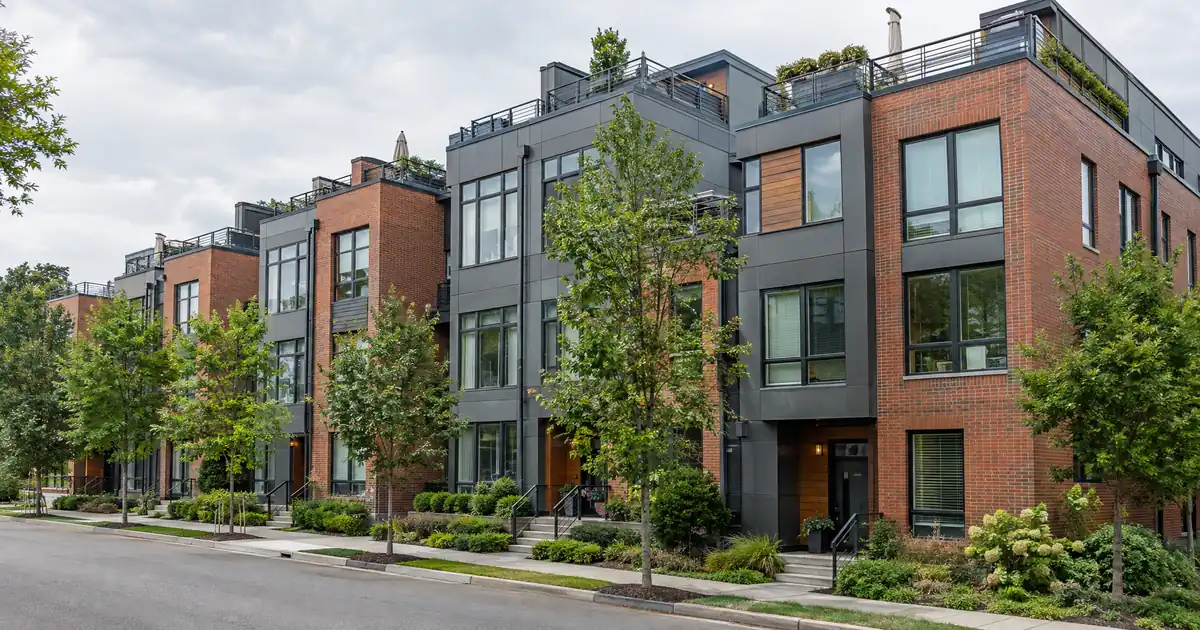
The Quick Read: Yes, a condo can get a conventional cash-out refinance in any state, including expensive ones. Three things decide it: the borrower and loan meet the standard cash-out rules, the condo project passes the agency project review, and the loan fits the county conforming limit. The building is the biggest variable. The state is a small one.
Cash-out refinance estimate
The starting figures are an example value with a balance and a cash request in proportion. Replace them with yours.
Editable benchmark: 7.40% as of October 15, 2026 · Freddie Mac 30-year average via FRED®. A conventional market reference, not a cash-out refinance quote.
Illustrative starting assumptions: a $350,000 home value, a $193,000 current balance, the agency cap on a one-unit principal residence, a thirty-year term at the current Freddie Mac benchmark, and property taxes and insurance estimated at typical national rates. Every field is editable.
Illustrative estimate only — not a Loan Estimate, approval, quote, or commitment to lend. The rate field carries the weekly Freddie Mac thirty-year conventional benchmark, a market reference and not a cash-out refinance quote; a cash-out loan is priced by the lender at lock. The cash available is the loan the program cap allows less the balances paid off, before closing costs, which are not included. The HELOC line is the program’s combined loan-to-value ceiling applied to the same value and balance. Taxes and insurance are editable estimates. Licensed in sixteen states for consumer mortgages.
Most of the confusion comes from the phrase “high-cost closing state.” It is not an agency term. Neither Fannie Mae nor Freddie Mac writes different cash-out rules for different states. This article separates what the phrase usually means, walks through the condo review, and shows where the real friction sits.
What Does “High-Cost Closing State” Actually Mean?
Two different ideas get mixed together under this phrase, and neither blocks a condo cash-out.
| Idea | What it is | What it controls |
|---|---|---|
| High closing costs | Title, transfer, recording and attorney charges that vary by state | What you pay at closing |
| High-cost loan-limit area | A county where the conforming limit sits above the baseline | How large the loan can be |
| Agency cash-out rules | One national standard | Whether the loan is eligible |
Closing costs are a cash-to-close question. Loan limits are a loan-size question. Neither is an eligibility question.
The baseline one-unit conforming limit is set nationally, and local limits can run higher in expensive counties, up to a cap of 150% of the baseline, per the FHFA conforming loan limit addendum. Limits are set by county, so look up your own county on FHFA’s site. Do not assume your state’s number.
There is no official national ranking of states by closing cost. The reliable comparison is your own Loan Estimate, which shows closing costs and estimated cash to close. The CFPB Loan Estimate explainer shows how to read it.
How Is a Condo Cash-Out Different From a House Cash-Out?
A condo cash-out underwrites two things: you and the building. On a house, the lender looks at the borrower, the loan and the property. On a condo, the association’s finances and condition become part of the file.
The borrower side is the same as any conventional cash-out. Fannie Mae defines a cash-out refinance as paying off the existing mortgage with a new first mortgage on the same property, with the borrower free to take equity out for any purpose. Across the wholesale programs Lendmire places files with, that borrower screen is routine: occupancy, seasoning, credit, ratios and reserves.
The project side is where condo files stall.
Is Your Building Eligible, and How Do You Find Out?
The building must pass the agency project review. Fannie Mae tracks project status in a system called Condo Project Manager. If a project shows “Unavailable,” the loan cannot be sold to Fannie Mae, and lenders must confirm that status regardless of review type, per Fannie Mae’s CPM FAQ.
There is no public approved-building list you can browse. The lender checks the building. Ask early, before you pay for an appraisal.
What the Full Review looks at
Fannie Mae’s Full Review process tests the association’s financial health. The main checks:
- No more than 15% of units can be 60 or more days past due on common expense assessments.
- No more than 15% can be that late on each special assessment.
- The budget must fund replacement reserves at 10% or more of assessment income.
Secondary trade reporting says the reserve minimum is set to rise to 15% for applications dated in early 2027 or later. Treat that as reported, not confirmed, and ask your lender what applies on your application date.
Traits that make a project ineligible
Fannie Mae’s ineligible project rules list timeshare or segmented ownership, hotel-style operations, projects needing critical repairs, and projects under evacuation orders. Freddie Mac’s list adds litigation, heavy investor concentration and excessive commercial space.
The review change that matters now
Fannie Mae has retired its Limited Review for applications dated on or after August 3, 2026, according to its own project standards FAQ. Many established projects now need a Full Review or a waiver. Trade press reports Freddie Mac’s streamlined review ended at the same time, but that part is secondary until the Freddie bulletin is checked.
Here is the catch. A big equity cushion used to help on some condo files. It no longer replaces a full project review.
Which Cash-Out Rules Still Apply to a Condo?
All of them. The condo does not exempt you from any standard cash-out requirement. Here is the envelope Lendmire works in on conventional cash-out files, subject to lender guidelines and full file review.
| Factor | Conventional cash-out |
|---|---|
| Max LTV, 1-unit primary residence | 80% |
| Max LTV, 2-4 unit primary, second home | 75% |
| Seasoning on existing first mortgage | At least 12 months |
| Time on title | 6 months for a borrower |
| Typical credit floor | 620 decision score |
| Automated ratio ceiling | 50% |
The seasoning rule is documented in a Fannie Mae announcement: the loan being paid off must be at least 12 months old, measured note date to note date, and at least one borrower must have been on title for six months unless an exception applies. Delayed financing, inheritance and legal-award exceptions exist. Files that assume seasoning away get kicked back.
Freddie Mac’s Guide section 4203.1 caps cash-out at 80% for a one-unit primary residence and 75% for two to four units, in line with the figures above. Each figure is subject to lender guidelines and a complete review of property type, leverage, and credit.
Two condo-specific cautions on leverage. Lower LTV caps can apply to some condo loans depending on the type of project review. And a second home carries the lower 75% cap, so occupancy decides leverage before the building does.
Reserves are also worth knowing. On a Desktop Underwriter cash-out with a DTI above 45%, Fannie Mae’s guide triggers a six-month reserves requirement. Reserves documentation belongs in the file from the start.
A wholesale lane also exists that reaches 89.99% LTV with no mortgage insurance. It needs a 680 score, a 50% ratio, a thirty-year fixed on a primary residence, a conforming balance and its own six months of seasoning. Whether a condo fits that lane depends on the lender’s project review. Ask before assuming.
Where Do State Costs Actually Hit a Condo Cash-Out?
State differences show up in third-party and government charges, not in loan eligibility. Lender-controlled charges are the same kind of line item everywhere. The pieces that move by state are title and settlement work, recording, transfer or mortgage taxes where they apply, and attorney involvement in states that use attorneys at closing.
| Cost category | Who controls it | Varies by state? |
|---|---|---|
| Lender charges | Lender | Not by state rules |
| Title and settlement | Third parties | Yes |
| Recording and taxes | Local government | Yes |
| HOA documents | Association | By association |
Condos add one more line: association fees for the questionnaire and documents. Compare Loan Estimates from more than one lender and check the third-party lines side by side. Costs and payoffs also come out of your proceeds, so the cash you net is less than the LTV cap suggests.
State law can also override program rules. Texas is the clear example: a cash-out on a homestead is capped by the state constitution at the agency figure, and the 89.99% wholesale lane is not written there. If you live in a state with its own homestead or equity-extraction rules, ask about them first.
Does a High-Cost County Help?
A higher local conforming limit helps only if your new loan fits under it. Cash-out raises the balance. A loan that pushes above the county limit falls outside agency conforming rules and becomes a jumbo loan.
Jumbo is a separate lane. In the wholesale programs Lendmire places with, jumbo needs a 660 decision score, reaches up to 90% leverage on some lanes, carries loans to $5,000,000, and holds a 50% ratio ceiling on the fixed lanes. That is more flexible on size, but it is a different file with different project review. Leverage, reserves, and pricing vary by lender and program; the final terms follow the full file review.
Check the loan limit on FHFA’s county lookup before you decide how much to take out. Do not assume a high-cost state means a high limit in your county.
What Does the Condo Do to Your Budget?
HOA dues weigh on your debt-to-income ratio. A special assessment adds to it. A reserve-funding gap in the association budget can predict future assessments, so a thin reserve is both a lending risk and a household risk.
On a worked scenario, picture a home valued at 100 units, with an existing balance of 50 units. At the 80% cap on a one-unit primary residence, the new loan can reach 80 units. Payoff of the old loan, closing costs and prepaids come out of that. What lands in your pocket is the remainder, and closing costs shrink it. Run the same picture at 75% and the gap narrows.
Mortgage insurance applies above 80% LTV on conventional loans. On a standard cash-out capped at 80%, it does not apply. On the no-MI wholesale lane at up to 89.99%, it is the point of the program. Terms vary by lender guidelines, property type, leverage, credit profile, and full file review.
What If the Project Fails Review?
You have a few options, and none involves arguing with the building.
1. Ask which review the lender used. Some transactions get a waiver. A Fannie-to-Fannie limited cash-out refinance can have project review waived under Fannie Mae’s waiver rules, but that is a limited cash-out only, not true cash-out, and it caps at 80% LTV.
2. Check whether a rate-and-term refinance meets your goal. It pays off the existing first mortgage, closing costs and a purchase-money second, with only incidental cash back. Leverage can reach 95% on a one-unit primary residence.
3. Ask about a lender that keeps loans in portfolio. A project with “Unavailable” status cannot be sold to Fannie Mae, so a portfolio option or a different program is the other path.
4. Wait for the association to fix it. Delinquencies and reserve funding can improve. Open critical repairs usually have to close first.
Freddie Mac has an “exempt from review” category, but it covers Freddie-owned no-cash-out refinances, not true cash-out. Attached projects of five or more units still get a critical-repairs and evacuation-order check, per Freddie Mac’s condo FAQ.
Florida deserves a flag. Older Limited Review rules used lower LTV caps for Florida condo projects, and some limits depend on application date. Confirm the current cap before you plan around a number.
Pre-Application Checklist
1. Confirm the loan being paid off is at least 12 months old and you have been on title for six months, or that an exception applies. 2. Ask the lender to check the building’s project status before ordering an appraisal. 3. Gather the association’s budget, reserve information, insurance certificates and delinquency data. Expect a project questionnaire. Completeness matters because a late missing page can stall the whole file. 4. Confirm your county’s conforming limit on FHFA’s lookup. 5. Pull your Loan Estimate and compare third-party lines, not just the lender’s. 6. Check whether your state has equity-extraction rules that override program caps.
When Is Another Route Better?
If the building is on the “Unavailable” list, a conventional cash-out is off the table for now. A home equity line or loan, a portfolio program, or waiting for the association to fix its finances may fit better. If the net cash after costs is small, ask whether it justifies replacing the loan you have.
Tax treatment can depend on your situation; borrowers should speak with a qualified tax professional before relying on any deduction or credit.
If you are weighing a cash-out refinance against keeping the loan you have, Lendmire can help you compare the programs and the equity each one reaches. Start with Lendmire’s cash-out refinance programs page. For Texas readers, Lendmire’s piece How to Get a Conventional Cash-Out in a High-Cost Closing State Like Texas covers the homestead overlay in more depth.
Key Terms Defined
Cash-out refinance: A new first mortgage that pays off your current one and lets you take equity out as cash.
Project review: The lender’s check of the condo association’s finances, condition and legal standing.
Condo Project Manager: Fannie Mae’s system that shows whether a condo project is eligible for sale to Fannie Mae.
Seasoning: The minimum time you must hold the loan being paid off and the title before cash-out is allowed.
Conforming limit: The county-based maximum loan size agencies will buy; above it the loan is jumbo. Exact terms depend on the lender’s guidelines, property type, leverage, and a full review of the borrower’s file.
Frequently Asked Questions
Can I get a conventional cash-out on a condo if I have lots of equity?
Equity does not skip the project review. Limited Review has been retired for applications dated on or after August 3, 2026, so many projects now need a Full Review or a waiver. Your equity still sets how much you can borrow, capped at 80% on a one-unit primary residence.
Does my state change the conventional cash-out rules?
No. The agencies set one national project standard, and loan limits are set by county. State differences show up in closing costs and in state law overlays such as Texas homestead rules.
What happens if my condo project is marked “Unavailable”?
The loan cannot be sold to Fannie Mae. You would need a lender that keeps loans in portfolio, a different program, or to wait until the association fixes the issue.
Can I borrow the full 80% as cash?
No. Payoff of the existing loan, closing costs and prepaids come out of the proceeds first. What you net is less than the cap suggests, so read the estimated cash to close on your Loan Estimate.
Is a second-home condo treated differently?
Yes. A second home carries the 75% cap instead of 80%, so occupancy changes leverage before the building review even starts.
All figures are subject to lender guidelines and full file review, and nothing here is a commitment to lend.
For your own numbers, request a scenario review with Lendmire.
About Lendmire
Lendmire, NMLS# 2371349, is a mortgage brokerage with consumer lending licenses in 16 states. FHA, VA, conventional and jumbo purchase and refinance loans are arranged through wholesale lending partners, and each application is reviewed individually by the lender. Scotsman Guide named Lendmire a Top Mortgage Workplace in both 2025 and 2026.
Get Started
Ready to find the right loan for you?
In about 30 seconds you can review financing options available for your home or investment property. No commitment required.
Informational only. Not a Loan Estimate, approval, or commitment to lend. Program availability and eligibility are subject to lender guidelines, credit approval, property review, and underwriting.
References
1. FHFA 2026 Conforming Loan Limit Addendum
2. CFPB Loan Estimate explainer
3. Fannie Mae Selling Guide B2-1.3-03, Cash-Out Refinance Transactions
5. Fannie Mae Selling Guide B4-2.2-02, Full Review Process
6. Fannie Mae Selling Guide B4-2.1-03 Ineligible Projects
7. Freddie Mac Guide Section 5701.3
8. Fannie Mae Project Standards FAQ
9. Fannie Mae announcement on cash-out seasoning
10. Freddie Mac Guide Section 4203.1
This article is part of Lendmire’s Conventional Loans series — every loan program’s qualification details, guidelines, and scenarios live on the loan options page.
Related reading: Can You Finance Every Closing Cost in a Conventional Cash-Out Refinance? · Texas Conventional Cash-Out Refinance Fee Cap in High-Cost States · How to Get a Conventional Cash-Out During and After a Divorce
Brandon Miller
Founder & CEO, Mortgage Loan Originator, Lendmire LLC
- Mortgage Loan Originator · NMLS# 1129696 · Verify on NMLS Consumer Access
- North Carolina Real Estate Broker · License# 343312 · Verify on NCREC
- North Carolina Insurance Producer · License# 19053198 · Property, Casualty, Life, Health · Verify on NAIC SBS
- Lendmire LLC · Firm NMLS# 2371349 · Verify firm licensure
Disclosure information. Lendmire is a state-licensed mortgage brokerage under NMLS# 2371349. Lendmire is not a depository institution, direct lender, or financial advisor — all loans referenced are placed through wholesale lender partners and are subject to each lender's underwriting standards. This article is provided for general informational purposes and is not a commitment to lend, nor does it constitute financial, legal, or tax advice. Loan programs, terms, rates, and qualification standards change without notice and depend on borrower profile, property type, and the state in which the subject property is located. Equal Housing Opportunity provider. NMLS Consumer Access: nmlsconsumeraccess.org.