
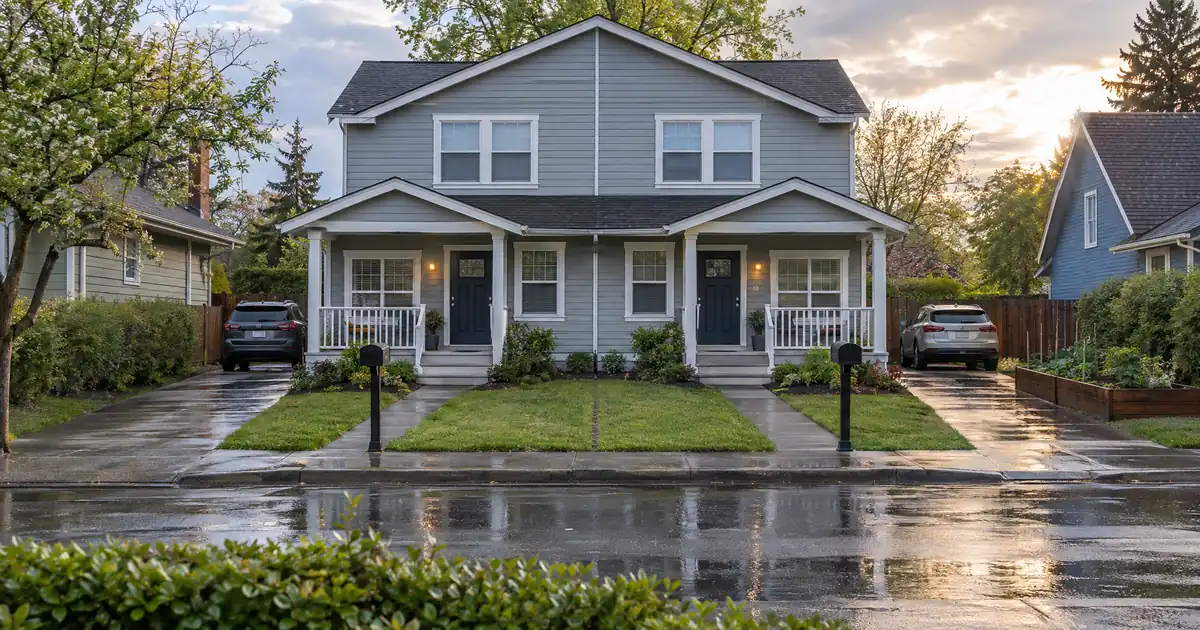
The Quick Read: On a two- to four-unit home you live in, a conventional loan can go to 95% of the value, so the minimum down payment is 5%. The 97% first-time-buyer option applies only to one-unit homes. Two other items matter as much as the percentage: reserves, and how much of the 5% must come from your own money. Everything here is subject to lender guidelines and full file review.
Key Takeaways
- A 2-4 unit primary residence purchase goes to 95% LTV, which means 5% down. One-unit buyers can reach 97% in the first-time-buyer lane.
- A second home tops out at 90%. An investment purchase is capped at 85% on one unit and 75% on two to four units. Occupancy decides the leverage.
- Gift money cannot cover the whole 5% above 80% LTV. The first 5% has to be yours.
- Expect a six-month reserve requirement on the automated path, a real cash need that a single-family buyer usually skips.
- Manual underwriting, cash-out refinances and loans above the conforming limit all follow different rules.
What Is the Down Payment Rule for a 2-4 Unit Primary Home?
The rule is 5% down on a purchase, measured against the lesser of the price or the appraised value. That is the maximum 95% LTV in the Fannie Mae Eligibility Matrix, which applies the same cap to 2-4 unit principal residences on purchases and limited cash-out refinances. Freddie Mac moved its 2-4 unit cap up to 95% as well. Terms vary by lender guidelines, property type, leverage, credit profile, and full file review.
Conventional payment estimate
The starting figures are an example price at the first-time buyer’s minimum down payment. Replace them with yours.
Editable benchmark: 7.32% as of October 22, 2026 · Freddie Mac 30-year average via FRED®. A conventional market reference, not a conventional loan quote.
Estimate seeded at the low end of Fannie Mae’s published range (0.58%–1.86% a year); the insurer prices the actual premium on the score and the leverage. Applies only above 80% loan-to-value.
Illustrative starting assumptions: a $350,000 price, the first-time buyer’s minimum down payment, a thirty-year term at the current Freddie Mac benchmark, mortgage insurance at the low end of Fannie Mae’s published range, and property taxes and insurance estimated at typical national rates. Every field is editable.
Illustrative estimate only — not a Loan Estimate, approval, quote, or commitment to lend. The rate field carries the weekly Freddie Mac thirty-year conventional benchmark, a market reference and not a conventional loan quote; your rate is set by the lender at lock. The mortgage insurance figure is an editable estimate seeded from Fannie Mae’s published typical range, not a premium quote; the insurer prices the actual premium, and the cancellation month assumes scheduled payments with no extra principal and no change in value. Taxes, insurance and dues are editable estimates; closing costs are not included. Conforming loan limits apply by county. Licensed in sixteen states for consumer mortgages.
That is a big shift from the old rule of thumb. Many borrowers still hear that a duplex or fourplex needs 15% to 25% down. Older agency caps were lower, and some lender blogs still repeat them. Across the wholesale programs placed through Lendmire, 95% is the working number for a principal residence with two to four units. Exact terms depend on the lender’s guidelines, property type, leverage, and a full review of the borrower’s file.
The condition is occupancy. You must live in one of the units. That is what separates this from an investment purchase, where the cap falls to 75% on two to four units.
How Is a 2-4 Unit Loan Underwritten, Step by Step?
Underwriting follows six steps, and the down payment is only the third or fourth thing that gets reviewed.
1. Structure and occupancy. You will occupy one unit as your principal residence. The loan is sized against the lesser of price or appraised value, so a low appraisal raises the cash you need.
2. Automated underwriting. Fannie Mae’s DU or Freddie Mac’s LPA issues the finding. The 95% cap comes from this path. The wholesale programs start at a 620 decision score, and the automated finding governs most files, with a total ratio ceiling of 50%.
3. Appraisal and rent schedule. A 2-4 unit home is appraised on a small residential income property form, which includes market rents for every unit.
4. Rental income, if you use it. Rent from the units you do not occupy can help you qualify. Rent from your own unit never counts. Lenders document it by lease or tax history and then apply a reduction for vacancy and upkeep. Exactly how much counts depends on the lender and the file.
5. Funds to close. You document the down payment, closing costs and the source of every dollar.
6. Reserves. On the automated path, the lender verifies reserves for a two- to four-unit principal residence.
What decides the outcome is the LTV bracket, automated versus manual underwriting, reserves, credit and the appraised rents.
Where Can the Down Payment Come From?
Your own funds have to cover the first 5% on a 2-4 unit purchase above 80% LTV. Per Fannie Mae’s Personal Gifts rule, a family gift can then cover the rest of the down payment, closing costs and reserves. At 80% LTV or less, the entire amount may come from a gift. Every figure here varies by lender and program — guidelines, property type, leverage, and credit profile all apply.
A one-unit primary residence has no such minimum, which is why a gift-funded plan that works on a single-family home can fail on a duplex. Grants follow the same logic. Fannie Mae’s grants and lender contributions rule applies the same 5% own-funds requirement to 2-4 unit principal residences above 80% LTV. Final terms depend on lender guidelines, property type, leverage, and the borrower’s complete credit picture.
A simple decision flow helps:
- Savings, retirement withdrawals or sale proceeds: these count as your own funds once documented.
- Family gift: fine for the amount beyond your first 5%, with a gift letter and a paper trail.
- Grants or assistance programs: same 5% own-funds rule on 2-4 units above 80% LTV. Program availability varies, so ask early.
What Does a 2-4 Unit Buyer Need Beyond the Down Payment?
Reserves are the cost most buyers miss. On the DU path, a 2-4 unit principal residence carries a six-month reserve requirement, per Fannie Mae’s minimum reserve rule. Reserves are counted in months of the housing payment, and funds you need to close do not count toward them. A one-unit principal residence has no such minimum. DU can also ask for more if the file looks riskier. These specifics are subject to lender guidelines and a full review of property, leverage, and credit.
So total cash is the 5% down payment, closing costs, the appraisal, any inspection and six months of reserves. That is noticeably more than a 5%-down single-family buyer needs, even though the down payment percentage looks the same. Terms depend on the lender’s guidelines, the property type, the leverage, and a full review of the credit profile.
Retirement accounts can sometimes count toward reserves, subject to lender guidelines. Ask which assets the lender will accept before you sign a contract.
How Does Mortgage Insurance Work on a 2-4 Unit Loan?
Mortgage insurance is required whenever LTV is above 80%, which includes every 95% purchase. It is a monthly cost folded into the payment, and the premium depends on your score and leverage. Published typical annual premiums run 0.58% to 1.86% of the balance. That is a range, not a quote. Property type and high LTV also add loan-level price adjustments, so a 2-4 unit at 95% generally costs more than a one-unit at the same leverage.
It does not last forever. Under the Homeowners Protection Act, as the Federal Reserve’s handbook explains, you may request cancellation in writing when your balance reaches 80% of the original value, with good payment history, no subordinate liens and no decline in value. The servicer must terminate it automatically at 78% if you are current. Putting more than 5% down gets you to the 80% line sooner, and at 80% LTV or less at purchase there is no mortgage insurance at all. The exact numbers vary by lender and program and follow a full review of property, leverage, and credit.
Lendmire’s conventional loan programs are built around this tradeoff. A smaller down payment keeps cash in your pocket for reserves and repairs, but it carries a longer stretch of insurance.
Where the Rule Breaks: Named Edge Cases
The 95% figure is a headline, not a promise. These are the places it changes.
Manual underwriting. If DU or LPA does not return an approvable finding, the loan can be manually underwritten, and the caps drop sharply. Fannie Mae’s matrix shows manual 2-unit loans under 85% and 3-4 unit loans at 75%. Credit and reserve demands are also stricter. Freddie Mac’s Home Possible fact sheet lists a 700 indicator score for manually underwritten 2-4 unit loans.
Cash-out refinance. If you already own the property and pull cash out, the cap is 75% on two to four units, against 80% on one unit. Cash-out is a different decision from a purchase, and it carries seasoning rules.
Income-limited programs. HomeReady and Home Possible allow 95% on 2-4 units but carry an income limit of 80% of area median income. HomeReady’s 2-4 unit eligibility excludes condos and co-ops. Home Possible requires landlord education on purchases, and a four-unit home is appraised on a specific small-income-property form. HomeReady’s own-funds minimum may be lower than the standard gift rule, but the product matrix is older, so confirm the current figure with the lender.
The guest house. A single-family home with an accessory dwelling unit is not automatically a duplex. Fannie Mae’s December announcement expanded ADU criteria so that two- and three-unit properties may include ADUs, provided the total dwelling units, ADUs included, do not exceed four. How the property is classified changes the LTV, the reserves and the appraisal form.
Manufactured homes. A 2-4 unit manufactured home sits at 90% on the matrix, with a 95% note for MH Advantage.
Above the conforming limit. Once the loan is bigger than the conforming limit, it becomes jumbo and the agency matrices stop applying. Limits for two to four units are indexed separately from the one-unit limit, so FHFA’s conforming loan limit FAQ is the place to start. Look up your county’s limit by unit count rather than assuming the one-unit number. The jumbo lanes take over above the limit, starting at a 660 decision score with leverage to 90%.
FHA contrast. The FHA 3-4 unit self-sufficiency test is an FHA feature. Conventional 95% financing is generally described as not carrying it. FHA is a separate program with its own rules, so do not mix the two when you compare.
How Do the Numbers Look on Real Scenarios?
Here are three buyer profiles, described in percentages and plain words.
The duplex house-hacker. A first-time buyer picks a duplex, lives in one side and plans to rent the other. The 97% first-time-buyer lane does not reach two units, so the cap is 95% and the down payment is 5%. The buyer brings savings for that 5%, closing costs and six months of reserves. Rent from the second unit can help with qualifying, but only after the lender applies its vacancy reduction. Rent from the buyer’s own unit is ignored. Lendmire’s piece Conventional Loan Down Payment Rules for a First-Time Buyer on a 2–4 Unit covers this profile in more depth.
The fourplex buyer. A repeat buyer targets a fourplex and wants to preserve cash. At 95% they put 5% down. With four units the appraisal rents, the reserves and the loan size all get a harder look. In some counties, the loan may land near the 4-unit conforming limit, so the county limit check comes first. Final terms depend on the lender’s guidelines, the property type, and the borrower’s complete credit picture.
The gift-assisted buyer. A buyer has family willing to give most of the money. Above 80% LTV, the buyer must put in 5% of their own funds first. The gift can then cover the rest of the down payment and closing costs. If the family can help the buyer reach 80% LTV or less, the whole amount could be a gift, but that is a much larger sum and a different loan. Each figure is subject to lender guidelines and a complete review of property type, leverage, and credit.
The practical read: a 2-4 unit purchase at 5% down is feasible for borrowers with solid credit, documented funds and a reserve cushion. It is rarely feasible for someone with exactly 5% and nothing behind it. Leverage, reserves, and pricing vary by lender and program; the final terms follow the full file review.
What About Occupancy If My Plans Change?
You are certifying that you intend to live in the property as your principal residence, and the lender relies on that statement. If you buy a fourplex at 95% and never move in, the file was written on a premise that was not true. That is a serious problem, not a technicality.
Plans can change legitimately, though. Many borrowers later move out of one unit and keep the loan, and that is generally fine after you have actually lived there. Ask your loan officer what the occupancy period expectation is and what the note says about it before you sign.
If one co-borrower will occupy and another will not, the occupying borrower is the one who matters for the occupancy status, but the file still needs both borrowers’ credit and income reviewed. Discuss that structure up front.
Key Terms Defined
LTV (loan-to-value): The loan amount divided by the lesser of price or appraised value. A 95% LTV means a 5% down payment.
Reserves: Verified liquid assets left after closing, measured in months of the housing payment.
DU / LPA: Fannie Mae’s and Freddie Mac’s automated underwriting systems, which issue the eligibility finding on most files.
Manual underwriting: A human review used when the automated system does not approve the file, usually with lower leverage caps and stricter credit and reserve factors.
Own funds: Money from your own accounts or assets, as opposed to a gift or grant.
Cancellation and termination: Cancellation is your written request to drop mortgage insurance at 80%. Termination is the servicer’s automatic removal at 78%.
Frequently Asked Questions
Can I really buy a fourplex with 5% down on a conventional loan?
Yes, when you live in one of the units and the file runs through the automated path. The maximum is 95% LTV for two to four units on a purchase. You still need six months of reserves, your own 5%, and a loan within the county’s conforming limit for four units. Subject to lender guidelines and full file review.
Can a family gift cover my whole down payment on a duplex?
Not above 80% LTV. The first 5% has to come from your own funds, and a gift can cover the rest. At 80% LTV or less, a gift can fund everything. A one-unit primary home has no own-funds minimum.
Does rent from the other units count toward qualifying?
It can help, but it is never automatic. Only rent from the units you do not occupy counts, it must be documented, and the lender applies a reduction for vacancy and upkeep. The appraiser’s rent schedule is part of the review. Plan to qualify with some margin rather than depending on the rent.
What changes if I buy the same building as an investment?
Occupancy decides the leverage. An investment purchase is capped at 75% LTV on two to four units, versus 95% with owner occupancy. That is a large jump in cash required.
When does mortgage insurance come off?
You can request cancellation in writing at 80% of the original value, if your payment history is good, there are no subordinate liens and the value has not dropped. The servicer must end it automatically at 78% if you are current.
If you are buying a home and want to see whether a conventional loan fits your file, Lendmire can help you compare the options and what each one asks of the file. For your own numbers, request a scenario review with Lendmire.
About Lendmire
Lendmire (NMLS# 2371349) is a mortgage brokerage serving homeowners and home buyers in 16 states. FHA, VA, conventional and jumbo purchase and refinance loans are arranged through wholesale lending channels; Lendmire brokers the financing and the lender underwrites each application. Scotsman Guide named Lendmire a Top Mortgage Workplace in both 2025 and 2026.
Get Started
Ready to find the right loan for you?
In about 30 seconds you can review financing options available for your home or investment property. No commitment required.
Informational only. Not a Loan Estimate, approval, or commitment to lend. Program availability and eligibility are subject to lender guidelines, credit approval, property review, and underwriting.
References
1. Fannie Mae Eligibility Matrix
2. Fannie Mae Selling Guide B3-4.3-04, Personal Gifts
3. Fannie Mae Selling Guide B3-4.3-06, Grants and Lender Contributions
4. Fannie Mae Selling Guide B3-4.1-01, Minimum Reserve Requirements
5. Federal Reserve Homeowners Protection Act Handbook
6. Freddie Mac Home Possible Fact Sheet
7. Fannie Mae Selling Guide Announcement SEL-2025-10
8. FHFA Conforming Loan Limit FAQs
This article is part of Lendmire’s conventional loan program — full qualification details, guidelines, and scenarios live on the program page.
Related reading: Conventional Loan Extra Payment Rules for Prepayment and Escrow · Minimum vs Larger Down Payment on a Conventional Loan · Conventional Loan Requirements for a Condo With a Low Down Payment
Brandon Miller
Founder & CEO, Mortgage Loan Originator, Lendmire LLC
- Mortgage Loan Originator · NMLS# 1129696 · Verify on NMLS Consumer Access
- North Carolina Real Estate Broker · License# 343312 · Verify on NCREC
- North Carolina Insurance Producer · License# 19053198 · Property, Casualty, Life, Health · Verify on NAIC SBS
- Lendmire LLC · Firm NMLS# 2371349 · Verify firm licensure
Legal disclosures. Lendmire (NMLS# 2371349) is a state-licensed mortgage brokerage that arranges financing through wholesale lender relationships. Lendmire is not a direct lender, depository institution, or registered financial advisor. The discussion above is general informational content about real estate financing — it is not financial, legal, or tax advice, and readers should consult licensed professionals for guidance on their individual circumstances. Loan inquiries are subject to lender underwriting; this article does not represent a commitment to lend. Loan terms, rates, and qualification standards vary by borrower, property, and state, and are subject to change at any time. Equal Housing Opportunity. NMLS Consumer Access: nmlsconsumeraccess.org.