
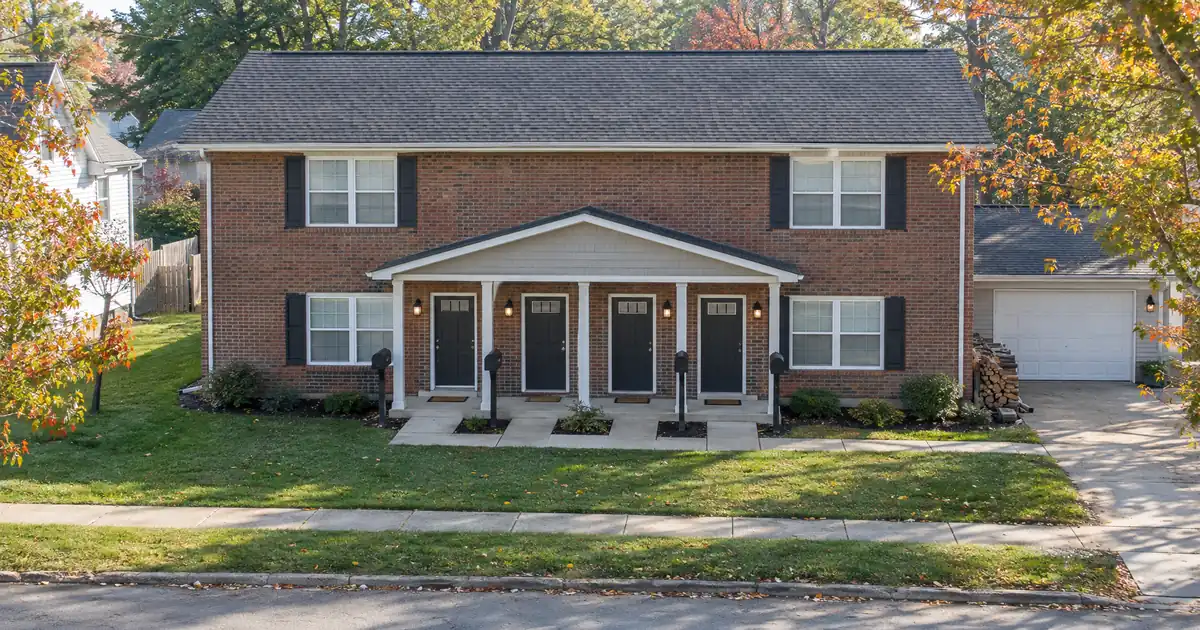
The Quick Read: On a 2-4 unit purchase with a co-borrower, the choice usually turns on one question: will the co-borrower live in the home? FHA suits a buyer with thinner credit or savings when everyone on the loan occupies the property. Conventional tends to fit better when a helper who won’t live there is part of the plan, or when the file is strong enough to skip FHA’s mortgage insurance structure. Final eligibility depends on lender guidelines and full file review.
Here is the honest version. Neither loan wins by default. FHA offers high leverage and a lower credit floor, but a non-occupying co-borrower can sharply change the leverage available on a 2-4 unit. Conventional offers more flexibility with a helper who isn’t moving in, but it asks more of credit and savings. The FHA loan programs Lendmire arranges work best when every borrower occupies. Add a non-occupant to a multi-unit file and the math changes.
FHA payment estimate
Starting assumptions reflect an example price and the FHA minimum investment. Replace them with your own figures.
Editable benchmark: 7.32% as of October 22, 2026 · Freddie Mac 30-year average via FRED®. A conventional market reference, not an FHA loan quote.
Illustrative starting assumptions: a $350,000 price, the FHA minimum investment as the down payment, a thirty-year term at the current Freddie Mac benchmark, and property taxes and insurance estimated at typical national rates. Every field is editable.
Illustrative estimate only — not a Loan Estimate, approval, quote, or commitment to lend. The rate field carries the weekly Freddie Mac thirty-year conventional benchmark, a market reference and not an FHA loan quote; your rate is set by the lender at lock. FHA mortgage insurance follows HUD’s published schedule for the term, leverage and loan size entered; taxes, insurance and dues are editable estimates; closing costs are not included; county loan limits are not checked here. Licensed in sixteen states for consumer mortgages. Lendmire is not affiliated with or acting on behalf of FHA, HUD, or the federal government.
Side-by-Side
| Factor | FHA | Conventional |
|---|---|---|
| Maximum financing | Up to 96.5% | Often up to 95% on 2-4 units |
| Minimum investment | 3.5% from a 580 score | Varies by program and file |
| Credit floor | Lower; 580 decision score | Generally higher |
| Mortgage insurance | Upfront plus annual premium | Private insurance, can be cancelled |
| Occupancy | Principal residence, 1-4 units | Principal residence, 1-4 units |
| Non-occupant co-borrower | Allowed; 2-4 units limit leverage | Allowed with added conditions |
| Documentation | Everyone on the note documents | Everyone on the note documents |
Treat the conventional column as a benchmark. Lender overlays vary, and the 3-4 unit limits in particular should be confirmed on your actual file, subject to lender guidelines.
How FHA Handles a Co-Borrower on a Multi-Unit
FHA is built for the home you live in. HUD describes its 203(b) program as insurance for buying a principal residence, with one-to-four unit properties eligible and financing up to approximately 96.5%. The borrower pays an upfront premium, which can be financed, plus an annual premium.
Across the wholesale programs Lendmire places FHA files with, the base is a 3.5% minimum investment from a 580 decision score. The upfront premium is 1.75%. The annual premium runs between 0.15% and 0.75% of the balance, depending on term, loan amount and LTV. On a thirty-year loan above 90% LTV, the annual premium lasts the full term. At or below 90%, it ends after eleven years. That detail matters when you plan a long hold. These specifics are subject to lender guidelines and a full review of property, leverage, and credit.
Now the co-borrower wrinkle. A non-occupant can be on an FHA loan. But HUD’s handbook rules generally cap leverage at 75% when the non-occupying borrower isn’t a qualifying family member. The family exception that restores high leverage does not extend to two- to four-unit properties. Verify the current wording in HUD’s housing handbooks before you plan around it. In practice, that means roughly a 25% down payment on a 2-4 unit when a helper won’t live there.
That is the single biggest difference in this comparison. Same buyer, same duplex, but the occupancy of the second borrower can move the required down payment from a few percent to a quarter of the price.
When FHA Is the Better Fit
FHA tends to win in these situations:
- Everyone on the loan will live in the home. Two spouses, or a parent and adult child moving into separate units, keep the high-leverage path open.
- Credit is in the 580s to mid-600s. FHA’s floor sits lower than most conventional programs.
- Cash is limited. A 3.5% minimum investment is hard to match elsewhere. Seller or interested-party contributions of up to 6% of the price can help with costs.
- Ratios run tight. The base pair is 31/43 housing and total. Documented compensating factors can reach 40/50 at the top tier, though the automated finding governs most files.
There is a catch on 3-4 units. FHA adds a property-level rental test, often called self-sufficiency. For those buildings, the lender looks at whether net rental income covers the full housing payment, using the appraiser’s fair market rent less a vacancy and maintenance allowance. Duplexes are generally treated differently, but confirm that against HUD. The appraisal for any 2-4 unit must document rent, as HUD Mortgagee Letter 2023-17 describes.
(Real talk: a fourplex that looks great on paper can still stall at the self-sufficiency test. Run that check before you fall in love with the building.)
FHA does not allow you to buy as a pure investor. HUD’s own archived guidance says the non-occupant provision isn’t meant to get around the ban on private-investor loans. A co-borrower who helps with income is fine. A co-borrower arrangement designed to hide who really owns the building is not.
When Conventional Is the Better Fit
Conventional usually fits better when:
- A helper won’t live there. Fannie Mae’s guide separates guarantors or co-signers from non-occupant borrowers. A co-signer signs the note and is jointly liable but holds no title interest. A non-occupant borrower may or may not be on title. That flexibility is wider than FHA’s, which expects occupying and non-occupying borrowers to take title.
- The leverage still needs to be high. On automated underwriting, the Fannie Mae guide’s non-occupant limit is 95% LTV when the non-occupant’s income is used. That sits well above FHA’s 75% on the same structure.
- Credit is strong. The CFPB notes private mortgage insurance varies with down payment and credit score and is generally cheaper than FHA for borrowers with good credit. It can also be cancelled, which FHA’s long-duration premium often cannot.
- The loan will outlive the insurance. If you expect to hold for many years, cancellable insurance is a real long-term edge.
Conventional is not free of friction. Manually underwritten files require the occupying borrower to put in the first 5% of the down payment from their own funds when a non-occupant’s income is used, with exceptions. Collections and charge-offs above a threshold generally must be resolved on 2-4 unit files. And rent from the unit you occupy generally can’t be counted to qualify, though rent from the other units can be.
Unit Count and Rental Income
Two units, three units and four units don’t behave alike.
On a duplex, both programs are fairly forgiving. Rent from the second unit may help conventional qualifying. FHA generally skips the self-sufficiency test.
On a triplex or fourplex, FHA adds that property-level test. Conventional doesn’t run the same test, but its leverage and credit requirements on 3-4 units deserve a hard look on your file. Don’t assume the duplex answer carries over.
For either loan, expect the appraiser to report market rent on a rental schedule form. Conventional lenders also report gross monthly rent on 2-4 unit principal residences, even when that rent isn’t used to qualify.
Co-Borrower Scenarios in Plain Words
Scenario one: two spouses, both moving in. FHA’s high-leverage path stays open. A lower credit score on one spouse is workable on FHA at the 580 floor. Conventional may price the weaker score harshly. FHA likely fits better.
Scenario two: a parent helping an adult child who will live in one unit. The parent doesn’t occupy. On FHA, the family-member exception to the 75% cap excludes 2-4 units, so the parent’s presence on the note likely means a much bigger down payment. Conventional, with a non-occupant borrower, can stay near 95% on automated underwriting. Conventional likely fits better.
Scenario three: a strong primary borrower and a weaker co-borrower, both occupying. Lenders generally weigh the combined file, but a stronger score doesn’t erase the weaker borrower’s problems. FHA tolerates the weaker profile more readily. Conventional may lean on the lower score. Compare both, because it’s a genuine toss-up.
Mortgage Insurance and the Long Game
FHA insurance is required on every FHA loan, and the CFPB notes it costs the same regardless of credit score. That’s helpful if your score is modest and punishing if your score is excellent.
Conventional insurance can be removed. Under the CFPB’s guidance, you may ask the servicer to cancel at the date the balance is scheduled to reach 80% of the original value, if you’re current and have no junior liens.
The long-term plan matters here. Some FHA borrowers refinance into conventional later once equity builds. That’s a common path, but not a promise, because it depends on future credit, value and guidelines. If you plan to hold and rent out other units, think about whether you’ll want to remove a co-borrower later. Removal typically means refinancing, which means requalifying on one income.
Risks of Adding a Co-Borrower
Both borrowers are liable for the full debt. Missed payments can damage credit and lead to foreclosure. A co-borrower’s share also counts against their own future borrowing, since Fannie Mae counts loans where the borrower is personally obligated toward financed-property tallies.
Settle these before applying: who lives where, who pays what, who holds title, and what happens if one person wants out.
A Balanced Verdict
If everyone on the loan will occupy the building and savings are thin, FHA is usually the stronger lane. If a non-occupying helper is essential, or credit is strong, conventional frequently works better, with the leverage and insurance differences above. Between those poles sits a middle zone where only side-by-side quotes settle it.
If you are buying a home and want to see whether an FHA loan fits your file, Lendmire can help you compare the options and what each one asks of the file.
Frequently Asked Questions
Can a non-occupying co-borrower be on an FHA loan for a duplex?
Yes, but leverage is usually limited. On 2-4 units, HUD’s family exception to the 75% cap generally does not apply, so expect a much larger down payment than the standard 3.5%. Confirm the current rule against HUD’s handbook.
Does conventional financing allow a co-signer who isn’t on title?
Yes. Fannie Mae’s guide distinguishes guarantors or co-signers, who sign the note without an ownership interest, from non-occupant borrowers. FHA generally expects all borrowers to take title, so that structure is unlikely there.
Which loan handles a co-borrower with weaker credit better?
FHA usually tolerates it better when everyone occupies, since its floor starts at a 580 decision score. Conventional pricing and eligibility lean more heavily on credit. Subject to lender guidelines, comparing both is the only reliable answer.
Can I count rent from the other units to qualify?
Often yes, but the methods differ. Conventional generally excludes rent from the unit you occupy and counts the other units. FHA on 3-4 units adds a self-sufficiency test using the appraiser’s market rent.
Does the choice change between two, three and four units?
Yes. Duplexes are the easiest on both programs. Three- and four-unit buildings bring FHA’s rental test and tighter conventional considerations, so check unit-specific limits on your file.
For your own numbers, request a scenario review with Lendmire.
About Lendmire
Lendmire (NMLS# 2371349) is a mortgage broker licensed for consumer lending in 16 states. Lendmire arranges FHA, VA, conventional and jumbo purchase and refinance loans through wholesale lenders; every file is underwritten by the lender under the applicable program guidelines. Scotsman Guide named Lendmire a Top Mortgage Workplace in both 2025 and 2026.
Get Started
Ready to find the right loan for you?
In about 30 seconds you can review financing options available for your home or investment property. No commitment required.
Informational only. Not a Loan Estimate, approval, or commitment to lend. Program availability and eligibility are subject to lender guidelines, credit approval, property review, and underwriting.
References
1. HUD – Basic Home Mortgage Loan 203(b)
3. HUD Mortgagee Letter 2023-17
4. HUD’s own archived guidance
5. Fannie Mae Selling Guide B2-2-04
6. CFPB – What is mortgage insurance
This article is part of Lendmire’s FHA loan program — full qualification details, guidelines, and scenarios live on the program page.
Related reading: Can You Get a Conventional Loan at the Minimum Score or Is FHA Better? · Conventional Loan vs FHA When Credit Is Strong · Is a Conventional Loan Better Than FHA When Buying a Condo?
Brandon Miller
Founder & CEO, Mortgage Loan Originator, Lendmire LLC
- Mortgage Loan Originator · NMLS# 1129696 · Verify on NMLS Consumer Access
- North Carolina Real Estate Broker · License# 343312 · Verify on NCREC
- North Carolina Insurance Producer · License# 19053198 · Property, Casualty, Life, Health · Verify on NAIC SBS
- Lendmire LLC · Firm NMLS# 2371349 · Verify firm licensure
Disclosure information. Lendmire is a state-licensed mortgage brokerage under NMLS# 2371349. Lendmire is not a depository institution, direct lender, or financial advisor — all loans referenced are placed through wholesale lender partners and are subject to each lender's underwriting standards. This article is provided for general informational purposes and is not a commitment to lend, nor does it constitute financial, legal, or tax advice. Loan programs, terms, rates, and qualification standards change without notice and depend on borrower profile, property type, and the state in which the subject property is located. Equal Housing Opportunity provider. NMLS Consumer Access: nmlsconsumeraccess.org.