
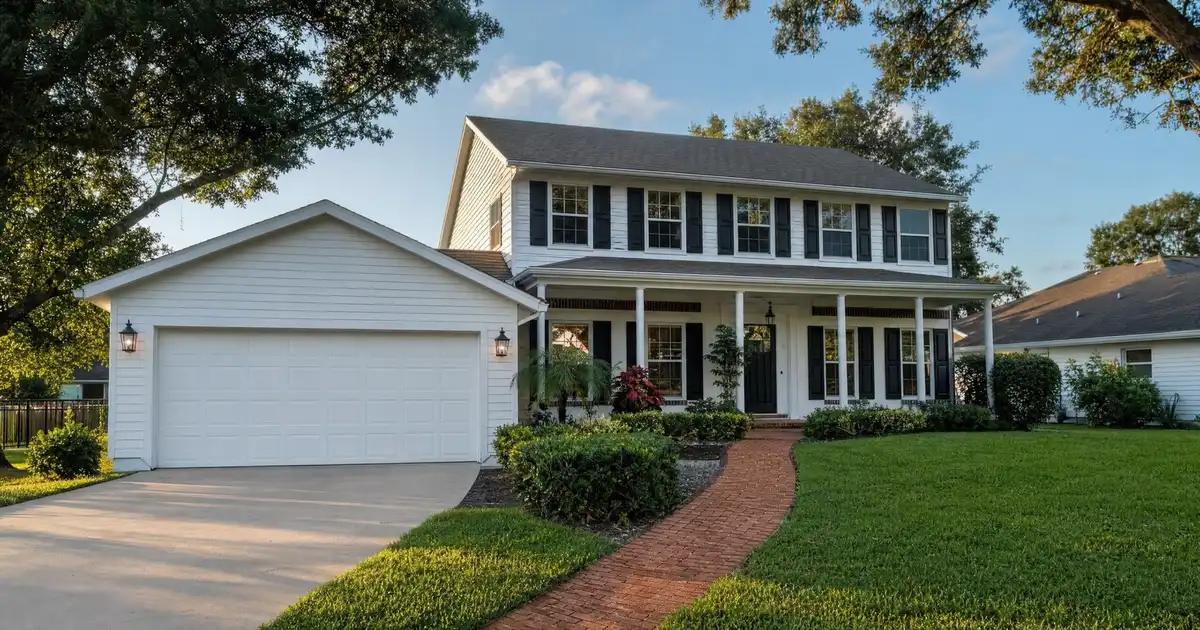
Current conventional guidelines, updated from one source.
One guideline source feeds every number here, and the page updates when the source does. These are purchase and refinance parameters; the leverage table underneath covers occupancy by occupancy, and the status lines cover insurance, gifts, and the first-time-buyer programs.
First-time buyer; 5% standard; 97% loan-to-value at the top
The agencies set the floor at 3% down for a first-time buyer and 5% for a repeat buyer, on a principal residence; the whole down payment may be a gift from a relative on a one-unit home, and twenty percent down removes mortgage insurance from the payment entirely.
Priced on the score; no agency minimum with an automated approval
620 is the working floor, a wholesale overlay rather than an agency rule, since Fannie Mae requires no minimum score for a loan the automated system approves and 620 only on a manual fixed-rate file. Above the floor, each step up in score lowers the cost of the loan and of the insurance.
Required above 80% LTV; removed at 80% by request, 78% automatically
The insurance line in a conventional payment is a bridge, not a fixture: required above 80% loan-to-value, cancellable at 80% on request and 78% by law, and priced by the insurer on the score inside Fannie Mae’s published 0.58%–1.86% range. Twenty percent down skips it entirely.
With an automated approval; 36% to 45% on a manual file
The total ratio runs to 50% with an automated approval, with the finding itself deciding how much of that room a particular file gets; manual files are read at 36%, or 45% with the matrix’s credit and reserve criteria met.
| Purpose | Occupancy and program | Maximum LTV |
|---|---|---|
| Purchase | One-unit principal residence, first-time buyer (fixed rate) | 97% |
| Purchase | One-unit principal residence, standard | 95% |
| Purchase | HomeReady / Home Possible (income limits apply) | 97% |
| Purchase | Two- to four-unit principal residence | 95% |
| Purchase | Second home | 90% |
| Purchase | Investment property, one unit | 85% |
| Purchase | Investment property, two to four units | 75% |
| Refinance | Limited cash-out (rate-and-term), one-unit principal residence | 95% |
| Refinance | Cash-out, one-unit principal residence | 80% |
| Refinance | Cash-out, two to four units, second home or investment | 75% |
| Combined LTV | Maximum contribution |
|---|---|
| above 90 percent | 3% of the sales price |
| 75.01 to 90 percent | 6% of the sales price |
| 75 percent or less | 9% of the sales price |
| investment property (any) | 2% of the sales price |
| Event | Waiting period |
|---|---|
| Chapter 7 or 11 bankruptcy | four years from discharge or dismissal (two years with documented extenuating circumstances) |
| Chapter 13 bankruptcy | two years from discharge; four years from dismissal (two with extenuating circumstances) |
| Multiple bankruptcy filings | five years when more than one filing within the past seven years |
| Foreclosure | seven years (three with extenuating circumstances, then limited to a principal residence or second home at 90 percent LTV, purchase or limited cash-out) |
| Deed-in-lieu, short sale or mortgage charge-off | four years (two with extenuating circumstances) |
Mortgage insurance: Fannie Mae reports that private mortgage insurance typically ranged from 0.58%–1.86% of the loan amount a year; the premium on a specific loan is priced by the insurer on the score, the leverage, and the coverage, and is never quoted here. Gifts from relatives may fund the entire down payment on a one-unit principal residence. HomeReady and Home Possible lend to 97% with income at or below 80% of the area median; HomeOne lends to the same leverage with a first-time buyer and no income limit.
Current conventional snapshot · updated October 1, 2026 · principal residences occupied within sixty days, second homes, and one- to four-unit investment properties · conforming limits apply by county and are confirmed by a Lendmire loan officer · above the limit, see the jumbo program · no prepayment penalty · Lendmire is a broker, never the lender.
This page describes program parameters, not an offer. The down payment minimums, the credit floor, the insurance thresholds, and the ratios are agency guidelines and lender overlays, subject to change without notice and to full underwriting; the appraisal, the credit report, the property, the occupancy, and the conforming limit decide every file. Lendmire is a broker, not a lender. Licensed in sixteen states for consumer mortgages. NMLS #2371349.
What a conventional loan is — and how the file is qualified.
Four rules shape a Cape Coral conventional file: leverage by occupancy and buyer, credit scoring that prices rather than gates, mortgage insurance that cancels, and ratios set by the automated finding. Each is explained below with the reason behind it.
For the program overview, see Lendmire’s conventional loan program, or the statewide guide at Conventional Loans in Florida; for the mortgage insurance cancellation rules, see the CFPB.
Leverage by occupancy and buyer
The agencies lend most on a home the borrower lives in and less as the occupancy changes: a one-unit principal residence reaches the top leverage, with the first-time buyer’s minimum the lowest down payment in the program; two- to four-unit homes, second homes, and investment properties step down from there, as the table in the snapshot shows for a Cape Coral buyer.
Credit scores and automated underwriting
What the score does on a Cape Coral conventional file is set the cost. A lower score raises the loan-level adjustments and the insurance premium; a higher score lowers both. Manual underwriting, used when the automated system cannot approve the file, carries its own minimum score and tighter ratios.
Mortgage insurance that cancels
The federal cancellation rules are the quiet advantage of a conventional loan. The borrower can ask to drop the insurance when the balance reaches the request threshold, the servicer must drop it at the automatic threshold, and it cannot outlast the midpoint of the term. On an FHA loan at full leverage the premium stays for the life of the loan.
Ratios, reserves, and the DU finding
Reserves are measured in months of the total housing payment and set by the finding, the occupancy, and the number of financed properties; a Cape Coral second-home or investment file carries more than a principal residence. Income needs a two-year history and a reasonable expectation of continuing.
The calculator runs this on a Cape Coral scenario and adds the piece most calculators skip: the month on the amortization schedule when the balance reaches the request and automatic-termination thresholds, so the payment after the insurance ends is visible beside the payment before.
Where Cape Coral buyers borrow — and how a conforming loan fits.
The leverage limits are percentages; the market turns them into dollars. The Census figures below describe Cape Coral’s ownership, home values, and household income, the backdrop every conforming loan here is sized against.
Market context only. Income sets the ratio, value sets the loan and the premium, and the down payment sets the leverage. The Census describes the first two for the market; the file supplies all three for the borrower.
Data sources: U.S. Census Bureau — ACS 5-Year (2024) housing and population estimates, including tenure, home values, gross rents, and household income.
Distinct Cape Coral neighborhoods, distinct conventional files.
A Cape Coral condominium, a decades-old family house, and a lakefront second home are three different conventional files: different project reviews, different leverage, different reserves. The six submarkets below show the range.
Higher-value homes
The higher-value Cape Coral file is a limit question, not an eligibility question. The conforming limit caps the loan amount, and the buyer either adds down payment to fit under it or chooses the jumbo route for the whole purchase. Roughly 64,036 Cape Coral households own their homes on the latest Census estimate — 77% of all households, the pool a conventional purchase joins.
Two-to-four-unit homes
Cape Coral duplexes and small apartment houses are conventional purchases at the multi-unit leverage in the snapshot when the buyer occupies one unit, with rent from the other units counted toward qualifying under the agencies’ rules. About 23% of Cape Coral’s households rent — roughly 18,878 renter households on the latest Census estimate.
Condominiums and townhomes
Much of Cape Coral’s entry-level stock is attached housing, and a conventional loan finances it whenever the project is warrantable under the agencies’ review. The dues go into the ratio, and the first-time buyer’s minimum applies as it would on a house. Cape Coral counts a population near 216K within the Cape Coral-Fort Myers, FL area.
Established close-in neighborhoods
Renovated and unrenovated homes sit side by side in Cape Coral’s established neighborhoods, and the appraisal values each on comparable sales. The leverage, the insurance, and the ratio do not change with the age of the house. On a home at Cape Coral’s median value, the first-time buyer’s minimum down payment comes to about $11,200 and the standard minimum to about $18,700 — before closing costs, and before the mortgage insurance that comes with either.
Investor and second-home purchases
An investor buying a Cape Coral unit to rent uses the conventional program at the investment leverage, documents the rent the agencies allow, and shows reserves for every financed property; the agencies cap how many such loans one borrower may carry. Median household income in Cape Coral sits near $78,104 on the latest Census estimate.
Newer infill and recent construction
On recent construction in Cape Coral the appraisal is usually uneventful and the arithmetic decides: whether the loan fits under the conforming limit, and whether the ratio carries the price once the insurance is added at the leverage chosen. The median owner-occupied home value in Cape Coral runs near $373,500 on the latest Census estimate.
Each Cape Coral submarket has its own property story, and the appraisal and the project review are where that story is told. The leverage limits, the cancellation rules, and the automated finding are the constants.
Four ways Cape Coral buyers put a conforming loan to work.
Because the agencies buy loans on principal residences, second homes, and investment property alike, the conventional loan is a program a Cape Coral household can use for every home it owns. Four examples follow.
Buy a condominium in a warrantable project
The condominium file adds the project review to the house file. Once a Cape Coral project clears it, the first-time buyer’s minimum, the insurance rules, and the ratio ceiling are exactly what they would be on a single-family home.
Buy a second home
For the Cape Coral vacation or weekend home, the conforming loan is usually the only consumer route: FHA and VA finance principal residences only. The down payment is larger, the reserves are deeper, and the score prices the loan the same way it does on any conventional purchase.
Buy an investment property
Investment property on a conforming loan is a common entry point for Cape Coral landlords: one to four units, a down payment set by the leverage table, rental income counted under the agencies’ rules, and a cap on how many financed properties one borrower may hold.
Buy a first home at the first-time-buyer minimum
For a Cape Coral first purchase, the conventional route pairs the agencies’ lowest down payment with insurance that cancels and no upfront premium; the file is qualified on the score, the ratio, the reserves, and the automated finding, and a family gift may fund the whole down payment.
Estimate the payment on a Cape Coral price before requesting a quote.
This is what a Cape Coral conventional purchase costs each month at the leverage you choose, with the insurance shown as a separate line and then removed: the calculator finds the month on the schedule when the balance reaches the request threshold and the automatic one, and shows the payment on each side. The rate shown is the weekly Freddie Mac average, editable, and not a quote.
Cape Coral conventional payment estimate
Use the Cape Coral defaults as a starting point and change the price, the down payment, the buyer type, the term, the insurance estimate, and the escrows to fit.
Editable benchmark: 7.03% as of September 24, 2026 · Freddie Mac 30-year average via FRED®. A conventional market reference, not a conventional loan quote.
Estimate seeded at the low end of Fannie Mae’s published range (0.58%–1.86% a year); the insurer prices the actual premium on the score and the leverage. Applies only above 80% loan-to-value.
Illustrative starting assumptions: a $375,000 price near Cape Coral’s median owner-occupied home value, the first-time buyer’s minimum down payment, a thirty-year term at the current Freddie Mac benchmark, mortgage insurance at the low end of Fannie Mae’s published range, property taxes and insurance estimated for Florida (U.S. Census Bureau). Every field is editable.
Illustrative estimate only — not a Loan Estimate, approval, quote, or commitment to lend. The rate field carries the weekly Freddie Mac thirty-year conventional benchmark, a market reference and not a conventional loan quote; your rate is set by the lender at lock. The mortgage insurance figure is an editable estimate seeded from Fannie Mae’s published typical range, not a premium quote; the insurer prices the actual premium, and the cancellation month assumes scheduled payments with no extra principal and no change in value. Taxes, insurance and dues are editable estimates; closing costs are not included. Conforming loan limits apply by county. Licensed in sixteen states for consumer mortgages.
Same buyer, three very different closings.
The score, the down payment available, VA eligibility, and the expected length of the loan decide which program wins. Here are the three, one next to the other.
Conventional, FHA, or VA.
Conventional fits the Cape Coral buyer with a solid score: the premium is smaller than FHA’s for strong credit and it ends, there is no upfront premium, and twenty percent down removes insurance altogether. A modest score or a thin file is where FHA competes.
Where conventional prices the score, FHA prices by schedule. FHA fits the buyer whose score would be priced heavily on a conventional loan, or who needs the ratio ladder’s room; it rarely wins for a Cape Coral buyer with strong credit and a down payment above the minimum. See Lendmire’s FHA loan program.
VA beats conventional on the principal residence for nearly every eligible borrower; conventional beats VA on everything VA does not touch: second homes, rentals, and buyers without the certificate. The two often sit side by side in one Cape Coral household. See Lendmire’s VA loan program.
The decision is rarely close once the profile is known. Conventional tends to win the strong score and every non-primary occupancy, FHA the modest score, and VA nearly any eligible principal residence. The comparison is run on the actual numbers, in writing. Above the conforming limit, see the jumbo loan program.
What to prepare for a Cape Coral scenario review.
What a lender reads on a Cape Coral conventional loan, and what you can have ready before anyone asks.
This is a general preparation guide, not a universal checklist. The selected lender may request additional information based on the transaction, the property, the automated underwriting finding, and the income picture. Nothing here is legal or tax advice.
Local details that can change the loan.
A handful of details decide whether a Cape Coral conventional file closes as planned, closes at a different cost, or stalls. These are the ones that come up most.
Use these checks to keep the Cape Coral file clean and fundable.
Three things to settle before a Cape Coral review: how the mortgage insurance will be structured and when it ends, where the decision score lands and what it prices, and whether the property has any agency question attached.
- Plan the insurance: it cancels on request at the request threshold and automatically at the termination threshold.
- Confirm the score: the score sets the loan-level adjustments and the insurance premium more than it gates the loan.
- Structure the contract: second homes and multi-unit homes need the buyer’s own funds above the threshold.
Mortgage insurance: how much, and until when
Cancellation on request needs a good payment history, no subordinate liens, and no decline in value; automatic termination needs only that the loan be current. A Cape Coral owner whose home has gained value may also ask the servicer to recognize the current value under its own rules, which is a servicer decision rather than a program right.
The score sets the cost
The score does two jobs on a Cape Coral file: it feeds the automated assessment alongside the rest of the credit file, and it sets the cost of the loan and the insurance. A buyer close to a cost tier sometimes gains more from a short wait and a paid-down balance than from any other change.
Seller contributions and the down payment
A Cape Coral contract can shift most closing costs to the seller inside the cap for the leverage, which leaves the buyer bringing the down payment and little else. On second homes and two- to four-unit homes above the threshold, part of the down payment must be the buyer’s own funds.
Ratios, reserves, and the finding
The automated finding decides how much of the ratio ceiling a Cape Coral file actually gets: a strong score and reserves earn the room, a thin profile earns less. The reserves are measured in months of the total housing payment and must be documented, not promised.
Waiting periods after a credit event
A documented hardship beyond the borrower’s control, such as a job loss or a medical event, can shorten several of the waiting periods, and the shortened foreclosure period limits the leverage and the occupancy. A Cape Coral file inside a waiting period is written later, not now.
From a Cape Coral pre-approval to keys in hand.
A conventional purchase runs in a fixed order: pre-approval through the automated system on the score, the ratio, and the reserves; contract and appraisal or value acceptance; underwriting that verifies what the finding assumed; and closing with the insurance structure set. Here is that order for a Cape Coral buyer.
Pre-approval
Start with the score, the income, the down payment, and the occupancy. A Lendmire loan officer runs the automated system, confirms the leverage and the insurance for the down payment chosen, checks the loan against the conforming limit, compares the structure with FHA and VA on the same numbers, and provides the terms in writing.
Contract and appraisal
The appraisal is a valuation first and a condition report second on a conventional file; a short value re-sizes the loan, and the Cape Coral contract is adjusted or released under its contingency. Where the system offers value acceptance, the step collapses to the system’s figure.
Underwriting
Underwriting on a Cape Coral conventional file is a verification of the finding: the documents behind the income and assets, the source of the down payment, the project review, and the insurance commitment for the leverage. Conditions are cleared and the approval is issued with its terms.
Closing
At closing the loan is funded at the leverage chosen, the mortgage insurance begins with the first payment where the loan sits above the threshold, and the escrows for taxes and insurance are set up. A Cape Coral buyer signs the note and the security instrument, occupies the home within the occupancy window, and the loan is sold to the agency.
A brokerage that prices the whole market.
Lendmire never lends. It reads a Cape Coral file against conventional, FHA, and VA, matches the program to the profile, and keeps the premium, the cost tier, and the conforming limit in front of the buyer before anything is signed.
Several programs, one set of numbers
The comparison printed on this page is run for real on every Cape Coral file: conventional with the insurer’s actual premium beside FHA with its premiums beside VA where eligibility exists, and the written terms follow from it.
The insurance explained before the offer
The premium and its exit are decided by the leverage and the score, and a buyer should know both before signing a contract. Lendmire states the structure for the Cape Coral purchase, shows the payment before and after cancellation, and explains the request and automatic thresholds.
Licensed, consumer-purpose, in writing
What this page shows are the agencies’ parameters and the wholesale overlays; what a specific Cape Coral loan gets is a written set of terms from a licensed loan officer after the review. Lendmire is a broker, never the lender.
Trusted by buyers & families alike.


Cape Coral conventional loan FAQs
Plain answers to the questions Cape Coral buyers ask most about conventional loans, in the order they usually ask them.
What is a conventional loan, and who is it for?
A conventional loan is the mortgage a Cape Coral buyer with good credit should compare first: a low down payment for the first-time buyer, insurance that cancels, no upfront premium, and the breadth to finance a second home or a rental under the same rules.
How much do I need to put down on a conventional loan in Cape Coral?
Less than most people expect on a principal residence, and it can be a gift from family. The trade for a small down payment is mortgage insurance, which cancels as the balance falls; the calculator shows the Cape Coral payment with it and without it.
What credit score do I need for a conventional loan?
The snapshot shows the floor. More useful than the number is what sits around it: a seasoned derogatory event is inside the rules after its waiting period, a thin file may need manual underwriting with tighter ratios, and the score drives the insurance premium on a Cape Coral loan.
How does private mortgage insurance work, and when does it end?
Mortgage insurance applies when the loan runs above the leverage threshold in the snapshot and is paid monthly as part of the payment. The premium is priced by the insurer on the score and the leverage, inside the published range the snapshot shows. Under the Homeowners Protection Act the borrower may request cancellation at the request threshold on the original value, the servicer must terminate it automatically at the termination threshold, and it ends no later than the midpoint of the term.
What is the conforming loan limit in Cape Coral?
Conforming limits are set each year by the FHFA, by county and by unit count, with higher limits in high-cost areas, which is why this page does not quote a figure. A Lendmire loan officer confirms the current limit for the county where you are buying; a loan above it needs a larger down payment to fit under the limit or moves to the jumbo program.
How does a conventional refinance work?
Rate-and-term to the higher limit, cash-out to the lower one, on a principal residence, second home, or rental at each occupancy’s leverage. A Cape Coral owner carrying mortgage insurance may also refinance into a loan at or below the threshold and leave the insurance behind.
What does the appraisal check on a conventional loan?
It confirms what the home is worth and that it is acceptable collateral. Waivers and value acceptance, where the system offers them, replace the appraisal and its fee; otherwise a licensed appraiser values the home on comparable sales.
Can I get a conventional loan after a bankruptcy or foreclosure?
Yes, once the waiting period in the snapshot table has run: each bankruptcy chapter, a foreclosure, a deed-in-lieu, and a short sale carry their own period, measured from discharge, dismissal, or the completion of the event, and several are shortened by documented extenuating circumstances. The periods are longer than FHA’s or VA’s.
What happens after my Cape Coral offer is accepted?
The lender orders the appraisal or accepts the value the automated system offers, checks the seller contributions against the cap for the leverage, confirms the project review for a condominium and the conforming limit, and underwrites the file against the finding. Closing sets up the escrows and starts the insurance where the loan is above the threshold. How long it takes depends on the appraisal and the conditions underwriting adds.
Can the down payment be a gift?
Gifts from family are allowed for the full down payment on a one-unit home the buyer will live in, and for closing costs and reserves. A Cape Coral buyer should route the funds so the transfer is easy to document.
Run the Cape Coral conventional numbers, then get the terms in writing.
When you are ready, a Cape Coral review sizes the loan, settles the program and the insurance structure, and produces written terms. Nothing on this page commits anyone to lend.
This guide covers Cape Coral — for the statewide guidelines, markets, and scenarios, see Conventional Loans in Florida, part of Lendmire’s conventional loan program.
Nearby markets in Florida: St. Petersburg · Tampa · Port St. Lucie · Miami · Jacksonville
Related programs: FHA Loans · Jumbo Loans · Refinance Loans