
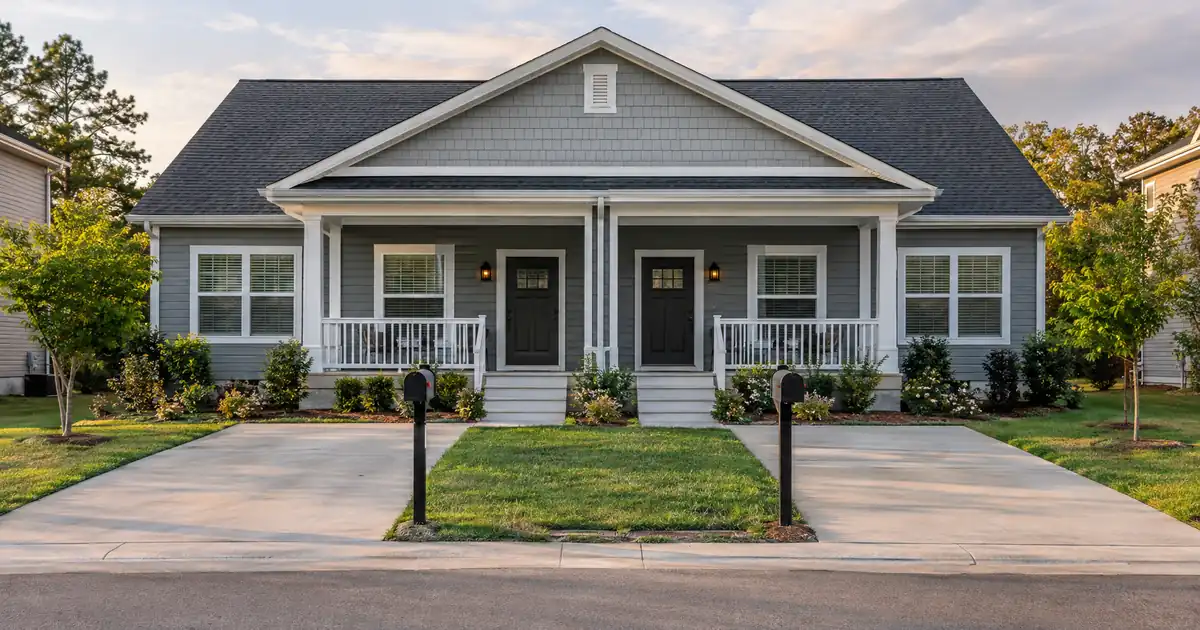
The Quick Read: Conventional cash-out usually costs less in ongoing insurance but reaches less of your equity. FHA cash-out reaches a little more equity, and in exchange it adds mortgage insurance and, on three- and four-unit buildings, a rent-based test. FHA tends to fit owners with thinner credit or higher debt loads. Conventional tends to fit owners with stronger credit who want to keep more equity untouched and avoid FHA insurance.
Lendmire arranges both kinds of loans through wholesale lenders. The brokerage’s FHA cash-out refinance program reaches 80% of the home’s value, and the home must have been owned and lived in for 12 months before the case number is assigned. Conventional cash-out on a two- to four-unit home you live in is set lower. The gap between those two ceilings is the starting point for the cost comparison.
“Cost” here means more than one thing. It covers how much equity you can reach, what mortgage insurance adds, how the lender prices risk, and how the paperwork treats your rental units. This article leaves out interest rates and payments, because those depend on the lender and your file. It compares the structure of each loan instead.
Key takeaways
- FHA cash-out tops out at 80% of value. Conventional cash-out on a 2-4 unit primary home generally tops out at 75%.
- FHA charges an upfront premium of 1.75% of the base loan, plus an annual premium that ranges from 0.15% to 0.75% of the balance.
- Conventional loans carry no FHA-style premium, but the lender adjusts pricing for credit score, leverage and unit count.
- Three- and four-unit FHA loans face a rent-based self-sufficiency test. Conventional loans use debt-to-income instead.
- Every cash-out loan pays off your existing liens first, and those liens count toward the leverage cap.
Side-by-Side
The table below shows how the two programs differ on the factors that drive total cost. These are program-level differences, and each is subject to lender guidelines and full file review.
| Factor | FHA cash-out | Conventional cash-out |
|---|---|---|
| Max leverage (2-4 units) | 80% of value | 75% of value, typically |
| Credit floor | Varies by scenario | Usually higher; lenders vary |
| Mortgage insurance | Upfront 1.75% plus annual premium | No FHA premium |
| Occupancy | You live in one unit | You live in one unit |
| Seasoning | About 12 months owned and occupied | Existing loan and title seasoning apply |
| Debt ratios | 31/43 base; up to 40/50 with factors | Debt-to-income, per automated findings |
| 3-4 unit rent test | Self-sufficiency test applies | No equivalent test |
| Rental income | Counted through appraisal rent estimate | Other units’ rent may count toward income |
Where the Cost Actually Comes From
The cost of each loan comes from four places: leverage, insurance, pricing adjustments and closing items. Each works differently on each side.
Leverage. On the same home, FHA lets you reach five more points of value than conventional does. Say your fourplex appraises at a given value and you owe a modest balance. At 75% you might fall short of the cash you need. At 80% you might clear it. That extra room is the main reason owners choose FHA here.
HUD sets the FHA ceiling. HUD Mortgagee Letter 2019-11 lowered it from 85% to 80% to protect the FHA insurance fund. The 80% cap does not change with unit count. Conventional works differently. Fannie Mae’s Eligibility Matrix allows 80% on a one-unit principal residence but lists 75% for two to four units. Unit count lowers the conventional ceiling and leaves the FHA one alone. Some lenders set their own limits below the published ones, so the number you see can vary.
Mortgage insurance. FHA charges an upfront premium of 1.75% of the base loan, and that premium can be financed into the balance. Financing it makes the new loan larger. The annual premium then runs between 0.15% and 0.75% of the balance, depending on term, loan amount and LTV, and HUD sets that annual schedule in HUD Mortgagee Letter 2023-05. These are program facts, not prices you can negotiate.
Duration matters as much as size. On a thirty-year loan above 90% LTV, the annual premium lasts for the full term. At or below 90% LTV, it ends after eleven years. A cash-out loan at the 80% ceiling would fall in the second group, which is a real plus. Even so, FHA insurance is more complicated to remove than conventional insurance, and some owners end up refinancing to shed it. Every figure here varies by lender and program — guidelines, property type, leverage, and credit profile all apply.
Conventional insurance is a different product. It is generally tied to higher-leverage loans, so a cash-out at 75% often carries none. That is a general pattern, not a promise. The lender confirms it on your file.
Pricing adjustments. Conventional pricing is risk-based. Lenders adjust it for credit score, leverage and unit count, and cash-out loans typically carry more adjustment than rate-and-term loans. The stronger your credit, the smaller the add-on. This is where weaker credit can erase the conventional cost advantage.
Closing items. Both are consumer mortgages. You receive a Loan Estimate and a Closing Disclosure, and both loans carry appraisal, title and lender charges. FHA adds the premium discussed above. Because a lower payment sometimes comes from a longer balance or a different term, compare the full cost of each loan on the disclosure rather than the headline payment.
The Three- and Four-Unit Twist
Unit count changes the FHA file more than the conventional one. On a two-unit home, FHA treats the loan like most other owner-occupied loans. On a three- or four-unit building, the property’s own rent must carry the payment. The appraiser estimates fair-market rent for all units, including the one you live in, and the underwriter subtracts a vacancy cushion. Confirm the exact math with the lender, because HUD’s handbook controls it and lenders apply it with their own overlays.
Conventional underwriting has no equivalent test. It looks at your debt-to-income ratio, and rent from the other units can count toward your income. That difference matters for a fourplex with a weak rent roll or an owner with a large personal income. A strong earner with weak rents may pass conventional and fail the FHA rent test.
Unit count also shows up in other conventional rules. Fannie Mae’s high-LTV refinance option, for instance, sets different minimums for two units than for three and four. Count your doors early.
When FHA Cash-Out Is the Better Fit
FHA is the better fit when credit, leverage or debt ratios are the obstacle. Four situations come up most.
- Your credit score is on the lower side. Through the wholesale programs Lendmire works with, FHA credit requirements vary by scenario. Conventional lenders generally want higher scores and price weaker credit higher. If your score sits near the bottom of the FHA range, conventional may be out of reach, or priced so that FHA wins.
- You need that last five points of equity. At 80%, FHA can reach cash that 75% cannot. For an owner paying off high-balance debt, or funding a repair that raises the building’s value, that gap can decide the whole plan.
- Your debt ratios are heavy. The base FHA pair is 31/43. Documented compensating factors, such as strong reserves or a long job history, can lift the limits to 40/50 at the top tier. Many conventional files run out of room well before that.
- You already hold an FHA loan. If so, ask your lender how the new insurance interacts with the old one. The answer depends on the loan type and your payoff path.
Still, FHA is the wrong choice in some cases. If your credit is strong and you need less than 75% of the value, you may pay FHA premiums for equity you never use. If the building has three or four units and weak rents, the self-sufficiency test may stop the file. If you plan to keep the loan a long time, the annual premium adds up over the term.
When Conventional Cash-Out Is the Better Fit
Conventional is the better fit when your credit and income are strong and you can live with the lower ceiling. Four profiles usually point that way.
- You have strong credit and plenty of equity. Reaching 75% is enough for many owners. If your plan needs less cash than that, conventional avoids the FHA premium entirely.
- Your rents are thin but your income is strong. Conventional counts personal income and the rent from your other units without the three- and four-unit rent test. That helps with a fourplex that cash-flows tightly.
- You want a cleaner exit from mortgage insurance. If you expect to refinance or sell within a few years, conventional’s lack of an FHA-style premium can matter. So can the standard conventional path to cancel insurance, where it applies.
- You expect to keep the building for a long time. Over many years, an annual premium adds up, and a lower-leverage conventional loan may cost less in total.
Conventional has its own limits. Seasoning rules apply. The Fannie Mae Selling Guide generally requires the existing mortgage to be at least 12 months old and at least one borrower to have been on title for six months. It also calls for taking the home off the market if it was listed for sale. Higher debt ratios can require reserves. Some lenders add stricter limits, so the real ceiling on a given day may sit below 75%.
How the Two Compare on a Real Decision
Picture an owner of a duplex who lives in one unit. The duplex has strong equity, the owner’s credit sits in the middle range, and the goal is to pay off credit cards and a car loan. At 75%, the conventional route may leave enough cash. At 80%, FHA leaves more. If the credit score is mid-range, conventional pricing may add enough cost that FHA’s insurance premium looks similar in practice. In a case like that, the honest answer comes from running both loan estimates side by side, not from a rule of thumb.
Now picture a fourplex owner with high income and rents that only barely cover the building’s costs. Conventional may work, because it reads income and counts rent from the other units. FHA may stall on the rent test. The opposite owner, with modest income but strong rents, may find FHA far easier.
Use of proceeds also matters. Cash-out can turn credit card balances into debt secured by your home. CFPB research on cash-out refinances and non-mortgage debt paydown notes that using home equity to pay off other debt can make sense when the cost of the extraction is less than the cost of the debt it replaces. The same research cautions that converting that debt into mortgage debt puts the home at risk. Tax treatment can depend on your situation; borrowers should speak with a qualified tax professional before relying on any deduction or credit.
Key Terms Defined
Cash-out refinance: a new loan larger than your current payoff, with the difference paid to you.
LTV (loan-to-value): the new loan balance divided by the appraised value, shown as a percentage.
Upfront mortgage insurance premium: the one-time FHA charge, set at 1.75% of the base loan, that can be financed into the balance.
Annual mortgage insurance premium: the ongoing FHA charge, between 0.15% and 0.75% of the balance, billed monthly with your payment.
Self-sufficiency test: the FHA check on three- and four-unit buildings that asks whether the property’s own rent can carry the payment.
Seasoning: the time you must have owned, lived in or held the existing loan before a cash-out is allowed.
A Balanced Verdict
Neither loan wins everywhere. FHA reaches more equity and accepts thinner credit and heavier debt, and it costs more in insurance. Conventional reaches less equity, rewards stronger credit and avoids FHA premiums, and it can cost more when credit is weak or when unit count lowers the ceiling.
Choose FHA if you need the extra five points of value, your credit sits near the lower end, or your debt ratios are tight. Choose conventional if your credit is strong, you need less than 75% of the value, or the rent test on a three- or four-unit building would trip the file. Where the answer is unclear, get both estimates and compare the totals, not the headlines.
If you are weighing a cash-out refinance against keeping the loan you have, Lendmire can help you compare the programs and the equity each one reaches. Every figure here is subject to lender guidelines and full file review, and none of it is a commitment to lend.
Frequently Asked Questions
Does FHA really allow more cash out than conventional on a 2-4 unit home?
Yes, in most cases. FHA caps cash-out at 80% of value regardless of unit count. Conventional lists 75% for two to four units on a principal residence, and some lenders set it lower. The five-point gap gives FHA more room, though FHA adds mortgage insurance in exchange.
Does the number of units change the FHA cash-out limit?
Not the percentage. The 80% cap is the same for one to four units. Units do change the file in two ways. Three- and four-unit buildings must pass the rent-based self-sufficiency test, and county loan limits vary by unit count, so check the limit for your county.
Does FHA mortgage insurance go away like conventional insurance?
Sometimes, but the rules differ. On a thirty-year loan above 90% LTV, the annual premium lasts for the term. Removing FHA insurance earlier usually means refinancing, so conventional’s cancellation path is simpler where insurance applies at all.
Can the rent from my other units help me qualify?
It can help on both sides, in different ways. Conventional underwriting can count rent from the other units toward your income. FHA uses the appraiser’s rent estimate, especially on three- and four-unit buildings, where it feeds the self-sufficiency test. The lender decides how much rent counts on your file.
How long do I need to have lived in the home before a cash-out?
For FHA through Lendmire’s programs, the home must be owned and occupied for 12 months before the case number is assigned. Conventional rules look at the age of your existing mortgage and how long you have been on title. Exceptions exist for situations such as inheritance, so ask your lender about yours.
For your own numbers, request a scenario review with Lendmire.
About Lendmire
Lendmire (NMLS# 2371349) is a mortgage broker licensed for consumer lending in 16 states. Lendmire arranges FHA, VA, conventional and jumbo purchase and refinance loans through wholesale lenders; every file is underwritten by the lender under the applicable program guidelines. Scotsman Guide named Lendmire a Top Mortgage Workplace in both 2025 and 2026.
For current guidelines, see FHA loan programs.
Get Started
Ready to find the right loan for you?
In about 30 seconds you can review financing options available for your home or investment property. No commitment required.
Informational only. Not a Loan Estimate, approval, or commitment to lend. Program availability and eligibility are subject to lender guidelines, credit approval, property review, and underwriting.
References
1. HUD Mortgagee Letter 2019-11
2. Fannie Mae Eligibility Matrix
3. HUD Mortgagee Letter 2023-05
4. Fannie Mae Selling Guide: Cash-Out Refinance Transactions
5. CFPB: Cash-Out Refinances and Paydown Behavior of Non-Mortgage Debt Balances
This article is part of Lendmire’s FHA Loan series — every loan program’s qualification details, guidelines, and scenarios live on the loan options page.
Related reading: Does an FHA Cash-Out on a 2-4 Unit Primary Home Carry Lifetime MIP? · How Much Equity an FHA Condo Needs for a Conventional Cash-Out · How to Qualify for an FHA Cash-Out on a 2-4 Unit Primary Home
Brandon Miller
Founder & CEO, Mortgage Loan Originator, Lendmire LLC
- Mortgage Loan Originator · NMLS# 1129696 · Verify on NMLS Consumer Access
- North Carolina Real Estate Broker · License# 343312 · Verify on NCREC
- North Carolina Insurance Producer · License# 19053198 · Property, Casualty, Life, Health · Verify on NAIC SBS
- Lendmire LLC · Firm NMLS# 2371349 · Verify firm licensure
Legal disclosures. Lendmire (NMLS# 2371349) is a state-licensed mortgage brokerage that arranges financing through wholesale lender relationships. Lendmire is not a direct lender, depository institution, or registered financial advisor. The discussion above is general informational content about real estate financing — it is not financial, legal, or tax advice, and readers should consult licensed professionals for guidance on their individual circumstances. Loan inquiries are subject to lender underwriting; this article does not represent a commitment to lend. Loan terms, rates, and qualification standards vary by borrower, property, and state, and are subject to change at any time. Equal Housing Opportunity. NMLS Consumer Access: nmlsconsumeraccess.org.