
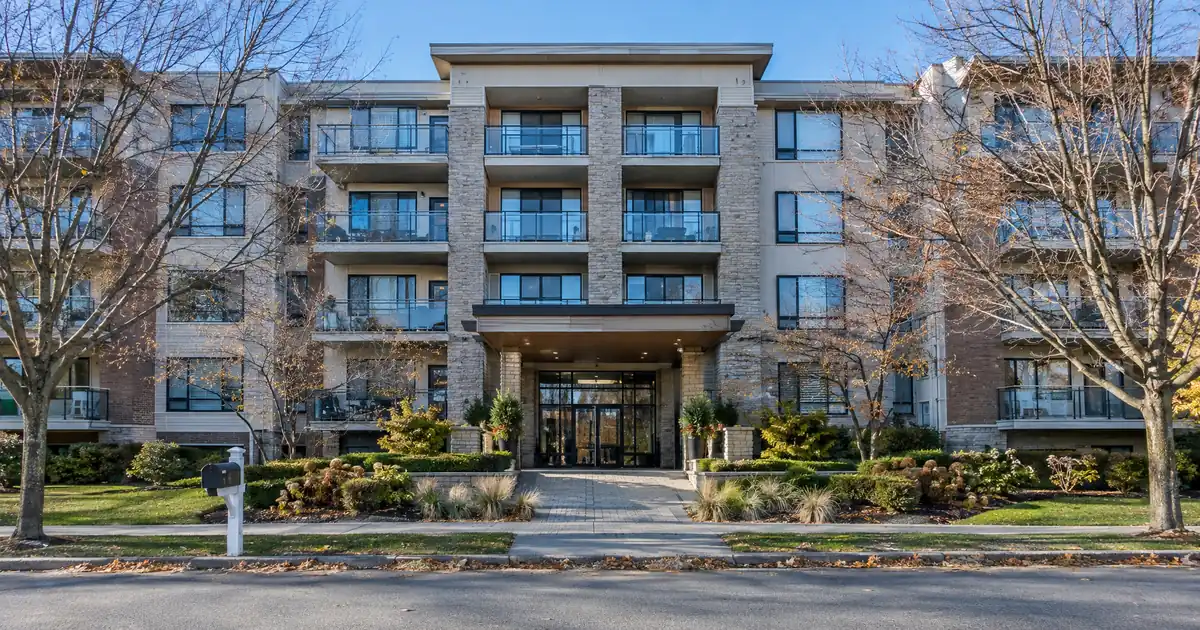
The Quick Read: It depends on the building more than the borrower. FHA fits buyers who need low money down and a flexible credit profile, but the condo project has to pass an FHA review. Conventional fits buyers with stronger credit and a bigger down payment, and its project review is often lighter. Either way, the building and the unit are judged separately, and a clean appraisal cannot fix a building that fails.
Side-by-Side
The table below compares the two options on borrower terms. FHA figures reflect the wholesale programs Lendmire places loans with, and every figure is subject to lender guidelines and full file review.
FHA payment estimate
Starting assumptions reflect an example price and the FHA minimum investment. Replace them with your own figures.
Editable benchmark: 7.32% as of October 22, 2026 · Freddie Mac 30-year average via FRED®. A conventional market reference, not an FHA loan quote.
Illustrative starting assumptions: a $350,000 price, the FHA minimum investment as the down payment, a thirty-year term at the current Freddie Mac benchmark, and property taxes and insurance estimated at typical national rates. Every field is editable.
Illustrative estimate only — not a Loan Estimate, approval, quote, or commitment to lend. The rate field carries the weekly Freddie Mac thirty-year conventional benchmark, a market reference and not an FHA loan quote; your rate is set by the lender at lock. FHA mortgage insurance follows HUD’s published schedule for the term, leverage and loan size entered; taxes, insurance and dues are editable estimates; closing costs are not included; county loan limits are not checked here. Licensed in sixteen states for consumer mortgages. Lendmire is not affiliated with or acting on behalf of FHA, HUD, or the federal government.
| Factor | FHA | Conventional |
|---|---|---|
| Maximum financing | 96.5% LTV | Varies by lender and borrower |
| Minimum investment | 3.5% at a 580+ decision score | Varies by program |
| Credit floor | 580 in the network | Often higher; varies |
| Mortgage insurance | Upfront 1.75% plus annual premium | Varies by down payment and credit |
| Occupancy | Owner-occupied primary residence | Primary, second home, or investment |
| Ratios | 31/43 base, up to 40/50 with factors | Set by automated findings |
| Project review | Approved project or Single-Unit Approval | Full Review or Waiver of Project Review |
Mortgage insurance deserves a note. On a thirty-year FHA loan above 90% LTV, the annual premium lasts for the term. At or below 90% LTV, it ends after eleven years. The annual premium runs between 0.15% and 0.75% of the balance, depending on term, loan amount and LTV. That is program mechanics, not a price quote. Each figure is subject to lender guidelines and a complete review of property type, leverage, and credit.
The row that decides most condo files is the last one. Two gates apply: the building passes or it doesn’t, and then the unit appraises or it doesn’t.
How the Two Gates Work
The first gate is the project. The second is the unit. Failing the first ends the file even when your credit, income and appraisal are fine.
For FHA, HUD’s condominium page says the unit must sit in an FHA-approved project or in a non-approved project that meets Single-Unit Approval (SUA) requirements. HUD looks at insurance coverage, financial condition, nature of title, pending legal action and physical condition, along with other viability and marketability factors. The governing text is Handbook 4000.1, and the loan officer should confirm current wording because these rules change.
For conventional, the lender follows Fannie Mae or Freddie Mac. Fannie Mae’s Selling Guide allows a Waiver of Project Review for certain units, such as units in small two- to four-unit projects and some five- to ten-unit projects that are not part of a larger development or master association. Larger projects go through Full Review. Even a waived project cannot be a condo hotel, a houseboat project or a timeshare-style structure, and insurance requirements still apply.
FHA Condo Approval: What the Building Must Pass
Start with the approved list. If the building is on HUD’s approved condo list, the lender reviews at the loan level. If it isn’t, the loan can still go through Single-Unit Approval.
SUA has conditions. Per HUD, the project must be complete and ready for occupancy, have at least five dwelling units, and not be a manufactured home. HUD’s 2019 announcement capped FHA-insured units far lower for SUA than for full approval. In projects of ten or more units, no more than 10 percent can be FHA-insured. Smaller projects can have no more than two. Approved projects generally allow a higher share, along with a general 50 percent owner-occupancy minimum and a cap on commercial space. Those figures date from 2019 and are set by notice, so treat them as “generally” and ask your loan officer for the current numbers.
Paperwork matters here. The lender completes the Condominium Loan Level/Single-Unit Approval Questionnaire, Form HUD-9991. Its information must come from verifiable sources, like the association or its management company, and be no more than 90 days old. For full approval, the submission uses Form HUD-9992, which asks about reserves, annual dues, special assessments and cash flow.
Here is the practical catch. The documents sit with the association or its management company. Slow responses there stall files more often than anything on the borrower side.
Conventional Condo Approval: What the Reviewers Look At
Conventional is not “no review.” It is a different review. The lender picks the path: waiver or Full Review. Then it checks the project’s status and documents, which typically include the budget, insurance, litigation and any inspection or reserve information.
Fannie Mae’s ineligible projects rules cover projects with too much commercial space, critical repairs, litigation, evacuation orders or termination. Fannie Mae can also flag a project as unavailable in its condo project system, and a project with that status is not eligible regardless of review type. Some lenders add their own project requirements on top of agency rules. Rules also shift. Lender letters have reportedly retired some limited-review options for established projects, so confirm the current review path with your loan officer.
Appraisal Rules for a Condo
An appraisal answers a value question and, on FHA, a property-standards question. It does not answer the project question.
On conventional loans, the appraiser reports a condo unit on the Individual Condominium Unit Appraisal Report, Form 1073. The lender must also give the appraiser the full ratified purchase contract. The focus is value and condition, using comparable condo sales.
On FHA, the appraisal also checks that the property meets minimum standards for safety, soundness and security. Condo issues that surface include failing common-element items, shared roof or systems problems, and unit-level safety items. A 2025 HUD mortgagee letter rescinded several FHA-specific appraisal protocols as outdated and costly, which is another reason to ask what is currently required. Flood zones add one more rule. HUD’s Mortgagee Letter 2025-17 says coverage on condos in Special Flood Hazard Areas must protect both the borrowers who hold title to the unit and the project’s common areas.
Think of it this way. Appraisal conditions on a house usually mean fixing a handrail or a peeling surface. On a condo, a condition may trace to the building, and you don’t control the building. The association does.
When Conventional Is the Better Fit
Conventional works best when the building is the problem or the borrower is strong.
- The building isn’t FHA-approved and doesn’t qualify for SUA. It may be a smaller project, a mixed-use building, or one with heavy FHA concentration. A building can be eligible for one program and not the other.
- Credit and savings are solid. If you can bring more down than the FHA minimum, conventional mortgage insurance can be cheaper or removable, depending on the structure.
- The unit isn’t your primary residence. FHA is owner-occupant financing. Occupancy decides the leverage, so a second home points to conventional.
- The building is small and eligible for a waiver. A Waiver of Project Review can remove a whole layer of association paperwork.
Conventional is not automatically easier. A building with litigation, critical repairs or thin reserves can fail both.
When FHA Is the Better Fit
FHA works best when the buyer is the constraint and the building is clean.
- Low cash and a 580-range score. The 96.5% maximum financing with a 3.5% minimum investment is the main draw. Across the wholesale programs Lendmire works with, 580 is the floor. HUD’s lower credit tier is not reached through the network.
- Higher debt ratios. The base pair is 31/43. Documented compensating factors can reach 40/50 at the top tier, and the automated finding governs most files. Read the actual ratios in the FHA loan programs overview and confirm with a loan officer.
- A non-occupant co-borrower is needed. FHA allows one.
- Seller help is part of the deal. Seller or interested-party contributions are allowed up to 6% of the price.
- The building is already on HUD’s approved list. That is the cleanest FHA path.
If the building isn’t approved, SUA is a case-by-case route. It is a fallback, not a plan.
Building Red Flags That Hurt Either Loan
| Red flag | FHA effect | Conventional effect |
|---|---|---|
| Pending litigation | Project criterion | Can make project ineligible |
| Thin reserves, special assessments | Reviewed on HUD forms | Reviewed in project documents |
| High investor concentration | Capped by FHA share limits | Reviewed by lender |
| Large commercial space | Floor-area cap | Cap applies |
| Insurance gaps | Must meet coverage rules | Insurance rules still apply |
| Unfinished construction | SUA requires completed project | Case-by-case |
Three Quick Scenarios
Lower savings, building not on the list. A buyer with a 600 score and modest savings falls in love with a unit in a 40-unit building. The building isn’t FHA-approved. SUA may work if FHA-insured units stay at or below 10 percent. If the building can’t meet that, the buyer needs a bigger down payment for conventional or a different building.
Strong credit, heavy investor ownership. A buyer with excellent credit and 20% down finds a building with many rented units. Conventional may fit better than FHA, but the lender’s own project overlays still apply. Leverage, reserves, and pricing vary by lender and program; the final terms follow the full file review.
Seller repairs. An FHA appraisal flags a safety item inside the unit. The seller agrees to fix it. If the item is a building component, the buyer has to get the association to act, and that can stall the file.
If the Building or Appraisal Fails
Follow this order:
1. Identify which gate failed. Project problems and appraisal problems have different fixes.
2. Ask whether the other program can work. A building that fails FHA may pass conventional, and the reverse is also true.
3. For FHA, ask about SUA. It only applies to completed projects of five or more units.
4. For appraisal conditions, negotiate repairs or a price adjustment. Request a reconsideration only when recent comparable sales support it.
5. If nothing works, walk away. Future buyers face the same project rules, so a failing building is also a resale problem.
Pre-Offer Checklist for Condo Buyers
Before writing an offer, ask your agent, the association and the loan officer:
- Is the building on HUD’s approved list?
- What is the owner-occupancy share, and how much is rented?
- Are there special assessments, litigation or critical repairs?
- How healthy are reserves, and what do dues cover?
- Who at the association handles questionnaires, and how responsive are they?
Budget for dues too. The CFPB says condo fees are usually paid directly to the association, not through the mortgage servicer, but they still count when you qualify.
Key Terms Defined
Single-Unit Approval (SUA): An FHA route that lets a loan on one unit proceed in a building that isn’t on the approved list.
Waiver of Project Review: A conventional path that skips full project review for certain small projects.
Form HUD-9991: The FHA questionnaire the lender completes for loan-level or single-unit approval.
Owner-occupancy share: The portion of units lived in by owners rather than renters.
Special assessment: An extra charge the association levies on owners for a large expense.
The Balanced Verdict
FHA wins for buyers who need low money down, in buildings that already pass. Conventional wins for stronger borrowers, second homes, and buildings FHA won’t touch. Compare the building first and the loan second.
If you are buying a home and want to see whether an FHA loan fits your file, Lendmire can help you compare the options and what each one asks of the file. For related reading, see Lendmire’s piece FHA vs Conventional Loan for a First-Time Condo Buyer: Appraisal Rules.
Frequently Asked Questions
Is FHA or conventional easier for a condo?
Neither is always easier. FHA puts more scrutiny on the building and offers flexible borrower terms. Conventional reviews the building too, but may be lighter for small projects and stricter on the borrower. The building’s status usually decides it.
Does approving my unit mean the building is approved?
No. The unit appraisal and the project review are separate. A good appraisal speaks to value and condition. It does not cure a project that fails eligibility.
Can an unapproved building still get an FHA loan?
Sometimes. Single-Unit Approval is possible for completed projects of five or more units that meet its conditions, including a low FHA-insured share. It is case-by-case, subject to lender guidelines.
Are HOA dues part of my mortgage payment?
Usually not. Dues are generally paid to the association directly. Lenders still count them when estimating your total monthly housing cost.
Does FHA approval of a building last forever?
No. Approvals generally need to be recertified, so a building’s status can change over time. Ask your loan officer to check the building’s current status before you make an offer.
For your own numbers, request a scenario review with Lendmire.
About Lendmire
Lendmire (NMLS# 2371349) is a mortgage broker licensed for consumer lending in 16 states. Lendmire arranges FHA, VA, conventional and jumbo purchase and refinance loans through wholesale lenders; every file is underwritten by the lender under the applicable program guidelines. Scotsman Guide named Lendmire a Top Mortgage Workplace in both 2025 and 2026.
Get Started
Ready to find the right loan for you?
In about 30 seconds you can review financing options available for your home or investment property. No commitment required.
Informational only. Not a Loan Estimate, approval, or commitment to lend. Program availability and eligibility are subject to lender guidelines, credit approval, property review, and underwriting.
References
2. Fannie Mae Selling Guide – Waiver of Project Review
3. HUD Archives – 2019 condo rule press release
4. Fannie Mae Selling Guide B4-2.1-03
5. Form 1073
6. HUD – Mortgagee Letter 2025-17
This article is part of Lendmire’s FHA loan program — full qualification details, guidelines, and scenarios live on the program page.
Related reading: FHA Loan Appraisal Requirements for New Construction · Does an Existing FHA Loan Qualify for a Streamline Without an Appraisal? · FHA, VA and Conventional Loan Seasoning Rules for a Divorce Award
Brandon Miller
Founder & CEO, Mortgage Loan Originator, Lendmire LLC
- Mortgage Loan Originator · NMLS# 1129696 · Verify on NMLS Consumer Access
- North Carolina Real Estate Broker · License# 343312 · Verify on NCREC
- North Carolina Insurance Producer · License# 19053198 · Property, Casualty, Life, Health · Verify on NAIC SBS
- Lendmire LLC · Firm NMLS# 2371349 · Verify firm licensure
Disclosures. The information presented in this article is general market commentary, not financial, legal, or tax advice. Lendmire is a mortgage brokerage (NMLS# 2371349) — not a direct lender or depository institution — and loan placement is subject to lender underwriting. Nothing in this content represents a commitment to lend. Loan terms, pricing, and program availability vary based on borrower qualifications, property characteristics, and state of subject property, and are subject to change at any time. Lendmire complies with Equal Housing Opportunity requirements. Consumer access: nmlsconsumeraccess.org.