
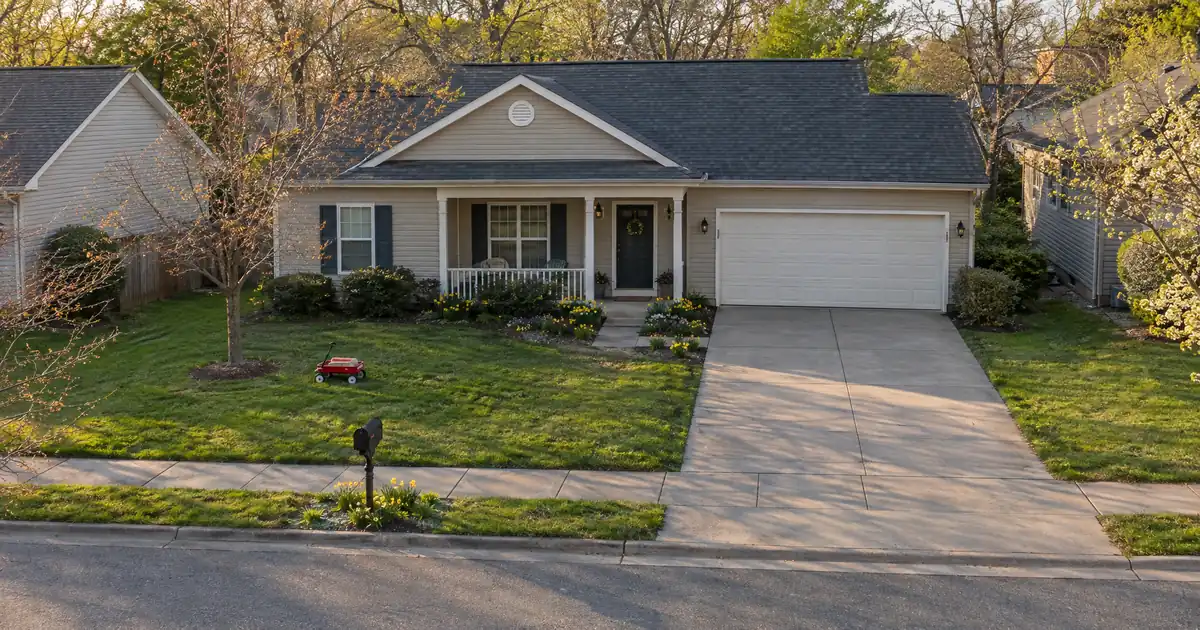
The Quick Read: It can, when the repairs are modest relative to the loan you would be replacing and you are comfortable managing the work and the cash yourself. A plain VA cash-out hands you the proceeds at closing, with no contractor bid, draw schedule or final inspection tied to the money. The catch is that the new loan replaces your whole mortgage, so the question is really about the cost of swapping the entire balance, not the cash alone.
What Is a Plain VA Cash-Out, and Why Does It Fit a No-Contractor Plan?
A plain VA cash-out refinance pays off your existing loan and puts the remaining equity in your hands as a lump sum. VA says the cash can go toward home improvements, debt, school or other needs. You need a Certificate of Eligibility and you must live in the home.
VA cash-out estimate
Seeded with an example value, a typical balance, and a round cash request at the first-use fee; change any field.
Editable benchmark: 7.24% as of October 29, 2026 · Freddie Mac 30-year average via FRED®. A conventional market reference, not a VA cash-out refinance quote.
Illustrative starting assumptions: a $350,000 home value, a $193,000 current balance, the full-value VA cap with the first-use funding fee financed, a thirty-year term at the current Freddie Mac benchmark, and property taxes and insurance estimated at typical national rates. Every field is editable.
Illustrative estimate only — not a Loan Estimate, approval, quote, or commitment to lend. The rate field carries the weekly Freddie Mac thirty-year conventional benchmark, a market reference and not a VA cash-out refinance quote; a VA loan is priced by the lender at lock. The total loan, funding fee included, is capped at the program leverage on the reasonable value; the fee follows the tier chosen. The cash available is what the cap allows less the balances paid off and the fee, before closing costs, which are not included. The HELOC line is the line program’s combined loan-to-value ceiling applied to the same value and balance. Taxes and insurance are editable estimates. The debt-to-income figure is a guideline; residual income decides a VA file. Licensed in sixteen states for consumer mortgages.
Nothing in that structure asks who does the work. You could hire a handyman, pay for materials and do the labor yourself, or hold the money for a repair you know is coming. The lender is not releasing funds against invoices.
Across the wholesale programs we place VA files with, the cash-out reaches up to 100% of the appraised value, including the financed funding fee. It can refinance any loan type into a VA loan, not only an existing VA mortgage. Lendmire’s VA cash-out refinance program page covers the program basics. Everything here is subject to lender guidelines and full file review, and nothing is a commitment to lend.
How Is This Different From VA Repair Financing?
VA also has a separate path for alteration and repair. VA’s Buyer’s Guide says VA can guarantee a loan that includes repairs, either with a purchase or as a cash-out refinance on a home you own and occupy. Under that structure, proceeds are paid to the builder or contractor during the repair period.
That is the contractor-dependent route. It does not suit a homeowner without a contractor. Some online pages treat “no DIY” rules for renovation loans as if they applied to every VA repair plan. They do not. Those rules belong to the repair-financing structure, not to a plain cash-out.
| Feature | Plain cash-out | Cash-out with repair financing |
|---|---|---|
| Contractor required | No | Yes |
| Funds released | Lump sum at closing | Paid out during repair period |
| Inspection of the work | None tied to the money | Typically required |
| Appraised on | Home as it stands | Value as completed |
| Best for | DIY, small jobs, urgent fixes | Large jobs with a bid |
The repair-financing path is where the loan is sized to the finished project. Details on that structure can change, so confirm current rules with a lender before counting on it.
What Does the Appraisal Do With Repairs You Haven’t Made Yet?
In practice, a plain cash-out is valued on the home as it stands today. Treat that as a working rule of thumb: you cannot count on borrowing against the finished project. If the repairs are what will raise the value, a plain cash-out will not credit them in advance.
There is a second wrinkle. If the appraiser flags problems that affect VA’s minimum property requirements, those items may need to be fixed before the loan can go forward. That can undercut a plan to do the work later and on your own schedule. A home with a leaking roof or a failed system is a different file from a home that simply needs updating.
How Much Cash Can You Actually Take Out?
Less than most people expect. The federal regulation on VA refinances caps the new loan at 100% of the reasonable value VA determines. The funding fee can be financed, but it counts inside that ceiling. Anything that would push the loan past 100% has to be paid in cash at closing.
Before you see a dollar, these items come off the top:
- The payoff of your current loan.
- Closing costs.
- The funding fee, if financed.
- Any lower cap a lender sets for itself.
The program we work with sets the cash-out funding fee at 2.15% for first use and 3.3% for later use. Veterans receiving compensation for a service-connected disability, and the other exempt groups, do not pay it. The 90% figure that turns up in older articles is not a lending cap. As VA Circular 26-19-05 explains, the loan-to-value calculation includes the financed fee and measures against the 100% ceiling, and 90% is one of the ways to pass the net tangible benefit test.
What Is the Net Tangible Benefit Test?
Every VA cash-out has to show a real benefit to the borrower. VA lists eight qualifying conditions. A lower payment, higher residual income, eliminating mortgage insurance, refinancing an interim construction or repair loan, moving from adjustable to fixed, and a new loan at or below 90% of reasonable value are among them.
This matters for small repairs. If your only goal is a modest sum of cash, the test needs a legitimate benefit behind it. The half-percent rate-reduction and fee-recoupment tests belong to the IRRRL, the streamline refinance for existing VA loans, and do not apply to the cash-out.
Lenders must also give you an estimate of the equity being removed. They must explain that taking it out may affect your ability to sell later. Read that disclosure as more than paperwork.
When Does It Make Sense? When Doesn’t It?
The honest answer turns on your current mortgage and the size of the job.
It tends to make sense when:
- The repair is large enough that spreading it over a new loan beats other funding.
- Your current loan is not one whose terms you would be giving up.
- You want to pay for materials, tools and labor flexibly, without bids or draw inspections.
- The cash-out also does other work, such as consolidating higher-cost debt or removing mortgage insurance from a non-VA loan.
- You have strong residual income and equity to spare.
It tends not to make sense when:
- The repair is small. Replacing an entire mortgage to fund a few projects resets the whole balance and term.
- Your existing loan has favorable terms you would lose.
- The home needs repairs just to appraise, since the no-contractor plan may fail at that step.
- You are not confident in estimating costs. Unrestricted cash invites overspending, and unspent cash still accrues interest.
The Consumer Financial Protection Bureau notes that a cash-out refinance may cost more or less than a home equity line depending on terms, and that you often pay closing costs. A second lien leaves your first mortgage untouched. A cash-out does not.
How Does a Cash-Out Change the Rest of the Loan?
The new terms apply to the whole balance, not only the cash. A bigger balance, a possibly longer term and a financed funding fee can all raise the payment or stretch the payoff. Lenders also commonly want you to keep some equity in the home.
Underwriting follows VA credit standards with residual income as the controlling test. The 41% debt-to-income figure is a guideline, not a cap, though a higher ratio calls for residual income well above the table. VA sets no minimum credit score. The wholesale programs we place VA loans with start at a 580 decision score, and some lenders set a higher floor.
Seasoning and the net tangible benefit also apply. Seasoning is the waiting period after your current loan’s first payment. The program we work with requires the later of 210 days from the first payment and the sixth payment.
Planning Repairs When There Is No Bid
A bid does one useful thing: it forces a number. Without one, build your own.
1. List each repair and separate urgent safety or system items from upgrades.
2. Price materials and any hired help from at least two sources.
3. Add a contingency cushion for surprises, since no lender is watching the budget.
4. Check permit and warranty requirements in your area. No inspector tied to the loan means quality control is yours.
5. Track spending and keep receipts and records.
If the total keeps growing as you plan, that is a signal to stop and ask whether a smaller, separate loan fits better than replacing the mortgage.
What About Energy-Efficiency Work?
VA’s Energy Efficient Mortgage rolls approved energy-saving improvements into a purchase or refinance. Documentation depends on cost, with a limit of $6,000, and funds sit in escrow until the lender verifies completion. That is a bid-driven structure, so it is not a DIY route.
Watch for Contractor-Arranged Financing
If a contractor steers you to a particular lender, slow down. The CFPB has described a scam pattern where a contractor arranges financing, the borrower signs what turns out to be a home equity loan, and the work goes unfinished. Get a quote from a lender the contractor did not recommend.
If you are weighing the same question on a different loan type, Lendmire’s piece Does a Jumbo Cash-Out Refinance Make Sense for Repairs Without a Contractor? works through the parallel tradeoffs.
Key Terms Defined
- Certificate of Eligibility (COE): The VA document that confirms you qualify for a VA loan.
- Reasonable value: The appraised value VA sets, which caps the new loan at 100%.
- Net tangible benefit: A listed advantage VA requires the refinance to give the borrower.
- Funding fee: A one-time VA charge that can be financed and is waived for exempt veterans.
- Residual income: The money left each month after debts and living costs, VA’s controlling test.
- Alteration and repair financing: The VA structure that pays a contractor in draws during repairs.
Frequently Asked Questions
Can I use a VA cash-out refinance if I do the repairs myself?
Yes. A plain cash-out delivers proceeds at closing with no draw schedule, so nothing requires a contractor. The tradeoff is that you manage the budget, and the appraisal values the home as it stands, not as repaired.
Does VA have a home-improvement loan that needs no contractor?
No. VA’s repair financing is built around contractor draws. A plain cash-out is the closest fit, but it is a refinance of your whole mortgage, not a dedicated repair product.
What if the appraiser finds repairs the home needs?
Items that affect VA’s minimum property requirements may need to be addressed before the loan proceeds. That can complicate a plan to do the work later, so ask your loan officer how the appraisal findings would be handled.
Can I refinance a non-VA loan into a VA cash-out?
Yes. The program refinances any loan type into VA, subject to seasoning, the net tangible benefit and full underwriting. Occupancy matters too, since the home must be your residence.
Will I get all my equity in cash?
No. The old payoff, closing costs, the financed funding fee and any lender cap come out first, all inside the 100% ceiling. What is left is your cash.
If you are weighing a cash-out refinance against keeping the loan you have, Lendmire can help you compare the programs and the equity each one reaches.
For your own numbers, request a scenario review with Lendmire.
About Lendmire
Lendmire, NMLS# 2371349, is a mortgage brokerage with consumer lending licenses in 16 states. FHA, VA, conventional and jumbo purchase and refinance loans are arranged through wholesale lending partners, and each application is reviewed individually by the lender. Scotsman Guide named Lendmire a Top Mortgage Workplace in both 2025 and 2026.
Get Started
Ready to find the right loan for you?
See your offer in seconds. No credit pull, no obligation.
Informational only. Not a Loan Estimate, approval, or commitment to lend. Program availability and eligibility are subject to lender guidelines, credit approval, property review, and underwriting.
References
1. VA.gov: Cash-out refinance loan
2. VA Home Loan Guaranty Buyer’s Guide
5. Consumer Financial Protection Bureau
6. VA News: Energy Efficient Mortgages
7. CFPB blog – Avoiding loan scams after a natural disaster
This article is part of Lendmire’s VA cash-out refinance program — full qualification details, guidelines, and scenarios live on the program page.
Related reading: VA Cash-Out Refinance Requirements Without Bringing Cash · Can You Get Approved for a VA Cash-Out Refinance Under VA Type 1 and Type 2 Rules? · VA Cash-Out Refinance Requirements for Military Borrowers
Brandon Miller
Founder & CEO, Mortgage Loan Originator, Lendmire LLC
- Mortgage Loan Originator · NMLS# 1129696 · Verify on NMLS Consumer Access
- North Carolina Real Estate Broker · License# 343312 · Verify on NCREC
- North Carolina Insurance Producer · License# 19053198 · Property, Casualty, Life, Health · Verify on NAIC SBS
- Lendmire LLC · Firm NMLS# 2371349 · Verify firm licensure
Disclosure information. Lendmire is a state-licensed mortgage brokerage under NMLS# 2371349. Lendmire is not a depository institution, direct lender, or financial advisor — all loans referenced are placed through wholesale lender partners and are subject to each lender's underwriting standards. This article is provided for general informational purposes and is not a commitment to lend, nor does it constitute financial, legal, or tax advice. Loan programs, terms, rates, and qualification standards change without notice and depend on borrower profile, property type, and the state in which the subject property is located. Equal Housing Opportunity provider. NMLS Consumer Access: nmlsconsumeraccess.org.