
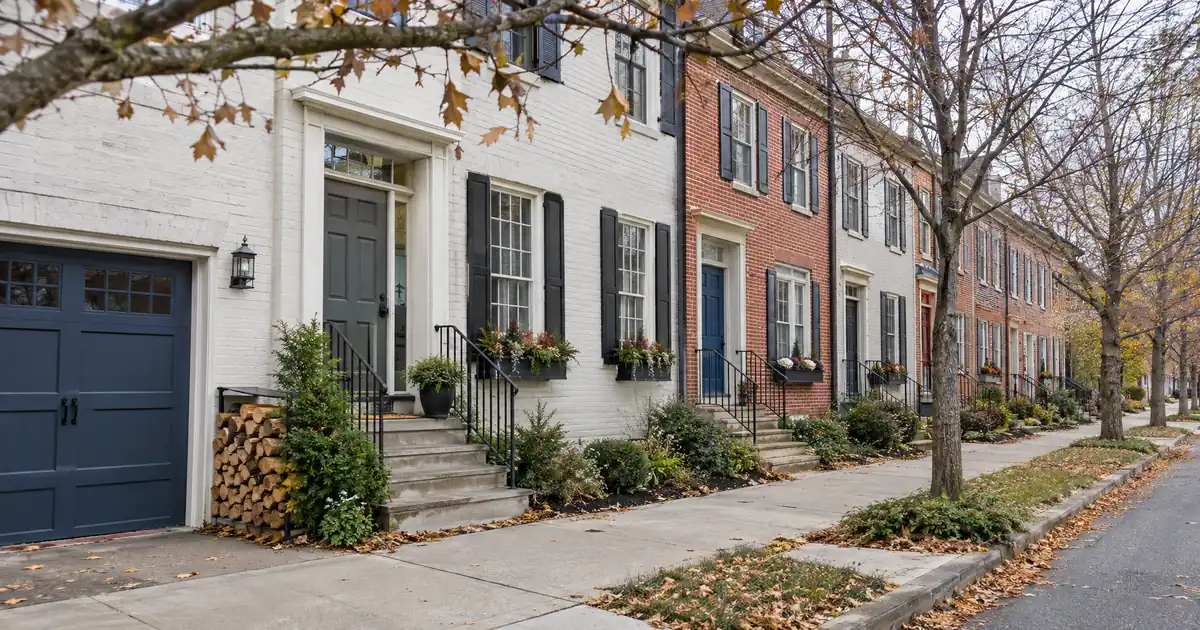
The Quick Read: Rarely. It works mechanically, since the cash is yours to spend. But FHA only insures a home you live in, and it generally won’t insure your next house if you keep the first one. The bigger mortgage on your current home also counts against you when you qualify for the next loan. It fits a narrow set of cases, and many buyers do better selling the first home or using a different funding source. Program details are subject to lender guidelines and full file review, and nothing here is a commitment to lend.
What Does an FHA Cash-Out Refinance Actually Do?
It replaces your current mortgage with a larger one and hands you the difference in cash. You owe more afterward. The cash is not income, and you can spend it on nearly anything, including a down payment.
FHA cash-out estimate
Seeded with an example value, a balance to match, and a round cash request; change any field.
Editable benchmark: 7.24% as of October 29, 2026 · Freddie Mac 30-year average via FRED®. A conventional market reference, not an FHA cash-out refinance quote.
Illustrative starting assumptions: a $350,000 home value, a $193,000 current balance, the FHA cap on a principal residence with the upfront premium financed, a thirty-year term at the current Freddie Mac benchmark, and property taxes and insurance estimated at typical national rates. Every field is editable.
An illustration, not a Loan Estimate, an approval, a quote, or a commitment to lend. The rate shown is the weekly Freddie Mac thirty-year conventional benchmark, used as a market reference; an FHA cash-out is priced by the lender at lock, and this is not an FHA cash-out refinance quote. HUD’s cap limits the base loan; the upfront premium is financed on top of the capped base loan; the monthly premium for the first year follows the snapshot’s schedule. Cash available means the base loan the cap permits less the balances retired, before closing costs, which this calculator leaves out. The line figure applies the line program’s combined loan-to-value ceiling to the same value and balance. Taxes and insurance are estimates you can edit. Licensed in sixteen states for consumer mortgages.
Across the wholesale programs Lendmire places FHA files with, the FHA cash-out reaches 80% loan-to-value (LTV). LTV is your loan balance divided by your home’s appraised value. At 80%, at least 20% of the home’s value stays as your equity. You never reach all of it.
The home must also be one you own and live in. Our programs look for 12 months of ownership and occupancy before the case number is assigned. A case number is the FHA’s file identifier, issued when the lender starts your loan. Lendmire’s FHA cash-out refinance program page lays out the program in more detail.
County loan limits apply too. FHA sets them by county, and they change every year, so check the current limit for your area before you plan around a number.
Why the Next House Is the Real Problem
Most of the trouble sits with the house you want to buy, not the one you are refinancing. FHA is built for a principal residence, meaning the home you live in most of the year. That one fact drives the whole decision.
HUD has long said that a person who keeps an FHA-insured principal residence generally may not buy another principal residence with FHA insurance, apart from listed exceptions. The same text says FHA insurance is not a vehicle for buying investment properties. That HUD chapter is older and since superseded, so confirm current wording in the HUD Housing Handbooks index, where Handbook 4000.1 lives.
So the answer depends on what the “other house” is:
| Your plan for the next house | How FHA rules treat it |
|---|---|
| Move in and sell the first home | Usually workable, since you still have one principal residence |
| Move in and keep the first home | Usually blocked for a second FHA loan, unless an exception applies |
| Buy a vacation home | Not an FHA purchase; FHA covers principal residences |
| Buy a rental | Not an FHA purchase |
| Buy a 2-4 unit and live in one unit | Can count as a principal residence |
Across our FHA purchase programs, the loan is for an owner-occupied principal residence of one to four units. If your plan is a vacation home or a rental, the occupancy changes the leverage and the loan type. That is a different conversation from this one.
The relocation exception is real but narrow. HUD describes it in terms of moving a certain distance from your current home, and HUD Mortgagee Letter 2023-17 refers to a 100-mile figure. How that distance test interacts with other conditions is not simple. Have a loan officer read the current wording against your actual move.
Does Your Current Home’s Loan Count Against You?
Yes, and this is the trap most people miss.
When you refinance, your payment on the first home rises. When you apply for the second home, the lender counts both payments. Lenders measure this with a debt-to-income ratio (DTI), which compares your monthly debts to your monthly income.
Across the FHA programs we place, the base pair is 31/43. That is housing costs against income, then total debts against income, with no compensating factors. Documented compensating factors, like strong reserves or a low payment increase, can stretch the pair up to 40/50 at the top tier. The automated finding governs most files.
Picture a buyer who takes cash out of her house, then contracts on a second. She now carries a bigger first mortgage and a new second one. Both sit in the ratio. The cash didn’t make her income any larger. Not ideal.
The only relief is selling the first home, or getting a lender to count rent from it. Here the rules get strict.
Can Rent From the Old House Offset Its Payment?
Sometimes, but not freely. Do not plan on it.
For FHA, Mortgagee Letter 2023-17 covers rental income from a home you are leaving. HUD’s approach counts 75% of the lesser of the appraised market rent or the leased rent, then subtracts the home’s full housing payment. It also attaches documentation and equity conditions.
Here’s the catch. A cash-out refinance cuts the equity in the home you are leaving. That can work against the equity test. You may be pulling out the very cushion the rent offset needs.
Conventional loans handle this differently. Under Fannie Mae’s Selling Guide, lease agreements are not permitted for a departing residence. The lender uses market-rent evidence, multiplies gross rent by 75%, and subtracts the home’s full payment. A positive result may offset only that payment. A negative result lands in your DTI. Rules differ by loan type, so ask which one applies to your next purchase.
What Does It Cost?
More than the cash you take. Closing costs apply to the entire new loan, not just the cash portion. The costs of a refinance are the upfront charges to originate the loan and transfer the lien. You see them on your Loan Estimate, the standard form every lender must give you after you apply.
FHA also charges mortgage insurance, which is a premium that protects the lender if you default. Across our programs, there are two parts:
- Upfront premium: 1.75% of the base loan, which can be financed into the balance.
- Annual premium: between 0.15% and 0.75% of the balance, depending on loan term, loan amount and LTV.
On a thirty-year loan above 90% LTV, the annual premium lasts for the loan’s term. At or below 90% LTV, it ends after eleven years. These are program mechanics, not advertised prices. Exact terms depend on the lender’s guidelines, property type, leverage, and a full review of the borrower’s file.
Both premiums land on a bigger balance than you had before. Your first-home payment goes up for two reasons: more principal, and more insurance. The repayment clock also restarts.
Final costs can shift between estimate and closing. The CFPB’s Your Home Loan Toolkit notes that some charges may rise at closing, generally by no more than 10% of what the final Loan Estimate listed. Compare Loan Estimates from more than one lender before you commit.
Short holding periods hurt. If you plan to sell the first home soon, the costs have little time to pay for themselves.
How the Sequence Works, Step by Step
1. Pick the next house’s loan type first. That decides whether your plan is allowed at all.
2. Check the current home. You need ownership and occupancy history, a clean payment record, and enough equity to stay at or under 80% LTV after the new loan. These specifics are subject to lender guidelines and a full review of property, leverage, and credit.
3. Order the appraisal. The new value sets how much cash exists. A lower appraisal can shrink or erase your plan.
4. Qualify on the larger payment. If a purchase contract is already signed, the lender counts that payment too.
5. Gather the usual file. Expect income documents, asset statements, current mortgage statements and the purchase contract.
6. Close the refinance, then the purchase. Timing, reserves and the cash trail all matter. Your next lender will want to see where the down payment came from. Every figure here varies by lender and program — guidelines, property type, leverage, and credit profile all apply.
Sequencing carries risk. Say the refinance closes and then the purchase falls through. You now hold a larger loan and a pile of cash you didn’t need. Also, spending every dollar on the down payment can leave you thin on reserves, which are the savings you keep after closing.
Closing the refinance doesn’t guarantee approval on the second loan. It only produces cash. The next lender still reviews your credit, income and debts on their own terms.
Should You Do It? A Decision Checklist
The strategy fits when most of these are true:
- You plan to sell the current home, or move in a way the next loan’s occupancy rules allow.
- Your income comfortably carries both payments in the ratio, not barely.
- You will still have meaningful reserves after the down payment.
- You will hold the first home long enough to recover the closing costs.
- The cash is covering a gap, not the whole plan.
Think twice when any of these are true:
- You want to keep the first home as a rental and buy the second with FHA.
- The next house is a vacation home or an investment.
- You are using the cash to cover debts or reserves you don’t have.
- Your payment history or credit is shaky.
This is a genuine toss-up for many people: the cash is real, but the rules make the next purchase harder. Stress-test both payments before you commit.
What Are the Alternatives?
The right tool depends on whether you are keeping the first home.
| Option | What stays in place | Best fit |
|---|---|---|
| FHA cash-out | New first mortgage replaces the old | Moving up, need cash |
| Conventional cash-out | New first mortgage replaces the old | Stronger credit, more equity |
| Home equity loan or HELOC | Your current mortgage stays | Keeping a loan you already have |
| Sell the first home | Nothing; equity becomes cash | A clean move up |
| Gift funds or assistance | Your first loan is untouched | Smaller down payment on next home |
The comparison turns on one question: do you want to keep your existing first mortgage? If it is a loan you value, adding a second lien leaves it alone. If you plan to sell, you may not need new debt at all.
Risks and Common Mistakes
- Treating cash-out as free money. It is new debt secured by your home. CFPB research notes that using home equity to pay off other debts has trade-offs, and that a cash-out refinance draws down the wealth you hold in the home today.
- Assuming all your equity is reachable. The 80% cap leaves a floor of equity in the house.
- Counting all the rent. Only a portion counts, and only under documented conditions.
- Assuming you can hold two FHA loans. Only listed exceptions allow it.
- Spending the reserves. A down payment that drains your savings can sink the second approval.
- Ignoring a price drop. Values fall. Higher debt on a lower-value home leaves less margin.
Key Terms Defined
Cash-out refinance: a new mortgage larger than your current one, where you receive the difference as cash.
LTV (loan-to-value): your loan balance divided by your home’s appraised value.
Principal residence: the home you live in most of the year.
DTI (debt-to-income ratio): your monthly debts divided by your monthly income.
Reserves: savings you still hold after closing, which lenders count as a safety cushion.
Mortgage insurance: a premium that protects the lender if you stop paying.
Frequently Asked Questions
Can I use FHA cash-out money for the down payment on any house?
The cash itself is yours to spend. The limit is the next loan. If the next house needs an FHA loan, the second-FHA-loan rules apply. A conventional or other loan has its own occupancy and ratio rules, so match the loan type to your plan first.
Can I use an FHA cash-out to buy a rental property?
Not with FHA insurance on the rental, since FHA does not insure properties you won’t live in. The cash from your own home can still be spent on a different loan type, where occupancy decides the leverage. That is a separate financing path with its own terms.
How much cash can I actually take out?
Less than your full equity. Across our programs the FHA cash-out reaches 80% LTV on a home you’ve owned and lived in for 12 months before the case number. The appraisal sets the value, and the new loan must also cover your payoff and costs, so the cash is what remains. Final terms depend on lender guidelines, property type, leverage, and the borrower’s complete credit picture.
Will I qualify for the second house after refinancing?
Not automatically. The next lender counts your new, larger first-home payment plus the new one. Credit, income and reserves still matter. Subject to lender guidelines and full file review, the ratios can run from 31/43 up to 40/50 with documented factors.
Does this make sense if I’m selling the first home soon?
Usually not. Closing costs and mortgage insurance apply to the whole new balance, and a short holding period gives you little time to recover them. Selling and using the sale proceeds often avoids the extra debt entirely.
Next Step
If you are weighing a cash-out refinance against keeping the loan you have, Lendmire can help you compare the programs and the equity each one reaches. Reach the team at 828-256-2183 or request a quote.
About Lendmire
As a mortgage broker (NMLS# 2371349), Lendmire helps homeowners and home buyers in 16 states with FHA, VA, conventional and jumbo purchase and refinance loans arranged through wholesale lenders. Lendmire is never the lender; program terms are set by the lender and the agency guidelines. Scotsman Guide named Lendmire a Top Mortgage Workplace in both 2025 and 2026.
For the program’s current guidelines, see FHA loan programs.
Get Started
Ready to find the right loan for you?
See your offer in seconds. No credit pull, no obligation.
Informational only. Not a Loan Estimate, approval, or commitment to lend. Program availability and eligibility are subject to lender guidelines, credit approval, property review, and underwriting.
References
1. HUD Handbook 4155.1, Chapter 1 (historical)
2. HUD Housing Handbooks index
3. HUD Mortgagee Letter 2023-17
4. Fannie Mae Selling Guide B3-3.8-05
5. CFPB Your Home Loan Toolkit
6. CFPB: Cash-Out Refinances and Paydown Behavior of Non-Mortgage Debt Balances
This article is part of Lendmire’s FHA cash-out refinance program — full qualification details, guidelines, and scenarios live on the program page.
Related reading: Does an FHA Cash-Out Refinance Make Sense for Repairs Without a Contractor? · Does an FHA Cash-Out Refinance Make Sense to Invest in the Stock Market? · Does an FHA Cash-Out Refinance Make Sense to Fund Renovations With a Higher DTI?
Brandon Miller
Founder & CEO, Mortgage Loan Originator, Lendmire LLC
- Mortgage Loan Originator · NMLS# 1129696 · Verify on NMLS Consumer Access
- North Carolina Real Estate Broker · License# 343312 · Verify on NCREC
- North Carolina Insurance Producer · License# 19053198 · Property, Casualty, Life, Health · Verify on NAIC SBS
- Lendmire LLC · Firm NMLS# 2371349 · Verify firm licensure
Disclosures. The information presented in this article is general market commentary, not financial, legal, or tax advice. Lendmire is a mortgage brokerage (NMLS# 2371349) — not a direct lender or depository institution — and loan placement is subject to lender underwriting. Nothing in this content represents a commitment to lend. Loan terms, pricing, and program availability vary based on borrower qualifications, property characteristics, and state of subject property, and are subject to change at any time. Lendmire complies with Equal Housing Opportunity requirements. Consumer access: nmlsconsumeraccess.org.