
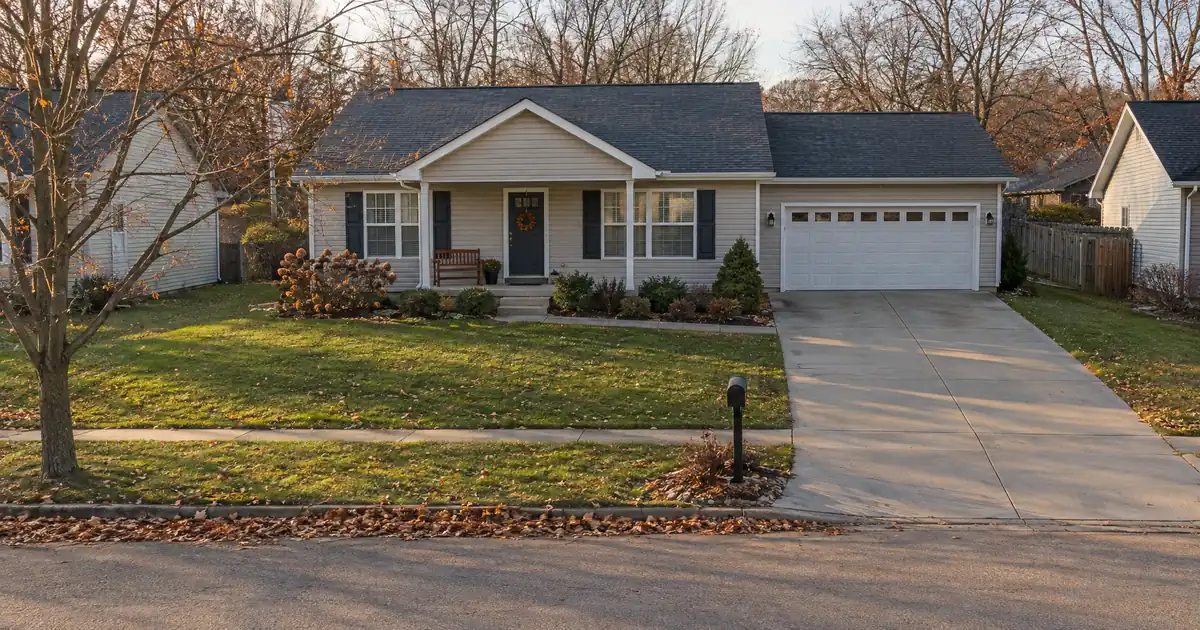
The Quick Read: Usually not, unless the next house fits a narrow exception. The cash itself is yours to spend however you like. The trouble is the second step. FHA generally insures one principal-residence mortgage per borrower at a time, so the next purchase typically needs a different loan. Meanwhile the cash-out loan has already raised the balance and payment on the home you keep.
How the Four-Step Plan Actually Works
The plan is a sequence of moves: refinance the home you live in, take the cash, then qualify for a separate loan on the new house. Each move has its own rules, and the second loan has to work with the first one already in place.
FHA cash-out estimate
Seeded with an example value, a balance to match, and a round cash request; change any field.
Editable benchmark: 7.24% as of October 29, 2026 · Freddie Mac 30-year average via FRED®. A conventional market reference, not an FHA cash-out refinance quote.
Illustrative starting assumptions: a $350,000 home value, a $193,000 current balance, the FHA cap on a principal residence with the upfront premium financed, a thirty-year term at the current Freddie Mac benchmark, and property taxes and insurance estimated at typical national rates. Every field is editable.
An illustration, not a Loan Estimate, an approval, a quote, or a commitment to lend. The rate shown is the weekly Freddie Mac thirty-year conventional benchmark, used as a market reference; an FHA cash-out is priced by the lender at lock, and this is not an FHA cash-out refinance quote. HUD’s cap limits the base loan; the upfront premium is financed on top of the capped base loan; the monthly premium for the first year follows the snapshot’s schedule. Cash available means the base loan the cap permits less the balances retired, before closing costs, which this calculator leaves out. The line figure applies the line program’s combined loan-to-value ceiling to the same value and balance. Taxes and insurance are estimates you can edit. Licensed in sixteen states for consumer mortgages.
An FHA cash-out refinance replaces your current mortgage with a larger one. You get the difference in cash after the payoff, closing costs and any financed premium. Lendmire’s FHA cash-out refinance program page covers the program in full. Here is the short version.
1. You own and occupy the home as your principal residence. Across the wholesale programs Lendmire places files with, the home must be owned and occupied for 12 months before the FHA case number is assigned. 2. The appraisal sets the value. The new loan can reach 80% of that value, and it can’t exceed the county loan limit. County limits change every year, so check yours. 3. The lender reviews your file on the new, larger payment. 4. You close, receive the net cash, and then apply for the loan on the next house.
Notice what is missing: no rule says where the cash goes. Down payment, repairs, debt payoff, all allowed. That freedom is why the idea is popular. It is also where people get ahead of themselves.
The Catch: FHA Insures One Principal Residence at a Time
FHA’s general policy is one insured principal-residence mortgage per borrower at a time. A second FHA loan requires a named exception, which means the next house is usually financed another way.
HUD’s Handbook 4000.1 sets this policy. The exceptions people commonly cite are a job-related relocation to a new principal residence far away, a growing family, vacating a jointly owned property, and non-occupying co-borrower status. Treat that list as a starting point. Exact wording and distance tests live in the current Handbook, so check the current version before you count on one.
Two clarifications help here. There is no lifetime limit on using FHA. You can use it again after selling or moving. The limit is on holding more than one at once. And the exception route only matters if the new house will be your own home. If you plan a second home or a rental, FHA isn’t the tool for that purchase at all.
What Kind of House Are You Buying?
The use of the new house decides the financing path, and FHA cash-out is only involved in the first step. Occupancy drives leverage and program choice.
| New house will be | Financing for the new house | Role of FHA cash-out |
|---|---|---|
| Your next primary residence (you move) | FHA only if an exception fits; otherwise non-FHA | Funds the down payment with equity from the old home |
| A second home | Non-FHA loan | Can supply cash, but adds payment to your ratios |
| A rental | Non-FHA loan | Can supply cash; FHA won’t finance the rental |
For rentals and second homes, occupancy decides the leverage, and those loans sit outside this FHA program.
What You Need to Qualify for the Cash-Out Step
Qualifying comes down to five things: ownership and occupancy, the 80% cap, payment history, debt ratios and mortgage insurance.
- Ownership and occupancy. The home must be your principal residence, owned and occupied 12 months before the case number. The property can be one to four units, and homes owned free and clear can be refinanced for cash out.
- The 80% cap. HUD Mortgagee Letter 2019-11 cut the maximum loan-to-value on cash-out refinances from 85% to 80% of Adjusted Value. Cash-out endorsements had grown sharply and HUD wanted stronger equity positions. Older articles still quote 85%. Ignore them.
- Payment history. Lenders look hard at recent late payments on the current mortgage. Guidelines vary by lender, so expect a clean recent record to matter.
- Credit and ratios. The wholesale programs Lendmire works with start at a 580 decision score for the 96.5% purchase product, and cash-out files are reviewed on the same credit picture. The base ratios are 31/43 (housing to total income), with documented compensating factors reaching 40/50 at the top tier. Automated findings govern most files, all subject to lender guidelines and full file review.
- Mortgage insurance. FHA charges an upfront premium of 1.75% of the base loan, which is typically financed, plus an annual premium that depends on term, loan amount and LTV. That upfront premium reduces your net cash.
The ratio line matters most for this plan. If you keep the old home and buy another, the lender for the new loan counts both housing payments. Qualifying for the second loan is often the real bottleneck.
A Worked Walk-Through
Say you own a home you’ve lived in for several years. Your equity is healthy, and you want to buy a larger house while keeping the first as a rental.
First, the cash-out loan reaches 80% of appraised value at most. Closing costs and the financed upfront premium come out of the proceeds, so the net cash is smaller than the equity you see on paper. Second, your balance on the first home is now higher, and so is the payment. Third, once you convert the first home to a rental, it no longer qualifies for FHA cash-out. Fourth, the lender on the new house counts the new payment, the larger old payment and your other debts. If the ratios stretch, the new purchase stalls, and you already hold the bigger balance.
Now flip it. Say your first home is your only home and you plan to sell it after buying the next one. You might skip the cash-out and use a purchase loan with a modest down payment, then sell the old home and pay it off. That avoids refinancing costs on a loan you’re about to retire.
When It Makes Sense, and When to Think Twice
It makes sense when the cash-out is a bridge you can carry and the next loan is already within reach. It is a poor fit when the cash is the only thing making the purchase possible.
| Makes sense if | Think twice if |
|---|---|
| The new house is your next primary residence and an FHA exception fits | You’d carry two housing payments with thin margin |
| Your ratios stay comfortable with both payments counted | The new lender’s ratios barely clear on paper |
| You plan to stay long enough to recover refinance costs | You’re giving up a lower payment on a mortgage you like |
| You have reserves beyond the cash you plan to spend | The spent cash is also your reserves |
That last row catches people. Cash you spend on the down payment can’t also serve as your safety cushion. Lenders on the next loan will ask what’s left.
The Risks Nobody Puts in the Headline
A cash-out refinance turns equity into debt secured by the home you live in. If the second house disappoints, the first one carries the risk.
The CFPB has said cash-out refinances can raise foreclosure risk, since they typically carry higher payments and balances than other refinances. It also notes they can convert unsecured debt into debt secured by the home. Its report also found that median borrower costs and fees on mortgages rose in 2022, a national trend across all mortgages, not an FHA cash-out figure.
The first-home payment goes up, the new-home lender counts it, and the ratios that looked fine in a spreadsheet get tight. Running both payments through the ratios before you refinance, not after, avoids most of the heartbreak. That’s the part that usually decides whether the plan works.
You also give up whatever terms your current mortgage has. If your existing loan is one you’d rather keep, replacing it to raise cash is a real cost.
Alternatives Worth Comparing
For this goal, a HELOC, a small-down-payment purchase loan or selling can beat an FHA cash-out. Each trades something different.
| Option | What it does | Main tradeoff |
|---|---|---|
| HELOC | Borrows against equity, keeps your first mortgage | Second lien; terms vary by lender |
| Conventional cash-out | Replaces the loan with a larger one | Different leverage and insurance rules |
| Low-down-payment purchase loan | Buys the next house with little cash | You carry both loans, payments counted |
| Selling the first home | Converts equity to cash, no new debt | You give up the first home |
| Gift or assistance funds | Covers down payment without new debt | Availability depends on program and donor |
That doesn’t make a HELOC right for everyone, but it is worth asking about, especially if your current mortgage is one you’d rather keep. Lendmire’s article Does a Cash-Out Refinance to Buy Another Rental Make Sense? covers the next-property side from the other direction.
Common Mistakes
- Counting spent cash as reserves. It can’t be in two places.
- Forgetting both payments in your ratios. The new lender sees the old loan’s bigger payment.
- Assuming 85%. The cap is 80%.
- Assuming a rental or second home qualifies for FHA cash-out. The program is tied to your principal residence.
- Confusing a Streamline with cash-out. An FHA Streamline refinances an existing FHA loan with no appraisal and a limited credit review, but it gives you no cash.
- Moving out first. If you rent out the old home before refinancing, you lose FHA cash-out access until occupancy is re-established.
Key Terms Defined
Adjusted Value: The appraised value, adjusted under HUD’s rules, that the 80% cap applies to.
Cash-out refinance: A new, larger mortgage that pays off the old one and hands you the difference in cash.
Principal residence: The home you live in as your main address.
LTV (loan-to-value): The loan balance divided by the home’s value, shown as a percentage.
Debt ratios: Your housing payment and total monthly debts compared with your income, shown as a pair such as 31/43.
HELOC: A home equity line of credit, a second loan that lets you borrow against equity as needed.
Frequently Asked Questions
Can I use FHA cash-out proceeds as a down payment on another house?
Yes, the proceeds aren’t restricted. The catch is the loan on the new house. FHA generally insures one principal residence at a time, so the new purchase usually needs a non-FHA loan unless a named exception applies. The lender on that loan will count your larger payment on the first home.
Can I use an FHA cash-out refinance on a rental or second home?
No. The program is tied to the home you live in, one to four units. A property you rent out or treat as a second home doesn’t qualify for FHA cash-out. HUD’s archive says FHA-financed properties that became investment or secondary properties can only do a streamline without an appraisal.
How much equity do I need to keep?
The loan can reach 80% of Adjusted Value, so you keep at least 20% equity at closing. Closing costs and any financed premium come out of the cash you receive. The net amount is typically less than the equity figure suggests.
Can I cash-out refinance a home I own free and clear?
Yes. HUD’s archived refinance guide says homes owned free and clear can be refinanced for cash out, as long as occupancy and other requirements are met. Confirm current details with your loan officer, since the archive is dated.
Is a HELOC a better way to fund the down payment?
Sometimes. A HELOC leaves your first mortgage in place, which matters if you like its terms. Compare Loan Estimates on each option before deciding.
If you are weighing a cash-out refinance against keeping the loan you have, Lendmire can help you compare the programs and the equity each one reaches. Program figures are subject to lender guidelines and full file review, and nothing here is a commitment to lend.
For your own numbers, request a scenario review with Lendmire.
About Lendmire
As a mortgage broker (NMLS# 2371349), Lendmire helps homeowners and home buyers in 16 states with FHA, VA, conventional and jumbo purchase and refinance loans arranged through wholesale lenders. Lendmire is never the lender; program terms are set by the lender and the agency guidelines. Scotsman Guide named Lendmire a Top Mortgage Workplace in both 2025 and 2026.
For the program’s current guidelines, see FHA loan programs.
Get Started
Ready to find the right loan for you?
See your offer in seconds. No credit pull, no obligation.
Informational only. Not a Loan Estimate, approval, or commitment to lend. Program availability and eligibility are subject to lender guidelines, credit approval, property review, and underwriting.
References
1. HUD Handbook 4000.1 update transmittal
2. HUD Mortgagee Letter 2019-11
3. CFPB
This article is part of Lendmire’s FHA cash-out refinance program — full qualification details, guidelines, and scenarios live on the program page.
Related reading: How to Choose an FHA Cash-Out or Streamline Refinance With Thin Credit · Best FHA Cash-Out Refinance Program When Your Current Mortgage Is an FHA Loan · Best FHA Cash-Out Refinance Program to Tap Equity on an FHA-Insured Home
Brandon Miller
Founder & CEO, Mortgage Loan Originator, Lendmire LLC
- Mortgage Loan Originator · NMLS# 1129696 · Verify on NMLS Consumer Access
- North Carolina Real Estate Broker · License# 343312 · Verify on NCREC
- North Carolina Insurance Producer · License# 19053198 · Property, Casualty, Life, Health · Verify on NAIC SBS
- Lendmire LLC · Firm NMLS# 2371349 · Verify firm licensure
Disclosure information. Lendmire is a state-licensed mortgage brokerage under NMLS# 2371349. Lendmire is not a depository institution, direct lender, or financial advisor — all loans referenced are placed through wholesale lender partners and are subject to each lender's underwriting standards. This article is provided for general informational purposes and is not a commitment to lend, nor does it constitute financial, legal, or tax advice. Loan programs, terms, rates, and qualification standards change without notice and depend on borrower profile, property type, and the state in which the subject property is located. Equal Housing Opportunity provider. NMLS Consumer Access: nmlsconsumeraccess.org.