
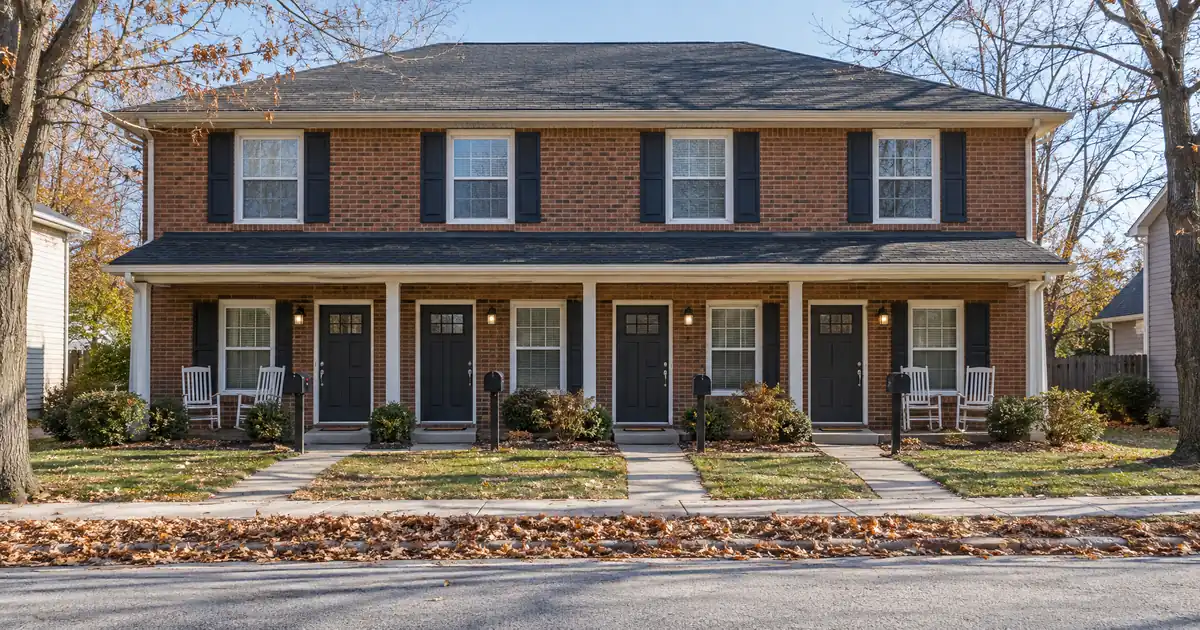
The Quick Read: A duplex, triplex, or fourplex can work with assistance when you live in one unit and both the first mortgage and the assistance option accept that address. The two sets of rules are separate. The grant option takes one-to-four units, while the forgivable and repayable seconds stop at two. You are not required to be a first-time buyer.
Key Takeaways
- Assistance is not a property type. The first mortgage has property rules, and the assistance has its own. The home must pass both.
- Occupancy is firm: a primary residence only, never a rental or second home.
- Unit count decides the shape. Grants cover one to four units. Forgivable and repayable seconds cover one to two units.
- Many people assume USDA works for small multifamily. It generally does not.
- Check the assistance option before you make an offer, not after.
What Counts as a “Property Rule”?
A property rule is any test the address itself must pass. Unit count, occupancy, location, property type, and condition all count.
Two lenders’ worth of logic sit on one house. The first mortgage asks whether this is an eligible home for FHA, USDA, or HUD-184 financing. The assistance asks a second question: does this home fit our list?
Those lists do not always match. A fourplex can pass the first test and fail the second.
The assistance itself comes in four shapes. Each has its own property list, which is why the next sections matter. You can see the full menu on Lendmire’s page for down payment assistance programs.
How Are the First Loan and the Assistance Checked, Step by Step?
The first loan is checked on the property. The assistance is checked on the buyer, the property, and how the money is structured. Both must clear before closing.
1. Pick the first mortgage. FHA, USDA, or HUD-184 sets the unit count, occupancy, location, and appraisal rules.
2. Pick the assistance shape. Grant, forgivable second, repayable second, or refinance-cost second. Each has its own unit limit and credit floor.
3. Run the same address through both lists. If either one says no, the plan changes.
4. Document the buyer. That means a full application and an automated underwriting finding. The grant also needs a homebuyer education course. The borrower pays for it up front, and the cost is credited back at closing.
5. Underwrite the money. A grant adds no payment and no lien. A forgivable second carries no interest and no payment. A repayable second is a real loan with a monthly payment, so it enters your debt ratios.
6. Appraise and clear conditions. The appraiser values the building and the rents on the units. Repair conditions, if any, get handled before closing.
The repayable second also arrives with its own loan disclosure and a balloon disclosure. It is a separate loan. Treat it like one.
Which Assistance Shape Takes Which Unit Count?
Unit count is the biggest dividing line. The grant is the most flexible on property size, while the two seconds are limited to one-to-two-unit homes. The refinance-cost second is a rare exception for existing owners.
| Shape | Units | First lien | Credit floor |
|---|---|---|---|
| Grant (2% or 3.5% of price) | 1-4 | FHA only | 620 |
| Forgivable second (3.5%) | 1-2 | FHA, USDA, HUD-184 | 640 |
| Repayable second (3.5% or 5%) | 1-2 | FHA, USDA, HUD-184 | 660 |
| Refinance-cost second (1%-3.5% of balance) | 1-4 | FHA refinance | 660 |
Credit floors for the seconds assume a single representative score. A lower-scoring co-borrower can be blended in under specific conditions, which raises the required minimums slightly. All of this is through wholesale lenders, subject to program guidelines and full underwriting.
The grant is a percentage of the purchase price toward the FHA minimum investment. Nothing is repaid, and there is no lien. It needs household income at or below 140% of the area median, unless a qualifying category applies. Those categories include first responders, educators, medical workers, civil servants, military personnel, first-time buyers, and buyers in underserved census tracts. It is not offered in Washington.
The second liens carry no income limit beyond USDA’s own on a USDA first lien. A forgivable second is forgiven after 36 or 60 on-time first-lien payments. A repayable second runs a 30-year amortization with a balloon due in year 10.
Does the First Mortgage Change the Answer?
Yes. FHA is the broadest option for small multifamily. USDA is the narrowest. HUD-184 allows up to four units but supplies no assistance of its own.
| First loan | Unit count | Assistance fit |
|---|---|---|
| FHA | 1-4 units | All four shapes |
| USDA | Effectively one dwelling | Forgivable or repayable second |
| HUD-184 | Up to 4 units | Forgivable or repayable second |
FHA. It lends against 1-4 unit homes when you occupy one unit. At a representative score of 580 or higher, FDIC’s summary of FHA 203(b) lists 96.5% maximum financing on an existing-home purchase. FHA has no special first-time-buyer terms. Current one-unit limits run from $541,287 to $1,249,125 by county, and limits rise with unit count.
FHA also charges mortgage insurance. There is an upfront premium of 1.75% of the base loan, which can be financed. An annual premium is added on top, set by loan size and leverage.
USDA. The program wants a permanent residence that is residential in use and appearance. One unit of a duplex may be eligible, but the buyer cannot purchase both. Buying both makes it an income-producing property. The property also has to sit in an Agency-designated rural area. A true 2-4 unit purchase is generally not a USDA option.
HUD-184. Under 24 CFR Part 1005, an Indian family may finance up to four dwelling units. The borrower occupies one as a principal residence and may rent the others. The program does not lend or provide assistance directly. HUD’s Section 184 policy handbook says any assistance comes from a separate source. The forgivable and repayable seconds are that separate source.
Where the General Rule Breaks
The rule of thumb is simple: live in one unit and match the assistance to the unit count. Several edge cases bend it.
Three- and four-unit homes. FHA applies a self-sufficiency test to these, and assistance does not change it. In plain terms, the building’s net rent has to carry the housing payment on its own. A payment-bearing second lien makes that test harder, and a grant or forgivable second does not. For a fourplex, the grant is the clean fit.
The duplex trap. A duplex is eligible for every FHA assistance shape. It is not eligible for a USDA purchase of both units. Buyers sometimes run the first test and skip the second. Don’t.
Rent from the other units. For FHA, rent can help you qualify. It is not guaranteed under every assistance structure, and the lender and program decide how it counts.
Mixed-use and unique properties. A building with a storefront or commercial space can fail the residential-use test. The second-lien options exclude unique property types. A legal-unit question has the same effect. Every unit should be a legal dwelling, so unpermitted conversions are a problem.
Condition. Minor non-structural repairs on the second-lien options can sit in escrow. The cap is $5,000, with 150% of the estimate escrowed and the work completed within the timeframe set by the program and lender. Bigger work needs a different first-lien structure, such as a limited 203(k) with renovation up to $75,000.
Stacking. No option combines with another down payment assistance program. A mortgage credit certificate is not allowed with the second liens. Layering two programs on the same address is generally off the table.
Public programs vary. State and local agencies write their own property lists. Some allow 2-4 unit homes with one unit owner-occupied, while others limit buyers to single-family, condo, or townhome. Many programs pair with a regular FHA or conventional loan, and many require mortgage insurance. Never assume another program’s list matches the ones above.
Moving out early. Every option is for a primary residence. Renting out your unit early or moving out can put the structure at risk, and a repayable second keeps its payment either way. Programs set their own rules on this, so ask before closing.
What Does a Buyer’s Decision Look Like in Practice?
The decision usually comes down to three questions: how many units, how much leverage you need, and whether you can carry a second payment. Run them in that order.
Picture a buyer with a 640 score eyeing a duplex. The forgivable second fits: 3.5% of the lesser of price or value, no payment, and forgiveness after 36 or 60 on-time first-lien payments. A repayable second needs 660, and the grant needs 620 plus the income test or a qualifying category. Which one wins depends on the file.
Now say you are a nurse who wants a fourplex. The second liens stop at two units. The grant is the shape that reaches four units, and it pairs with an FHA first lien only. It also requires the FHA self-sufficiency test to clear on rents.
Or consider a repeat buyer moving up. Nothing in the network requires a first-time buyer.
A quick pre-offer checklist:
1. Confirm the unit count against the shape you want. 2. Confirm the first loan accepts the property (FHA, USDA, or HUD-184). 3. Confirm your score clears the floor for that shape. 4. Check the income test, or the qualifying category, if you want the grant. 5. Ask whether a payment-bearing second still passes your debt ratios. 6. Confirm every unit is a legal dwelling and the building is residential.
Key Terms Defined
Owner-occupant: A buyer who lives in the home as a primary residence.
Second lien: A loan recorded behind the first mortgage. If the home is sold or refinanced, the first mortgage is paid first.
Forgivable second: A second lien with no interest and no payment that is forgiven after a set number of on-time first-lien payments.
Balloon: A lump sum due at a set point. On a repayable second, it falls in year 10.
Self-sufficiency test: An FHA check on three- and four-unit homes that asks whether the building’s net rent can carry the housing payment.
Legal unit: A dwelling that is permitted and recognized as a separate residence.
Area median income: The midpoint household income for a county or metro, used for the grant’s 140% income test.
Your Next Step
If you are buying a primary home and want to see whether a down payment assistance option fits your file, Lendmire can help you compare the grant, forgivable, and repayable structures alongside an FHA, USDA, or HUD-184 first mortgage. Reach the team at 828-256-2183 and bring the unit count with you. Program availability is through wholesale lenders, subject to program guidelines, full underwriting, and not a commitment to lend.
Frequently Asked Questions
Can I use down payment assistance on a fourplex?
Only the grant option reaches four units. It pairs with an FHA first lien and must satisfy FHA’s self-sufficiency test on the rents. The forgivable and repayable seconds cover one-to-two-unit homes. You must live in one of the units.
Does a USDA loan work for a duplex?
Rarely. One unit of a duplex may be eligible, but you cannot buy both. Buying both makes it an income-producing property, and USDA excludes those. A true multifamily purchase generally points to FHA instead.
Does HUD-184 come with down payment assistance?
No. HUD-184 allows up to four units but does not provide assistance itself, per HUD’s own handbook. The forgivable and repayable seconds can sit behind an HUD-184 first lien on one-to-two-unit homes. Property location and borrower eligibility rules still apply.
Do I have to be a first-time buyer?
No. Repeat and move-up buyers qualify. The grant’s income test has a first-time-buyer category among several, but it is only one way in. The second-lien options have no income limit beyond USDA’s own on a USDA first lien.
Can I rent out my unit or the other units right away?
Rent from the other units can count toward FHA qualification, subject to lender and program guidelines. What you cannot do is treat the purchase as an investment. Assistance applies to an owner-occupied primary residence only, so you should live in one unit.
About Lendmire
Lendmire, NMLS# 2371349, is a mortgage brokerage with consumer lending licenses in 16 states. Down payment assistance options are arranged alongside FHA, USDA and HUD-184 first liens through wholesale lending partners, and each application is reviewed individually by the lender. Scotsman Guide named Lendmire a Top Mortgage Workplace in both 2025 and 2026.
Investors who want the broader program framework can review how DSCR loans work.
Get Started
Ready to find the right loan for you?
In about 30 seconds you can review financing options available for your home or investment property. No commitment required.
Informational only. Not a Loan Estimate, approval, or commitment to lend. Program availability and eligibility are subject to lender guidelines, credit approval, property review, and underwriting.
References
1. HUD
2. FDIC Affordable Mortgage Lending Guide, FHA 203(b)
This article is part of Lendmire’s down payment assistance program — full qualification details, guidelines, and scenarios live on the program page.
Related reading: Can a Builder Provide Down Payment Assistance on a New Construction Home? · Down Payment Assistance Property Rules for a Condo or Townhome · Can You Use Down Payment Assistance on a Duplex?
Brandon Miller
Founder & CEO, Mortgage Loan Originator, Lendmire LLC
- Mortgage Loan Originator · NMLS# 1129696 · Verify on NMLS Consumer Access
- North Carolina Real Estate Broker · License# 343312 · Verify on NCREC
- North Carolina Insurance Producer · License# 19053198 · Property, Casualty, Life, Health · Verify on NAIC SBS
- Lendmire LLC · Firm NMLS# 2371349 · Verify firm licensure
Required disclosures. Lendmire (NMLS# 2371349) operates as a licensed mortgage broker, not a direct lender or depository. The discussion in this article is general in nature and should not be relied upon as financial, legal, or tax advice — every investment scenario is unique and should be reviewed by a qualified professional. Any loan inquiry is subject to lender underwriting, and this article is not a commitment to lend or a guarantee of approval. Mortgage rates, loan terms, and program guidelines vary by borrower, property, and state, and may change without notice. Equal Housing Opportunity. Verify licensure at NMLS Consumer Access.