
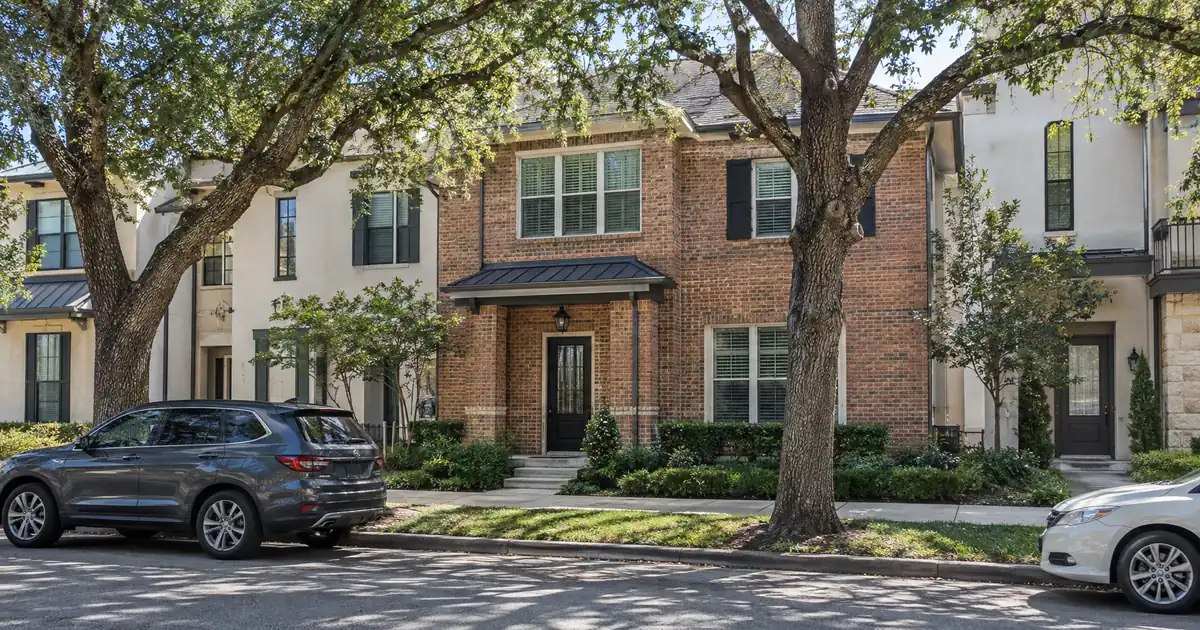
Most cash-out files on small rentals stall in the same three places: a lease that doesn’t match the rent roll, an appraisal that lands flat, and an owner who hasn’t held the property long enough. Fix those before submission and the file reads clean. Skip them and it comes back with a list of conditions.
That is the working reality of a DSCR cash out refinance in Bryan, Texas. The investor already owns the property and wants the equity out for the next purchase. The job is to show the lender a property that supports the loan on its own rent. Lendmire, a DSCR-focused mortgage broker, sees the same pattern on files in markets with a university anchor and a softening sales market. The paperwork decides the outcome more often than the price does.
DSCR Cash-Out Calculator
Run the cash-out numbers in Bryan, TX
Rate source: Freddie Mac 30-yr average via FRED® — Federal Reserve Bank of St. Louis · effective Sep 24, 2026
Prefilled with starting assumptions — enter your property’s value, balance, taxes, and insurance for a more accurate picture.
Program parameters update from Lendmire’s centralized guideline source. Taxes and insurance are editable estimates.
As of Sep 24, 2026 · General Freddie Mac market benchmark, not a Lendmire loan offer. Property value, balance, taxes, and insurance are editable estimates. Maximum loan-to-value varies by lender, program, property type, and seasoning. Not a Loan Estimate, approval, or commitment to lend. Program availability and eligibility are subject to lender guidelines, credit approval, property review, and underwriting.
The Quick Read:
A DSCR cash-out refinance in Bryan, Texas is underwritten primarily on the property’s rental income measured against its full monthly obligation, so the file turns on leases, rent-roll clarity, title, reserves and an appraisal that supports the equity being pulled, with final eligibility set by lender guidelines.
- Bryan’s citywide median sold price is $310,500, per Movoto.
- Homes.com shows a median Bryan home rent of $1,875, per its rental listings.
- June listings rose 26 percent while closed sales fell 12 percent, per KBTX.
- Cash-out typically tops out near 75 percent LTV after about six months of ownership.
Bryan Market Snapshot
A quick read on the Bryan investor landscape — figures come from the cited sources below. Confirm current property-level numbers before underwriting.
| Metric | Detail |
|---|---|
| Typical rents | $1,023 bryan avg (HUD User, College Station-Bryan) |
| Vacancy | 6.5% apartment (HUD User, College Station-Bryan) |
East Side and The Oaks: Low Basis, Stacked Doors
The East Side, The Oaks and Briarcrest Ridge are the strongest refinance candidates in Bryan for investors who hold duplexes or older small multifamily. Zumper names Briarcrest Ridge at $980 a month, East Side at $1,000 and The Oaks at $1,050 as the most affordable neighborhoods. Those are low-sample averages, so treat them as directional. Cash flow here depends on a low purchase basis, and that is exactly the situation where a refinance makes sense.
Stacking is the reason. A single house has one rent against one payment. A duplex or fourplex puts two to four rents into the same coverage numerator, against a balance that is often not much higher than a median single-family home. Bryan’s small-multifamily inventory is real. Homes.com showed 41 multi-family homes and duplexes for sale in Bryan, including a package of six fourplexes totaling 24 units. That package is larger than a typical 1-4 unit DSCR loan, and buildings with five or more units generally route to commercial or multifamily financing instead. Check the unit count before you assume a program fits.
Closer to the core, a ZIP 77802 duplex listing shows two 3BR/2BA doors under an existing lease. That is the profile lenders like: two full-size units, leases in place, nothing to explain. It’s a snapshot of active inventory, not a statistic.
The caution is rent level. One older small-multifamily door in ZIP 77801 was marketed at $875 a month, per a Homes.com listing. Apartment List puts the 2BR average at $1,369, but that skews toward newer complexes. Underwrite older stock on in-place rents, not on new-apartment averages. One listing is not a submarket average, but it shows how wide the gap can be.
Running the Coverage Math (Modeled, Not Sourced)
Coverage is monthly rent divided by the full monthly obligation: principal, interest, taxes, insurance and any HOA. Most standard DSCR programs are built around a 1.00 benchmark, since rent covers the obligation at that level. Some lenders will look below it with lower leverage, stronger reserves or different pricing. The inputs below are modeled assumptions, not market data, and every ratio includes taxes and insurance.
| Modeled scenario | Modeled rent | Coverage read |
|---|---|---|
| SFR at $310,500 median | $1,875 total | Mid-to-high 0.8s |
| Duplex at $330,000, two doors | $1,400 per door | Around 1.2x |
| Duplex at $330,000, older doors | $875 per door | High 0.7s |
The first row uses the citywide median sold price and the Homes.com median rent. At 75 percent LTV with full taxes and insurance, a median house lands under 1.00. That’s a structure problem, not a Bryan problem. The second row shows why investors here look at duplexes: two doors at the upper end of the $1,000-$1,400 per-unit range clear the benchmark with room to spare. The third row shows what happens when the rents are the $875 kind.
When a file falls below 1.00 on long-term rent, there are paths a lender might review. A sub-1.00 program, an interest-only structure, or a smaller loan amount can change the math. Each one depends on lender guidelines, credit, reserves and property review. None of them is a promise.
Seasoning, the 75 Percent Cap and a Soft Appraisal
Expect a ceiling of 75 percent LTV on a cash-out refinance, measured from the appraised value, and about six months of ownership counted from title recording. Those are typical program guidelines, not guarantees. Equity available depends on rent used for lender review, the full obligation, reserves and that 75 percent ceiling. It is never a fixed cash figure.
Seasoning is where the quiet kickbacks happen. The clock starts at recording, not at contract or at closing-table signature, so the settlement statement and recorded deed need to be in the file. Investors who assume the clock started earlier get sent back. (It happens on BRRRR files constantly, where the rehab timeline eats the seasoning window.) Reserves of about six months of the full obligation are typical, and credit generally starts at a 620 floor with better tiers at 660, 680 and 700. Standard programs run up to $3,000,000, with smaller balances placed through select lenders in the network.
The appraisal is the bigger variable in this market. Per KBTX, June listings were up 26 percent and closed sales down 12 percent from the prior June, with some sellers feeling pressure to cut asking prices. Movoto shows 92 days on market against 81 a year earlier, with 983 sales in July against 695 a year before. Sales volume is up, absorption is slower. That reads as a loosening market, not a hot one.
For a refinance, that means fewer clean closed comps and a higher chance the appraiser holds value flat. Don’t underwrite a cash-out on assumed appreciation. Build the equity case from what you paid, what you improved and what recently closed nearby. If the value comes in light, an appraisal reconsideration packet is a normal step. Include recent in-neighborhood sales, a condition summary and documented improvements. A packet that shows its work recovers more than one that argues.
Paper That Keeps the File Clean
The cleanest files from a documentation standpoint arrive with a complete set: signed leases for every unit, a current rent roll that matches them, entity documents, a clear title commitment, reserves documentation and a fresh insurance quote. That’s the list. Nothing exotic.
In markets with both long-term and student-adjacent tenants, the common friction is lease mismatch. A rent roll says one thing, the leases say another, and someone has to reconcile the gap. Tenants on month-to-month holdovers, leases that expired over the summer turnover, and rent roll entries with no backing lease are the usual suspects. Lenders want lease evidence for each unit. If a unit is vacant, expect the lender to use a market-rent opinion for it instead of a number you supply.
For properties held in an LLC, entity documents need to match the title vesting. Operating agreement, certificate of formation and good standing all need to line up. LLC-held loans are available subject to lender program eligibility, and the borrowing entity’s paperwork is a frequent holdup when the title shows a different name.
The last item is reserves documentation. Bank statements should show the funds seasoned and sourced. If the cash-out proceeds are meant to count toward reserves on the new purchase, that is a separate conversation with the lender. Verify current local rental rules, property taxes and insurance with qualified local professionals before you finalize the numbers.
The Demand Behind the Rent Roll
Bryan’s rental demand isn’t just student demand, and that matters for how durable the income looks to a lender. The U.S. Census Bureau counted 83,980 residents in the 2020 census and estimates 89,615 in its later vintage, up 6.7 percent from the base. That is a city growing at a steady clip.
Employer-driven demand sits on top. TxEDC lists Axis Pipe and Tube, FujiFilm Diosynth Biotechnology Texas, iBio, Sanderson Farms and Wayfair among major employers, and cites expansions including a $100 million Axis capacity project, a $148 million CertainTeed roofing complex and a $330 million FUJIFILM Diosynth expansion in the Brazos Valley BioCorridor. The City of Bryan describes Texas Triangle Park as a 1,000-plus acre rail-served industrial park in northeast Bryan, designated Foreign Trade Zone #84. Healthcare adds St. Joseph Health Regional Hospital and Baylor Scott & White Medical Center–College Station, though no reliable headcounts turned up for either. Employees of those sites need long-term housing, and long leases are the easiest ones to document.
The education side matters too. Texas A&M’s fall enrollment topped 81,000 across all locations, per WTAW, with more than 74,000 in College Station. Those figures are preliminary, and most of that student demand lands in College Station rather than Bryan. The Bryan-specific pull comes from RELLIS, a multi-university campus inside Bryan, and from the Blinn campus on Villa Maria Road. Blinn states that RELLIS has no on-campus housing, which pushes those students into Bryan’s rental stock. KXXV reported nearly 10,000 students across the Bryan campus and RELLIS as of spring 2024, including 3,802 at RELLIS.
What’s the Catch on Student-Adjacent Rentals?
The catch is supply and timing. Student leases cluster in late summer, turnover spikes in summer, and a missed leasing window can leave a unit empty when the lender is looking at it. A twelve-month lease with a non-student tenant is easier to underwrite for a refinance, full stop.
Supply is also coming. Community Impact reports large student-oriented filings in College Station, including a 406-unit project and a $50 million development. A developer quoted in a separate Community Impact report said student-oriented housing is more financially viable than commercial development. New purpose-built supply can pull tenants away from older student-adjacent rentals. That is a pipeline signal, not a measured vacancy rate, and filings can change.
I found no reliable current rental vacancy figure for Bryan. The older HUD metro analysis put apartment vacancy at 6.5 percent, but that is historical context only. Third-party vacancy numbers that run far higher usually mix in every vacant housing unit, not rentals. Don’t use them.
The practical read: a workforce duplex in the East Side or The Oaks carries less market-rate risk than a student-targeted house near Villa Maria Road. Rents overall are close to flat. Apartment List shows a 0.1 percent change over twelve months, while Zumper shows Bryan’s average at $1,506 and down 5 percent year over year. A refinance built on a rent increase is a refinance built on a hope.
Where the Proceeds Go
The point of pulling equity is the next acquisition, and the research shows where Bryan price points sit. Homes.com medians put Wheeler Ridge at $281,500, Briarcrest at $340,000, Copperfield at $348,000 and Tiffany Park at $389,500. Zumper lists 3BR rents at $1,925 and 4+BR at $2,400. Those are directional, and Wheeler Ridge rents look thin-sample. Still, three-bedroom houses at those price points are the most data-supported category in the market.
Traditions and Miramont sit near $1.2 million at the median, which is a poor rent-to-value profile for this kind of loan. Skip them.
Here’s the toss-up. Pulling equity from a duplex to buy a second duplex keeps the stacking logic going but stays concentrated in the same submarket. Using proceeds for a workforce single-family in Copperfield or Briarcrest diversifies the tenant type, but a house at those prices runs thinner on coverage. There’s no universal answer. It depends on whether the investor values coverage cushion or geographic spread.
DSCR vs. conventional financing
There are two common ways to finance an investment property in Bryan, TX, and they qualify you differently — here’s how investors weigh them.
Why investors choose it
- Qualifies on the property’s rental income — no personal tax returns, W-2s, or pay stubs needed to document income.
- No personal debt-to-income ceiling to clear, so existing mortgages and obligations don’t cap your borrowing the same way.
- Can be closed in an LLC, keeping the property inside a business entity.
- Built for scaling — not held to the limit on number of financed properties that conventional financing applies.
- Underwriting centers on the deal: generally qualifies when the rent covers the payment, a 1.00x coverage ratio being a common baseline (confirmed in underwriting).
- Designed specifically for investment property, including long-term and, where the program allows, short-term rentals.
Where it’s strong
- Often the lowest ongoing financing cost for a buyer who fully qualifies on personal income — a fit for a first property or a cost-first purchase.
Trade-offs for investors
- Requires full personal income documentation and must fit within a debt-to-income limit — salary, existing debts, and other mortgages all count.
- Typically held in your personal name rather than a business entity.
- Caps how many financed properties you can carry, which can become a ceiling as a portfolio grows.
- Evaluates you as a borrower as much as the property, which usually means more paperwork.
How investors usually choose: a first or single property often optimizes for the lowest financing cost; portfolio builders often optimize for leverage, vesting in an LLC, and scaling past conventional caps. The right answer depends on your goals, the property, and current guidelines — both paths run through select lenders in Lendmire’s wholesale network, with eligibility and terms confirmed in underwriting.
For the mechanics, see pulling equity with a DSCR cash-out and rate-and-term and cash-out refi details. Texas DSCR financing covers the statewide picture. To run a specific property, talk through the numbers or call 828-256-2183.
Bryan Versus College Station: Which Side Does the Math Favor?
Bryan has the edge right now for a refinance built on rent coverage. College Station carries the student-specific lease cycle and a heavy new-supply pipeline, while Bryan’s employer and RELLIS demand supports long-term tenants at a lower basis. A duplex with leases in place in the East Side or The Oaks holds up better to a flat appraisal than a student rental in a market adding hundreds of new units.
Frequently Asked Questions
How do you qualify for a DSCR loan in Bryan, Texas?
Qualification centers on the property’s rent against its full monthly obligation, with 1.00 a common benchmark. Lenders also review credit, typically starting near a 620 floor, plus reserves of about six months and a property review. Some programs look below 1.00 with lower leverage or other compensating factors. Final eligibility depends on lender guidelines.
What are the requirements for a cash-out refinance on an investment property in Bryan, Texas?
Typical guidelines cap cash-out at 75 percent LTV with about six months of ownership from title recording. The file needs signed leases, a current rent roll, entity documents if the property is in an LLC, title information and reserves documentation. Properties such as manufactured homes, log homes and barndominiums fall outside these programs. Confirm terms with the lender.
Does a duplex in Bryan usually cover better than a single-family rental?
On the modeled math, yes. A median-priced house at the citywide median sold price and median rent lands under 1.00 including taxes and insurance, while a duplex with two doors at $1,400 lands around 1.2x. Older doors near $875 flip that result. The in-place rent roll decides it, so get real leases before assuming either outcome.
Should student-adjacent rentals near Blinn be refinanced differently?
They need more documentation and more caution. Late-summer lease clustering and summer turnover can leave gaps that show up on the rent roll, and new student supply in College Station adds market-rate pressure. A twelve-month lease with a non-student tenant is easier to underwrite than a short, seasonal one.
For current guidelines and terms, see Lendmire’s DSCR loan programs page.
About Lendmire
A non-QM mortgage broker (NMLS# 2371349), Lendmire arranges DSCR financing for real estate investors in 41 markets, meaning 40 states plus Washington, D.C. Loans are underwritten primarily on property cash flow rather than personal income documentation, which suits self-employed buyers and entity-owned portfolios. Lendmire places loans through wholesale investor lenders and is not a direct lender. The brokerage is a 2026 Scotsman Guide Top Mortgage Workplace and a top-ranked workplace in 2025.
Get Started
Ready to find the right loan for you?
In about 30 seconds you can review financing options available for your investment property. No commitment required.
Informational only. Not a Loan Estimate, approval, or commitment to lend. Program availability and eligibility are subject to lender guidelines, credit approval, property review, and underwriting.
References
1. Movoto
2. Homes.com — Bryan TX Homes for Rent
3. KBTX
4. HUD User, College Station-Bryan Housing Market Analysis
5. Zumper
6. Homes.com
9. U.S. Census Bureau QuickFacts
10. TxEDC, College Station-Bryan
11. City of Bryan Economic Development
12. WTAW
14. KXXV
15. Community Impact
16. separate Community Impact report
17. a 2026 Scotsman Guide Top Mortgage Workplace
18. Scotsman Guide — Top Workplaces 2025
This article is part of Lendmire’s investment property cash-out refinance program — full qualification details, guidelines, and scenarios live on the program page.
Related reading: Cash Out Refinance Investment Property in Bryan TX · DSCR Cash Out Refinance in Odessa, Texas: Pulling Equity From Oil-Cycle Workforce Rentals · Cash Out Refinance Investment Property in Stephenville, Texas: How the Rent Math Clears at 75% LTV
Guides: Investment Property Cash-Out Refinance in Bryan, TX · Investment Property Cash-Out Refinance in Texas
Brandon Miller
Founder & CEO, Mortgage Loan Originator, Lendmire LLC
- Mortgage Loan Originator · NMLS# 1129696 · Verify on NMLS Consumer Access
- North Carolina Real Estate Broker · License# 343312 · Verify on NCREC
- North Carolina Insurance Producer · License# 19053198 · Property, Casualty, Life, Health · Verify on NAIC SBS
- Lendmire LLC · Firm NMLS# 2371349 · Verify firm licensure
Compliance and disclosures. Lendmire (NMLS# 2371349) is a licensed mortgage broker and is not a direct lender, depository institution, financial advisor, or tax professional. Content in this article is general market analysis and educational information — not financial, legal, or tax advice for any specific situation. Lendmire does not guarantee loan approval; every transaction is subject to underwriting by the funding lender. Mortgage pricing and loan program guidelines are subject to change at any time without notice and vary by borrower characteristics, property type, and state regulations. Lendmire complies with Equal Housing Opportunity. Licensure verification: NMLS Consumer Access.