
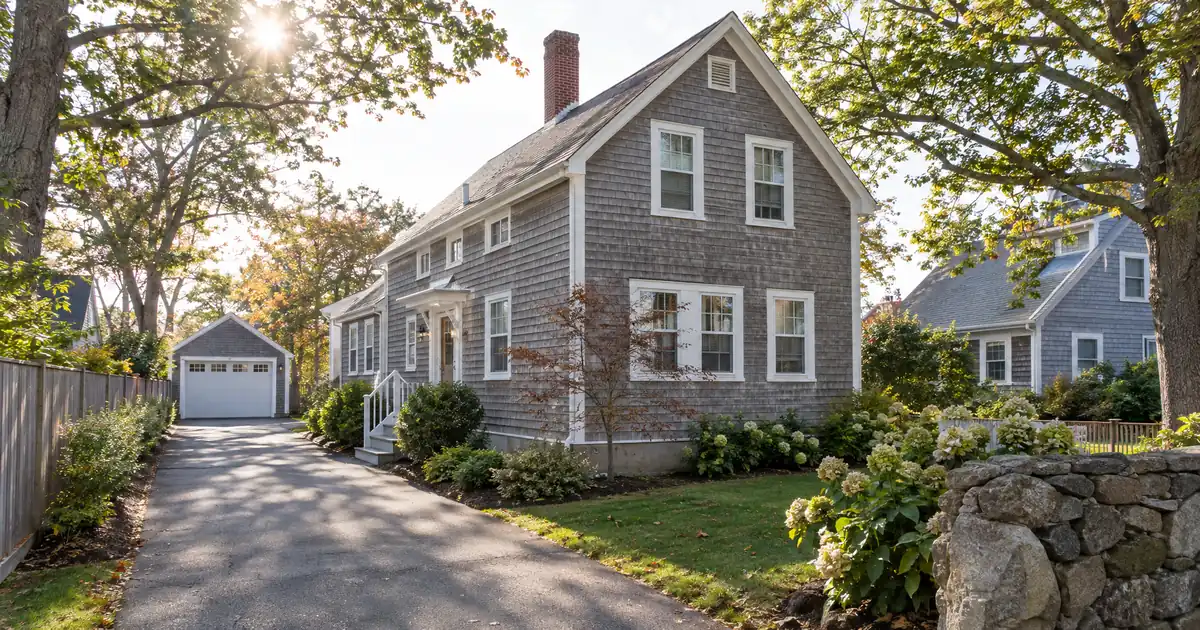
Hyannis is where a Cape Cod cash-out refinance either works or doesn’t. According to the Town of Barnstable’s housing needs assessment summary, 55% of Hyannis units are renter-occupied. That makes it the densest year-round rental pocket on the peninsula. Barnstable’s six-month median sale price was $722,000 across 227 sales, the highest volume on the Cape, per Charles King Group’s MLSPIN-based report. Rent-to-value at that price is thin, and that tension shapes everything that follows: owners here often hold plenty of equity, but rent, not the loan-to-value cap, tends to decide how much of it can come out.
Lendmire (NMLS# 2371349), a DSCR-focused mortgage broker, structures DSCR scenarios for investors targeting Cape Cod, Massachusetts and places them with wholesale lenders across 41 markets, including D.C. This article covers the owner who already holds a Cape rental and is deciding whether to pull equity out. It skips the purchase side.
DSCR Cash-Out Calculator
Run the cash-out numbers in Cape Cod, MA
Rate source: Freddie Mac 30-yr average via FRED® — Federal Reserve Bank of St. Louis · effective Sep 24, 2026
Prefilled with starting assumptions — enter your property’s value, balance, taxes, and insurance for a more accurate picture.
Program parameters update from Lendmire’s centralized guideline source. Taxes and insurance are editable estimates.
As of Sep 24, 2026 · General Freddie Mac market benchmark, not a Lendmire loan offer. Property value, balance, taxes, and insurance are editable estimates. Maximum loan-to-value varies by lender, program, property type, and seasoning. Not a Loan Estimate, approval, or commitment to lend. Program availability and eligibility are subject to lender guidelines, credit approval, property review, and underwriting.
The Short Version:
A DSCR cash-out refinance on a Cape Cod, Massachusetts investment property is underwritten primarily on the property’s rental income measured against its full monthly obligation, not on the owner’s personal income. The equity that can be pulled depends on rent used for lender review, reserves and the LTV ceiling together.
- Cash-out LTV tops out at 75%, and on most Cape single-family rentals rent binds first.
- Only about 12% of Barnstable County housing is rented year-round, per the Cape Cod Commission.
- Upper Cape towns like Bourne have the lowest price basis and the best rent-to-value odds.
- Chatham and the Outer Cape are appreciation markets, not coverage markets.
- Plan on roughly six months of ownership before cash-out is on the table.
Why the Cash-Out Ceiling Here Is Rent, Not LTV
Cash-out refinance eligibility on Cape Cod is set by rent coverage first and the 75% LTV cap second. Most standard programs use a 1.00x baseline: rent used for lender review measured against principal, interest, taxes, insurance and any association dues. Cape prices are high enough that the coverage test usually binds before the LTV test does.
Take a modeled Barnstable single-family. Assume a $722,000 value (the six-month median) and a three-bedroom rent near $3,800. That rent is a listing-based average from Rentometer, which is directional, not a lease comp, and an appraiser’s rent schedule may come in lower. At 75% LTV, with full taxes and insurance in the obligation, coverage lands in the mid-0.8s. Drop leverage to about 60% and the number moves to roughly 1.0. These are modeled inputs, not market data. Exact terms depend on the lender’s guidelines, property type, leverage, and a full review of the borrower’s file.
So a Cape owner with lots of paper equity may find the workable cash-out is closer to 60% LTV than 75%. Here’s the catch: the equity is real, but the rent doesn’t support borrowing all of it. Every figure here varies by lender and program — guidelines, property type, leverage, and credit profile all apply.
When a file falls under 1.00 on long-term rent, a few paths exist:
- A sub-1.00 program, which typically means lower leverage and stronger credit or reserves
- An interest-only structure, which changes the obligation the rent is measured against
- A smaller cash-out request
Each is something a lender would review. None is a promise, and eligibility depends on lender guidelines, credit, reserves and property review. If an owner is reaching for sub-1.00 on every property they own, the issue usually sits with the submarket or property type, not the loan structure.
Now the appreciation math. Data Cape Cod reports the county’s annual median single-family price rose from $433,000 to $789,500 across six years, roughly an 82% climb. The same source says increases have slowed since the pandemic peak. Much of the equity available today was created in that run-up, so underwrite the refinance on today’s appraised value and current rents. Further appreciation is not a base case.
Hyannis and Barnstable: The Deepest Rental Bench
Hyannis has the most year-round tenant demand on the Cape, and that demand comes from healthcare more than tourism. Cape Cod Healthcare calls itself the largest employer on Cape Cod and is headquartered in Hyannis. Per the Pioneer Institute, healthcare employs 27,564 people in the region, ahead of accommodation and food services at 21,988 and retail at 18,800. A hospital-anchored base of travel nurses, technicians and allied staff tends to want six-to-twelve-month or year-round leases. That’s the tenant profile a DSCR appraisal rewards.
Cape Cod Community College in West Barnstable adds a soft layer of demand. The research treats it as a commuter campus, so it’s a minor driver, not a major one.
The property-type angle matters more than the neighborhood angle. Per the Cape Cod Commission’s county housing profile, nearly 80% of residential properties are single-family and almost 18% are multifamily. The state’s housing snapshot says just 23% of land is zoned for two or more units by right, and 2% for three or more. A legal, year-round duplex is scarce, and scarcity is what supports income stacking.
Run the numbers on a hypothetical duplex. Suppose it sits at the same $722,000 price, with two-bedroom units modeled at about $2,500 each, in line with the figure the Town’s needs assessment cited. At 75% LTV and full taxes and insurance, coverage comes out around 1.1x. No sourced duplex prices exist in the research, so treat this as a structure comparison, not a market quote. Still, it shows why the same price and the same LTV can flip from a failing test to a passing one just by adding a second rent line. Final terms depend on lender guidelines, property type, leverage, and the borrower’s complete credit picture.
Owners of Hyannis multi-unit property with a long hold have the strongest cash-out case on the Cape. A single-family owner in the same town has more to work out.
Bourne and the Upper Cape: Where the Basis Is Lowest
Bourne is the likeliest place to find rent-to-value that clears. NNE Real Estate Group’s MLS-based analysis puts Bourne near $348 per square foot, against about $1,511 in Provincetown. That’s a broker blog, so treat it with caution. Charles King Group groups Bourne with Mashpee and Yarmouth at medians of $588K–$670K, and its March report names Bourne, Sandwich and Pocasset as some of the most accessible entry points.
Rents don’t fall in proportion to price across towns, so lower basis means better coverage. That’s the whole argument for the Upper Cape.
Demand comes from three places. Massachusetts Maritime Academy in Buzzards Bay enrolls 1,511 undergraduates. Joint Base Cape Cod hosts Camp Edwards, the Air National Guard 102d Intelligence Wing, the Space Force 6th Space Warning Squadron and the Coast Guard’s Base Cape Cod and Air Station Cape Cod, according to a Town of Barnstable JBCC briefing. And the Bourne and Sagamore bridges carry commuters toward the South Shore and Boston. The research found no verified JBCC headcount, so weight it as a stable anchor, not a quantified one.
The exit here is thinner than Hyannis. Fewer units trade, and appraisers have fewer comps. If the goal is cash flow and the owner can accept less liquidity, the Upper Cape usually beats the Mid-Cape on the math. An owner who wants easier resale might argue the other way. That’s a genuine toss-up, and the answer depends on how long the capital stays parked.
Yarmouth, Dennis and Falmouth: Workable, With Conditions
Yarmouth and Dennis sit closer to Hyannis employers and offer more affordable entry points. Yarmouth falls in the $588K–$670K group. No verified Dennis median turned up. Hospital workers, hospitality staff and retail employees fill the tenant pool. Two-family properties in this belt are the natural target where they exist.
Falmouth is the Cape’s second-largest town at 32,517 residents in the 2020 count reported by CapeNews. It has a year-round base tied to Falmouth Hospital and Woods Hole Oceanographic Institution, the region’s second-largest employer, with roughly 900 to 1,000 employees. No verified Falmouth median was found. Any Falmouth figure would have to come from the specific appraisal.
Mid Cape pricing is soft. Redfin’s Mid Cape data page shows prices down 1.5% year over year at a $660K median. That argues for conservative LTV and for not counting on a value bump from a light rehab. Redfin’s “Mid Cape” boundary may differ from other sources, so use it as a direction, not a precise comp.
Skip Chatham and the Outer Cape
For a cash-flow-driven cash-out, Chatham and the Outer Cape are the wrong end of the Cape. Chatham’s median sits at $1,465,000, or $741 per square foot, per the Charles King report. Rent-to-value on long-term leases is weak. The Outer Cape (Provincetown, Wellfleet and Truro) is highly seasonal, and the Cape Cod Commission’s census release shows the highest vacancy rates there. That vacancy is mostly seasonal homes, not rental vacancy.
An owner in Chatham may have enormous equity. But equity and coverage are different tests. If the reason to refinance is to redeploy capital into a property that carries itself, this is where the mismatch shows up. If the goal is simply to hold an appreciating asset and unlock capital, that’s a different conversation, and one where a lender may want lower leverage and larger reserves.
What the Deal Desk Tends to See
On Cape-type files, the friction point is rarely credit or leverage. It’s the rent schedule. In thin-inventory, low-comp markets, appraisers lean on a small set of leases, and listing averages tend to overstate what gets accepted. The cleaner files usually arrive with a signed year-round lease, a documented rent history and an insurance quote already in hand. Owners planning a refinance often do better running coverage at the appraisal number, not the listing number, before they ask for a cash-out figure.
What Lenders Typically Review on a Cape Cash-Out
Program guidelines vary by lender, borrower and property. The parameters below are typical, not guaranteed:
| Factor | Typical guideline |
|---|---|
| Cash-out LTV | Up to 75% |
| Seasoning | About 6 months from title recording |
| Minimum DSCR | 1.00 baseline |
| Credit score | 620 floor, with tiers at 660, 680, 700 |
| Reserves | About 6 months PITIA (about 9 above $1,500,000) |
Loan amounts run up to $3,000,000 on standard programs, and smaller balances route through select lenders in the network. Manufactured homes, log homes and barndominiums fall outside these programs. Cape compounds with a main house plus a guest house are a different question, and eligibility depends on the appraisal and the lender.
DSCR vs. conventional financing
Two common ways to finance an investment property in Cape Cod, MA. They qualify you differently — here’s how investors weigh them.
Why investors choose it
- Qualifies on the property’s rental income — no personal tax returns, W-2s, or pay stubs needed to document income.
- No personal debt-to-income ceiling to clear, so existing mortgages and obligations don’t cap your borrowing the same way.
- Can be closed in an LLC, keeping the property inside a business entity.
- Built for scaling — not held to the limit on number of financed properties that conventional financing applies.
- Underwriting centers on the deal: generally qualifies when the rent covers the payment, a 1.00x coverage ratio being a common baseline (confirmed in underwriting).
- Designed specifically for investment property, including long-term and, where the program allows, short-term rentals.
Where it’s strong
- Often the lowest ongoing financing cost for a buyer who fully qualifies on personal income — a fit for a first property or a cost-first purchase.
Trade-offs for investors
- Requires full personal income documentation and must fit within a debt-to-income limit — salary, existing debts, and other mortgages all count.
- Typically held in your personal name rather than a business entity.
- Caps how many financed properties you can carry, which can become a ceiling as a portfolio grows.
- Evaluates you as a borrower as much as the property, which usually means more paperwork.
How investors usually choose: a first or single property often optimizes for the lowest financing cost; portfolio builders often optimize for leverage, vesting in an LLC, and scaling past conventional caps. The right answer depends on your goals, the property, and current guidelines — both paths run through select lenders in Lendmire’s wholesale network, with eligibility and terms confirmed in underwriting.
A rough comparison for the two common owner profiles:
| Situation | DSCR cash-out | Conventional |
|---|---|---|
| LLC-held, several rentals | Practical path | Runs out of room |
| One personally held rental, strong W-2 | Depends on coverage | May cost less |
LLC-titled borrowers may be eligible, subject to program terms. For self-employed owners whose traditional personal-income documentation understates income, the property-income basis is often the cleaner file. For a W-2 borrower with one rental and a clean tax return, the guide “Where DSCR and Conventional Diverge” is worth running side by side, since conventional may carry a lower cost when the borrower’s own income carries the file. For the general mechanics, the guide “What Is a DSCR Loan” covers the basics, and the cash-out qualification details go deeper on seasoning and proceeds. Rate-and-term and cash-out refi details cover the alternative when the goal is restructuring, not extraction. Massachusetts investors can also see Lendmire’s Massachusetts DSCR loan programs.
Where the Proceeds Should Go
Cash-out capital is only as good as its next use. Redeploying into another Cape rental works if the target clears coverage at current pricing, which points to Upper Cape entry points or a legal multi-unit. Pulling equity to spend on a property that fails the same test just moves the problem.
Demand-side risk deserves a plain statement. The state’s snapshot projects no net increase in year-round households, and about 36% of Barnstable County housing units are classified as seasonal, recreational or occasional use. The tenant pool is shallow and working-age, made up mostly of healthcare and service workers. That supports occupancy for a compliant year-round rental, and the Housing Assistance Corporation describes a severe shortage of year-round rentals. It doesn’t support underwriting for growth.
Thin inventory cuts both ways. The realtor association’s first-quarter report puts inventory near half of pre-pandemic levels, with sub-$1M listings at 34.4 median days on market, per CCIAOR. Fewer comps mean uneven appraisals. Verify current local rental rules, taxes and insurance with qualified local professionals before committing capital.
To run a specific Cape property, talk through the numbers or call Lendmire at 828-256-2183.
Bourne Over Chatham, For Now
Among the Cape’s own towns, the math favors Bourne over Chatham right now. Bourne’s price basis sits near $348 per square foot against a Chatham median of $1,465,000, and rents don’t scale with that gap. Bourne’s tenants come from the academy, the base and the bridge commute. Chatham’s come from summer. For a cash-out meant to fund the next deal, the Upper Cape is where coverage still shows up.
Frequently Asked Questions
How do you qualify for a DSCR cash-out refinance on Cape Cod?
Qualification centers on the property’s rent versus its full monthly obligation, with 1.00x as a common baseline. Lenders typically also review a credit score floor around 620, roughly six months of reserves and about six months of ownership. On most Cape single-family rentals, leverage may need to sit below 75% for coverage to clear. Exact eligibility depends on lender guidelines.
What are the requirements for an investment property loan in Cape Cod, Massachusetts?
Expect a rent schedule from an appraiser, proof of reserves, a credit profile that meets the program tier and an eligible property type. LLC-held properties may be eligible subject to program terms. Because year-round lease comps are thin, a documented lease history strengthens the file.
Does a Cape Cod single-family rental clear 1.00 coverage?
Often not at 75% LTV once taxes and insurance are included. A modeled Barnstable median-priced house with a listing-average rent lands in the mid-0.8s at that leverage, and closer to 1.0 near 60% LTV. Lower-priced Upper Cape properties and legal duplexes clear more readily. A sub-1.00 program or interest-only structure may be reviewed, subject to lender guidelines.
Which Cape Cod towns pencil best for a cash-out refinance?
Bourne and Sandwich carry the most workable rent-to-value, since price per square foot is lowest and tenant demand is anchored by healthcare, the military and the maritime academy. Chatham and the Outer Cape lean toward appreciation and away from coverage. A legal multi-unit anywhere in the first group is the strongest structure.
What DSCR terms may lenders review for investors in Massachusetts?
Lendmire arranges DSCR investor loans through wholesale lenders. A key feature is that eligibility is reviewed primarily on the property’s rental income, with a 75% LTV ceiling on cash-out. Final terms depend on lender guidelines, credit and property review.
For current guidelines and terms, see Lendmire’s DSCR loan programs page.
About Lendmire
Lendmire (NMLS# 2371349) is a DSCR-focused mortgage broker that helps arrange investor financing across 41 markets, including Washington, D.C., through wholesale and investor-lending channels. DSCR eligibility is generally reviewed by the lender on the property’s rental income rather than personal income documentation, subject to lender guidelines. That structure suits self-employed investors, LLC operators and portfolios above four financed properties. Scotsman Guide named Lendmire a Top Mortgage Workplace in both 2025 and 2026.
Get Started
Ready to find the right loan for you?
In about 30 seconds you can review financing options available for your investment property. No commitment required.
Informational only. Not a Loan Estimate, approval, or commitment to lend. Program availability and eligibility are subject to lender guidelines, credit approval, property review, and underwriting.
References
1. Cape Cod Commission: Incentivizing Year-Round Rental Housing
2. Rentometer
3. Data Cape Cod: Real Estate Trends
4. Mass.gov: Cape Cod Housing Snapshot
5. Bourne near $348 per square foot
7. CCIAOR
8. 2025
9. 2026
This article is part of Lendmire’s investment property cash-out refinance program — full qualification details, guidelines, and scenarios live on the program page.
Related reading: DSCR Loans in Cape Cod, Massachusetts: Investor Financing for Hyannis, Chatham, Falmouth & Real Estate Investors · Cash Out Refinance on Cape Cod Investment Property · Cash Out Refinance Investment Property in Plymouth MA
Guides: Investment Property Cash-Out Refinance in Massachusetts
Brandon Miller
Founder & CEO, Mortgage Loan Originator, Lendmire LLC
- Mortgage Loan Originator · NMLS# 1129696 · Verify on NMLS Consumer Access
- North Carolina Real Estate Broker · License# 343312 · Verify on NCREC
- North Carolina Insurance Producer · License# 19053198 · Property, Casualty, Life, Health · Verify on NAIC SBS
- Lendmire LLC · Firm NMLS# 2371349 · Verify firm licensure
Disclosures. The information presented in this article is general market commentary, not financial, legal, or tax advice. Lendmire is a mortgage brokerage (NMLS# 2371349) — not a direct lender or depository institution — and loan placement is subject to lender underwriting. Nothing in this content represents a commitment to lend. Loan terms, pricing, and program availability vary based on borrower qualifications, property characteristics, and state of subject property, and are subject to change at any time. Lendmire complies with Equal Housing Opportunity requirements. Consumer access: nmlsconsumeraccess.org.