
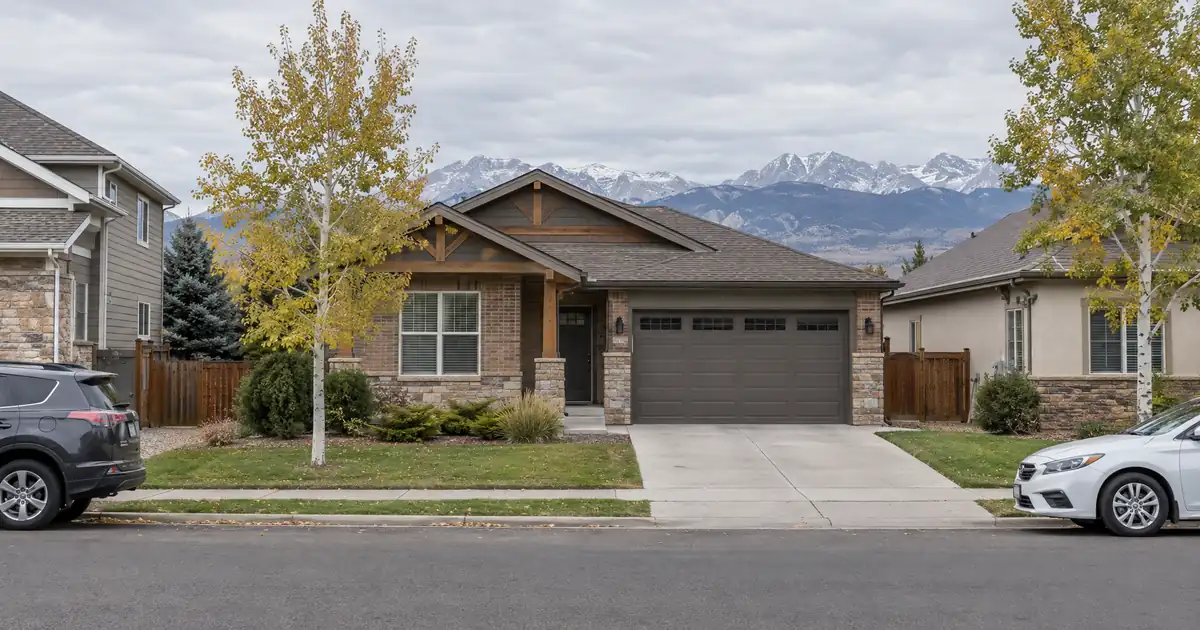
The objection most investors raise about Commerce City is fair: rents don’t stretch far enough against prices to support aggressive cash-out. Median sale prices sit near $495K, per Redfin’s housing market data, while listing-based rents average about $2,800, per Zumper. That gap means coverage, not property value, usually sets the ceiling on equity extraction. This report works through where that constraint bites, where it loosens, and how proceeds can be recycled. Lendmire (NMLS# 2371349) structures DSCR scenarios for investors targeting Commerce City, Colorado and places them with wholesale lenders across 41 markets, including D.C.
DSCR Cash-Out Calculator
Run the cash-out numbers in Commerce City, CO
Rate source: Freddie Mac 30-yr average via FRED® — Federal Reserve Bank of St. Louis · effective Sep 24, 2026
Prefilled with starting assumptions — enter your property’s value, balance, taxes, and insurance for a more accurate picture.
Program parameters update from Lendmire’s centralized guideline source. Taxes and insurance are editable estimates.
As of Sep 24, 2026 · General Freddie Mac market benchmark, not a Lendmire loan offer. Property value, balance, taxes, and insurance are editable estimates. Maximum loan-to-value varies by lender, program, property type, and seasoning. Not a Loan Estimate, approval, or commitment to lend. Program availability and eligibility are subject to lender guidelines, credit approval, property review, and underwriting.
The Quick Read:
A cash-out refinance on a Commerce City rental is underwritten primarily on the property’s rental income measured against its full monthly obligation, which suits investors who own a well-seasoned rental and can accept proceeds sized by coverage rather than by appraised equity alone.
- Redfin’s data shows Commerce City’s median sale price sitting below where it was a year ago.
- Cash-out is capped at 75 percent LTV with roughly 6 months of seasoning.
- Reunion’s median rent runs well above the citywide figure, per Redfin’s neighborhood table.
- Small-unit rents are soft, while 3-bedroom-plus homes make up a large majority of rental listings.
- Prices are flat to falling, so plan for conservative appraisals.
Why Coverage Sets the Ceiling, Not Equity
Coverage, not appraised value, is the binding constraint here. At roughly a 0.57 percent monthly rent-to-price ratio (Lendmire Research arithmetic, blending Redfin’s median price with Zumper’s average rent, so treat it as illustrative), a typical single-family rental lands near 1.0x at full 75 percent leverage once taxes and insurance are included. Some files come in slightly under.
Most standard DSCR programs are built around a 1.00x benchmark because rent covers the full monthly obligation at that level. Lenders can look at lower ratios with compensating factors, but those files usually mean less leverage or more cash held back, and eligibility turns on credit profile, reserves, and property review. The ratio itself is monthly rent divided by principal, interest, taxes, insurance, and any HOA dues.
Here is the modeled version. Run the numbers on a $495K rental with $2,800 in monthly rent, both modeled assumptions. At 75 percent LTV, coverage sits around 1.0x, including taxes and insurance. Trim the cash-out request toward 65 percent and the number moves to just over 1.1x. Same house, same tenant. The only variable is how much equity you pull.
That trade-off is the whole game in this market. Equity is available on paper, but the 75 percent ceiling is an upper bound, and the proceeds depend on rent used for lender review, reserves (about 6 months of the monthly obligation on most files), and credit tier. Programs typically start from a 620 floor, though pricing and leverage improve at higher scores. For the mechanics of the product itself, see the guide “The Refi Options”.
Two Submarkets Split by a Wildlife Refuge
Commerce City is really two rental markets. The Rocky Mountain Arsenal National Wildlife Refuge, a 15,000-acre former chemical-weapons site about 10 miles northeast of downtown Denver, sits between them. 9News reports that it largely separates the north from the rest of the city, and that the two halves sit in different school districts.
Reunion (north). This master-planned community is the city’s premium rental pocket. Redfin’s neighborhood rent table shows a median rent of $3,100, against a citywide figure of $1,879. That table is an older snapshot and doesn’t specify property type, so the comparison isn’t like-for-like. Commerce City North counts about 2,000 residences with plans for more than 10,000, and Homes.com places the neighborhood about 3 miles from Denver International Airport. Airport-adjacent commuters and new-construction renters are the tenant base.
Reunion also shows why underwriting by price tier beats underwriting by neighborhood name. A smaller entry-level home or townhome in the $350K range against Reunion-level rent could produce coverage well above 1.3x on a modeled basis. A larger home near $650K against the same rent falls below 0.9x. Those price bands come from a realtor guide, so consider them directional. Same zip code, opposite outcomes.
The southern core (Derby, Dupont, Adams City, Rose Hill). These are the older, original neighborhoods, sitting near the Suncor refinery and the rail lines. No reliable price or rent source turned up for them, so this report won’t invent one. Industrial and logistics workers anchor demand. Investors holding property here should get a current rent analysis on the specific asset before assuming Reunion-style coverage.
One caution on labels: Redfin’s table also lists Green Valley Ranch ($2,775), Central Park ($2,532), and Gateway ($2,197) under Commerce City. Those are Denver-side neighborhood names, so verify boundaries before treating them as local submarkets.
What the Appraiser Will See
An appraiser on a Commerce City refinance will find flat-to-softening values and deep comps. The Redfin median dropped 3.9 percent year over year, yet price per square foot was up 3.0 percent to $220. The two together point to a mix shift toward smaller or cheaper homes rather than a broad price collapse. Homes averaged about 39 days on market, and May saw 343 sales versus 309 a year earlier.
For a cash-out borrower, that cuts two ways. Volume gives appraisers usable comparables, which helps. But a property bought at an earlier price peak may not appraise above its purchase basis. Movoto shows the median list price around $524K, down 1 percent, a smaller decline than Redfin’s sold-price figure. That difference is a methodology gap between list and sold data, not a contradiction. Size any equity plan off the more conservative number.
Seasoning matters too. Programs generally look for about 6 months of ownership measured from title recording before a cash-out, so a recent purchase can’t be refinanced early to capture a hoped-for price bump. For this market, that’s less of a limit than it sounds. With values drifting sideways, an investor waiting on seasoning isn’t missing much appreciation.
Small Units Are Soft, Big Homes Hold
Rent softness is concentrated in smaller units. RentCafe reports average apartment rent (buildings with 50 or more units) fell 4.68 percent year over year, to $1,819, while 3-bedrooms average $2,447. Zumper’s listing data shows 1-bedroom rents down 22.2 percent and 2-bedroom rents down 10.4 percent, and it reports that 3-bed and 4-plus-bed units make up about two-thirds of rental inventory. Concessions are visible in new-apartment listings, including free-rent offers.
The practical read: new apartment supply is pressuring the low end. Family-sized single-family rentals are the stronger fit for a cash-out file. If the rent figure on your appraisal’s rent schedule leans on an asking rent inflated by concessions, expect the lender to haircut it.
The tenure split explains part of why house rentals dominate. RentCafe shows 4,699 renter-occupied households, or 22 percent, against 78 percent owner-occupied. That is a thin, house-heavy rental base. Vacancy data wasn’t available from a reliable source, so no vacancy figure is offered here.
Fourplex or Single-Family? (A Genuine Toss-Up)
Multi-unit stock is scarce. Homes.com showed four multi-family listings priced from $769,900 to $1,198,000, including a side-by-side quadplex with four 2-bed units. That snapshot changes constantly, so confirm current inventory.
Use Zumper’s 2-bed average of about $1,850. Four units gross roughly $7,400 monthly, a modeled figure. Against the listing range, that’s about 0.6 to 1.0 percent of price. Modeled with full taxes and insurance at 75 percent LTV, coverage runs from just over 1.0x at the top of the price range to about 1.6x at the bottom. Meaningful spread.
The quad’s real edge may be resilience rather than a higher ratio. One vacancy costs about 25 percent of gross rent instead of all of it. But those are the same small-unit rents flagged as soft above. Investors who already own a small multifamily property should confirm how their lender underwrites 2-4 unit assets under residential DSCR rules. Owners weighing whether to hold single-family or trade into a quad might see the single-family route as simpler, while those valuing income diversification could argue the other way. Neither is clearly superior on coverage alone. A comparison of conventional versus DSCR on investor loans can help frame whether a DSCR file makes sense for the ownership structure.
The Demand Story Behind the Rent Roll
Tenant demand rests on a working-class, logistics-and-construction base. The City of Commerce City describes a manufacturing history built on railroad and interstate access, now expanding into logistics, professional services, DIA technology, and retail and hospitality. Data USA shows Construction (4,690 residents), Health Care and Social Assistance (3,832), and Retail Trade (3,746) as the largest resident industries, with employment up 4.8 percent to 35.1K. The Suncor refinery, acquired in 2003 per the Commercial City Historical Society, and numerous trucking firms are the largest private employers. No verified headcounts turned up, and no college campus or in-city hospital was confirmed.
Access explains the location premium. AC-REP describes the city as adjacent to six major highways, Denver International Airport, three railroads, and two commuter rail lines. Population growth has been steady per U.S. Census Bureau QuickFacts. That combination supports long lease terms among industrial and airport-linked renters, which is the demand profile a cash-out lender wants behind the rent.
DSCR files in commuter-belt markets like this one tend to hinge on the rent schedule, not the appraisal. The common friction point is a lease signed well below or above the market rent the appraiser concludes. Files with a clean 12-month lease, a documented payment history, and a reserves statement already in hand tend to move through review with fewer questions. LLC-titled properties are workable, subject to lender program eligibility.
Recycling the Proceeds
The point of pulling equity is the next acquisition. In this market, that argues for sizing conservatively. Keeping the refinance near 65 percent LTV preserves coverage above 1.1x, which protects the file against a soft appraisal and leaves headroom for reserves. Aggressive leverage at 75 percent works only where rent is strong, such as a Reunion-tier property.
Loan amounts run up to $3,000,000 on standard programs, though smaller balances route through select lenders in the network. Review details are subject to lender guidelines, credit approval, and property review. Investors can compare DSCR options or call 828-256-2183 to walk through a specific scenario. The state-level picture sits in Colorado DSCR financing. For the underlying mechanics, Lendmire’s DSCR walkthrough covers the ratio in detail.
Investors should verify current local rental rules, taxes, and insurance with qualified local professionals.
DSCR vs. conventional financing
Two common ways to finance an investment property in Commerce City, CO. They qualify you differently — here’s how investors weigh them.
Why investors choose it
- Qualifies on the property’s rental income — no personal tax returns, W-2s, or pay stubs needed to document income.
- No personal debt-to-income ceiling to clear, so existing mortgages and obligations don’t cap your borrowing the same way.
- Can be closed in an LLC, keeping the property inside a business entity.
- Built for scaling — not held to the limit on number of financed properties that conventional financing applies.
- Underwriting centers on the deal: generally qualifies when the rent covers the payment, a 1.00x coverage ratio being a common baseline (confirmed in underwriting).
- Designed specifically for investment property, including long-term and, where the program allows, short-term rentals.
Where it’s strong
- Often the lowest ongoing financing cost for a buyer who fully qualifies on personal income — a fit for a first property or a cost-first purchase.
Trade-offs for investors
- Requires full personal income documentation and must fit within a debt-to-income limit — salary, existing debts, and other mortgages all count.
- Typically held in your personal name rather than a business entity.
- Caps how many financed properties you can carry, which can become a ceiling as a portfolio grows.
- Evaluates you as a borrower as much as the property, which usually means more paperwork.
How investors usually choose: a first or single property often optimizes for the lowest financing cost; portfolio builders often optimize for leverage, vesting in an LLC, and scaling past conventional caps. The right answer depends on your goals, the property, and current guidelines — both paths run through select lenders in Lendmire’s wholesale network, with eligibility and terms confirmed in underwriting.
Frequently Asked Questions
Does the refinery or the wildlife refuge affect how a cash-out gets underwritten?
Not directly. Underwriting focuses on rent, the monthly obligation, credit, and the appraised value. The refuge and refinery matter indirectly, since they shape which areas command Reunion-style rents versus core-city rents. The appraiser’s comps will reflect that split.
Is Reunion the only place cash-out coverage looks strong?
Reunion has the strongest published rent figure, but strength depends on purchase basis. Entry-level homes there can show healthy coverage, while larger homes may not. The older southern core lacks reliable public rent data, so coverage there must be tested asset by asset.
How does falling median price affect the equity I can pull?
It can shrink it. With the median down 3.9 percent year over year, a refinance appraisal may come in flat or below a purchase-era basis. Cash-out is capped at 75 percent of the appraised value, so a lower value directly reduces the ceiling, before coverage limits are even applied.
Are 1-bedroom and 2-bedroom rentals a weak fit for cash-out here?
They are the soft spot. Zumper shows 1-bed rents down 22.2 percent and 2-bed rents down 10.4 percent year over year, and RentCafe shows apartment rents falling. Underwrite them at conservative rents. Larger family homes have held up better.
What should a Commerce City owner do before applying?
Pull a current rent analysis for the specific street and price tier, then compare it to Redfin’s recent sold comps. In a market where Reunion rents and southern-core rents diverge this sharply, a property-specific rent figure will tell you more than any citywide average.
For current guidelines and terms, see Lendmire’s DSCR loan programs page.
About Lendmire
A DSCR-focused mortgage broker, Lendmire (NMLS# 2371349) places investor financing across 41 markets, covering 40 states plus Washington, D.C. Lenders generally review DSCR eligibility on property cash flow rather than traditional personal-income documentation, subject to lender guidelines. Lendmire has been recognized as a 2025 Scotsman Guide Top Workplace and a 2026 Scotsman Guide Top Workplace.
Get Started
Ready to find the right loan for you?
In about 30 seconds you can review financing options available for your investment property. No commitment required.
Informational only. Not a Loan Estimate, approval, or commitment to lend. Program availability and eligibility are subject to lender guidelines, credit approval, property review, and underwriting.
References
1. Redfin’s housing market data
2. Zumper
3. Rocky Mountain Arsenal National Wildlife Refuge
5. Redfin’s neighborhood rent table
6. Homes.com
7. Movoto
8. RentCafe
9. Homes.com
11. Data USA
12. Commercial City Historical Society
13. AC-REP
14. U.S. Census Bureau QuickFacts
15. a 2025 Scotsman Guide Top Workplace
16. a 2026 Scotsman Guide Top Workplace
This article is part of Lendmire’s investment property cash-out refinance program — full qualification details, guidelines, and scenarios live on the program page.
Related reading: Luxury Rental DSCR Loans In New Jersey · Jersey Shore Vacation Rental Loans: DSCR Financing In Ocean City, Cape May And Long Beach Island · DSCR Cash-out Refinance In New Jersey: Pulling Equity From A Rental
Guides: Investment Property Cash-Out Refinance in Commerce City, CO · Investment Property Cash-Out Refinance in Colorado
Brandon Miller
Founder & CEO, Mortgage Loan Originator, Lendmire LLC
- Mortgage Loan Originator · NMLS# 1129696 · Verify on NMLS Consumer Access
- North Carolina Real Estate Broker · License# 343312 · Verify on NCREC
- North Carolina Insurance Producer · License# 19053198 · Property, Casualty, Life, Health · Verify on NAIC SBS
- Lendmire LLC · Firm NMLS# 2371349 · Verify firm licensure
Important disclosures. Lendmire (NMLS# 2371349) is a licensed mortgage brokerage. Lendmire is not a direct lender, depository institution, or financial advisor. All loan inquiries are subject to lender underwriting; this article does not constitute a commitment to lend. Rates, terms, and program guidelines are subject to change without notice and vary by borrower profile, property type, and state. Information in this article is general in nature and is not financial, legal, or tax advice. Equal Housing Opportunity. NMLS Consumer Access: nmlsconsumeraccess.org.