
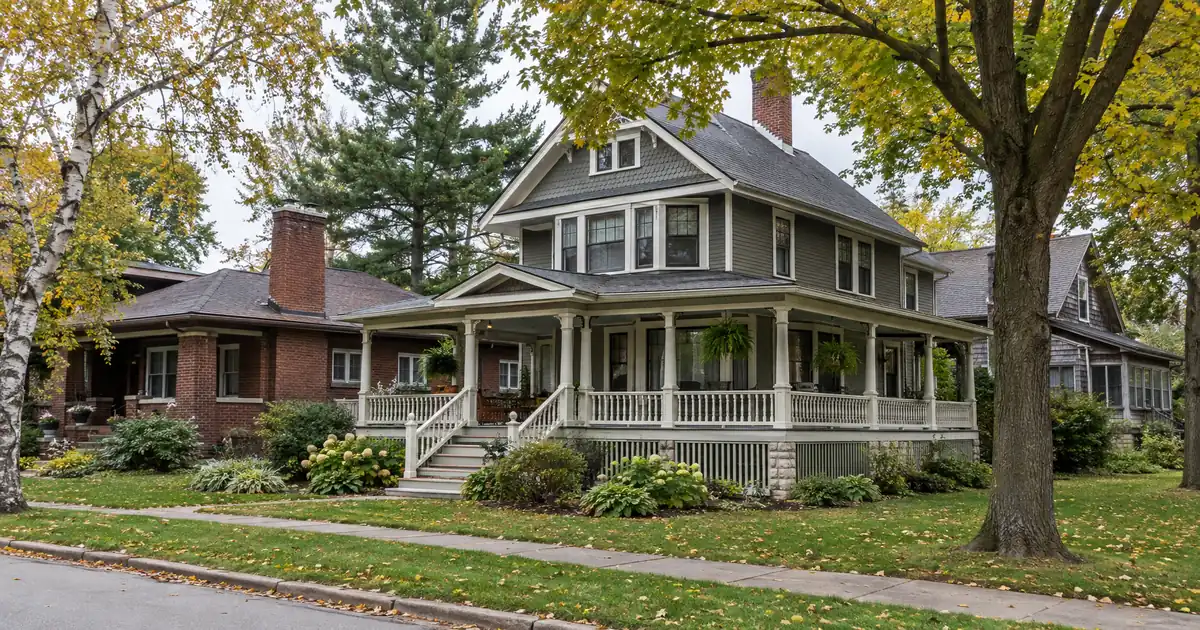
Green Bay’s rental vacancy fell to an estimated 3.6 percent, from 4.8 percent, even as rental construction surged, according to HUD’s Housing Market Profile for the metro. Absorption outran new supply. For owners already holding a duplex or workforce rental here, that is the backdrop for a cash-out refinance: a tight rental market supports the income side of the file, and rising home values widen the equity side.
DSCR Cash-Out Calculator
Run the cash-out numbers in Green Bay, WI
Rate source: Freddie Mac 30-yr average via FRED® — Federal Reserve Bank of St. Louis · effective Sep 24, 2026
Prefilled with starting assumptions — enter your property’s value, balance, taxes, and insurance for a more accurate picture.
Program parameters update from Lendmire’s centralized guideline source. Taxes and insurance are editable estimates.
As of Sep 24, 2026 · General Freddie Mac market benchmark, not a Lendmire loan offer. Property value, balance, taxes, and insurance are editable estimates. Maximum loan-to-value varies by lender, program, property type, and seasoning. Not a Loan Estimate, approval, or commitment to lend. Program availability and eligibility are subject to lender guidelines, credit approval, property review, and underwriting.
Key Takeaways:
A DSCR cash-out refinance in Green Bay, Wisconsin is underwritten primarily on the property’s rental income measured against its full monthly obligation, with the lender reviewing seasoning, reserves, and appraised value to size the proceeds. Structure matters more than headline price, and the appraisal sets the ceiling.
- Redfin puts the city median near $295K, up 7.0 percent, which supports appraisals.
- Cash-out tops out at 75 percent LTV, with about six months of ownership typical.
- Duplexes beat single-family on coverage, but only below the roughly $360K listing average.
- Downtown comps are thin: three sales in one month, median down 7.3 percent.
Green Bay Market Snapshot
A quick read on the Green Bay investor landscape — figures come from the cited sources below. Confirm current property-level numbers before underwriting.
| Metric | Detail |
|---|---|
| Population | 334,697 population (Census Reporter, Green Bay metro) |
| Vacancy | 3.6% (HUD PD&R Housing Market Profile) |
Why the Equity Is There
The equity case in Green Bay rests on a market that has repriced. Redfin’s city data shows a three-month median near $295K, up 7.0 percent year over year. Zillow’s index sits lower, at $289,378 and up 5.8 percent, a methodology difference rather than a disagreement on direction. Both point up.
Rents have moved too, but more slowly. Zumper reports a citywide median of $1,095 per month, up 4.3 percent, with two-bedrooms around $1,150 and three-bedrooms at $1,549. RentHop shows higher figures, $1,245 and $1,795, but describes rents as roughly flat over the year. Values are outpacing rents. That is the core tension in a cash-out here: the appraisal may have grown faster than the income that has to carry the new balance.
Green Bay, Wisconsin investors can have DSCR scenarios reviewed through lender programs that Lendmire helps place across 41 markets, including Washington, D.C. (Lendmire, NMLS# 2371349). The structure is straightforward. A lender reviews how the qualification works on rent against the full obligation, caps cash-out at 75 percent of appraised value, and expects roughly six months of ownership measured from title recording. Reserves of about six months of PITIA are typical, and a 620 credit score is the floor on most files. All of it sits subject to lender guidelines.
The Demand Anchors Behind the Rent Roll
Green Bay’s tenant base is not a college story. Brown County names Bellin Health as its largest employer, followed by Humana, and identifies paper-making as the city’s principal industry. A HUD Comprehensive Housing Market Analysis, drawing on an older city financial report, gave the historical scale: Humana at 3,275 employees, Schneider at 2,725, Bellin Health Systems at 2,525, and Georgia-Pacific at 1,950. Treat those as scale, not current headcounts.
The mix matters for underwriting. Insurance carriers, trucking headquarters, a hospital system, and paper manufacturing pull from different cycles, so no single layoff cluster empties a block. The metro holds 334,697 residents with a median household income of $79,876, per Census Reporter’s ACS data. Northeast Wisconsin Technical College adds a steady renter pool; Niche reports 2,331 full-time and 9,495 part-time undergraduates.
Astor: The Hospital District Play
Astor is the strongest equity-extraction submarket in the city. The City of Green Bay’s economic development analysis documents the Bellin and St. Vincent hospital district as established in Astor in the early 1970s, which gives the neighborhood a durable employment anchor on its doorstep.
The housing stock fits the loan. Homes.com describes a National Register historic neighborhood with Queen Annes, Dutch Colonials, Craftsman bungalows, and American Foursquare duplexes. Those duplexes are the target. An owner who bought one several years ago has likely seen the appraisal move meaningfully, and two rent checks against one loan is the cleanest way to hold coverage while pulling cash.
Here’s the catch: older stock carries condition risk. Appraisers price deferred maintenance, and a duplex with dated systems may appraise below what the neighborhood’s headline numbers suggest.
Run the Numbers: Duplex Versus Single-Family
Duplexes win on coverage, and the gap is wider than the rent-to-price ratios suggest. Realmo’s active listings show 26 duplexes priced from $169,900 to $715,000, averaging $360,278. Modeled assumptions below use the two-bedroom rent of $1,150 per unit and a value equal to the stated price, with 75 percent LTV and full PITIA including taxes and insurance.
- Duplex near $250K value: two units grossing roughly $2,300 a month put coverage around 1.3x.
- Duplex near the $360K average: coverage lands just under 1.00x.
- Three-bedroom single-family near $295K: at $1,549 rent, coverage is around 0.8x.
Sub-1.00 doesn’t end the conversation. A lender may review it under a sub-1.00 program, an interest-only structure, or a lower LTV with stronger compensating factors, and each comes with its own pricing and reserve terms. Approval remains subject to lender guidelines, credit review, and the property appraisal.
The math also shows why the price band matters more than the property type. Only the lower-priced or updated duplexes clear thin margins comfortably. A $715K listing needs rents that Green Bay’s two-bedroom median doesn’t produce.
DSCR files in markets like this one typically look the same at the front end: a long-held property, a strong appraisal, and a coverage number that is fine on current leases but tight once the new balance is sized at the 75 percent ceiling. The files that go smoothly usually have leases in hand, rent roll documented at or near market, and reserves sourced before the application goes in. The ones that stall usually discover, after the appraisal, that the value they assumed and the value the lender accepted don’t match.
The Shrinking Small-Rental Stock
Small rentals are getting scarcer. HUD’s same housing profile reports that 1-4 unit structures held an estimated 42 percent of renter-occupied housing, down from 48 percent in 2019, partly because rising home values prompted small owners to sell. Fewer competing duplexes and single-family rentals means less supply pressure on the ones an investor keeps. It also means the next acquisition, the one the cash-out funds, competes in thinner inventory. Plan the redeployment before pulling the equity, not after.
Olde North, Navarino, and Oak Grove (Where Rent-to-Value Is Sharpest)
Near-north and east-side neighborhoods are the workforce value end. Zumper lists Olde North at $897 per month, Imperial Pride at $950, and Navarino at $995 as the most affordable neighborhoods, though those are averages across all unit sizes. Listing-portal prices in these areas run well below the city median, which is what makes rent-to-value look strongest here.
The trade-off is appraisal depth and condition variance. Low entry prices leave less absolute equity to extract, so a cash-out on a $200K-range house yields a smaller draw than the same percentage on an Astor duplex. These neighborhoods suit owners recycling small chunks of equity into additional doors rather than one large redeployment.
Downtown: Skip the Cash-Out Unless the Comps Hold
Downtown commands the highest rents. Rent.com reports an average one-bedroom of $1,550, versus $1,199 in the Broadway District and Fort Howard. The appraisal picture is weaker. Redfin’s downtown data shows a $255K median, down 7.3 percent, built on only three sales in a single month.
Three sales aren’t a comp set. An appraiser working from that sample may land well under an owner’s expectation, and cash-out proceeds are the first casualty. Compare the Westside: a $275K median, up 5.7 percent, described by Redfin as very market-rate. A deeper sales pool gives the appraiser more to work with.
Allouez, Ashwaubenon, and the Suburban Ring
Allouez and Ashwaubenon sit above the city median on listing-portal snapshots, and De Pere, Bellevue, and Howard higher still. Those higher price points are more single-family territory, where coverage tends to run thinner. The Packers and Lambeau Field draw buyer attention to Ashwaubenon, but short-term rental income isn’t the thesis here. Long-term lease coverage is. Owners with suburban single-family rentals should expect coverage near or below 1.00x and plan the file around a lower LTV or a program built for that profile.
ARV Risk and the Seasoning Clock
Value sources disagree. Redfin shows $295K up 7.0 percent, while Zillow shows $289,378 up 5.8 percent. Monthly medians swing on small samples, so the headline isn’t the appraisal. Only closed sales of the same property type, on the same or adjacent streets, matter. Six months of seasoning sets the earliest possible date. An owner who finished a rehab last quarter should run closed comps before assuming the post-rehab value will hold.
For owners whose coverage clears 1.00x comfortably, Lendmire’s investment property refinance options and its cash-out refinance path for investment properties cover the two routes. Those whose rents lag can read the guide “Where DSCR and Conventional Diverge” before deciding which product fits. Entity-titled properties, including LLC holdings, are reviewed subject to lender program eligibility. Lendmire’s Wisconsin DSCR loan programs outline the statewide structure, and the team can be reached at 828-256-2183 for a file review. Verify current local rental rules, taxes, and insurance with qualified local professionals before sizing any refinance.
Frequently Asked Questions
Can a Green Bay duplex really hit 1.00 coverage after a cash-out?
Often yes, below roughly $250K in value. At 75 percent LTV with full taxes and insurance, two-bedroom rents near $1,150 each put coverage around 1.3x. Near the $360K listing average, coverage slips just under 1.00x.
DSCR vs. conventional financing
There are two common ways to finance an investment property in Green Bay, WI, and they qualify you differently — here’s how investors weigh them.
Why investors choose it
- Qualifies on the property’s rental income — no personal tax returns, W-2s, or pay stubs needed to document income.
- No personal debt-to-income ceiling to clear, so existing mortgages and obligations don’t cap your borrowing the same way.
- Can be closed in an LLC, keeping the property inside a business entity.
- Built for scaling — not held to the limit on number of financed properties that conventional financing applies.
- Underwriting centers on the deal: generally qualifies when the rent covers the payment, a 1.00x coverage ratio being a common baseline (confirmed in underwriting).
- Designed specifically for investment property, including long-term and, where the program allows, short-term rentals.
Where it’s strong
- Often the lowest ongoing financing cost for a buyer who fully qualifies on personal income — a fit for a first property or a cost-first purchase.
Trade-offs for investors
- Requires full personal income documentation and must fit within a debt-to-income limit — salary, existing debts, and other mortgages all count.
- Typically held in your personal name rather than a business entity.
- Caps how many financed properties you can carry, which can become a ceiling as a portfolio grows.
- Evaluates you as a borrower as much as the property, which usually means more paperwork.
How investors usually choose: a first or single property often optimizes for the lowest financing cost; portfolio builders often optimize for leverage, vesting in an LLC, and scaling past conventional caps. The right answer depends on your goals, the property, and current guidelines — both paths run through select lenders in Lendmire’s wholesale network, with eligibility and terms confirmed in underwriting.
How much does the Bellin and St. Vincent hospital district matter for appraisals?
It matters for demand more than for appraised value directly. The district anchors tenant demand in Astor and the near-east side, which supports stable occupancy, but the appraiser still prices the individual property from closed sales and condition.
Why is the Westside easier to refinance than Downtown?
Sales volume. The Westside is a very market-rate area with a steady flow of closed sales, while Downtown recorded only a handful of sales in a single month. Thin comps make Downtown appraisals harder to predict.
Do hospital and insurance-carrier employers make Green Bay riskier or safer for rentals?
Safer, by diversification. Bellin Health, Humana, Schneider, and Georgia-Pacific span health care, insurance, logistics, and paper, so no single industry cycle drives tenant demand across every neighborhood.
How long must I own a Green Bay property before a DSCR cash-out?
About six months, measured from title recording, is typical. Reserves near six months of PITIA and a 620 credit floor are also common, all subject to lender guidelines.
Where Does Your Equity Go Next?
Green Bay’s tight vacancy and thinning small-rental stock reward the owner who pulls equity and redeploys it into another well-located duplex. So take a hard look at your current property: does its appraised value, not its asking-price headline, carry enough of a cushion above the 75 percent ceiling to fund the next acquisition?
For current guidelines and terms, see Lendmire’s DSCR loan programs page.
About Lendmire
Lendmire (NMLS# 2371349) is a DSCR-focused mortgage broker that helps arrange investor financing across 41 markets, including Washington, D.C., through wholesale and investor-lending channels. DSCR eligibility is generally reviewed by the lender on the property’s rental income rather than personal income documentation, subject to lender guidelines, which works for self-employed investors, LLC operators, and portfolios above four financed properties. Scotsman Guide named Lendmire a Top Mortgage Workplace in both 2025 and 2026.
Get Started
Ready to find the right loan for you?
In about 30 seconds you can review financing options available for your investment property. No commitment required.
Informational only. Not a Loan Estimate, approval, or commitment to lend. Program availability and eligibility are subject to lender guidelines, credit approval, property review, and underwriting.
References
1. HUD Housing Market Profile, Green Bay
2. Census Reporter, Green Bay metro
3. Redfin, Green Bay housing market
5. Zumper, Green Bay rent research
6. RentHop
8. HUD Comprehensive Housing Market Analysis, Green Bay
9. Northeast Wisconsin Technical College
10. Homes.com
12. Rent.com
14. Westside
15. 2025
16. 2026
This article is part of Lendmire’s investment property cash-out refinance program — full qualification details, guidelines, and scenarios live on the program page.
Related reading: DSCR Loans in Green Bay, Wisconsin: Investor Financing for the Broadway District, Allouez & West Side Rentals, Cash-Flow Markets & Real Estate Investors · Cash Out Refinance Investment Property Green Bay Wisconsin · DSCR Cash Out Refinance in Door County, Wisconsin: The 2026 DSCR Financing Guide to Highway 42
Guides: Investment Property Cash-Out Refinance in Green Bay, WI · Investment Property Cash-Out Refinance in Wisconsin
Brandon Miller
Founder & CEO, Mortgage Loan Originator, Lendmire LLC
- Mortgage Loan Originator · NMLS# 1129696 · Verify on NMLS Consumer Access
- North Carolina Real Estate Broker · License# 343312 · Verify on NCREC
- North Carolina Insurance Producer · License# 19053198 · Property, Casualty, Life, Health · Verify on NAIC SBS
- Lendmire LLC · Firm NMLS# 2371349 · Verify firm licensure
Disclosures. The information presented in this article is general market commentary, not financial, legal, or tax advice. Lendmire is a mortgage brokerage (NMLS# 2371349) — not a direct lender or depository institution — and loan placement is subject to lender underwriting. Nothing in this content represents a commitment to lend. Loan terms, pricing, and program availability vary based on borrower qualifications, property characteristics, and state of subject property, and are subject to change at any time. Lendmire complies with Equal Housing Opportunity requirements. Consumer access: nmlsconsumeraccess.org.