
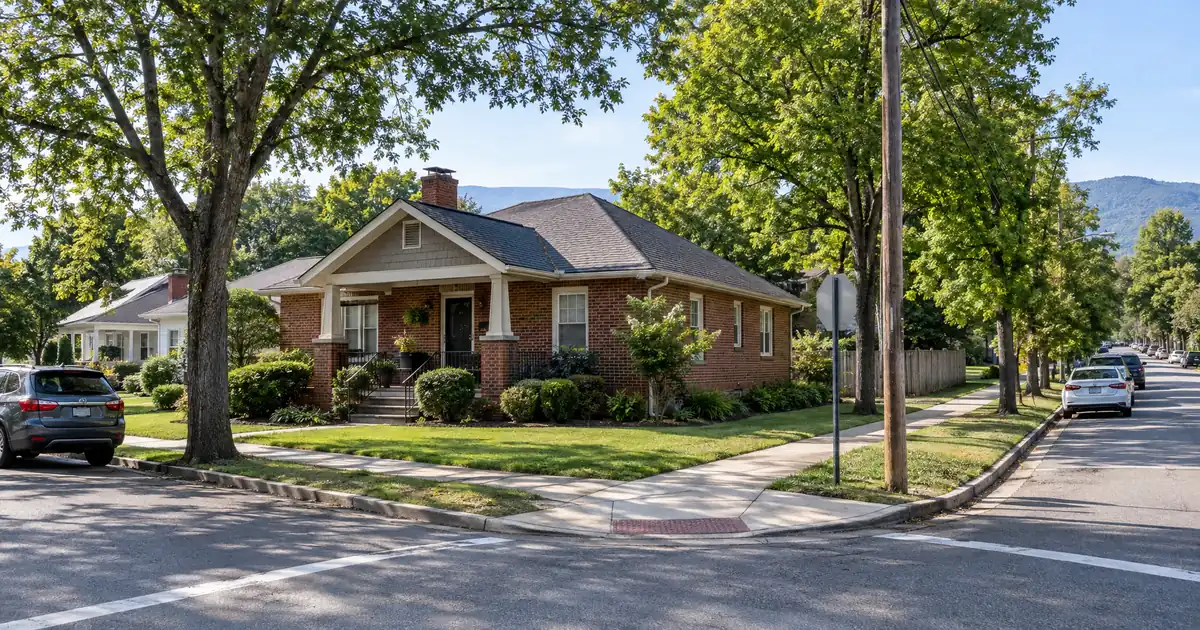
Most Kannapolis investors chase the downtown ballpark district for equity, and that is backwards. Public capital is lifting the West Avenue core, but the coverage math that makes a cash-out refinance work sits in the older, cheaper, single-family-heavy pockets around it. The investor who understands that split pulls more usable capital out of a rental than the one who simply owns the shinier address.
DSCR Cash-Out Calculator
Run the cash-out numbers in Kannapolis, NC
Rate source: Freddie Mac 30-yr average via FRED® — Federal Reserve Bank of St. Louis · effective Oct 1, 2026
Prefilled with starting assumptions — enter your property’s value, balance, taxes, and insurance for a more accurate picture.
Program parameters update from Lendmire’s centralized guideline source. Taxes and insurance are editable estimates.
As of Oct 1, 2026 · General Freddie Mac market benchmark, not a Lendmire loan offer. Property value, balance, taxes, and insurance are editable estimates. Maximum loan-to-value varies by lender, program, property type, and seasoning. Not a Loan Estimate, approval, or commitment to lend. Program availability and eligibility are subject to lender guidelines, credit approval, property review, and underwriting.
Key Takeaways:
A DSCR cash-out refinance on a Kannapolis, North Carolina investment property is underwritten primarily on the rental income the property produces measured against its full monthly obligation, with the new loan capped by a loan-to-value ceiling. Zillow puts the average local home value at $283,833.
- Cash-out leverage typically tops out at 75 percent of value, subject to lender guidelines.
- Single-family rents run roughly $1,499 to $1,892 depending on source and submarket.
- Duplex stacking does not produce the strongest modeled coverage in the city; the low-basis single-family model does better.
- New downtown apartment supply favors older stock outside the delivery zones.
- Seasoning of about six months from title recording typically applies before cash-out.
Kannapolis Market Snapshot
A quick read on the Kannapolis investor landscape — figures come from the cited sources below. Confirm current property-level numbers before underwriting.
| Metric | Detail |
|---|---|
| Home prices | $303K median (Redfin Kannapolis Housing Market) |
| Typical rents | $1,236 median (Apartment List – Kannapolis) |
| Population | 57,890 population (Census Reporter – Kannapolis NC) |
| Employment | 100 jobs announced (Kannapolis city government) |
| Vacancy | not reported (NeighborhoodScout – Northlight) |
West Kannapolis: Where Single-Family Coverage Holds
West Kannapolis is the strongest cash-out refinance market in the city because it combines city-level rents with a rental stock that is majority single-family. RentCafe’s submarket page shows an average rent of $1,499 with 51 percent of rentals being single-family homes. RentCafe puts the citywide average at $1,578, so West Kannapolis rents run slightly below the city figure.
Why it matters for an equity pull: single-family tenants are not comparison-shopping against a leasing office offering two months free. Concessions in newly delivered apartment buildings don’t drag on an older house’s rent roll the way they would on a unit in a lease-up complex. That keeps the rent used for lender review steadier, and rent used for lender review is the number a lender uses to size the refinance.
Pricing context is the other half. Zillow’s index puts the average Kannapolis home value at $283,833, up 0.5 percent over the past year. Data USA reports a median property value of $276,400 and a homeownership rate of 65.6 percent. Redfin runs higher on a different basis (more on that below). Against those price levels, single-family rents in the $1,500 to $1,900 band sit near the rent-to-price territory investors target in coverage-driven markets.
Run the numbers on a modeled rental valued near the Zillow average, refinanced at 75 percent LTV, with rent at the $1,892 single-family average that Apartments.com reports. Including taxes and insurance, coverage lands around 1.1x. Those are modeled assumptions, not sourced market results. Cut the rent to $1,600 and the same property drops to roughly 0.9x. The gap between those two outcomes is why rent verification matters more than the appraisal headline.
The Rent Range Problem
Kannapolis rent data does not agree with itself, and the spread is wide enough to move a coverage number by 0.3x or more. Apartment List reports a citywide median of $1,236, up 3.6 percent year over year, with one-bedrooms at $1,548 and up and two-bedrooms at $1,806 and up. RentCafe puts the average at $1,578. Apartments.com shows a two-bedroom apartment at $1,605 and an average single-family rental of $1,892, ranging from $850 to $3,200.
Different methodologies, different unit mixes. The $1,236 median blends every unit type, while the $1,892 figure is houses only. For a DSCR refinance, the relevant number is neither. It is the lender’s appraisal-based market rent schedule or the in-place lease on the specific property. Investors who model off the high end of the range and then meet a lower appraised rent discover the cash-out proceeds shrink or disappear (it happens more than anyone admits).
A sub-1.00 result is not the end of the file. At the low end of the range, a modeled single-family rental near the Zillow average covers roughly 0.7x including taxes and insurance. Paths a lender would review include a sub-1.00 program at reduced leverage, an interest-only structure, or a smaller cash-out pull. Whether any of those apply depends on lender guidelines, credit review, reserves and the property itself. They are options to price, not outcomes to count on.
Duplexes Beat Houses on the Math
Two-unit product is the strongest candidate for clearing DSCR in Kannapolis, though it does not guarantee a pass. Redfin’s multifamily listings show projected per-unit rents near $1,900 on new-construction duplexes, plus an existing remodeled duplex near downtown marketed as two separate income streams. Two units at that level produce gross rent well above what any single-family house in the same price tier can generate, which improves the odds on the math even though full coverage still depends on price, leverage, taxes, and insurance.
Model it conservatively, and keep the outcome honest. Assume a duplex valued around the level of the new-construction product, with the projected rent haircut below the listed per-unit figures. At 75 percent LTV, with full PITIA including North Carolina property taxes and insurance, coverage on a purchase like this can land well under 1.0x, roughly in the mid-0.6x to low-0.7x range across a spread of plausible rate environments. Using the full projected per-unit rents lifts the result somewhat, but it does not change the picture much. A new-construction duplex at this price level may not clear a DSCR test on rent alone at that leverage. Lower leverage, a larger down payment, or a lower-priced existing duplex can move the numbers, and a broker can help compare programs against the actual property. Those inputs are modeled assumptions, not quoted rents or prices.
There is lender-appetite evidence too. ConnectCRE reports a $37.75 million financing for the Graces Reserve Apartments, a three-story garden-style complex. That is institutional capital underwriting Kannapolis multifamily at scale, a reasonable signal that small-balance lenders will look at two- to four-unit product here without hesitation.
Here is the thinking-out-loud part. Is the duplex always the better refinance candidate? Not necessarily. A paid-down single-family rental with long-tenured tenants can beat a newer duplex still working through lease-up, because in-place rent is verifiable on day one. For an investor with both, the duplex usually carries the coverage and the house usually carries the equity.
Downtown: Appreciation Story, Not a Coverage Story
Treat the West Avenue district as a long-term equity play rather than a day-one coverage play. The city bought roughly 50 acres and eight blocks of its own downtown and launched a $113 million revitalization anchored by a minor-league ballpark and the research campus. A separate downtown agreement required a minimum tax value of $40.125 million on three parcels facing the ballpark.
That public capital pushes basis up faster than rent. The new mid-rise product (200 Main, Stadium Lofts, VIDA) prices at a premium tied to luxury construction. An owner already holding downtown property may see the strongest appreciation here, which is useful for a refinance, but a buyer paying today’s downtown pricing is paying for that growth in advance. The numbers on a downtown-priced unit tend to run thinner than in outlying corridors.
Skip the Delivery Zones
Supply is the real risk in the newer submarkets. Millstone Village alone calls for 134 townhomes and 304 multifamily units plus a Harris Teeter. Kirk Hanson’s market analysis counts 350 new apartment units directly downtown. Regionally, MMG Real Estate Advisors reports Charlotte delivered a record 16,700 multifamily units with roughly 22,000 more under construction.
Lease-up concessions on Class-A product tend to pressure rents on older neighbors within the same walkable footprint. The practical read: refinance and hold older, non-luxury single-family and small multifamily outside those delivery zones, where the rent roll doesn’t compete with a brand-new building offering incentives.
Northlight and Royal Oaks illustrate the other side. NeighborhoodScout shows many homes built between 1940 and 1969 and a vacancy rate of 16.7 percent. That is a flag, not a recommendation. Elevated vacancy means lower acquisition basis and negotiating leverage, but also means a property must show stabilized in-place rent before it supports a meaningful cash-out. Reposition first, refinance second.
Demand Anchors Behind the Rent Roll
Kannapolis sits on a layered employment base, which is what keeps long-term rental demand from depending on any single payroll. The city rebuilt after the Pillowtex mill closure in 2003 around the North Carolina Research Campus, which Kirk Hanson’s investor guide describes as home to more than 100 scientists from 8 universities and more than 16 biotech companies. NCRC’s partner page confirms Atrium Health and the Duke Clinical and Translational Science Institute operating from the campus medical plaza. The campus began as a $1.5 billion project planned for 3.2 million square feet and roughly 5,000 jobs, and Momentec Brands has announced a 756,000-square-foot customer success center with capacity for about 700 employees.
The blue-collar side is expanding as well. Amazon’s original fulfillment center employed 1,000 full-time workers within its first year, and the city has announced a second Amazon location in the 85 Exchange Industrial Park with 100 jobs. Livability lists Chewy, Corning, Gordon Food Service, Stanley Black & Decker and the motorsports operations of Hendrick and Speedway among the wider Cabarrus County employers. Kannapolis is also home to Earnhardt Ganassi Racing and the Haas F1 headquarters, a technical-salary tenant pool most similarly sized Piedmont cities lack.
One forward-looking item: Novant Health has announced a 50-bed hospital on Trinity Church Road, a second major health system in a market Atrium dominates. It hasn’t opened, so treat it as a demand catalyst for that corridor rather than a present-day rent driver.
The population side supports the demand story. Census Reporter shows 57,890 residents across 34.9 square miles, up from 53,114 at the 2020 census. Median household income is $70,691 per NeighborhoodScout. About 34 percent of households rent, per RentCafe’s occupancy data.
What Seasoning and the 75 Percent Cap Mean Here
Equity extraction in Kannapolis runs through two constraints: a 75 percent LTV ceiling on cash-out refinances and roughly six months of ownership measured from title recording, both typical of the programs Lendmire arranges and subject to lender guidelines. Minimum coverage is typically 1.00x on rent used for lender review against full PITIA, credit tiers start at a 620 floor, and reserves generally run about six months of PITIA. Loan amounts can reach $3 million on standard programs. Equity available depends on rent used for program review, PITIA, reserves and the LTV ceiling, so it is never a guaranteed cash figure.
Here is where appreciation math gets awkward in this market. Zillow shows the typical value up just 0.5 percent over the year. Redfin reports a median sale price of $303,000, down 9.77 percent year over year, with a median of $210 per square foot, up 3.7 percent, and 47 days on market against 39 a year earlier. The two figures use different methodology (an index of typical values versus actual sold prices), and the mix of homes selling shifts the median. The takeaway is simple: Kannapolis is not a double-digit-appreciation market right now.
So the equity an investor extracts mostly comes from paydown and from buying below value, not from market lift. Picture an investor holding a rental valued near the Zillow average with a payoff balance around 60 percent of value. At the 75 percent ceiling, the usable gap is about 15 points of value, before reserves and seasoning conditions. Run the same math on a property bought at 85 percent of value and the gap widens, which is why basis matters more than headline appreciation. For the mechanics, see the equity-extraction mechanics and rate-and-term and cash-out refi details.
How These Files Typically Look
DSCR files in markets like this one typically look like a house or small multifamily held long enough to season, with in-place rent that sits a notch below the platform averages. Coverage often clears 1.0x with little room, so the file turns on the appraiser’s rent schedule and the reserves the investor can document. Strong files tend to pair verifiable leases with a clean payment history on the existing loan. Weak ones lean on projected rents that haven’t been tested.
Investors in the Charlotte exurb ring also tend to move proceeds into the next acquisition quickly after the refinance funds. Planning the next purchase before the cash-out is sequenced helps. Lendmire’s North Carolina DSCR platform covers the state-level program structure, and the DSCR fundamentals page explains how the coverage ratio is built from rent over principal, interest, taxes, insurance and HOA dues.
Cheap Product Needs a Different Lens
Kellswater Commons and parts of downtown show among the more affordable rents in the city, making them cash-flow-first candidates. The 10 Federal Storage neighborhood guide pegs one VIDA-adjacent area at home prices of $180,000 to $350,000 against two-bedroom rents of $1,400 to $1,800. At the low end, a modeled $180,000 property with $1,400 rent covers around 1.3x including taxes and insurance, materially better than the citywide median-price deal. That ratio is a modeled result, and a smaller loan balance may route through select lenders in the network rather than standard programs.
Coverage is won in these price pockets, not at the city average. A refinance of a low-basis rental yields a smaller dollar pull, but a cleaner coverage ratio and lower exposure to a rent miss. Two lower-basis properties can outperform one expensive one on risk-adjusted terms, though the exit liquidity is thinner.
How DSCR Compares
Investors weighing options will see the difference quickly. A DSCR refinance looks at property income rather than traditional personal-income documentation, which matters for self-employed owners and portfolios past conventional limits. A comparison of DSCR and conventional financing covers the trade-offs, and the generic reminder applies here: verify local rental rules, taxes and insurance with qualified local professionals before underwriting.
Frequently Asked Questions
Can a Kannapolis rental near the research campus support a cash-out refinance at 75 percent LTV?
It can when rent used for eligibility review covers full PITIA at 1.00x or better and the property has been owned about six months from title recording. Lender guidelines, appraisal and reserves decide the final number. Properties near the campus tend to show verifiable single-family leases, which helps documentation.
DSCR vs. conventional financing
There are two common ways to finance an investment property in Kannapolis, NC, and they qualify you differently — here’s how investors weigh them.
Why investors choose it
- Qualifies on the property’s rental income — no personal tax returns, W-2s, or pay stubs needed to document income.
- No personal debt-to-income ceiling to clear, so existing mortgages and obligations don’t cap your borrowing the same way.
- Can be closed in an LLC, keeping the property inside a business entity.
- Built for scaling — not held to the limit on number of financed properties that conventional financing applies.
- Underwriting centers on the deal: generally qualifies when the rent covers the payment, a 1.00x coverage ratio being a common baseline (confirmed in underwriting).
- Designed specifically for investment property, including long-term and, where the program allows, short-term rentals.
Where it’s strong
- Often the lowest ongoing financing cost for a buyer who fully qualifies on personal income — a fit for a first property or a cost-first purchase.
Trade-offs for investors
- Requires full personal income documentation and must fit within a debt-to-income limit — salary, existing debts, and other mortgages all count.
- Typically held in your personal name rather than a business entity.
- Caps how many financed properties you can carry, which can become a ceiling as a portfolio grows.
- Evaluates you as a borrower as much as the property, which usually means more paperwork.
How investors usually choose: a first or single property often optimizes for the lowest financing cost; portfolio builders often optimize for leverage, vesting in an LLC, and scaling past conventional caps. The right answer depends on your goals, the property, and current guidelines — both paths run through select lenders in Lendmire’s wholesale network, with eligibility and terms confirmed in underwriting.
Why do Kannapolis rent figures differ so much between sources?
Each platform blends different unit types. Apartment List’s $1,236 median covers everything, RentCafe’s $1,578 is an average, and Apartments.com’s $1,892 is single-family only. A lender relies on appraisal rent or the in-place lease, so model off those rather than a platform headline.
Does the downtown apartment boom hurt cash-out potential on older rentals?
Possibly in the blocks nearest new deliveries. Downtown is adding 350 apartment units and Millstone Village plans 304 multifamily units, and concessions on new product can pressure nearby rents. Older single-family and small multifamily outside those zones are less exposed.
Is a duplex easier to refinance than a house in Kannapolis?
Often yes on coverage. Two income streams at listed per-unit rents near $1,900 produce stronger ratios than a single-family rental in a similar price tier. A stabilized house with long-term tenants can still beat a duplex still in lease-up.
What if coverage falls below 1.00x?
A lender may review a sub-1.00 program at lower leverage, an interest-only structure, or a smaller cash-out pull. These carry different pricing and conditions, and eligibility depends on credit, reserves and property review.
For current guidelines and terms, see Lendmire’s DSCR loan programs page.
The Short Version
If you only take one thing from this piece, it’s this: in Kannapolis, the equity worth extracting sits in low-basis single-family and duplex rentals outside the new-supply zones, not in the downtown address getting the headlines.
About Lendmire
As a DSCR and non-QM mortgage broker, Lendmire (NMLS# 2371349) connects investors with wholesale lending channels across 41 markets, including Washington, D.C. The lender’s review centers on the property’s rental income rather than the borrower’s traditional personal-income documentation, which suits self-employed operators and portfolios beyond four financed properties. The brokerage was named a 2025 Scotsman Guide Top Mortgage Workplace and a top-ranked workplace in 2026.
Get Started
Ready to find the right loan for you?
In about 30 seconds you can review financing options available for your investment property. No commitment required.
Informational only. Not a Loan Estimate, approval, or commitment to lend. Program availability and eligibility are subject to lender guidelines, credit approval, property review, and underwriting.
References
1. $283,833
2. Redfin
4. Census Reporter – Kannapolis NC
5. kannapolisnc.gov — Kannapolis Welcomes Amazon (Second Location 100 Jobs in City Announced
8. Data USA
10. RentCafe
11. Redfin’s multifamily listings
12. ConnectCRE
13. 10federalstorage.com — Best Neighborhoods in Kannapolis NC
14. independenttribune.com — 40 Million Investment Coming to Downtown Kannapolis
16. Kirk Hanson’s market analysis
18. Kirk Hanson’s investor guide
20. hudson.house.gov — Cabarrus County Celebrates Partnership with Amazon
22. a 2025 Scotsman Guide Top Mortgage Workplace
23. Scotsman Guide — Top Workplaces 2026
This article is part of Lendmire’s investment property cash-out refinance program — full qualification details, guidelines, and scenarios live on the program page.
Related reading: Cash Out Refinance Investment Property in Kannapolis, North Carolina: The 2026 DSCR Guide to Cannon Village · DSCR Cash Out Refinance in Statesville, North Carolina: Can Your Rent Cover the New Loan? · DSCR Cash Out Refinance in New Bern, North Carolina: A 2026 Guide to Historic District Equity
Guides: Investment Property Cash-Out Refinance in Kannapolis, NC · Investment Property Cash-Out Refinance in North Carolina
Brandon Miller
Founder & CEO, Mortgage Loan Originator, Lendmire LLC
- Mortgage Loan Originator · NMLS# 1129696 · Verify on NMLS Consumer Access
- North Carolina Real Estate Broker · License# 343312 · Verify on NCREC
- North Carolina Insurance Producer · License# 19053198 · Property, Casualty, Life, Health · Verify on NAIC SBS
- Lendmire LLC · Firm NMLS# 2371349 · Verify firm licensure
Compliance and disclosures. Lendmire (NMLS# 2371349) is a licensed mortgage broker and is not a direct lender, depository institution, financial advisor, or tax professional. Content in this article is general market analysis and educational information — not financial, legal, or tax advice for any specific situation. Lendmire does not guarantee loan approval; every transaction is subject to underwriting by the funding lender. Mortgage pricing and loan program guidelines are subject to change at any time without notice and vary by borrower characteristics, property type, and state regulations. Lendmire complies with Equal Housing Opportunity. Licensure verification: NMLS Consumer Access.