
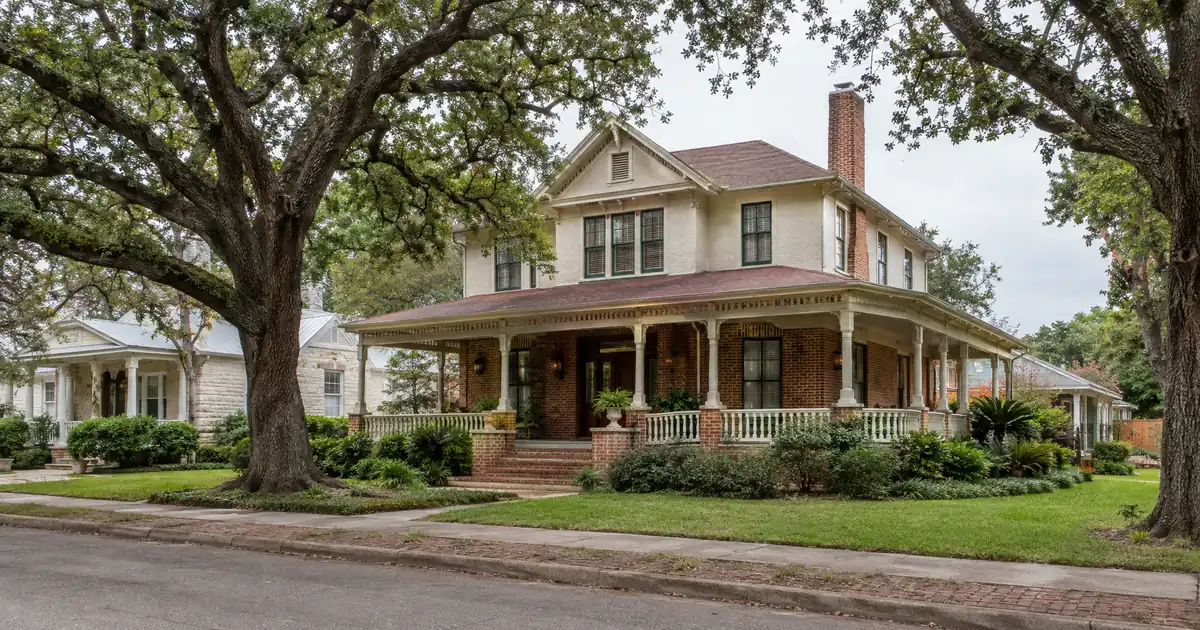
Downtown Pharr is where the arithmetic looks best and the appraisal risk looks worst. NeighborhoodScout puts the median price in the older core at $81,837 against an average rent of $1,004. That is a monthly rent-to-price ratio above 1.2 percent, but the same page flags a 17.1 percent vacancy rate. For an investor already holding a rental there, the cash-out question isn’t whether the rent covers the debt. It’s whether the value is large enough, and the occupancy story clean enough, to pull meaningful capital out.
DSCR Cash-Out Calculator
Run the cash-out numbers in Pharr, TX
Rate source: Freddie Mac 30-yr average via FRED® — Federal Reserve Bank of St. Louis · effective Oct 1, 2026
Prefilled with starting assumptions — enter your property’s value, balance, taxes, and insurance for a more accurate picture.
Program parameters update from Lendmire’s centralized guideline source. Taxes and insurance are editable estimates.
As of Oct 1, 2026 · General Freddie Mac market benchmark, not a Lendmire loan offer. Property value, balance, taxes, and insurance are editable estimates. Maximum loan-to-value varies by lender, program, property type, and seasoning. Not a Loan Estimate, approval, or commitment to lend. Program availability and eligibility are subject to lender guidelines, credit approval, property review, and underwriting.
Key Takeaways:
A DSCR cash-out refinance in Pharr, Texas is underwritten primarily on the property’s rental income measured against its full monthly obligation, so the controlling variable is the gap between local rents and appraised value, which runs from thin on newer single-family to wide in the older core, with sizing capped by a 75 percent loan-to-value ceiling.
- Downtown Pharr shows $81,837 median price and $1,004 average rent, but 17.1 percent vacancy (NeighborhoodScout).
- Citywide single-family rent-to-value sits near 0.54 percent, which leaves coverage thin at full leverage (Foreclosure.com).
- Fourplexes listed near $450,000 spread one loan across four rent streams (LoopNet).
- Home values are down 1.34 percent year over year, so proceeds track in-place rent, not appreciation.
- Pharr Northwest’s mobile-home stock falls outside these programs entirely.
Pharr Market Snapshot
A quick read on the Pharr investor landscape — figures come from the cited sources below. Confirm current property-level numbers before underwriting.
| Metric | Detail |
|---|---|
| Home prices | $81,837 median price (NeighborhoodScout) |
| Typical rents | $1,004 (NeighborhoodScout) |
| University enrollment | 27,431 total (Data USA) |
| Population | 79,809 population (HomeSnacks) |
| Employment | 2,200+ faculty and staff (South Texas College) |
| Vacancy | 17.1% (NeighborhoodScout) |
Downtown Pharr: High Ratio, Higher Scrutiny
Downtown Pharr has the strongest rent-to-price ratio in the available data, but it also has the highest vacancy flag and the smallest absolute equity pool. Coverage is easy to clear there. Proceeds are modest and the underwriting attention is heavy.
The housing is small to medium single-family houses plus apartment complexes, and many were built between 1940 and 1969. Occupancy is a mix of owners and renters. On a modeled basis, a property priced at the neighborhood median and refinanced at 75 percent LTV, with rent set at the $1,004 average and the debt measured on full PITIA, lands at roughly 1.7 coverage including taxes and insurance. That clears the standard 1.00 benchmark with room to spare.
Here’s the catch. Smaller balances narrow the lender field. The standard programs reach up to $3,000,000, while smaller loans route through select lenders in the network, so the pool of lenders is thinner for this kind of file. A 17.1 percent vacancy rate also means a reviewer will want the actual lease, not the neighborhood average. Picture an investor holding a 1950s house near the downtown core with a signed lease at the neighborhood average. That file is a coverage success and a proceeds disappointment. The refinance frees capital, but not a lot of it.
How the Extraction Works, Step by Step
A DSCR cash-out refinance replaces the existing loan with a new one sized to appraised value and rental coverage, and the difference between the new balance and the payoff becomes proceeds. Four gates govern it: seasoning, appraised value, the 75 percent LTV ceiling, and the coverage test.
Step one is seasoning. Programs typically look for about six months of ownership, measured from title recording. An investor who bought a rental recently, even with a heavy rehab, usually has to wait out that window before cashing out.
Step two is the appraisal. The appraiser establishes value and a market-rent opinion. Equity is whatever sits between the appraised value and what the investor owes.
Step three is the leverage cap. Cash-out loans top out at 75 percent of value, which is lower than the purchase cap. Nothing above it is available regardless of how strong the rent is. Whatever the existing lien consumes comes out of that 75 percent first.
Step four is the coverage test. The ratio is monthly rent divided by the full monthly obligation: principal, interest, taxes, insurance and any HOA dues. Most standard programs are built around a 1.00 benchmark because rent covers the payment at that level. Some lenders will review lower ratios, but those files usually bring lower leverage, different pricing or more cash retained. Credit tiers step through 620, 660, 680 and 700, with 620 as the floor, and reserves of about six months of PITIA are typical. Exact eligibility depends on lender guidelines, credit profile and property review. For the mechanics in more depth, see the guide “What Is a DSCR Loan”.
Through Lendmire’s DSCR program footprint — 41 markets, including Washington, D.C. — lenders may review qualifying rental income subject to program guidelines for Pharr, Texas investors. Lendmire (NMLS# 2371349) is a non-QM mortgage broker that places these loans through wholesale investor lenders rather than lending directly. Texas files run through Lendmire’s Texas DSCR platform. Investors comparing structures can review the refi programs and the refi options before choosing a path. Entity-titled properties can be eligible depending on program guidelines.
Three Submarkets, Three Different Answers
The three NeighborhoodScout areas in Pharr produce very different coverage outcomes on the same rent-to-debt logic. The table below uses modeled coverage at 75 percent LTV including taxes and insurance, built from the published price and average rent for each area. These are modeled assumptions, not quoted terms.
| Submarket | Median price | Avg rent | Modeled coverage at 75% LTV |
|---|---|---|---|
| Downtown Pharr | $81,837 | $1,004 | about 1.7 |
| Pharr Northwest | $143,753 | $1,567 | directional only |
| Pharr Southeast | $218,302 | $1,232 | about 0.8 |
Sources: Downtown, Northwest and Southeast NeighborhoodScout pages. These are modeled estimates, not MLS data, and they don’t separate bedroom counts.
Pharr Southeast is the newer, owner-heavy area of single-family homes and small apartment buildings, many built in 2000 or later. It carries the weakest price-to-rent ratio of the three. At full 75 percent leverage the coverage number lands below 1.00. A sub-1.00 program, a lower cash-out percentage or an interest-only structure are the paths a lender might review. None of them is a promise, and each trades away some proceeds. Dropping leverage to roughly the mid-50s percent range brings the modeled number back toward 1.0. In practice, the cash-out here is smaller than the equity on paper suggests.
Pharr Northwest needs a hard stop. The stock is mostly mobile homes and small apartment buildings. Manufactured homes, single- and double-wide, fall outside the network’s DSCR programs, so that portion of the stock is not an eligible collateral pool. The $1,567 average rent also looks too high for this housing type, and it should be read as directional, not as an underwriting rent. Only the small apartment buildings in the area are a conceivable fit, and those deserve their own property-level review.
Why a Fourplex Changes the Coverage Number
A fourplex spreads one loan across four rent streams at a lower per-door basis than most single-family houses, and that structural difference is what lifts the coverage ratio. Pharr is one of the few South Texas markets where that math is visible in listings.
LoopNet shows Pharr four-unit listings asking about $450,000 with a broker-stated 6 percent cap rate, and an 18-unit building asking $2,499,000 at 8.10 percent. These are asking figures from a dated listing snapshot, not closed sales. At roughly $112,500 per door on the four-unit, the basis sits below the citywide median home value of $166,537 from Foreclosure.com, which is an AVM-based figure.
Run the numbers on a modeled fourplex: four 3-bedroom units at the $1,131 average Apartments.com reports for three-bedrooms, giving $4,524 in gross monthly rent. Against a $450,000 value at 75 percent LTV, with debt measured on full PITIA, modeled coverage rounds down to about 1.4. A single house at the citywide $900 median rent and that same $166,537 value comes in near 0.8 at the same leverage. The multi-unit clears the benchmark and the single-family does not.
Much of the Pharr fourplex product is newer, in a gated or townhouse-style format with 2-bedroom and 3-bedroom layouts, and some units are separately metered, per Redfin listings. Similar units give an appraiser cleaner rent and sale comps. Separate meters keep utility costs with tenants.
One underwriting habit matters here. Lenders commonly work from the lower of in-place lease rent and the appraiser’s market-rent opinion. A seller’s stated market rent that runs well ahead of actual leases will not carry the file.
Appreciation Isn’t the Engine Here
Pharr is a cash-flow market, not an appreciation market, and the cash-out should be sized on today’s appraised value and in-place rent. Home values are down 1.34 percent year over year and median rent is flat, per Foreclosure.com. At the metro level, the RGV Business Journal reports a McAllen-area median sale price of $233,000 against $234,000 a year earlier, which is effectively level.
That reshapes the extraction thesis. In a rising market, an investor refinances because the value moved. Here, the value is roughly where it was, so the capital comes from three places: buying low, forcing rent through renovation, or paying down the original loan balance. An owner with heavy seasoning and a light balance has real equity to pull. An owner who bought recently at full price probably doesn’t.
The proceeds become capital for the next deal. The pattern that fits Pharr’s data is redeploying cash from a fully valued Southeast single-family into a low-basis downtown house or a small multifamily where coverage clears without lowering leverage. It’s a trade of equity in a thin-coverage asset for equity in a thick-coverage one. Whether that is the stronger play depends on exit liquidity, since low-basis downtown houses are harder to sell, but for a hold-and-collect investor the coverage gain usually outweighs it.
The Demand Behind the Rents
Pharr’s rental demand rests on a city-owned trade crossing, a large community college and a school district employer, and none of them depends on short-term price momentum. That matters for a refinance because it supports long-lease occupancy under the loan.
The Pharr EDC cites industrial parks, cold storage, temperature-controlled inspection facilities and an entomology lab, with the Pharr-Reynosa International Bridge as the top U.S. crossing for fresh produce. Rio South Texas Region adds that the City of Pharr owns and operates the bridge and that all commercial trucks are diverted to it from the McAllen-Hidalgo crossing. Most Texas cities of this size don’t own a commercial port of entry, which ties logistics, cold-chain and customs-broker jobs directly to the city.
South Texas College has a Pharr presence at its Regional Center for Public Safety, with more than 2,200 faculty and staff across the system, and Data USA shows enrollment of 27,431. Pharr-San Juan-Alamo ISD serves about 29,000 students and is a major local employer. Healthcare adds Rio Grande Regional Hospital and South Texas Health System McAllen.
On rents, the sources disagree. Apartments.com shows $899 on average, Point2Homes $932, HomeSnacks $990 and Texas Ally $1,034 citing the Census. A fair read is roughly $900 to $1,050, depending on source. Two-bedroom units are 50 percent of Pharr rentals and about 41 percent of households rent (9,591 households), per RentCafe, so 2/2 and 3/2 layouts line up with the largest tenant pool.
There is strong pressure as well. The same RentCafe data shows average rent in 50-plus-unit buildings falling from $1,038 to $932, while the McAllen-Pharr metro moved from $983 to $989. Small owners compete with those complexes. Underwrite at the conservative end of the rent range, not the best in-place lease.
DSCR vs. conventional financing
There are two common ways to finance an investment property in Pharr, TX, and they qualify you differently — here’s how investors weigh them.
Why investors choose it
- Qualifies on the property’s rental income — no personal tax returns, W-2s, or pay stubs needed to document income.
- No personal debt-to-income ceiling to clear, so existing mortgages and obligations don’t cap your borrowing the same way.
- Can be closed in an LLC, keeping the property inside a business entity.
- Built for scaling — not held to the limit on number of financed properties that conventional financing applies.
- Underwriting centers on the deal: generally qualifies when the rent covers the payment, a 1.00x coverage ratio being a common baseline (confirmed in underwriting).
- Designed specifically for investment property, including long-term and, where the program allows, short-term rentals.
Where it’s strong
- Often the lowest ongoing financing cost for a buyer who fully qualifies on personal income — a fit for a first property or a cost-first purchase.
Trade-offs for investors
- Requires full personal income documentation and must fit within a debt-to-income limit — salary, existing debts, and other mortgages all count.
- Typically held in your personal name rather than a business entity.
- Caps how many financed properties you can carry, which can become a ceiling as a portfolio grows.
- Evaluates you as a borrower as much as the property, which usually means more paperwork.
How investors usually choose: a first or single property often optimizes for the lowest financing cost; portfolio builders often optimize for leverage, vesting in an LLC, and scaling past conventional caps. The right answer depends on your goals, the property, and current guidelines — both paths run through select lenders in Lendmire’s wholesale network, with eligibility and terms confirmed in underwriting.
Working DSCR brokers see a recurring pattern in border and valley markets like this one: coverage looks comfortable on listing-site rents and then tightens once the appraiser’s market-rent opinion and the actual lease come in lower. The files that move cleanly are the ones where the investor brings the signed lease, a rent comparable and a realistic leverage target before the appraisal is ordered. Files built on an optimistic rent assumption tend to get re-cut late.
Frequently Asked Questions
How do you qualify for a DSCR loan in Pharr?
Qualification centers on the property’s coverage ratio: monthly rent divided by full monthly PITIA, with 1.00 as the common benchmark. Credit (floor 620) and about six months of reserves also matter. Downtown Pharr and fourplex files tend to clear the ratio more easily than newer single-family in Pharr Southeast. Final eligibility depends on lender guidelines, credit profile and property review.
What are the requirements for a cash-out refinance on an investment property in Pharr, Texas?
Expect about six months of ownership measured from title recording, a loan-to-value ceiling of 75 percent and coverage meeting the program’s DSCR floor. Reserves of about six months of PITIA are typical, and the loan can reach $3,000,000 on standard programs. Proceeds depend on appraised value, rent used for lender review, the payoff and reserves, so they are never a guaranteed figure. These specifics are subject to lender guidelines and a full review of property, leverage, and credit.
How does rental income affect DSCR refinance eligibility in Pharr?
Rent used for lender review is the numerator of the coverage ratio, so a lower appraiser rent directly lowers eligibility and proceeds. Lendmire arranges DSCR investor loans, and its programs underwrite primarily on property cash flow instead of personal income documents. Lease rent and market rent are both reviewed, and the lower figure often controls.
Can a mobile home in Pharr Northwest be cash-out refinanced on a DSCR loan?
No. Manufactured homes, single- and double-wide, are outside these DSCR programs. Pharr Northwest’s stock is mostly mobile homes and small apartment buildings, so only the small apartment buildings would be a conceivable fit, and they need their own property-level review.
Does Downtown Pharr’s vacancy rate hurt a refinance?
It can. The 17.1 percent vacancy figure is a neighborhood-level flag, not a verdict on any single property. A reviewer will look at the actual lease and occupancy of the subject. A leased property with a documented rent history reads very differently from the area average.
The Blind Spot: Pharr’s Values and Rents Don’t Agree With Each Other
The single biggest risk for DSCR-financed investors in Pharr is that the market gives no stable anchor for value or rent, so a cash-out sized on a listing-site number can shrink at the appraisal. Median home value ranges from $122,100 (Texas Ally, citing the Census) to $138,152 and $161,414 (HomeSnacks) across sources, and one aggregator shows $217,312. Rents range from $899 to $1,034. Because proceeds depend on 75 percent of appraised value, and coverage depends on appraised rent, the lowest plausible figure on each side, not the average, is the one to plan around. Investors should also verify current local rental rules, taxes and insurance with qualified local professionals. In a flat-price border market, the investor who sizes the refinance on the conservative appraisal, not the optimistic one, is the one who avoids a late re-cut.
For current guidelines and terms, see Lendmire’s DSCR loan programs page.
About Lendmire
A non-QM mortgage broker (NMLS# 2371349), Lendmire arranges DSCR financing for real estate investors in 41 markets, 40 states plus Washington, D.C. Because deals are underwritten primarily on property cash flow rather than personal income documentation, the structure suits self-employed buyers and entity-owned portfolios. Lendmire places loans through wholesale investor lenders and is not a direct lender. It is a 2026 Scotsman Guide Top Workplace and a top-ranked workplace in 2025. Investors weighing this structure against bank financing can reach the team at 828-256-2183.
Get Started
Ready to find the right loan for you?
In about 30 seconds you can review financing options available for your investment property. No commitment required.
Informational only. Not a Loan Estimate, approval, or commitment to lend. Program availability and eligibility are subject to lender guidelines, credit approval, property review, and underwriting.
References
1. NeighborhoodScout, Downtown Pharr
3. LoopNet, McAllen-area multifamily
4. Data USA
5. HomeSnacks
7. Northwest
8. NeighborhoodScout, Pharr Southeast
10. Redfin
13. Rio South Texas Region, Invest in Pharr
14. RentCafe, Pharr
15. 2026 Scotsman Guide Top Workplace
16. Scotsman Guide — Top Workplaces 2025
This article is part of Lendmire’s investment property cash-out refinance program — full qualification details, guidelines, and scenarios live on the program page.
Related reading: Cash Out Refinance Investment Property in Pharr, Texas: 2026 DSCR Guide to the Bridge Corridor · Cash Out Refinance Investment Property in Marble Falls, Texas: Downtown Duplex Equity Math · DSCR Cash Out Refinance in Baytown, Texas: Equity Extraction in a Refinery Town With Soft Rents
Guides: Investment Property Cash-Out Refinance in Pharr, TX · Investment Property Cash-Out Refinance in Texas
Brandon Miller
Founder & CEO, Mortgage Loan Originator, Lendmire LLC
- Mortgage Loan Originator · NMLS# 1129696 · Verify on NMLS Consumer Access
- North Carolina Real Estate Broker · License# 343312 · Verify on NCREC
- North Carolina Insurance Producer · License# 19053198 · Property, Casualty, Life, Health · Verify on NAIC SBS
- Lendmire LLC · Firm NMLS# 2371349 · Verify firm licensure
Required disclosures. Lendmire (NMLS# 2371349) operates as a licensed mortgage broker, not a direct lender or depository. The discussion in this article is general in nature and should not be relied upon as financial, legal, or tax advice — every investment scenario is unique and should be reviewed by a qualified professional. Any loan inquiry is subject to lender underwriting, and this article is not a commitment to lend or a guarantee of approval. Mortgage rates, loan terms, and program guidelines vary by borrower, property, and state, and may change without notice. Equal Housing Opportunity. Verify licensure at NMLS Consumer Access.