
The Quick Read: On a conventional cash-out refinance, your debt-to-income ratio is your total monthly debts divided by your gross monthly income, and the ceiling depends on how the loan is underwritten. An automated finding can go as high as 50%. A manually underwritten file sits at 36% or 45%, depending on credit score and reserves. On a 2-4 unit home you live in, rent from the other units can be added to income, but only a reduced share of it, and the full new payment still counts as a debt.
Key Takeaways
- The cash-out leverage cap on a 2-4 unit primary home is 75%, versus 80% on a one-unit home. For many owners, that cap binds before DTI does.
- Rent from the unit you live in generally does not count. Rent from the other units does, at a haircut.
- The full new payment goes into your debts. Rent is added to income and is not netted against the payment.
- The new, larger loan replaces the old mortgage in the ratio, so taking more cash raises DTI.
- Cash taken out at closing does not count as reserves.
What DTI Means on a Cash-Out Refinance
DTI is all of your monthly debt payments divided by your gross monthly income. The Consumer Financial Protection Bureau describes it as one way lenders gauge whether you can manage the payments on money you plan to borrow. It also notes that limits differ by loan product and by lender.
Two ideas matter here. The “back-end” ratio includes the new housing payment plus every other debt on your credit report. That is the number lenders focus on. The housing payment itself is called PITIA: principal, interest, taxes, insurance, and any association dues.
A cash-out refinance pays off your existing first mortgage and replaces it with a new, larger one. So your old payment drops out of the ratio and the new PITIA goes in. Every dollar of cash you pull out makes that new payment bigger.
If your question is about cash-out refinance programs generally, the rest of this piece covers how the ratio works when the home has two to four units.
Where Do the DTI Limits Come From?
Across the wholesale programs Lendmire places conventional files with, the limit follows the underwriting path. The path is set by the automated finding or by a manual review.
| Underwriting path | Maximum DTI | What else matters |
|---|---|---|
| Automated finding | 50% | Credit, reserves, leverage weighed together |
| Manual, standard | 36% | Score and reserve factors |
| Manual, extended | 45% | Stronger score and reserves |
The automated ceiling is stated in Fannie Mae Selling Guide B3-6-02: a loan run through Desktop Underwriter can go to 50%, and a recalculated ratio above the applicable limit makes the loan ineligible for delivery to Fannie Mae. The manual columns appear in the Fannie Mae Eligibility Matrix. Freddie Mac’s page for 2- to 4-unit properties puts manual underwriting at 45% and says rent from the other units can be added to income. Its automated system works up to its own limit.
Most files land on the automated path, and the automated finding governs. Even so, a lender can set a tighter ceiling than the agency maximum. Some lenders cap DTI at 45% across the board. The wholesale conventional programs generally start at a 620 decision score, though exact eligibility depends on the lender and the full file.
Six months of reserves enter the picture on a cash-out when DTI is above 45%, and a 2-4 unit primary home can trigger a reserve requirement on its own. The lender confirms the exact requirement for your file. Final terms depend on lender guidelines, property type, leverage, and the borrower’s complete credit picture.
Which Rent Counts and Which Doesn’t
This is where 2-4 unit owners get tripped up. Two statements are both true. Rent from the other units counts. Rent from your own unit does not.
Under Fannie Mae’s general rental income rules, rent from the unit you occupy generally can’t be used to qualify. Boarder income and accessory-unit income are named exceptions. Rent from the units you don’t occupy can be used.
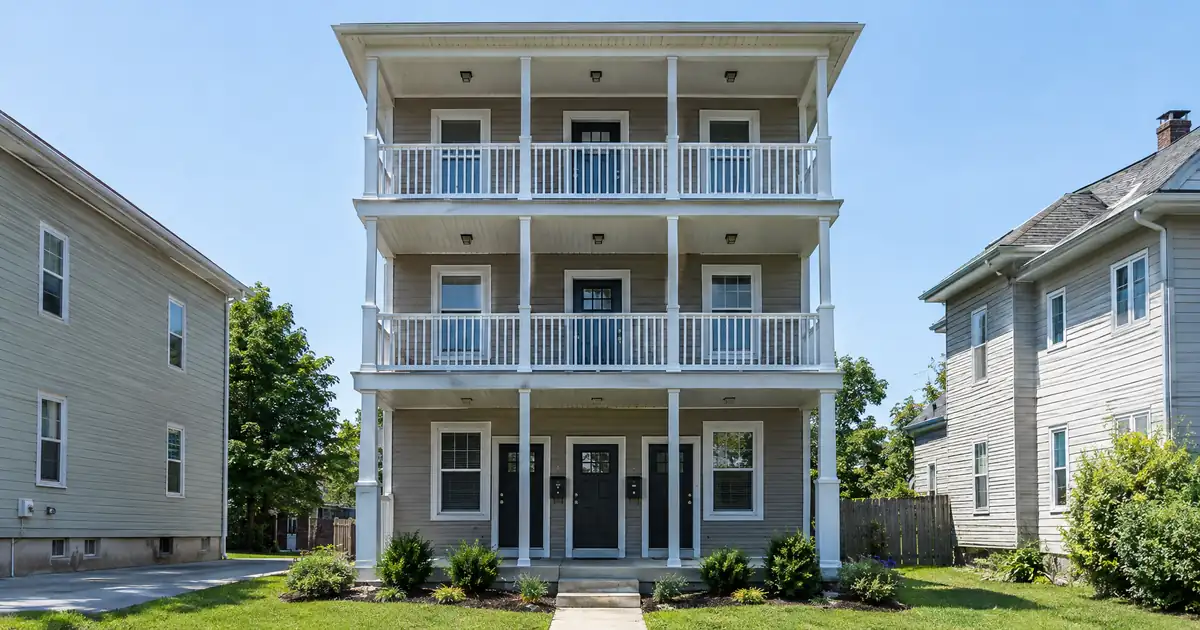
Picture a fourplex where you live in one unit:
| Unit | Occupant | Does the rent count? |
|---|---|---|
| Unit 1 | You | No, generally |
| Unit 2 | Tenant | Yes, at a reduced share |
| Unit 3 | Tenant | Yes, at a reduced share |
| Unit 4 | Vacant | Appraiser’s market rent, reduced, subject to lender review |
So a fourplex has three potentially countable rents, not four. A duplex has one.
How the Rent Is Added: Income, Not an Offset
Many borrowers assume the rent simply cancels the mortgage payment. It doesn’t. Under the agency method, positive qualifying rental income is added to your total monthly income. The full PITIA goes into your monthly obligations. It is not netted against the property’s payment.
The reduced share comes from a vacancy and upkeep haircut. The Fannie Mae Desktop Underwriter job aid on rental income says that for a 2-4 unit principal residence, net rental income is calculated without subtracting the proposed PITIA. In practice, the lender uses 75% of the gross rent. The other 25% is set aside for vacancies, operating costs, and repairs.
Two consequences follow. Strong rent helps your ratio, but it never erases the payment. And a 2-4 unit owner can look tighter on paper than their actual cash flow feels.
One more rule: if you have no property-management experience, or less than 12 months of it, rent used for lender review may only offset the property’s own PITIA. It can’t boost your other income.
What Rent Evidence Does the Lender Use?
The appraisal drives much of this. A 2-4 unit home is appraised on a small residential income property form, and the appraiser gives a market rent opinion for each unit. That rent schedule feeds the income side of your DTI.
Beyond the appraisal, lenders document rent from your tax returns showing rental history or from current leases, depending on how long the property has produced rent. The lender follows the Guide topic for your situation, so ask early which documents apply to you. A vacant unit usually falls back on the appraiser’s market rent, and a lease signed just before the refinance draws closer review.
Short-term or nightly rentals are handled differently, and the standard rent schedule doesn’t fit them. The lender will tell you how it treats that income.
How a Cash-Out Changes Your DTI
Three things move the ratio.
The new payment. A bigger loan means a bigger PITIA. Because that full payment sits in your debts, the more cash you take, the higher DTI climbs.
Payoffs at closing. Paying off a car loan, credit card, or other installment debt at closing can lower DTI. Installment debts with more than ten payments left generally count, and lease payments always count. Clearing one with proceeds removes its payment from the ratio, though it also uses up some of the cash you came for.
The leverage cap. Here’s the part many borrowers miss. A conventional cash-out on a 2-4 unit principal residence tops out at 75% LTV, versus 80% on a one-unit home. A rate-and-term refinance can go as high as 95% on a one-unit primary, so the cash-out cap is far tighter. You need substantial equity before DTI even comes up. These specifics are subject to lender guidelines and a full review of property, leverage, and credit.
Which binds first? On a modest balance with strong rents, the 75% cap usually binds. On a high-balance home with heavy other debts, DTI may bind first. The practical move is to test both. Start with the maximum loan the 75% cap allows, then check whether DTI clears. If it doesn’t, you have three levers: take less cash, pay off debts at closing, or document more rent used for lender review.
A Worked Example, Without Dollar Figures
Consider two owners of the same fourplex. Both live in one unit and rent the other three. Both want the maximum cash-out at 75% LTV. Terms depend on the lender’s guidelines, the property type, the leverage, and a full review of the credit profile.
Owner A has few other debts. Three rents count at 75% and get added to income. The new, larger PITIA goes in as a full debt. The ratio lands comfortably under the automated ceiling.
Owner B carries a car loan, two credit cards, and a personal loan. The same new PITIA plus those payments pushes DTI past 50%. The file fails as structured.
The fixes: Owner B can pay off the personal loan and a card at closing, which removes their payments from the ratio. Or Owner B can take less cash, so the new payment shrinks. Either change can bring the file back under the ceiling. A third option is to confirm that all three rents are fully documented.
If Owner B’s ratio sat between 45% and 50%, the six-month reserve question would also come into play. Cash-out proceeds don’t count toward reserves, because reserves are reduced by cash back on a refinance. That surprises people who plan to use the proceeds as their cushion.
Seasoning and Timing Rules
DTI is only one gate. Under Fannie Mae’s cash-out rules, the existing first mortgage being paid off must be at least 12 months old, measured note date to note date. At least one borrower must have been on title for six months before the new loan is disbursed. A property that was listed for sale must be off the market by the disbursement date.
These rules can block a recent buyer or someone who just refinanced. Named exceptions exist, including delayed financing, inheritance, and legal awards.
What to Bring
Have these ready before you apply:
- Pay stubs, W-2s, or traditional personal-income documentation for your job income
- Current leases and security deposit records for each rented unit
- Tax returns showing rental history, if the property has been rented for a while
- Statements for every debt you plan to pay off or keep
- Your current mortgage statement and homeowners insurance details
- Proof of reserves, if your ratio or unit count calls for them
Where the General Rule Breaks
A few edge cases change the answer:
- Manual versus automated. The same file can face a 45% ceiling manually and 50% on the automated path. Overlays can be tighter than either.
- No landlord experience. Rent may only offset the property’s PITIA, as noted above.
- Boarders and accessory units. Both are named exceptions to the own-unit rule, but the details vary. Ask the lender how they apply to you.
- Ineligible property types. Under the matrix, units in a co-op project and attached units in a condo project aren’t eligible for this treatment.
- Texas homesteads. A cash-out on a Texas homestead is capped by the state constitution, so the available loan-to-value on that kind of refinance can differ from other states.
- Rule changes. Fannie Mae renumbered its rental income topics, so older lender pages can be out of date. Check dates before relying on any outside summary.
When Conventional DTI Is the Wrong Lane
If the ratio won’t work even after you trim cash and pay off debts, a different structure may fit better. A rate-and-term refinance, which allows only incidental cash back, carries far higher leverage and a lighter equity burden. For a home you plan to keep, taking less cash or waiting until debts are lower is often the cleaner fix. Occupancy matters too: leverage on a second home differs from a primary home, so the rules above apply to the home you live in.
Pricing on a cash-out also reflects risk-based adjustments tied to credit score and LTV, per Fannie Mae’s published matrix. Those adjustments are part of the cost of pulling cash out, so weigh them against what the money will do for you. If you want to see what the extra cash can return on this kind of property, Lendmire’s piece How Much a Cash-Out Refinance Returns on a 2-4 Unit Primary Home walks through it. Tax treatment can depend on your situation; borrowers should speak with a qualified tax professional before relying on any deduction or credit.
Key Terms Defined
DTI (debt-to-income ratio): Your total monthly debt payments divided by your gross monthly income.
PITIA: Principal, interest, taxes, insurance, and association dues, the full monthly housing payment.
LTV (loan-to-value): The new loan balance as a share of the home’s appraised value.
Seasoning: The minimum time you must have held the home or the existing loan before a cash-out.
Reserves: Funds left in your accounts after closing, counted in months of payments.
Desktop Underwriter (DU): Fannie Mae’s automated system that weighs credit, reserves, LTV, and DTI together.
Frequently Asked Questions
What is the maximum DTI for a conventional cash-out refinance on a duplex I live in?
Up to 50% on an automated finding, and 36% or 45% on a manual review. Lender overlays can set a lower limit, and the automated finding weighs credit, reserves, and leverage along with DTI.
Does the rent from my own unit count toward my income?
Generally no. Rent from the unit you occupy can’t be used to qualify, with boarder income and accessory-unit income as named exceptions. Rent from the other units can count at a reduced share.
Why does a 2-4 unit cash-out have a lower LTV than a single-family home?
The agency matrix sets 75% for a 2-4 unit principal residence and 80% for a one-unit home. Multi-unit properties carry more risk in the agencies’ view, so the cash-out cap is tighter.
Can I use the cash I take out as my reserves?
No. Reserves are reduced by the cash back you receive on a refinance. If your DTI is above 45%, six months of reserves can apply, and they have to come from other funds.
What if I bought the property recently?
The seasoning rules can block you. The loan being paid off must be at least 12 months old and a borrower must have been on title six months, unless an exception such as delayed financing applies.
If you are weighing a cash-out refinance against keeping the loan you have, Lendmire can help you compare the programs and the equity each one reaches. Details are subject to lender guidelines and a full review of your property, leverage, and credit, and nothing here is a commitment to lend.
For your own numbers, request a scenario review with Lendmire.
About Lendmire
Lendmire, NMLS# 2371349, is a mortgage brokerage with consumer lending licenses in 16 states. FHA, VA, conventional and jumbo purchase and refinance loans are arranged through wholesale lending partners, and each application is reviewed individually by the lender. Scotsman Guide named Lendmire a Top Mortgage Workplace in both 2025 and 2026.
For the program’s current guidelines, see conventional loan programs.
Get Started
Ready to find the right loan for you?
In about 30 seconds you can review financing options available for your home or investment property. No commitment required.
Informational only. Not a Loan Estimate, approval, or commitment to lend. Program availability and eligibility are subject to lender guidelines, credit approval, property review, and underwriting.
References
1. CFPB: What is a debt-to-income ratio?
2. Fannie Mae Selling Guide B3-6-02, Debt-to-Income Ratios
3. Fannie Mae Eligibility Matrix
4. Freddie Mac: 2- to 4-unit properties
5. Fannie Mae Selling Guide B3-3.8-01, General Rental Income
6. Fannie Mae DU Job Aid: Entering Rental Income
7. Fannie Mae Selling Guide B2-1.3-03, Cash-Out Refinance Transactions
This article is part of Lendmire’s Conventional Loans series — every loan program’s qualification details, guidelines, and scenarios live on the loan options page.
Related reading: Conventional Cash-Out Refinance Reserves by Occupancy and Unit Count · Does a 2-4 Unit Primary Home Need PMI on a Cash-Out Refinance? · How to Get a Conventional Cash-Out Refinance on a Texas Second Home
Brandon Miller
Founder & CEO, Mortgage Loan Originator, Lendmire LLC
- Mortgage Loan Originator · NMLS# 1129696 · Verify on NMLS Consumer Access
- North Carolina Real Estate Broker · License# 343312 · Verify on NCREC
- North Carolina Insurance Producer · License# 19053198 · Property, Casualty, Life, Health · Verify on NAIC SBS
- Lendmire LLC · Firm NMLS# 2371349 · Verify firm licensure
Required disclosures. Lendmire (NMLS# 2371349) operates as a licensed mortgage broker, not a direct lender or depository. The discussion in this article is general in nature and should not be relied upon as financial, legal, or tax advice — every investment scenario is unique and should be reviewed by a qualified professional. Any loan inquiry is subject to lender underwriting, and this article is not a commitment to lend or a guarantee of approval. Mortgage rates, loan terms, and program guidelines vary by borrower, property, and state, and may change without notice. Equal Housing Opportunity. Verify licensure at NMLS Consumer Access.