
The Quick Read: On a VA cash-out refinance, there is no hard debt-to-income cap set by VA. The 41% figure is a guideline that triggers a closer look, and residual income is the test that actually decides the file. On a duplex, triplex or fourplex you live in, rent from the other units can help, but only a portion counts and only when certain conditions are met. Lenders may also set stricter limits of their own.
Key Takeaways
- Debt-to-income (DTI) at VA is a guideline, not a ceiling. A ratio above 41% needs residual income well above the table, subject to lender guidelines.
- Residual income, the money left after all obligations, is the controlling test.
- You must live in one of the units. This is a home loan, not an investment loan.
- Rent from the other units counts at 75%, and the lender may require your own reserves and proof you can manage tenants.
- Cash-out proceeds cannot be used to build those reserves.
- Credit floors and tighter DTI caps usually come from the lender, not from VA.
What Is a VA Cash-Out Refinance on a 2-4 Unit Home?
A VA cash-out refinance replaces your current mortgage with a new VA-backed loan that is larger than what you owe, and you receive the difference as cash. You can also use it to move a non-VA loan into the VA program. The loan can reach 100% of the appraised value, including the financed funding fee, subject to lender guidelines and full file review.
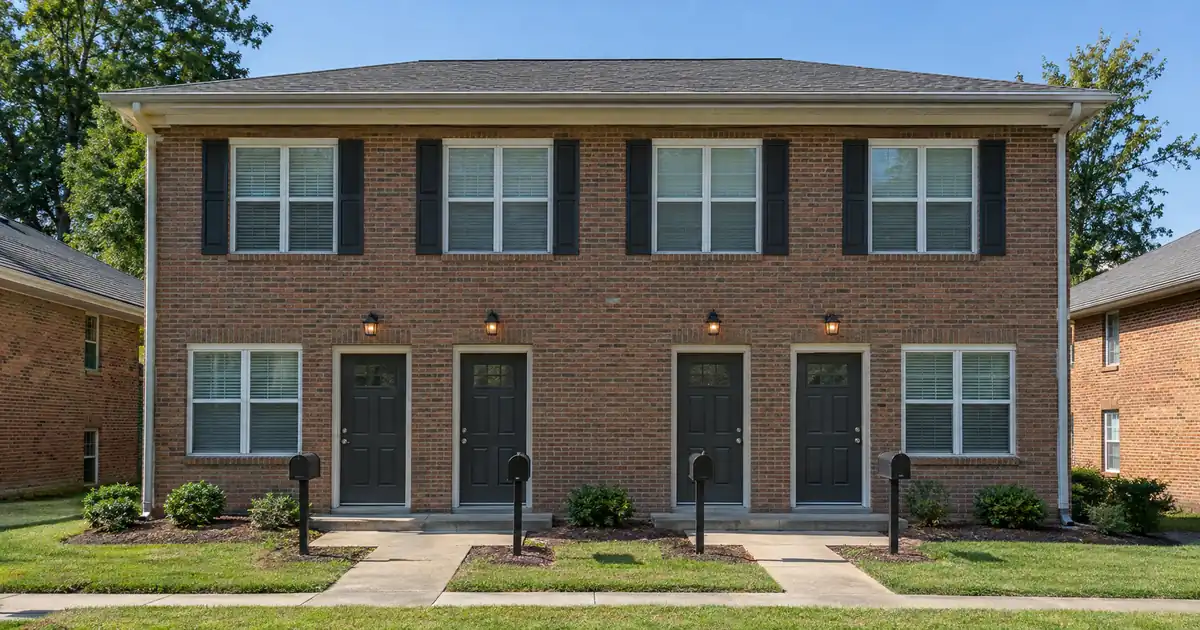
A 2-4 unit home is a duplex, triplex or fourplex. VA allows these, with one condition: you live in one of the units. Picture a fourplex where you occupy one unit and rent out three. That is a primary home with rental income. It is not a rental property you own from a distance.
The details of the VA cash-out refinance program matter here because a multi-unit property changes how the lender counts your income. A single-family file is simple. A fourplex file has a second income stream to document and a bigger payment to carry.
VA itself does not make the loan. Private lenders underwrite and close it, and VA guarantees a portion. Lendmire is a mortgage broker. It arranges VA loans through wholesale lenders and does not lend directly.
Does VA Have a Maximum DTI?
No. VA publishes no hard DTI cap. The 41% figure is a guideline, and a file above it gets closer scrutiny. Across the wholesale programs these files go to, a ratio over 41% is not a denial. It means the lender wants stronger proof elsewhere in the file.
DTI is your total monthly debts divided by your gross monthly income. Gross means before taxes. The debts include the new mortgage payment, car loans, student loans, credit card minimums and similar obligations.
Here is the part most online explainers get wrong. They treat 41% as the VA maximum. It is not. Under VA’s underwriting chapter in the Lenders Handbook, credit standards have three parts: satisfactory credit, stable income, and residual income measured against regional tables. The DTI ratio is a guide that should not automatically trigger approval or rejection.
Two things can still tighten the number in practice:
- Lender overlays. Many lenders add their own DTI cap, and some set a higher credit-score floor than the one they would need under VA rules. VA sets no minimum credit score. The wholesale programs Lendmire places VA loans with start at a 580 decision score, though another lender may set a different floor.
- Compensating factors. Strong reserves, a long job history or low use of credit can support a higher ratio.
Why Residual Income Decides the File
Residual income is the money left each month after your mortgage, debts, estimated taxes, shelter costs and job-related expenses. VA compares that leftover amount to a table. The table varies by region and by family size.
DTI measures a percentage. Residual income measures whether you can actually live on what remains. A household with a large family in a high-cost region needs more left over than a single borrower elsewhere. That is why a file can pass on DTI and still fail on residual income.
It also works the other way. A file above 41% can still work when the leftover income is well above the table. That is the practical meaning of “guideline, not a cap.”
This matters for cash-out because the payment usually rises. The new loan is larger, so the monthly obligation grows, and that lowers your residual income. Before you ask for more cash than you need, run the household budget against the larger payment. Residual income, not the headline DTI, is where cash-out files get tight.
How Does Rent From the Other Units Count?
Rent can help, but only a portion counts, and conditions apply. Under the VA underwriting chapter, prospective rental income counts as effective income only if you show a reasonable likelihood of success as a landlord and hold cash reserves of at least six months of the full housing payment (principal, interest, taxes and insurance, known as PITI).
The main rules, as VA’s underwriting chapter describes them:
- 75% of the rent. For an existing property, the lender counts 75% of the lease or rental agreement, unless a higher percentage can be documented. The other 25% is a cushion for vacancy and upkeep.
- Appraiser’s opinion where needed. On a multi-unit property, the appraiser’s fair-rent opinion supports the rent figure for units without a lease.
- Landlord capability. Prior experience managing rentals, or a property management company, shows you can handle tenants.
- Traditional personal-income documentation. For existing rentals, the lender asks for two years of returns or transcripts with the schedules that show rental income.
Rent affects the ratio in either direction. After the 75% factor, if the rent exceeds the property’s payment, the surplus can be added to your income. If it falls short, the shortfall is added to your monthly obligations. Either way, the DTI changes.
Some lenders skip the rental-income method altogether. In that case the full payment counts as a debt, and the reserve requirement may not apply. That is a lender choice, not a VA rule, so ask which approach your lender uses. Every figure here varies by lender and program — guidelines, property type, leverage, and credit profile all apply.
A Worked Example Without Dollar Amounts
Say you live in one unit of a fourplex and rent the other three. Work through the file in steps.
1. Take the rent on the three rented units and multiply by 75%. That is the counted rent.
2. Compare the counted rent to the full payment on the new loan. If the counted rent is higher, the surplus goes into your income. If it is lower, the shortfall goes into your debts.
3. Add your other monthly debts to the debt side.
4. Divide total monthly debts by gross monthly income. That is your DTI.
5. Separately, subtract all obligations and living costs from income. Compare what remains to the residual-income table for your region and family size.
Now suppose the cash-out raises the loan balance. The payment goes up, so the shortfall grows or the surplus shrinks. Your DTI rises. If part of the cash goes to pay off a car loan or credit cards at closing, those payments leave the debt side, which can offset some of the increase.
A duplex and a fourplex run on the same logic. The difference is scale. A fourplex has more rent to document, a bigger payment and more tenants to manage. Ask your lender whether any extra tests apply to three- and four-unit homes. Practices vary, and the lender’s answer should come before you pay for an appraisal.
Reserves: The Condition That Trips Up Cash-Out Files
If you want rent counted, you need the reserves, and they must be your own money. VA’s underwriting chapter in the knowva copy says equity cannot serve as reserves. Gift funds do not count either. And the cash proceeds from a regular cash-out refinance cannot be counted toward the required six months of PITI.
That last rule catches borrowers off guard. They plan to use the cash from the refinance to show reserves for the same refinance. It does not work that way. The reserves need to be in your account before the new loan closes.
In practice, that means a borrower with plenty of equity but thin savings may not be able to use the rental income method. The file then runs on the full payment as a debt, which pushes DTI higher. Know this before you set a cash-out amount.
Funding Fee, Appraisal and Seasoning
Three other pieces shape the numbers.
The funding fee. On a cash-out refinance, the VA funding fee is 2.15% for first use and 3.3% for later use. It is waived for veterans receiving compensation for a service-connected disability and for the other exempt groups. You can finance the fee, but the total loan, fee included, stays within 100% of the appraised value. A larger fee means less room for cash.
The appraisal. Cash-out requires a VA appraisal. The appraiser sets the reasonable value, and on a multi-unit home the appraiser’s rent opinion feeds the income analysis. VA’s cash-out loan page also warns that refinancing costs can add up to thousands of dollars and urges borrowers to understand how the new loan amount relates to the home’s value.
Seasoning and net tangible benefit. The VA cash-out carries the same seasoning as the other VA refinances: the later of 210 days from the first payment and the sixth payment. It also requires a net tangible benefit. A streamlined refinance (IRRRL) is different. It typically involves a more limited review, subject to lender guidelines, but it is for existing VA loans only and does not give you cash.
Where the General Rule Breaks
A few edge cases change the picture.
- You choose not to count rent. The full payment becomes a debt. Reserves may not be required, but DTI is higher.
- Joint Veterans. If two or more eligible Veterans own the property together, VA’s Chapter 7 allows four family units plus one business unit, plus one more unit for each participating Veteran. Beyond that, the property is ineligible for the guaranty.
- Non-taxable income. Income such as certain disability benefits can be grossed up for the DTI calculation. Residual income uses the actual amount. Ask your lender how it applies this.
- Partial entitlement. If you have used some entitlement, the loan may need different terms. This is a question for a loan officer, not a rule of thumb.
- Using the home as an investment. VA loans are for a primary residence. CFPB’s overview of VA loans confirms that the lender, not VA, underwrites and closes the loan. Moving out of the property is a conversation to have before you refinance, not after.
Program Rules vs. Lender Overlays
This is the question that causes the most confusion. Two lenders can look at the same file and give different answers. The table shows why.
| Item | VA program rule | Lender overlay |
|---|---|---|
| DTI | 41% is a guideline | Many set a stricter cap |
| Credit score | VA sets no minimum | Lenders set floors |
| Residual income | Table by region and family | Rarely lowered |
| Rental income | 75% with conditions | Some skip it |
| Reserves | Six months PITI for rent | May require more |
When a lender says “no” on DTI, ask whether it is VA’s rule or the lender’s. If it is the lender’s, a different lender may see the file differently. That is one reason a broker, who can place a file with more than one wholesale lender, can matter on a multi-unit file.
If Your DTI Is Too High
You have options before you walk away.
- Reduce the cash-out amount. A smaller loan means a smaller payment.
- Pay off debts at closing. Removing a monthly payment helps the ratio.
- Document more rent. Leases and a clean two-year rental history can matter.
- Build your own reserves. Money in your account counts. Cash from the refinance does not.
- Add a co-borrower with income. This is subject to lender guidelines and eligibility.
- Compare lenders. An overlay at one lender may not exist at another.
Another route is a different loan type. Each program treats multi-unit rent differently, and that comparison is worth a conversation with a loan officer.
Key Terms Defined
Debt-to-income ratio (DTI): Your total monthly debt payments divided by your gross monthly income.
Residual income: The money left each month after your mortgage, debts, taxes and living costs, measured against a VA table.
Cash-out refinance: A new mortgage larger than your current balance, with the difference paid to you in cash.
PITI: Principal, interest, taxes and insurance, the four parts of a monthly housing payment.
Reserves: Your own cash savings left after closing, held in an account.
Certificate of Eligibility (COE): The VA document that confirms you qualify for the program.
Net tangible benefit: A clear, measurable gain from the refinance that VA requires.
Documents to Gather
Pull these together before you apply, because a multi-unit file asks for more than a single-family one:
- Certificate of Eligibility
- Current leases for every rented unit
- Two years of traditional personal-income documentation with the rental schedules
- Recent bank statements showing your reserves
- Proof of any property management agreement or landlord history
- Pay stubs, W-2s or other income records
- A list of current debts with balances
Weighing Your Options
If you are weighing a cash-out refinance against keeping the loan you have, Lendmire can help you compare the programs and the equity each one reaches. Program figures are subject to lender guidelines and full file review, and nothing here is a commitment to lend. You can request a quote or call 828-256-2183 to talk through your own numbers.
Frequently Asked Questions
Can I do a VA cash-out refinance on a fourplex?
Yes, if you live in one of the units and the lender approves the file. VA allows 2-4 unit homes as primary residences. A fourplex adds rent to document and a larger payment to carry, so expect the lender to look closely at income, reserves and the appraisal.
Does rental income lower my DTI?
Rental income can lower it. After the 75% factor, a rent surplus over the property’s payment is added to your income. A shortfall is added to your debts instead. So rent can lower the ratio or raise it, depending on how it compares to the new payment.
Do I need landlord experience?
Often, yes, or an equivalent. VA’s underwriting chapter asks for a reasonable likelihood of success as a landlord. Prior experience managing rentals or a property management company can show that. Without it, the lender may not count the rent.
Can I use my cash-out proceeds as reserves?
No. VA says the cash proceeds of a regular cash-out refinance cannot be counted as the required PITI reserves. Equity and gift funds do not count either. The reserves must be your own money, in your account before closing.
What happens if my DTI is above 41%?
The file gets closer review, not an automatic denial. Residual income well above the table, plus compensating factors, can support it. Be aware that the lender may have its own cap below what VA would accept.
For your own numbers, request a scenario review with Lendmire.
About Lendmire
Lendmire is a mortgage brokerage (NMLS# 2371349) licensed for consumer mortgage lending in 16 states, arranging FHA, VA, conventional and jumbo purchase and refinance loans through a wholesale lending network. Eligibility is determined by the lender on each file. Scotsman Guide named Lendmire a Top Mortgage Workplace in both 2025 and 2026.
Get Started
Ready to find the right loan for you?
In about 30 seconds you can review financing options available for your home or investment property. No commitment required.
Informational only. Not a Loan Estimate, approval, or commitment to lend. Program availability and eligibility are subject to lender guidelines, credit approval, property review, and underwriting.
References
1. VA Lenders Handbook, Chapter 4: Credit Underwriting
2. VA Pamphlet 26-7, Chapter 4 (knowva copy)
3. VA cash-out refinance loan page
4. VA Lenders Handbook, Chapter 7
This article is part of Lendmire’s VA Loans series — every loan program’s qualification details, guidelines, and scenarios live on the loan options page.
Related reading: How to Use a VA Cash-Out on an Existing VA Loan for the Next Home · VA Cash-Out Requirements for Debt Consolidation With a High DTI · How to Choose an IRRRL or VA Cash-Out With a High DTI
Brandon Miller
Founder & CEO, Mortgage Loan Originator, Lendmire LLC
- Mortgage Loan Originator · NMLS# 1129696 · Verify on NMLS Consumer Access
- North Carolina Real Estate Broker · License# 343312 · Verify on NCREC
- North Carolina Insurance Producer · License# 19053198 · Property, Casualty, Life, Health · Verify on NAIC SBS
- Lendmire LLC · Firm NMLS# 2371349 · Verify firm licensure
Compliance and disclosures. Lendmire (NMLS# 2371349) is a licensed mortgage broker and is not a direct lender, depository institution, financial advisor, or tax professional. Content in this article is general market analysis and educational information — not financial, legal, or tax advice for any specific situation. Lendmire does not guarantee loan approval; every transaction is subject to underwriting by the funding lender. Mortgage pricing and loan program guidelines are subject to change at any time without notice and vary by borrower characteristics, property type, and state regulations. Lendmire complies with Equal Housing Opportunity. Licensure verification: NMLS Consumer Access.