
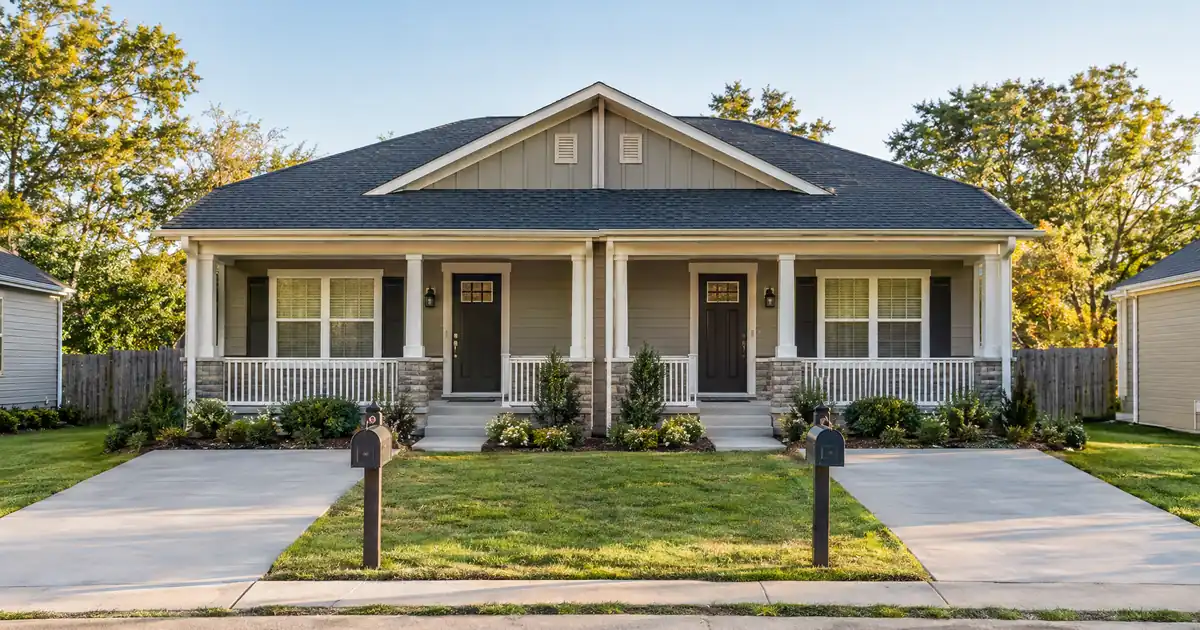
The Quick Read: A jumbo cash-out refinance replaces your current first mortgage with one new, larger loan, and that new loan is what gets sized against the county limit. Your old balance and old rate do not carry over. On a home you live in with two units, expect lower cash-out leverage than a single-family home gets, plus rent documentation for the second unit. Whether the move makes sense depends on how low your first mortgage really is, and in which way.
Key Takeaways
- A cash-out refinance pays off your first mortgage. A second lien, such as a home-equity loan or HELOC, leaves it in place.
- The new loan amount decides whether the loan is jumbo. The home’s value does not.
- A duplex usually gets lower cash-out leverage than a one-unit home, and the lender looks hard at reserves and the appraisal.
- Rent from the unit you do not occupy can help, but only when it is documented.
- If your first mortgage is cheap, the question is not “can I qualify?” It is “what am I giving up?”
Jumbo cash-out estimate
Enter the value, the balance, and the cash wanted; choose the occupancy and the structure; the lanes, the payment, and the reserves follow.
Editable benchmark: 7.40% as of October 15, 2026 · Freddie Mac 30-year average via FRED®. A conventional market reference, not a jumbo cash-out refinance quote.
Illustrative starting assumptions: a $2,000,000 home value in the jumbo range, a $1,000,000 current balance, a principal residence on a thirty-year fixed structure at the current Freddie Mac conforming benchmark, and property taxes and insurance estimated at typical national rates. Every field is editable.
Illustrative estimate only — not a Loan Estimate, approval, quote, or commitment to lend. The rate field carries the weekly Freddie Mac thirty-year conforming benchmark, a market reference and not a jumbo cash-out refinance quote; a jumbo loan is priced by the lender at lock. The lanes shown are the wholesale cash-out lanes behind this page as of the snapshot date; the calculator reads each lane’s leverage, loan maximum by occupancy, cash-in-hand cap, and reserves as the lane table states them, and a Lendmire loan officer confirms the lane on the file. The cash available is the loan the lane allows less the balances paid off, before closing costs, which are not included; on most lanes a jumbo cash-out begins one dollar above the conforming limit for the county, and two lanes start at a stated dollar floor instead. The HELOC line is the line program’s combined loan-to-value ceiling applied to the same value and balance. Taxes and insurance are editable estimates. Licensed in sixteen states for consumer mortgages.
What “Low First Mortgage” Means
People use the phrase two ways. Some mean a small balance, which usually means a lot of equity. Others mean a low interest rate that they do not want to lose. Some mean both.
Either way, the mechanics are the same in a cash-out refinance. The lender pays off the old first mortgage and writes one new loan for the payoff plus your cash. The new loan resets the term and the pricing on the whole balance, not just on the cash you pull out.
That is why a low first mortgage makes this decision different from a standard cash-out. You are not only asking what you can borrow. You are asking what happens to a loan you may want to keep.
The jumbo cash-out lane is built for loans above the county’s conforming limit. Lendmire’s jumbo cash-out refinance program is arranged through wholesale lenders, and each lender sets its own guidelines. A jumbo loan starts one dollar above that county limit, so a small first mortgage plus a large cash request can push the new loan across the line.
How a Jumbo Cash-Out on a Duplex Works, Step by Step
Here is the path from first question to funds.
Step 1: Size the new loan. Add your payoff, the cash you want, and any costs rolled in. That total is the new loan amount. It is compared with the conforming limit for your county and your unit count. Two-unit limits are higher than one-unit limits, so check the FHFA’s published limits for your county before assuming you are in jumbo territory.
Step 2: Check the leverage cap. Cash-out loans sit at lower leverage than purchase loans. On a duplex you live in, expect a lower cap than the same lender would give a single-family home. Agency rules follow the same pattern: the Fannie Mae eligibility matrix shows a lower maximum for cash-out on 2-4 unit homes than on one-unit homes. Jumbo lenders set their own numbers, so treat the agency matrix as a map of the logic, not a promise.
Step 3: Run the credit and ratio checks. Across the wholesale jumbo programs Lendmire places files with, the headline lane starts at a 660 decision score. That is the credit score the lender uses after looking at all your reported scores. Leverage on that lane reaches 90%, and several lanes reach 89.99% combined loan-to-value. Combined loan-to-value, or CLTV, counts every loan against the home, including a second lien. The remaining lanes stop at 80%. Cash-out leverage is lower than those purchase figures, and the exact cap depends on the lane, the amount, and the occupancy.
Step 4: Meet the reserves. Reserves are the savings left after closing, measured in months of the full housing payment. They rise with the loan amount. On a duplex, a lender may look more closely at them, because the building has two units to keep running.
Step 5: Order the appraisal. A duplex needs a full interior appraisal with a rent schedule. Above a lane’s threshold amount, some lanes call for two appraisals. The appraised value sets your leverage, so a low appraisal can shrink your cash.
Step 6: Close and wait out the cancel window. You can cancel a refinance on your primary residence within three business days after closing, per the CFPB. Cash is generally released after that window ends. Waiving it is allowed only for a genuine personal financial emergency.
The Ratio Ceilings by Loan Structure
A ratio here means your total monthly debts divided by your gross monthly income. Jumbo lanes cap it differently depending on how the loan is built.
| Structure | Ratio ceiling |
|---|---|
| Fixed rate | 50% |
| Adjustable rate | 45% |
| Interest-only | 43% |
Each figure is subject to lender guidelines and full file review. The headline loan maximum on the largest lanes is $5,000,000. Many duplex files land well below that, but it tells you the lane has room.
How Lenders Count Duplex Rent
Rent on a duplex works differently from what most borrowers expect. Rent from the unit you occupy generally cannot be used to qualify you. Rent from the other unit can help offset the payment, but only as documented.
Under agency rules, the appraiser uses the Form 1025 small residential income report for a 2-4 unit home. Fannie Mae also publishes a rental income worksheet for these properties. When a lease documents the rent, the agency wants either the appraiser’s market rent schedule or proof the lease is in effect, such as two consecutive months of rent payments. The agency has been restructuring its rental income rules, so confirm current treatment with your loan officer.
Lenders typically count only part of the other unit’s rent, not the full amount. The exact haircut is lender-specific, so Lendmire will not quote one here. An unleased unit is a weaker case than a leased one with a payment history.
Notice what this means for your first mortgage. If it is small, your payment may already look light. A bigger new loan raises your payment, and the documented rent has to help carry it.
Seasoning, Title, and Ownership Rules
Seasoning is the waiting period a lender wants before it will refinance. Jumbo lenders set their own. The agency baseline is a useful map:
- The mortgage being paid off is at least 12 months old, counted note date to note date.
- At least one borrower has been on title for six months before the new loan funds.
- If the home was listed for sale, it must be off the market by the funding date.
Those points come from the Fannie Mae Selling Guide. Your jumbo lender may be stricter or looser. Title matters in another way too. If the duplex sits in a trust or another entity name, tell your loan officer at the start, because the options can narrow.
Cash-Out or a Second Lien?
If the first mortgage is cheap, the honest first move is to compare. A cash-out reprices the whole balance. A second lien leaves your first mortgage alone and adds a separate loan on top.
| Factor | Cash-out refinance | Second lien |
|---|---|---|
| Existing first loan | Paid off and replaced | Stays in place |
| Pricing of new money | Applies to whole balance | Applies to new money only |
| Loan count | One | Two |
| Combined leverage | One cap | CLTV cap still applies |
A rough decision rule. If the first mortgage is cheap and the cash you need is modest, a second lien tends to protect more. If the first mortgage is small and you need cash that a second lien will not reach, a cash-out may be the only path. If your first mortgage is not cheap anymore, the replacement costs you less, and the cash-out wins on simplicity.
One wrinkle: second liens have their own thresholds. The CFPB says a subordinate lien is treated as “higher-priced” at a higher spread than a first lien. That is a pricing test, not a reason to rule it out.
Two Duplex Scenarios, Described in Percentages
The low-balance owner. Picture a duplex bought long ago, with a first mortgage that is a small share of its value. The borrower lives in one unit and rents the other. Equity is plentiful, so leverage is not the limit. The new loan could cross into jumbo territory because the cash request is large. Reserves, the appraisal, and the documented rent decide how much comes out. Here the old loan is small, so giving it up costs little.
The low-rate owner. Now picture a duplex with a first mortgage at a very low rate and a balance around half the value. The owner wants a modest sum. A cash-out would replace a loan worth keeping with a new one priced for today. The new loan might not even be jumbo. This owner should price a second lien first. A jumbo cash-out makes sense only if the second lien cannot reach the amount needed.
These are modeled situations, not quotes. Your numbers decide the answer.
Where the General Rule Breaks
Rules of thumb fail in a few named places.
High-balance versus jumbo. In high-cost counties, a loan above the baseline but under the county ceiling is still conforming. Check the county before you assume jumbo.
Delayed financing. If you bought the duplex with cash, the agency guide allows a cash-out refinance within six months when the source of funds is documented. This is a rare exception to seasoning.
Co-owner buyout. The 12-month first-mortgage age test does not apply when the refinance buys out a co-owner.
Limited cash-out. A refinance that mostly cuts your payment or term and returns only small cash back sits in a different category. If you add a new second lien while refinancing the first, the transaction may still count as limited cash-out, and that choice affects the leverage cap. That is the “keep or restructure” decision for a low first mortgage.
Occupancy. The three-day cancel right applies only to your primary residence. Leverage is lower for second homes and for homes you do not live in, so occupancy decides the cap. A duplex where you do not live is a different conversation.
Texas. Texas homestead cash-out loans follow their own state rules, and the agency guide treats them separately. If you are in Texas, tell your loan officer early.
What Actually Lands in Your Account
Gross equity is not your cash. Start with the new loan amount. Subtract the payoff of the old first mortgage, then the closing costs that are rolled in or paid, then any required holdbacks. Reserves are not subtracted from the loan, but they have to exist in your accounts. What is left is your net.
On a duplex with a low first mortgage, the payoff piece is small, so most of the new loan can reach you. That sounds good. But a larger new loan raises the balance that carries the new pricing, and it raises the reserves the lender wants.
Who Should Skip This
Skip the jumbo cash-out if any of these fit:
- Your first mortgage is cheap, and a second lien covers your need.
- Reserves are thin, because the lender will count months of the full payment.
- Your ratio is near the ceiling for the structure you want.
- The home may appraise low, which would cut leverage and the cash you get.
- The second unit has no lease or rent history, so it cannot help.
Documents to Gather
Start the file with what a duplex needs:
- Current leases and proof of rent payments for the other unit
- Your first mortgage statement and payoff information
- Recent bank and asset statements for reserves
- Proof of income as the lane requires
- Homeowners insurance and any condo or association documents if they apply
Tax treatment can depend on your situation; borrowers should speak with a qualified tax professional before relying on any deduction or credit.
Next Step
If you are weighing a cash-out refinance against keeping the loan you have, Lendmire can help you compare the programs and the equity each one reaches. For more on how tiers and trade-offs line up, read Lendmire’s piece Jumbo Cash-Out Refinance Tiers for a Homeowner With a Low First Mortgage.
Key Terms Defined
Jumbo loan: A mortgage larger than the conforming limit for your county and unit count.
Cash-out refinance: A new mortgage that pays off your old one and gives you the extra equity as cash.
CLTV: Combined loan-to-value, the total of all loans on the home as a percentage of its value.
Seasoning: The waiting period a lender wants before it will refinance a loan or a recent purchase.
Reserves: Savings left after closing, measured in months of your full housing payment.
Second lien: A separate loan, such as a HELOC or home-equity loan, that sits behind your first mortgage.
Frequently Asked Questions
Does a jumbo cash-out on a duplex wipe out my low first mortgage?
Yes. The new loan pays off your first mortgage and replaces it, so the old rate and balance are gone. If you want to keep that loan, a second lien is the usual alternative.
Can I use rent from both units to qualify?
Generally not. Rent from the unit you live in typically cannot help you qualify. Rent from the other unit can help when it is documented with a lease and proof of payment, and lenders usually count only part of it.
Is my duplex jumbo if its value is above the conforming limit?
Not necessarily. The test is the new loan amount against the county and unit-count limit, not the home’s value. A large equity cushion with a small loan can still land in conforming territory.
Do I get the cash right at closing?
No. On a primary residence, you have a three-business-day right to cancel, and funds are generally released after it ends. The right can be waived only for a bona fide personal financial emergency.
How much equity do I have to leave in the home?
It depends on the lane, the loan amount, and occupancy. Cash-out leverage is lower than purchase leverage, and a duplex generally gets a lower cap than a one-unit home. Any figure is subject to lender guidelines and full file review, and nothing here is a commitment to lend.
For your own numbers, request a scenario review with Lendmire.
About Lendmire
Lendmire, NMLS# 2371349, is a mortgage brokerage with consumer lending licenses in 16 states. FHA, VA, conventional and jumbo purchase and refinance loans are arranged through wholesale lending partners, and each application is reviewed individually by the lender. Scotsman Guide named Lendmire a Top Mortgage Workplace in both 2025 and 2026.
For the program’s current guidelines, see jumbo loan programs.
Get Started
Ready to find the right loan for you?
In about 30 seconds you can review financing options available for your home or investment property. No commitment required.
Informational only. Not a Loan Estimate, approval, or commitment to lend. Program availability and eligibility are subject to lender guidelines, credit approval, property review, and underwriting.
References
1. FHFA, conforming loan limit values announcement
2. Fannie Mae eligibility matrix
3. CFPB, can I waive my right to rescind
4. Fannie Mae Selling Guide forms, including Form 1025
5. Fannie Mae Selling Guide, cash-out refinance transactions
This article is part of Lendmire’s Jumbo Loans series — every loan program’s qualification details, guidelines, and scenarios live on the loan options page.
Related reading: Jumbo Cash-Out Reserve Requirements on a Second Home · How to Fix a Low Automated Valuation on a Jumbo Cash-Out · Jumbo Cash-Out Refinance Rules With an Adjustable First Mortgage
Brandon Miller
Founder & CEO, Mortgage Loan Originator, Lendmire LLC
- Mortgage Loan Originator · NMLS# 1129696 · Verify on NMLS Consumer Access
- North Carolina Real Estate Broker · License# 343312 · Verify on NCREC
- North Carolina Insurance Producer · License# 19053198 · Property, Casualty, Life, Health · Verify on NAIC SBS
- Lendmire LLC · Firm NMLS# 2371349 · Verify firm licensure
Disclosures. The information presented in this article is general market commentary, not financial, legal, or tax advice. Lendmire is a mortgage brokerage (NMLS# 2371349) — not a direct lender or depository institution — and loan placement is subject to lender underwriting. Nothing in this content represents a commitment to lend. Loan terms, pricing, and program availability vary based on borrower qualifications, property characteristics, and state of subject property, and are subject to change at any time. Lendmire complies with Equal Housing Opportunity requirements. Consumer access: nmlsconsumeraccess.org.