
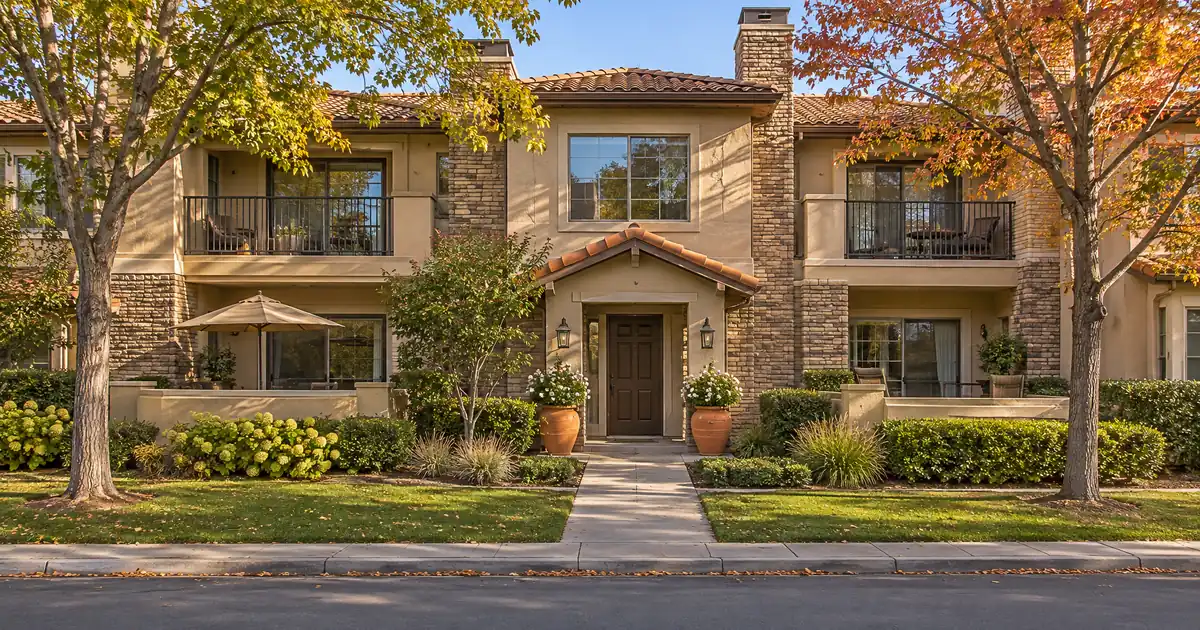
The Quick Read: The ceiling is 100% of the appraised value, with the financed funding fee counted inside it. Your actual cash is what is left after the old loan payoff, the fee, and any costs paid from proceeds. On a condo, one more gate sits in front of all of that: the project has to carry current VA acceptance. If the project is still under review, the cash-out cannot move forward until that review is resolved.
- Ceiling: 100% of the VA-determined value, fee included.
- Cash: value, minus old payoff, minus the funding fee, minus costs taken from proceeds.
- Condo gate: VA approves projects, not individual units.
- Not a promise: every figure is subject to lender guidelines and full file review.
What “Equity Released” Actually Means
Equity is what your home is worth minus what you owe. Cash released is a smaller number. Think of equity as the pie and the cash-out as the slice that survives the costs.
VA cash-out estimate
Seeded with an example value, a typical balance, and a round cash request at the first-use fee; change any field.
Editable benchmark: 7.18% as of November 5, 2026 · Freddie Mac 30-year average via FRED®. A conventional market reference, not a VA cash-out refinance quote.
Illustrative starting assumptions: a $350,000 home value, a $193,000 current balance, the full-value VA cap with the first-use funding fee financed, a thirty-year term at the current Freddie Mac benchmark, and property taxes and insurance estimated at typical national rates. Every field is editable.
Illustrative estimate only — not a Loan Estimate, approval, quote, or commitment to lend. The rate field carries the weekly Freddie Mac thirty-year conventional benchmark, a market reference and not a VA cash-out refinance quote; a VA loan is priced by the lender at lock. The total loan, funding fee included, is capped at the program leverage on the reasonable value; the fee follows the tier chosen. The cash available is what the cap allows less the balances paid off and the fee, before closing costs, which are not included. The HELOC line is the line program’s combined loan-to-value ceiling applied to the same value and balance. Taxes and insurance are editable estimates. The debt-to-income figure is a guideline; residual income decides a VA file. Licensed in sixteen states for consumer mortgages.
Across the wholesale programs Lendmire places VA loans with, the VA cash-out reaches 100% of the appraised value, with the financed fee included. It also refinances any loan type into VA. A conventional, FHA, or USDA loan can move into a VA loan this way, even if you take no cash at all. The basics of how the program fits together are laid out on Lendmire’s page for the VA cash-out refinance program.
The rule behind the ceiling comes from the agency. VA Circular 26-19-05 says VA will no longer guarantee refinancing loans when the loan-to-value ratio exceeds 100 percent. A financed funding fee cannot push the loan above the property’s reasonable value. The same circular defines the ratio as the total loan amount, including any funding fee, divided by the reasonable value the appraiser determines.
Quick plain-English version: the appraiser sets the value, and the value sets the ceiling.
Key Terms Defined
Reasonable value: the value VA assigns through its own appraisal. It sets the ceiling on the new loan.
Loan-to-value (LTV): the new loan, fee included, divided by that value.
Funding fee: a one-time VA fee that can be financed into the loan. It is waived for veterans receiving compensation for a service-connected disability and for the other exempt groups.
Net tangible benefit (NTB): a test showing the refinance actually helps you. A VA cash-out must meet one of VA’s eight listed benefits.
Condo project approval: VA acceptance of the whole condominium project, not your single unit.
Type I and Type II: a Type I refinance keeps the new loan, fee included, at or below the old payoff. A Type II exceeds the old payoff, which is what happens when you take cash.
From Appraised Value to Net Cash, Step by Step
The cash math is plain subtraction, built from VA’s rule rather than from an official VA formula.
| Step | What happens |
|---|---|
| 1. Start | VA-determined reasonable value |
| 2. Apply ceiling | Loan, fee included, cannot pass 100% of that value |
| 3. Subtract | Payoff of the old loan |
| 4. Subtract | Funding fee, if financed |
| 5. Subtract | Closing costs paid from proceeds |
| 6. Result | Cash you receive |
Two things trip people up. First, the funding fee sits inside the ceiling, so financing it shrinks your cash. For a cash-out, the fee is 2.15% on first use and 3.3% on later use, unless you are exempt. Second, the appraisal controls everything. If it comes in low, the ceiling drops and the cash drops with it.
Picture a condo that appraises at the same value you expected. You owe a good chunk on it. The fee gets financed. Costs come out of proceeds. What lands in your account is noticeably smaller than the equity you started with. Plan around that smaller number, not the headline one.
Why Many Lenders Stop Short of 100%
The VA ceiling is not the same as what a given lender will fund. Some lenders and their investors set their own lower cap on cash-outs. A 90% figure often comes up in these conversations, and it is easy to mistake for the program’s rule.
In VA’s own materials, 90% is only one of the net tangible benefit options. The VA AQ42 lender call slides list “maintain LTV equal to or less than 90%” next to other benefits. It is not the program’s cap.
So the program ceiling and the lender’s practical limit can differ. Ask early which one applies to your file. That one question can change your expected cash by a wide margin.
Why the Condo Changes the Answer
Here is the part most guides skip. VA approves condominium projects, not individual units. The VA Buyer’s Guide says that if a condo is not on the list, the project must be submitted to VA for review to confirm it meets VA requirements.
The lender checks the project in the VA Condo Report before preparing the file. An older VA presentation lists the statuses you may see: Accepted Without Conditions, Accepted With Conditions, Pending, Rejected, Suspended, Unknown, and HUD Accepted.
What each status means for your cash
| Project status | Effect on a cash-out |
|---|---|
| Accepted | File can move to appraisal |
| Accepted with conditions | Conditions must be met first |
| Pending or under review | Cash-out waits on the outcome |
| Rejected or suspended | Cash-out is off the table for now |
| Unknown | Needs a lookup or a submission |
“Under review” is the uncomfortable middle. Your equity has not changed. Your access to it has. If the review ends in approval, the math above applies. If it ends in rejection, the cash is simply not available through VA on that unit.
Edge Cases Worth Knowing
No spot approval. Some borrowers hope VA will approve their unit alone, the way FHA sometimes can. VA works at the project level. Plan on the project, not the unit.
FHA-approved is not automatically VA-approved. VA once accepted FHA-approved projects without reviewing their documents. Do not assume that today. Check the Condo Report.
Project problems. Litigation, special assessments, and unpaid association dues are part of project review. VA’s published materials do not give a simple bright-line cutoff for litigation. Speak with a loan officer about what a particular project’s situation does to review.
Refinancing a non-VA loan. The cash-out is the route for moving a conventional, FHA, or USDA loan into VA. The same seasoning and net tangible benefit rules apply. Across the wholesale programs Lendmire places files with, seasoning follows the later of 210 days from the first payment and the sixth payment.
Repairs. A cash-out can include improvements, with value measured as completed. The Buyer’s Guide says VA allows improvements to be included in the value and completed after closing.
Streamline is a different loan. The IRRRL refinances an existing VA loan with no VA appraisal and no cash out. It carries a 0.5% fee unless you are exempt. VA Circular 26-19-22 warns lenders not to confuse cash-out guidance with IRRRL guidance. A streamline cannot hand you cash.
Also keep the rate-reduction and fee-recoupment tests in their lane. Those are IRRRL rules. They do not govern a VA cash-out, though the net tangible benefit test applies to both.
How the Loan Is Underwritten
A VA cash-out is a full review, not a streamline. Here is the sequence.
1. Eligibility. Your certificate of eligibility (COE) comes from VA, and you must occupy the home as your residence.
2. Project check. The lender looks up the condo project before anything else.
3. VA appraisal. The appraiser sets the reasonable value. This is required for cash-outs.
4. Credit and income review. Residual income is the controlling test. That is the money left each month after major obligations and living costs. The 41% debt-to-income figure is a guideline, not a cap. A higher ratio needs residual income well above the table.
5. Net tangible benefit. The file must meet one of VA’s eight listed benefits, and the lender provides the required disclosures.
6. Closing. You receive a Loan Estimate and a Closing Disclosure like any consumer mortgage.
On credit, VA itself sets no minimum score. The wholesale programs Lendmire places VA loans with start at a 580 decision score. Some lenders set a higher floor. These are program guidelines, subject to lender review, not a commitment to lend.
Two more features help the cash picture. A VA loan carries no mortgage insurance of any kind, which is itself a recognized benefit under the net tangible benefit test. And with full entitlement there is no VA loan limit, with the programs serving amounts to $4,000,000. If you have remaining entitlement instead, a down payment may be required. Speak with a loan officer about your own entitlement.
Condo Costs That Eat Into the Net
The appraisal, title work, and lender charges all come out of the same equity. Association dues and special assessments do not reduce your cash directly, but they affect your monthly budget and how the project looks during review. A project with heavy assessments or dues problems may draw more scrutiny.
Timing is the other cost. Project review before an appraisal can add time, and a project that is not yet accepted can hold the whole file. Check the project status before you plan anything that depends on the cash, such as a closing on another purchase or a contractor deposit.
VA Cash-Out vs. the Alternatives
| Option | Cash access | Condo project test | Best for |
|---|---|---|---|
| VA cash-out | Up to 100% of value, fee included | Yes, VA project acceptance | Eligible veterans wanting to replace the loan |
| VA streamline (IRRRL) | None | No VA appraisal | Lowering or fixing an existing VA loan |
| Home equity loan or HELOC | Second lien, separate terms | Set by that lender | Keeping a low-balance first loan |
| Conventional cash-out | Lender’s own cap | Conventional project rules | Those who prefer a non-VA loan |
The choice is not only about how much cash. A VA cash-out replaces your first loan. If your current loan is something you want to keep, a second-lien product may fit better. If you have a non-VA loan and want VA’s structure, the cash-out is the way in, even with zero cash taken.
Common Misconceptions
- “VA cash-out stops at 90%.” The VA ceiling is 100%, fee included. A 90% limit is usually a lender overlay.
- “My condo was approved when I bought.” Status has to be current at the refinance.
- “The appraisal will match my estimate.” VA’s appraisal sets the value used.
- “A streamline can give me cash.” It cannot.
- “They can approve just my unit.” VA reviews the project.
Before You Apply: A Short Checklist
- Get your COE in hand.
- Ask your lender to look up your project in the VA Condo Report first.
- Find out whether your lender caps leverage below the VA ceiling.
- Estimate your payoff, then subtract the funding fee and costs, to see realistic cash.
- Plan for the low-appraisal case, not just the good one.
- If the project is under review, hold off on any spending that depends on the cash.
Who This Isn’t For
If you want a simple rate drop on an existing VA loan, the streamline fits better and needs no cash-out. If your project is rejected, VA cash-out is off the table until that changes. And if you want to keep your current first loan untouched, a second lien is the cleaner tool.
Frequently Asked Questions
How much cash will I actually get from a VA cash-out on a condo?
Less than your equity. The ceiling is 100% of the VA-determined value, fee included, and your old payoff, the funding fee, and costs come out of that. A lender’s own cap may lower it further.
Can I do a VA cash-out if my condo project is under review?
Not until the project has current VA acceptance. The lender checks the VA Condo Report first. If the review ends in rejection, the cash-out is not available on that unit.
Does VA cap cash-outs at 90%?
No. The VA ceiling is 100%. The 90% figure is one net tangible benefit option, and many lenders use it as their own limit.
Do I need a VA loan already to do a VA cash-out?
No. The cash-out refinances any loan type into VA, including conventional, FHA, and USDA loans. You can even use it with no cash taken.
Does the funding fee reduce my cash?
Yes, when you finance it. The fee is 2.15% on first use and 3.3% on later use for a cash-out, and it is waived for exempt veterans. Financed, it counts inside the 100% ceiling.
Next Step
If you are weighing a cash-out refinance against keeping the loan you have, Lendmire can help you compare the programs and the equity each one reaches. Program details are subject to lender guidelines and full file review, and nothing here is a commitment to lend. The honest first move on a condo is simple: confirm the project status before you count on a single dollar of that equity.
For your own numbers, request a scenario review with Lendmire.
About Lendmire
Lendmire, NMLS# 2371349, is a mortgage brokerage with consumer lending licenses in 16 states. FHA, VA, conventional and jumbo purchase and refinance loans are arranged through wholesale lending partners, and each application is reviewed individually by the lender. Scotsman Guide named Lendmire a Top Mortgage Workplace in both 2025 and 2026.
Get Started
Ready to find the right loan for you?
See your offer in seconds. No credit pull, no obligation.
Informational only. Not a Loan Estimate, approval, or commitment to lend. Program availability and eligibility are subject to lender guidelines, credit approval, property review, and underwriting.
References
1. VA Circular 26-19-05 (cash-out refinance)
3. VA Home Loan Guaranty Buyer’s Guide
5. VA Circular 26-19-22 (IRRRL guidance)
This article is part of Lendmire’s VA cash-out refinance program — full qualification details, guidelines, and scenarios live on the program page.
Related reading: VA Cash-Out vs Home Equity Loan for a Veteran Buying Out a Partner · How Lenders Underwrite a VA Cash-Out Refinance With High Equity and Low Income · How to Document Equity for a VA Cash-Out Refinance
Brandon Miller
Founder & CEO, Mortgage Loan Originator, Lendmire LLC
- Mortgage Loan Originator · NMLS# 1129696 · Verify on NMLS Consumer Access
- North Carolina Real Estate Broker · License# 343312 · Verify on NCREC
- North Carolina Insurance Producer · License# 19053198 · Property, Casualty, Life, Health · Verify on NAIC SBS
- Lendmire LLC · Firm NMLS# 2371349 · Verify firm licensure
Important disclosures. Lendmire (NMLS# 2371349) is a licensed mortgage brokerage. Lendmire is not a direct lender, depository institution, or financial advisor. All loan inquiries are subject to lender underwriting; this article does not constitute a commitment to lend. Rates, terms, and program guidelines are subject to change without notice and vary by borrower profile, property type, and state. Information in this article is general in nature and is not financial, legal, or tax advice. Equal Housing Opportunity. NMLS Consumer Access: nmlsconsumeraccess.org.