
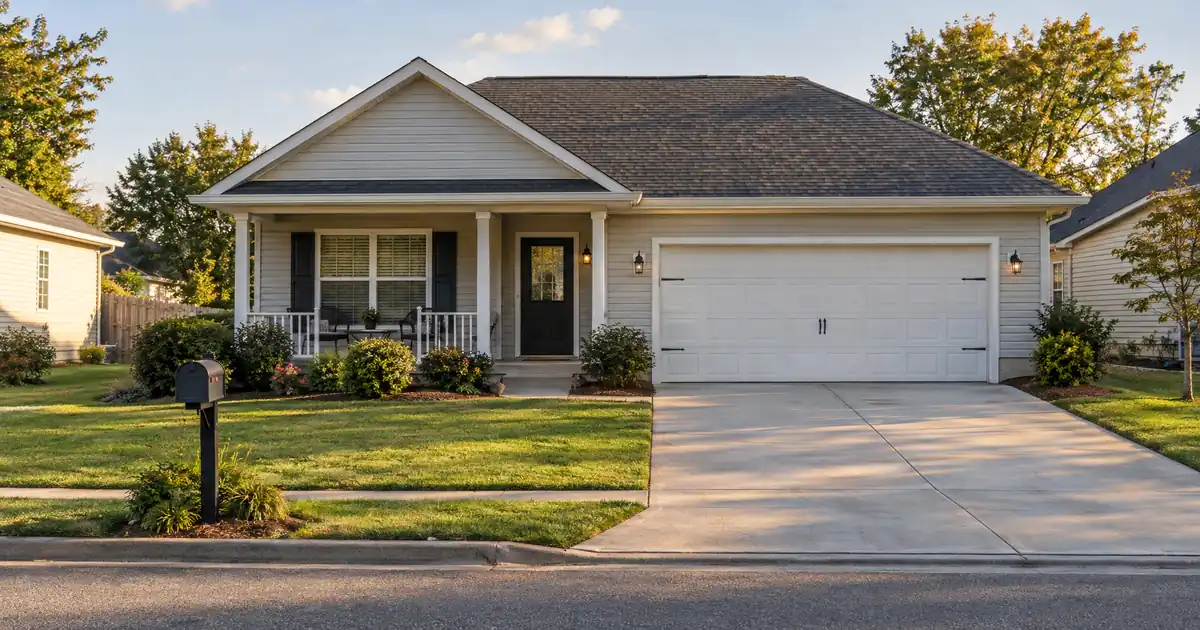
The Quick Read: Published equity numbers describe total equity. Total equity is not what you can borrow. A conventional cash-out refinance replaces your whole first mortgage, so you give up your current loan to reach the equity. On a one-unit home you live in, the borrowable slice tops out at 80% of the appraised value, subject to lender guidelines and full file review.
What Is “Tappable” Equity vs. Total Equity?
Total equity is what your home is worth minus what you owe. Tappable equity is what a lender lets you borrow against after it leaves a cushion.
Cash-out refinance estimate
The starting figures are an example value with a balance and a cash request in proportion. Replace them with yours.
Editable benchmark: 7.40% as of October 15, 2026 · Freddie Mac 30-year average via FRED®. A conventional market reference, not a cash-out refinance quote.
Illustrative starting assumptions: a $350,000 home value, a $193,000 current balance, the agency cap on a one-unit principal residence, a thirty-year term at the current Freddie Mac benchmark, and property taxes and insurance estimated at typical national rates. Every field is editable.
Illustrative estimate only — not a Loan Estimate, approval, quote, or commitment to lend. The rate field carries the weekly Freddie Mac thirty-year conventional benchmark, a market reference and not a cash-out refinance quote; a cash-out loan is priced by the lender at lock. The cash available is the loan the program cap allows less the balances paid off, before closing costs, which are not included. The HELOC line is the program’s combined loan-to-value ceiling applied to the same value and balance. Taxes and insurance are editable estimates. Licensed in sixteen states for consumer mortgages.
The formula is one line:
- Total equity = appraised value − current mortgage balance.
- Tappable equity = (appraised value × maximum LTV) − current mortgage balance.
LTV means loan-to-value: the loan balance as a percentage of the home’s value. On a conventional cash-out refinance of a one-unit principal residence, the cap is 80% LTV. For two- to four-unit principal residences, second homes and investment property, it is 75%. Those caps come from the Fannie Mae Eligibility Matrix, and the programs we place files with follow the same envelope. Each figure is subject to lender guidelines and a complete review of property type, leverage, and credit.
Here is the part headline data skips. If you own with a 60% balance against value, you hold 40% equity. You can borrow up to 80% total, which means the new loan can reach 20 points of value above your current balance. The other 20 points stay in the house.
What Does the National Equity Data Actually Tell You?
It tells you the direction of the market, not your number. Aggregate reports show how much equity homeowners hold and how much they pull out. They cannot tell you what your appraiser will say.
Two pieces of research are useful here. The Federal Housing Finance Agency studied the lock-in effect, which is the reluctance to give up a low-rate mortgage. FHFA Working Paper 24-03 found that each percentage point by which market rates exceed your existing fixed rate cuts the probability of selling by 18.1%. It estimates lock-in prevented 1.72 million transactions over a two-year span.
The second is industry data. ICE, a mortgage data firm, estimates homeowners withdrew $47 billion in equity in a recent first quarter. Second-lien borrowers (home equity loans and lines) took about $25 billion. Another 234,000 homeowners completed cash-out refinances for about $22 billion. Treat these as ICE estimates.
The pattern is plain. Many locked-in homeowners reach equity through a second lien, which leaves the first mortgage alone. Fewer choose a cash-out refinance. That is a sensible reading of the math, and it is also incomplete, as the sections below show.
How do you read headline numbers against your own file? Three adjustments:
1. Swap the average for your appraisal. Automated estimates and appraisals often differ. The appraisal sets the denominator in your LTV.
2. Apply the cap. Published equity is rarely cut to 80% or 75% of value.
3. Subtract what you owe, including any second lien. A second mortgage counts against the same cap.
How Is a Conventional Cash-Out Refinance Underwritten?
Underwriting runs in six steps: classify the loan, check the clocks, review the borrower, appraise the home, price the loan, then close. Each step can change how much you can reach.
Step 1: Classify the loan. A cash-out refinance pays off your existing mortgage with a new first mortgage and puts cash in your hands. Per the Fannie Mae Selling Guide, a new first mortgage on a home with no lien also counts as cash-out. So a paid-off house is still a cash-out loan. A rate-and-term refinance, also called limited cash-out, allows only incidental cash back. That program runs up to 95% LTV on a one-unit principal residence, with mortgage insurance above 80%. Leverage, reserves, and pricing vary by lender and program; the final terms follow the full file review.
Step 2: Check the clocks. Three timers apply.
- The first mortgage being paid off must be at least 12 months old, counted from old note date to new note date.
- At least one borrower must have been on title for six months before the new loan funds.
- A home listed for sale must come off the market on or before funding.
Freddie Mac carries similar ownership and seasoning conditions in its Seller/Servicer Guide. One wholesale lane we use has its own six months of seasoning on top.
Step 3: Underwrite the borrower. The lender runs credit, income, debts and reserves through the agencies’ automated systems. Across the wholesale conventional programs, the floor is a 620 decision score. The automated finding governs most files, with a total debt-to-income ratio ceiling of 50%. Reserves are cash left after closing. Per the Eligibility Matrix, files with a ratio above 45% in Fannie Mae’s system call for six months of reserves.
Step 4: Appraise the home. The appraised value is the base for your LTV. The new loan also has to fit under the conforming loan limit for your county and unit count. Check the FHFA conforming loan limits page for your county; this article does not quote dollar limits.
Step 5: Price the loan. Cash-out loans are generally priced higher than limited cash-out loans. Pricing rises as LTV goes up and as credit scores go down. Your Loan Estimate shows the actual terms.
Step 6: Close, then wait out rescission. On a refinance of the home you live in, you have a federally defined right-of-rescission period after closing during which you can cancel, and funds generally follow the end of that window. Timing varies by file and lender.
What Do the Variations Look Like?
There are three main structures: the standard agency cash-out, a wholesale no-mortgage-insurance lane, and the rate-and-term alternative. Pick by how much cash you need and what you can leave behind.
| Structure | Max LTV | Mortgage insurance | Best for |
|---|---|---|---|
| Standard cash-out (1 unit, primary) | 80% | None at or below 80% | Most cash-out borrowers |
| Cash-out (2–4 unit, second home, investment) | 75% | None at or below 75% | Multi-unit or non-primary homes |
| Wholesale lane | 89.99% | — | Higher leverage, 680 score, 50% ratio |
| Rate-and-term (limited cash-out) | 95% | Above 80% | Payoff, not cash |
The wholesale lane reaches 89.99% LTV with no mortgage insurance. It requires a 680 score and a 50% ratio ceiling on a thirty-year fixed loan, a primary residence and a conforming balance. It has its own six months of seasoning. Texas is the exception: a homestead cash-out there is capped by the state constitution at the agency figure, and the wholesale lane is not written there. Terms vary by lender guidelines, property type, leverage, credit profile, and full file review.
Mortgage insurance matters for any loan above 80% LTV. You may ask to cancel it at 80% of the original value with good payment history, no second liens and no drop in value. The servicer must end it at 78%. Exact terms depend on the lender’s guidelines, property type, leverage, and a full review of the borrower’s file.
Where Does the General Rule Break?
The 80% cap and the clocks have named exceptions. Know them before you assume you are locked out or locked in.
Delayed financing. Bought a home with cash? You can recover that cash without waiting six months, if the original purchase was arm’s-length and the settlement statement shows no mortgage financing was used. The buyer may have been a person, an eligible revocable or land trust, or an LLC or partnership the borrower owns outright. Any remaining payments on the original loan count in your ratio. Delayed financing does not waive the appraisal, credit review, LTV limits or cash-out pricing. Freddie Mac has its own conditions.
Inheritance and divorce. The Guide’s ownership rules carve out acquiring a home by inheritance or legal award.
Co-owner buyout. Buying out a co-owner can qualify as limited cash-out if the property was jointly owned at least 12 months. The 12-month note-age test does not apply.
Free-and-clear homes. Still cash-out, as covered above.
Ineligible cases. Some transactions do not qualify: paying off an installment land contract, a loan with a temporary interest-rate buydown, and a PACE-loan borrower who has the equity to pay it off but chooses not to. Check the current Guide first, since some of these rules sit in older versions of the text.
Student loans. Standard cash-out LTV limits apply when proceeds pay student debt.
Rescission. The three-day cancel right is generally tied to a refinance of your principal residence. It does not cover a purchase loan. A waiver is allowed only for a bona fide personal financial emergency, with your own written statement.
Why Does Lock-In Change the Decision?
Because a first-lien cash-out gives up your whole existing loan, not only the part you borrow. Your low rate applies to every dollar you owe today. A new loan resets all of it.
Say you hold a low fixed rate on a balance that is a modest share of your home’s value. A second lien leaves that first loan untouched. A cash-out refinance swaps it for a larger loan at today’s terms. That is the lock-in cost. You can measure it on your own Loan Estimate by comparing your current payment to the new one.
The test has three parts:
1. Cash needed. A small amount favors a second lien. A large sum raises the question.
2. Gap between your rate and today’s. A wider gap raises the cost of giving up the first mortgage.
3. Years left on your current loan. A loan that is nearly paid off holds less balance to reprice.
This is a genuine judgment call. A second lien usually wins for a modest sum, though cash-out can come out ahead for the cases below.
When Does Cash-Out Still Win for a Lock-In Homeowner?
When you need more than a second lien can supply, or when consolidating liens simplifies the whole structure. The lock-in logic fades in these cases:
- You have a first and a second lien. Merging both into one new first mortgage can replace two payments with one. Paying off a purchase-money second lien also fits the rate-and-term structure.
- Your existing rate isn’t low. Lock-in is about the gap. No gap, no cost.
- You need a large sum. Second liens are limited by the combined LTV cap.
- You want a fixed term for the whole balance. Some second liens carry variable payments.
- A big project, a buyout or debt payoff makes the numbers work. Those are all reasons to take cash out, but price them against the costs below first.
The tradeoff is real. Run the cost test before you commit.
How Do the Options Compare?
Three products reach equity, and each treats your first mortgage differently. A HELOC and a home equity loan are separate second-lien products, not agency first-lien cash-out loans.
| Factor | Cash-out refinance | HELOC | Home equity loan |
|---|---|---|---|
| Your first mortgage | Replaced | Kept | Kept |
| Disbursement | Lump sum at closing | Revolving line | Lump sum |
| Loan type | New first lien | Second lien | Second lien |
| Closing costs | Itemized on Loan Estimate | Varies | Varies |
| Fit | Large need, lien merge | Ongoing needs | One-time need |
CFPB research on cash-out refinances notes that closing costs can include origination fees, appraisal fees, title insurance and other taxes and fees. The same paper says paying closing costs is a frequent use of cash-out funds, which is why net cash is smaller than gross equity. The CFPB’s Loan Estimate guide explains how those costs are itemized. Compare the full terms on your Loan Estimate, not one number.
For more on the choice itself, Lendmire’s piece Should a Lock-In Homeowner Ever Choose a Conventional Cash-Out Refinance? walks through it from the borrower’s side. If you are shopping programs, Lendmire’s cash-out refinance programs page lays out what the wholesale network offers.
What Is the Decision Flow in Practice?
Work it as a sequence of checks. Each answer either clears the way, points to an exception, or points to a different product.
1. Have you owned the home at least six months, and is your first mortgage at least 12 months old? If not, check delayed financing or another exception. 2. Is the home your primary residence? That sets the 80% cap and the rescission right. 3. Does tappable equity cover your cash need? Use the formula above. 4. Is the cash need large, or are there two liens to merge? If yes, a cash-out refinance is a live option. 5. Is the cash need modest and your rate low? A second lien deserves a hard look. 6. Does the new loan fit the conforming limit? If not, the jumbo lanes apply.
Tax treatment can depend on your situation; borrowers should speak with a qualified tax professional before relying on any deduction or credit.
What Does the Process Look Like?
It runs from value check to closing in a fixed order. Here is what to expect.
1. Estimate value and tappable equity with the formula.
2. Choose a program and apply.
3. Receive your Loan Estimate and compare terms.
4. Order the appraisal, which sets your LTV.
5. File review covers credit, income, ratio and reserves.
6. Close, sign the new note, and the old mortgage is paid off.
7. Pass the three-business-day rescission window, then funds disburse.
Across the wholesale programs we place files with, the most common surprise is the appraisal. The appraised value sets the cash you can reach, and an automated estimate is only a starting guess. Files also stall when a borrower forgets a second lien that counts against the cap.
Key Terms Defined
LTV (loan-to-value): the loan balance as a percentage of the home’s appraised value.
Seasoning: the waiting period an agency wants between events, such as owning a home or holding a loan.
Lock-in effect: the reluctance to sell or refinance when you hold a mortgage below today’s market.
Second lien: a loan secured by your home that sits behind your first mortgage, such as a HELOC.
Rescission: your right to cancel a refinance of your principal residence within three business days.
Reserves: cash or liquid assets left after closing.
Frequently Asked Questions
How soon after buying can I do a cash-out refinance?
Usually after six months on title, and only if the first mortgage you are paying off is at least 12 months old. If you bought with cash, delayed financing is an exception to the title wait. Inheritance and legal awards also carry exceptions.
Is a paid-off home still treated as cash-out?
Yes. A new first mortgage on a home with no lien counts as cash-out. That means the cash-out LTV caps and pricing apply, even though no existing loan is being paid off.
How much equity do I have to leave in the house?
On a one-unit primary residence, 20% of the appraised value under the standard cap. For two- to four-unit homes, second homes and investment property, it is 25%. A wholesale lane reaches 89.99% LTV for borrowers who meet its score, ratio and seasoning rules, subject to lender guidelines.
Does a HELOC keep my low rate?
Yes, because it sits behind your first mortgage and leaves that loan untouched. It is a separate product with its own terms, so compare it to a cash-out refinance using your own numbers.
Can I cancel a cash-out refinance after closing?
For a refinance of your principal residence, you have three business days to cancel. Purchases are not covered. A waiver is allowed only for a bona fide personal financial emergency.
If you are weighing a cash-out refinance against keeping the loan you have, Lendmire can help you compare the programs and the equity each one reaches. Figures here are subject to lender guidelines and full file review, and nothing here is a commitment to lend.
For your own numbers, request a scenario review with Lendmire.
About Lendmire
Lendmire (NMLS# 2371349) is a mortgage brokerage serving homeowners and home buyers in 16 states. FHA, VA, conventional and jumbo purchase and refinance loans are arranged through wholesale lending channels; Lendmire brokers the financing and the lender underwrites each application. Scotsman Guide named Lendmire a Top Mortgage Workplace in both 2025 and 2026.
For the program’s current guidelines, see conventional loan programs.
Get Started
Ready to find the right loan for you?
In about 30 seconds you can review financing options available for your home or investment property. No commitment required.
Informational only. Not a Loan Estimate, approval, or commitment to lend. Program availability and eligibility are subject to lender guidelines, credit approval, property review, and underwriting.
References
1. Fannie Mae Eligibility Matrix
3. Fannie Mae Selling Guide B2-1.3-03
4. Freddie Mac Seller/Servicer Guide §4301.5
5. CFPB research on cash-out refinances and non-mortgage debt paydown
6. CFPB Loan Estimate Explainer
This article is part of Lendmire’s cash-out refinance program — full qualification details, guidelines, and scenarios live on the program page.
Related reading: Conventional Cash-Out Rules After a Listing for a Lock-in Homeowner · How Much Equity a Conventional Lender Requires for a Cash-Out Refinance · Can a Homeowner Start a Business With a Conventional Cash-Out Refinance?
Brandon Miller
Founder & CEO, Mortgage Loan Originator, Lendmire LLC
- Mortgage Loan Originator · NMLS# 1129696 · Verify on NMLS Consumer Access
- North Carolina Real Estate Broker · License# 343312 · Verify on NCREC
- North Carolina Insurance Producer · License# 19053198 · Property, Casualty, Life, Health · Verify on NAIC SBS
- Lendmire LLC · Firm NMLS# 2371349 · Verify firm licensure
Important disclosures. Lendmire (NMLS# 2371349) is a licensed mortgage brokerage. Lendmire is not a direct lender, depository institution, or financial advisor. All loan inquiries are subject to lender underwriting; this article does not constitute a commitment to lend. Rates, terms, and program guidelines are subject to change without notice and vary by borrower profile, property type, and state. Information in this article is general in nature and is not financial, legal, or tax advice. Equal Housing Opportunity. NMLS Consumer Access: nmlsconsumeraccess.org.