
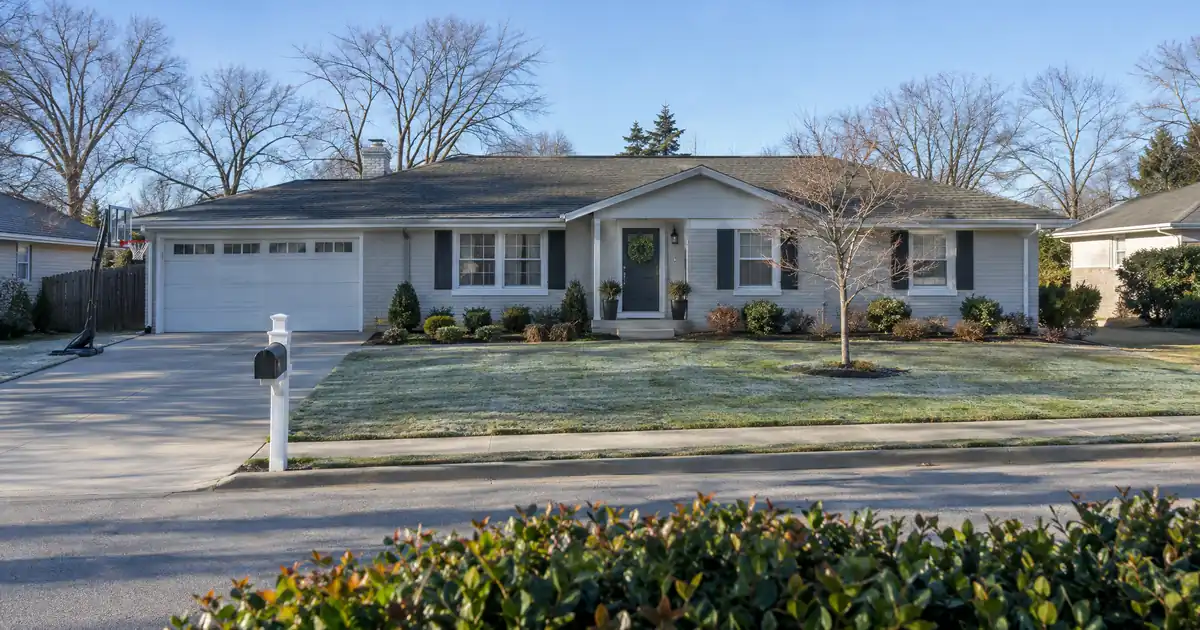
The Quick Read: HomeReady does not allow a true cash-out refinance, only a limited one that pays off your current loan and costs. On that loan, Fannie Mae counts the qualifying income of every borrower who signs the note and compares it to a cap of 80% of area median income for the home’s location. Want real cash out? You leave HomeReady and use standard cash-out rules, which have no income cap.
Key Takeaways
- HomeReady covers purchases and limited cash-out refinances on a principal residence. A cash-out refinance for real cash is a different loan.
- The income test looks at people on the note, not everyone in your household.
- Cash from the refinance is never income. It adds to your debt, not your earnings.
- The cap is 80% of area median income, and it applies in every location.
- If you earn above the cap, you can still refinance. You just use standard conventional rules.
What Does “HomeReady Cash-Out” Actually Mean?
The phrase mixes two loans. A limited cash-out refinance (also called rate-and-term) replaces your existing first mortgage and rolls in closing costs. You walk away with only small, incidental cash. A true cash-out refinance lets you borrow against equity and keep the difference.
Cash-out refinance estimate
The starting figures are an example value with a balance and a cash request in proportion. Replace them with yours.
Editable benchmark: 7.32% as of October 22, 2026 · Freddie Mac 30-year average via FRED®. A conventional market reference, not a cash-out refinance quote.
Illustrative starting assumptions: a $350,000 home value, a $193,000 current balance, the agency cap on a one-unit principal residence, a thirty-year term at the current Freddie Mac benchmark, and property taxes and insurance estimated at typical national rates. Every field is editable.
Illustrative estimate only — not a Loan Estimate, approval, quote, or commitment to lend. The rate field carries the weekly Freddie Mac thirty-year conventional benchmark, a market reference and not a cash-out refinance quote; a cash-out loan is priced by the lender at lock. The cash available is the loan the program cap allows less the balances paid off, before closing costs, which are not included. The HELOC line is the program’s combined loan-to-value ceiling applied to the same value and balance. Taxes and insurance are editable estimates. Licensed in sixteen states for consumer mortgages.
HomeReady is Fannie Mae’s low-down-payment program for moderate-income households. Fannie Mae’s Selling Guide defines it as a purchase or limited cash-out refinance on a one- to four-unit principal residence. Nothing in that definition covers true cash-out.
So when someone searches “HomeReady cash-out refinance,” two questions hide inside it. How does Fannie Mae count income on the limited refinance? And what changes if you want real equity in hand? This article answers both.
On leverage, I see the same pattern across the wholesale programs we place files with. A limited cash-out refinance on a one-unit primary home reaches 95% loan-to-value (LTV, the loan as a share of the home’s value). It reaches 97% when the existing loan is agency-owned and the first-time-buyer program allows it. Mortgage insurance applies above 80%. For true cash-out, the figure drops to 80% on a one-unit home. You can read more about cash-out refinance programs on Lendmire’s site, and the mechanics of the smaller loan are covered in Lendmire’s piece Limited Cash-Out Refinance for Fannie Mae Loans: What It Allows. All figures are subject to lender guidelines and full file review.
Key Terms Defined
Area median income (AMI): The middle household income for the area where the home sits. HomeReady caps your qualifying income at 80% of it.
Qualifying income: The income a lender uses to decide whether you can repay the loan.
Note signer: Anyone who signs the loan’s promissory note and is legally responsible for repaying it.
Boarder: A person who rents a room in your home and is not on the loan or the title.
Limited cash-out refinance: A refinance that pays off your first mortgage and costs, with only incidental cash back.
Desktop Underwriter (DU): Fannie Mae’s automated system that reviews a file and checks the income against the AMI cap.
DTI (debt-to-income ratio): Your monthly debts divided by your monthly gross income.
Whose Income Counts, and Against What?
Only income from borrowers who sign the note counts, and only to the extent the lender uses it to qualify you. That rule comes straight from the Fannie Mae Selling Guide section on HomeReady eligibility.
Your lender uses the same method it reports to Fannie Mae as “monthly income.” That total is then compared to the AMI for the property’s location.
Three details trip people up:
- The property’s location sets the number. Where you work or where you used to live does not matter.
- Lenders must use Fannie Mae’s AMI figures. Those are the ones inside DU or on Fannie Mae’s website. Figures posted elsewhere, including on federal housing sites, are not acceptable for this test.
- The cap applies everywhere. Many online articles still say low-income census tracts waive the limit, but that is no longer the case. The cap is 80% of AMI, including in those tracts, according to Fannie Mae’s HomeReady product matrix.
Here is how common income types sort out on a HomeReady refinance:
| Income or item | Counts toward the cap? | Notes |
|---|---|---|
| Wages of a note signer | Yes | If used to qualify |
| Self-employment of a note signer | Yes | Documented the usual way |
| Boarder rent | Yes, if used | Capped share, history required |
| Household member off the note | Generally no | Confirm with your loan officer |
| Cash-out proceeds | No | Not income |
| Income left out of qualifying | No | Excluded as a whole type |
One more point. A lender can leave out a whole type of income that isn’t needed. It can’t shave one type down partway to fit under the cap. Your loan officer can walk you through which income the file actually needs.
How the Income Test Runs, Step by Step
Here is the sequence on a typical limited cash-out refinance of a primary home.
Step 1: Confirm the loan type. The new loan must pay off the existing first mortgage and costs, with only incidental cash back. Fannie Mae recently changed the cap on that cash. The current formula is in Fannie Mae’s Selling Guide Announcement SEL-2025-08, and it replaced an older, different formula. Rely on the formula in that announcement, because older articles may still quote the earlier cap on cash back.
Step 2: Check who owns your current loan. When leverage runs above 95%, the existing loan generally must be owned by Fannie Mae. The Fannie Mae Eligibility Matrix repeats that condition for limited cash-out refinances. DU can flag it, and the lender can also check servicing records or Fannie Mae’s Loan Lookup tool. If you’re unsure, ask your loan officer to run the lookup before you apply.
Step 3: Build qualifying income. The lender documents the income needed to repay the loan. That one figure feeds both the approval decision and the AMI comparison.
Step 4: Run DU. The system compares your total qualifying income to the AMI for the home’s location. Even on a loan not submitted as HomeReady, DU can send a message when your income looks low enough to qualify.
Step 5: Appraise. The appraisal sets the value, and the value sets your LTV and the largest loan the file supports. The conventional floor on most wholesale programs is a 620 decision score, and the automated finding governs most files. The total debt ratio ceiling is 50%.
Step 6: Price the insurance. Above 80% LTV you carry mortgage insurance. HomeReady’s insurance requirements are lighter than standard coverage on higher-leverage loans. It can be cancelled at your request at 80% of the original value, with a good payment history. The servicer must end it automatically at 78%.
Boarder Income and Other Flexible Sources
Boarder rent is the most distinctive income tool HomeReady offers, and it has strict conditions. Selling Guide section B5-6-02 sets them for one-unit homes:
- The boarder cannot be on the loan or hold any ownership interest.
- The boarder must have lived with you for about a year, shown through documents such as a driver’s license, a bill, or a bank statement.
- You must document the rent payments over that same period. When income is averaged over twelve months, a small allowance for missed months applies.
- Rent paid directly to a third party doesn’t qualify.
- Boarder rent can fill only a capped share of your total qualifying income.
Think of it this way: boarder income is not a shortcut. If your roommate moved in last month, that rent does not count yet.
The same section covers non-occupant co-borrowers and rental income from the subject property. Ask your loan officer to walk you through the exact wording that applies to your home, because the details differ by unit count.
When You Want Real Cash: Leaving HomeReady
Real cash means standard conventional cash-out. Here is how the two loans compare for a one-unit primary home:
| Feature | HomeReady limited cash-out | Standard cash-out |
|---|---|---|
| Cash back | Incidental only | Yes, from equity |
| Income cap | 80% of AMI | None |
| Maximum LTV | 95%, or 97% if Fannie Mae owns your loan | 80% |
| Existing loan age | No special rule here | At least 12 months |
| Time on title | No special rule here | 6 months |
Standard cash-out reaches only 75% on two- to four-unit primary homes, second homes, and investment property. Occupancy decides the leverage, and HomeReady itself is only for a principal residence.
Selling Guide section B2-1.3-03 adds more conditions. At least one borrower must have been on title for six months before disbursement, with a few listed exceptions. On files with a high debt ratio, extra cash reserves can be required. We cover the timing rules in detail in Lendmire’s piece on the seasoning period for a Fannie Mae cash-out refinance.
The tradeoff is real. You lose the income-cap restriction and HomeReady’s lighter mortgage insurance, and you give up 15 points of leverage. Some borrowers also see a wholesale lane that reaches 89.99% LTV with no mortgage insurance. It needs a 680 score and a 50% ratio on a thirty-year fixed primary residence with a conforming balance, plus its own six months of seasoning. It is not written in Texas on a homestead, where the state constitution caps cash-out. Every figure here varies by lender and program — guidelines, property type, leverage, and credit profile all apply.
Where the General Rule Breaks
The “80% of AMI on note signers” rule covers most files. These edge cases are where it stops working cleanly.
You earn above the cap. HomeReady is off the table. You don’t lose access to conventional financing. Fannie Mae’s standard product has no income limit, per Fannie Mae’s HomeReady comparison sheet.
Fannie Mae does not own your current loan. The 95%-plus tier depends on Fannie Mae owning the existing mortgage. If it doesn’t, ask your loan officer what applies. Guessing here wastes an application.
You own the home free and clear. A new first mortgage on a home with no existing mortgage generally counts as cash-out, not limited cash-out. Confirm this with your lender before assuming a limited refinance works.
A household member isn’t on the note. Their income generally doesn’t help the cap test. Adding them to the loan makes their income count, and also makes their debts count. Run both versions before deciding.
The home is manufactured housing. It has its own product matrix, and single-width homes face limits on cash-out. Ask early.
Second home or investment property. HomeReady is for principal residences only. Occupancy decides the leverage, and the figures above show how the caps drop.
Income changes mid-file. A new job, a dropped boarder, or a raise can shift the qualifying total. Tell your loan officer right away, because the file is reviewed against what’s true at closing.
What the Decision Looks Like in Practice
Picture two homeowners with the same house and the same income, both under the AMI cap. One wants to drop mortgage insurance on a high-leverage loan and fold in closing costs. The other wants a lump sum for a roof and a kitchen.
The first fits HomeReady’s limited cash-out. The loan pays off the old mortgage, the costs ride in the balance, and the cash-back rules stay satisfied. The second needs standard cash-out at 80% LTV. If the roof money pushes the balance past that, the file fails on leverage, not on income. Final terms depend on lender guidelines, property type, leverage, and the borrower’s complete credit picture.
The questions that decide it:
1. How much cash do you actually need? Incidental amounts fit HomeReady. Anything meaningful needs standard cash-out.
2. Does your income sit under the cap? If not, the question is already answered.
3. Is your current loan Fannie Mae-owned? That decides whether the highest-leverage tier is open.
4. How long have you held the loan and title? Standard cash-out needs twelve months on the loan and six on title.
5. Will you keep the mortgage insurance long enough for it to matter? It cancels at 80% by request and ends at 78%.
None of this is a promise of approval. Every file is reviewed against lender guidelines, and eligibility turns on your credit, the property, and the documents.
If you are weighing a cash-out refinance against keeping the loan you have, Lendmire can help you compare the programs and the equity each one reaches.
Frequently Asked Questions
Can I use HomeReady for a cash-out refinance?
Not for true cash-out. HomeReady allows purchases and limited cash-out refinances only. If you want meaningful cash from your equity, the standard conventional cash-out program is the path, and it has no income limit.
Does the cash I take out count as income?
No. Cash from a refinance is borrowed money, not earnings. It raises your loan balance and can change your debt ratios. It never helps you meet or stay under the income cap.
Does my spouse’s or partner’s income count if they’re not on the loan?
Generally no. Fannie Mae counts income from borrowers who sign the note, and only as used to qualify. Adding someone to the note brings in both their income and their debts, so compare the file both ways.
What if my income is over the 80% AMI limit?
You can’t use HomeReady, but you can still refinance with standard conventional rules. Those rules have no income cap. They carry their own leverage limits, including 80% LTV on a one-unit primary home for cash-out. These specifics are subject to lender guidelines and a full review of property, leverage, and credit.
Where do I find the AMI for my home?
Your lender uses the figure built into Desktop Underwriter, or the one Fannie Mae publishes on its website. Other published versions are not acceptable for this test. Your loan officer can confirm the number for your property’s location.
For your own numbers, request a scenario review with Lendmire.
About Lendmire
Lendmire, NMLS# 2371349, is a mortgage brokerage with consumer lending licenses in 16 states. FHA, VA, conventional and jumbo purchase and refinance loans are arranged through wholesale lending partners, and each application is reviewed individually by the lender. Scotsman Guide named Lendmire a Top Mortgage Workplace in both 2025 and 2026.
For the program’s current guidelines, see conventional loan programs.
Get Started
Ready to find the right loan for you?
In about two minutes you can review financing options available for your home or investment property. No commitment required.
Informational only. Not a Loan Estimate, approval, or commitment to lend. Program availability and eligibility are subject to lender guidelines, credit approval, property review, and underwriting.
References
1. Fannie Mae Selling Guide B5-6-01: HomeReady Mortgage Loan and Borrower Eligibility
2. Fannie Mae’s HomeReady product matrix
3. Fannie Mae Selling Guide Announcement SEL-2025-08
4. Fannie Mae Eligibility Matrix
5. Fannie Mae Selling Guide B5-6-02: HomeReady Underwriting Methods and Requirements
6. Fannie Mae Selling Guide B2-1.3-03: Cash-Out Refinance Transactions
7. Fannie Mae’s HomeReady comparison sheet
This article is part of Lendmire’s cash-out refinance program — full qualification details, guidelines, and scenarios live on the program page.
Related reading: How Fannie Mae Counts Months of Ownership on a Cash-Out Refinance · Does a Fannie Mae No Cash Out Refinance Allow Any Cash Back? · Does Fannie Mae Allow a Cash-Out Refinance on a Primary Home?
Brandon Miller
Founder & CEO, Mortgage Loan Originator, Lendmire LLC
- Mortgage Loan Originator · NMLS# 1129696 · Verify on NMLS Consumer Access
- North Carolina Real Estate Broker · License# 343312 · Verify on NCREC
- North Carolina Insurance Producer · License# 19053198 · Property, Casualty, Life, Health · Verify on NAIC SBS
- Lendmire LLC · Firm NMLS# 2371349 · Verify firm licensure
Required disclosures. Lendmire (NMLS# 2371349) operates as a licensed mortgage broker, not a direct lender or depository. The discussion in this article is general in nature and should not be relied upon as financial, legal, or tax advice — every investment scenario is unique and should be reviewed by a qualified professional. Any loan inquiry is subject to lender underwriting, and this article is not a commitment to lend or a guarantee of approval. Mortgage rates, loan terms, and program guidelines vary by borrower, property, and state, and may change without notice. Equal Housing Opportunity. Verify licensure at NMLS Consumer Access.