
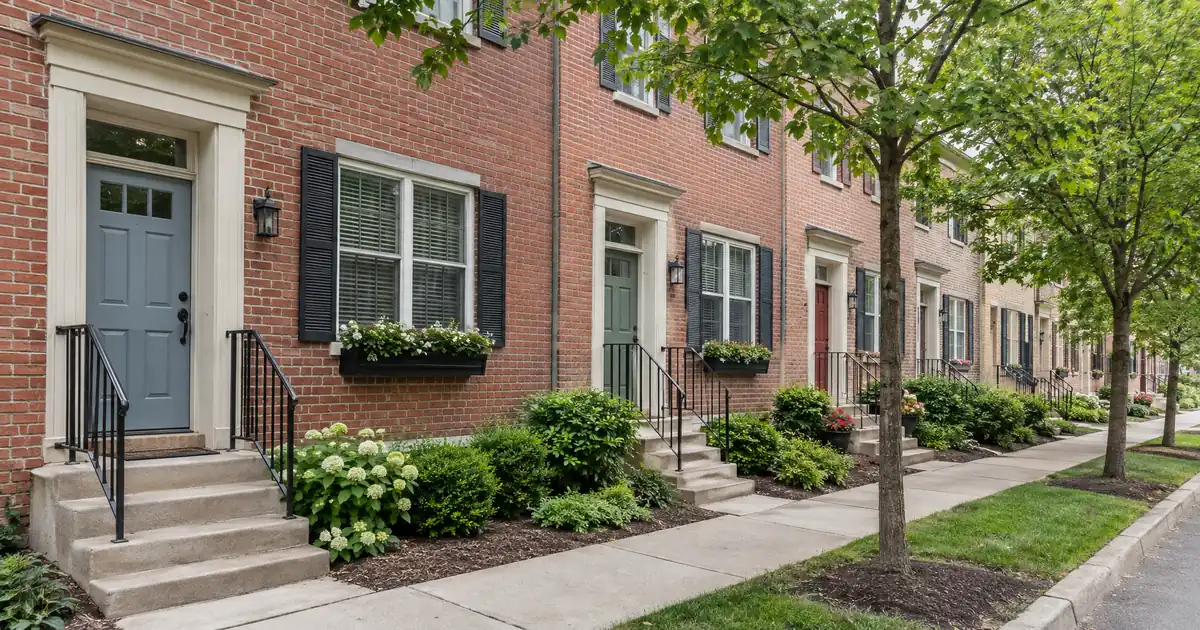
The Quick Read: Usually yes, if you live in a two- to four-unit home. The lender can add part of the rent from the other units to your income, though not all of it and not without paperwork. The named exception is a rent-bearing accessory dwelling unit (ADU) on a one-unit home, whose rent cannot be used on an FHA cash-out. The rent adds to your income. It does not shrink your payment.
The Short Version by Property Type
Where you live decides most of the answer. A duplex, triplex, or fourplex that you occupy can have subject-property rent counted as income. A one-unit home with a rented ADU cannot use that ADU rent on a cash-out. The table below sorts the common setups.
| Your setup | Can its rent count? | Main evidence |
|---|---|---|
| Duplex you live in | Yes, other unit’s rent | Appraisal rent or traditional personal-income documentation |
| Triplex or fourplex you live in | Yes, plus a self-sufficiency check | Appraisal rent or traditional personal-income documentation |
| One-unit home with rented ADU | No, not on a cash-out | Not applicable |
| Commercial space in the building | No | Not applicable |
| Room rented inside your own unit | Different rules (boarder) | Lender confirms |
A word on certainty. The rule that permits two- to four-unit rent is in writing, and so is the ADU exclusion. Anyone who says “FHA cash-out never allows rental income” is overstating it. Individual lenders can add their own requirements on top, so the lender confirms how it treats your file at application.
Why a Cash-Out Feels Different From a Purchase
A cash-out is a full refinance, not a tune-up. You replace your current FHA loan with a bigger one and take the difference in cash. Across the wholesale programs Lendmire places files with, the FHA cash-out reaches 80% loan-to-value (LTV, the loan as a share of the home’s appraised value). That is true on a home you have owned and occupied for 12 months before the case number is assigned.
Most online explanations of FHA rent income are written for people buying a multi-unit home. They talk about projected rent from tenants who have not moved in yet. Your situation is different. You have lived there, probably collected rent, and maybe filed it on a tax return. That history is evidence, and it changes which documentation path the lender uses.
Two other differences matter:
- The new payment is larger. Taking cash out raises the balance, so the payment you must qualify for grows.
- Value drives the cash. The 80% cap means the appraisal, not the rent, limits how much equity you can pull.
If you want the program basics before the rent details, Lendmire’s FHA cash-out refinance program page covers who it fits and how the equity is measured.
How Rent Gets Counted, Step by Step
The lender picks one of two paths, based on whether you have rental history. Both come from HUD’s Mortgagee Letter 2023-17, the agency notice that lays out how rental income from the subject property is treated. HUD means the Department of Housing and Urban Development, which sets FHA’s rules.
Path one: no rental history since your last tax filing. Maybe you just converted a unit, or a unit sat vacant. Then the lender needs an appraisal that shows fair market rent. On a two- to four-unit home, the appraiser uses a small residential income property report. If you have a signed lease, the lender can use it too. The lender counts a discounted share of the lesser of the appraiser’s market rent or the lease rent. The discount covers vacancy and upkeep. A lease alone does not do the job.
Path two: you have rental history. The lender looks at your traditional personal-income documentation, specifically Schedule E, the form that reports rental income and expenses. It averages the rental figure shown there. The lender may add back certain items, such as depreciation, mortgage interest, taxes, insurance, and association dues. It also collects the last two years of returns with Schedule E.
Path two has a catch. Heavy deductions on Schedule E shrink the income the lender can count, even when your tenants paid every month. Some deductions are added back, but not all.
Either way, the same rules shape how the rent enters your file:
1. Only the other units count. The rent is added to your income as net rental income. Your own unit’s rent does not exist as income, because you are living in it.
2. Rent is never subtracted from the payment. The full new mortgage payment stays in your debt ratios. The rent only helps on the income side.
3. No commercial income. If the building has a storefront, that rent does not count.
4. The appraisal anchors everything. A cash-out needs a full appraisal anyway, so the same visit also supports the rent evidence.
Here is the part borrowers misread most. “Counting rent” does not mean the rent pays the mortgage on paper. It means the lender treats a discounted slice of it as income when it measures your total debts against your total income.
Ratios, Credit, and the Rest of the File
Rent helps your income, but you still have to qualify as a person. Across the FHA programs Lendmire works with, the base debt ratios are 31/43. That means housing costs at 31% of income and total debts at 43%, with no compensating factors. Documented compensating factors, such as strong reserves or a clean payment history, can stretch the pair as high as 40/50 at the top tier. An automated underwriting finding governs most files.
Counted rent raises the income side of that math. That can be the difference between a new, larger payment fitting inside the ratios and falling just outside them. It does not erase the debt side.
On credit, the wholesale programs Lendmire places FHA loans with start at a 580 decision score. Some lenders set a higher floor, and your payment history on the existing loan is part of the review. Everything here is subject to lender guidelines and a full file review, and none of it is a commitment to lend.
The Self-Sufficiency Test (Three- and Four-Unit Homes)
Three- and four-unit homes face an extra test that duplexes skip. HUD’s glossary defines “Net Self-Sufficiency Rental Income” as subject-property rent over and above the full housing payment. That is the principal, interest, taxes, and insurance, plus any mortgage insurance and association dues. HUD’s archived reference guide on rental income explains the idea. The net rent from all units, including the unit you live in, must at least cover the mortgage payment.
Two cautions. First, that archive page is historical background, not current rule. Second, the vacancy factor used in the test can change, so this article does not state one. Your lender runs the current version.
Why this matters on a cash-out: the test uses the payment on the new loan. A bigger loan means a bigger payment to cover. Picture a fourplex that passed comfortably when you bought it. Take cash out, and the new payment grows while the rent stays put. The cushion shrinks, and a property that passed before can fall short.
Three- and four-unit homes also carry a reserve requirement. Per HUD’s letter, the lender must verify and document cash reserves, meaning savings left over after closing, to cover several months of the housing payment. Duplexes do not carry that requirement. The exact numbers vary by lender and program and follow a full review of property, leverage, and credit.
The duplex is the friendliest FHA cash-out setup for rent, because it skips both the self-sufficiency test and the reserves. The fourplex gives you more rent, but also more hoops. For some borrowers the extra rent buys real room in the ratios. For others the extra requirements cancel out the benefit. It depends on how thin your margin is.
What the Lender Will Ask For
Expect a unit-by-unit paper trail. Lenders write this down differently, but a typical request list looks like this:
- Current leases for each rented unit, signed by both sides.
- Two years of traditional income documentation with Schedule E, if you have reported rent.
- An income property appraisal, showing market rent for each unit.
- Proof of occupancy, since the home must be your principal residence. HUD’s glossary defines that as the place you typically occupy for most of the calendar year, and a person has only one.
- Reserve statements if the building has three or four units.
- Payment history on your existing mortgage.
Messy rent records can turn a workable file into a decline. Cash deposits that don’t match leases, or units rented informally with no paper, give the lender nothing to count.
Accessory Units, Boarders, and Other Odd Cases
An ADU on a one-unit home is the one case where the rent is off the table. The same HUD letter allows ADU rent on a purchase or a rate-and-term refinance under a separate documentation path, but excludes it on a cash-out. If your property is a single-family home with a rented garage apartment, the rent will not help your cash-out income. You would qualify on your other income only.
Boarders are not the same as renting another unit. HUD’s glossary defines a boarder as someone renting space inside your own dwelling unit. That differs from a separate unit with its own entrance and kitchen.
Other real estate you own is a different question. Rent from a separate rental property follows other rules, including tax-return averaging. That is not the “other units in my home” situation this article covers.
A streamline pays no cash. The FHA Streamline refinances an existing FHA loan with no appraisal, a limited credit review, and a net tangible benefit, meaning the new loan has to leave you measurably better off. Because it hands you no cash, rent documentation is not the main issue there. Confirm that with your lender.
When the Rent Doesn’t Count or the Test Fails
You have options, and each trades one thing for another. If rent can’t be counted, your ratios are tight, or a three- or four-unit property misses the self-sufficiency test, here is how the paths compare.
| Option | What it gives you | The tradeoff |
|---|---|---|
| Streamline refinance | Keeps FHA, no appraisal | No cash out |
| Rate-and-term refinance | Reaches 97.75% on a principal residence | No cash out; occupied the prior 12 months |
| Conventional cash-out | Different income and leverage rules | Different qualification standards |
| Smaller cash-out amount | Smaller new payment | Less cash than you wanted |
| Wait and document | Builds a clean rent history | Delays your plan |
Conventional loans handle subject-property rent differently. Fannie Mae’s Selling Guide section on subject-property rental income allows rent on two- to four-unit principal residences but keeps the full payment in the debt ratio. Those rules are revised from time to time, so treat them as a contrast, not a promise.
If you want to weigh the two paths side by side, Lendmire’s article Should a Current FHA Borrower Use FHA Cash-Out or Conventional? walks through the tradeoffs. Another piece explains how rent from other units can help you qualify for an FHA cash-out in more depth.
A Borrower Scenario
Say you own a fourplex, live in one unit, and rent the other three. You have owned and occupied it for well over 12 months, and you want to refinance your existing FHA loan and pull cash for repairs.
The lender orders an appraisal on an income property report. It shows market rent for each unit and sets the value. The 80% cap applies to that value. You have two years of returns with Schedule E, so the lender averages your rental figure, adds back the allowed items, and counts the result as income for the other three units. Your own unit’s rent counts for nothing.
Then come the checks. Your total debts, including the full new payment, are measured against total income. The self-sufficiency test asks whether the net rent from all four units covers the new payment. The lender verifies reserves, because it is a four-unit property.
If you pass all of it, rent has done its job. If the new payment pushes the ratio over the line, you might take less cash. Or you might look at a different program. The rent never “pays” the loan on paper. It adds income, and the full payment stays in the ratios.
Five Common Misconceptions
Most of the confusion comes from mixing up purchase rules, cash-out rules, and ADU rules.
- “FHA cash-out can’t use any rent.” Wrong as stated. The documented exclusion is for ADU rent. Rent from two- to four-unit homes is eligible income.
- “All the rent counts.” Not so. Lenders count a discounted portion on the no-history path, and tax-return averaging cuts into the figure on the history path.
- “Rent offsets my payment.” That’s inaccurate. Rent is added to income, not subtracted from the payment.
- “A lease is enough.” Wrong. The no-history path needs an appraisal showing market rent, and the history path needs conventional personal-income paperwork.
- “FHA cash-out goes to 85%.” Outdated. HUD’s Mortgagee Letter 2019-11 cut the cash-out cap to 80% of value, and the programs Lendmire places files with use 80%.
Don’t forget mortgage insurance. An FHA loan carries an upfront premium of 1.75% of the base loan, which is financed into the balance. It also carries an annual premium that depends on term, loan amount, and LTV. On a thirty-year loan above 90% LTV, the annual premium lasts for the loan term. At or below 90% LTV, it ends after eleven years. These are program mechanics, not prices, and the mortgage insurance feeds into the payment that your income has to support. Final terms depend on the lender’s guidelines, the property type, and the borrower’s complete credit picture.
Tax treatment can depend on your situation; borrowers should speak with a qualified tax professional before relying on any deduction or credit.
Key Terms Defined
Effective income: The income a lender actually counts toward your qualifying ratios, after any discount or adjustment.
Self-sufficiency test: A check on three- and four-unit homes that asks whether net rent covers the full housing payment.
Schedule E: The tax form that reports rental income and expenses, which lenders use to average your rent history.
Accessory dwelling unit (ADU): A smaller, separate living space on a one-unit property, such as a garage apartment.
Principal residence: The home you live in for most of the calendar year. You can have only one.
Loan-to-value (LTV): The loan amount as a percentage of the home’s appraised value.
Frequently Asked Questions
Does the rent from the unit I live in count?
No. Your own unit’s rent does not count as income, because you are the one occupying it. On three- and four-unit homes, that unit’s market rent does enter the self-sufficiency check, which looks at net rent from all units against the payment.
Is every dollar of rent counted as income?
No. On the no-history path, the lender counts a discounted share of the lesser of market rent or the lease rent. On the history path, the lender averages Schedule E figures and adds back only certain items. Either way, expect counted income to land below the rent you actually collect.
Do I need an appraisal to count the rent?
Yes, in practice. An FHA cash-out is a full-appraisal transaction, and a two- to four-unit home is appraised on an income property report that shows market rent. On the no-history path, that appraisal is the evidence for your rent. It also sets the home value that the 80% cap is measured against.
Can taking cash out make a property fail the self-sufficiency test?
It can. The test uses the new payment, and the new loan is larger. If rent stays the same while the payment grows, the cushion shrinks. Three- and four-unit owners should ask the lender to run the test before choosing a cash-out amount.
What if my lender says no but I think the rules allow it?
Lenders may layer their own requirements on top of FHA’s baseline, and those vary. A different lender may reach a different answer on the same file. A broker can compare how several wholesale lenders treat multi-unit rent on a cash-out. Eligibility remains subject to lender guidelines and full file review.
Next Step
If you are weighing a cash-out refinance against keeping the loan you have, Lendmire can help you compare the programs and the equity each one reaches. Bring your leases, your latest returns, and your questions, and talk it through with a loan officer.
For your own numbers, request a scenario review with Lendmire.
About Lendmire
Lendmire (NMLS# 2371349) is a mortgage brokerage serving homeowners and home buyers in 16 states. FHA, VA, conventional and jumbo purchase and refinance loans are arranged through wholesale lending channels; Lendmire brokers the financing and the lender underwrites each application. Scotsman Guide named Lendmire a Top Mortgage Workplace in both 2025 and 2026.
Get Started
Ready to find the right loan for you?
In about 30 seconds you can review financing options available for your home or investment property. No commitment required.
Informational only. Not a Loan Estimate, approval, or commitment to lend. Program availability and eligibility are subject to lender guidelines, credit approval, property review, and underwriting.
References
1. HUD Mortgagee Letter 2023-17
2. HUD Archives HOC Reference Guide, Rental Income
3. Fannie Mae Selling Guide, Rental Income on the Subject Property
4. HUD Mortgagee Letter 2019-11
This article is part of Lendmire’s FHA Loan series — every loan program’s qualification details, guidelines, and scenarios live on the loan options page.
Related reading: Does an FHA Cash-Out Count Part-Time, Overtime or Social Security Income? · FHA Cash-Out Requirements vs What an FHA Streamline Allows · Can a Non-Occupant Co-Borrower Be Added to an FHA Cash-Out?
Brandon Miller
Founder & CEO, Mortgage Loan Originator, Lendmire LLC
- Mortgage Loan Originator · NMLS# 1129696 · Verify on NMLS Consumer Access
- North Carolina Real Estate Broker · License# 343312 · Verify on NCREC
- North Carolina Insurance Producer · License# 19053198 · Property, Casualty, Life, Health · Verify on NAIC SBS
- Lendmire LLC · Firm NMLS# 2371349 · Verify firm licensure
Legal disclosures. Lendmire (NMLS# 2371349) is a state-licensed mortgage brokerage that arranges financing through wholesale lender relationships. Lendmire is not a direct lender, depository institution, or registered financial advisor. The discussion above is general informational content about real estate financing — it is not financial, legal, or tax advice, and readers should consult licensed professionals for guidance on their individual circumstances. Loan inquiries are subject to lender underwriting; this article does not represent a commitment to lend. Loan terms, rates, and qualification standards vary by borrower, property, and state, and are subject to change at any time. Equal Housing Opportunity. NMLS Consumer Access: nmlsconsumeraccess.org.