
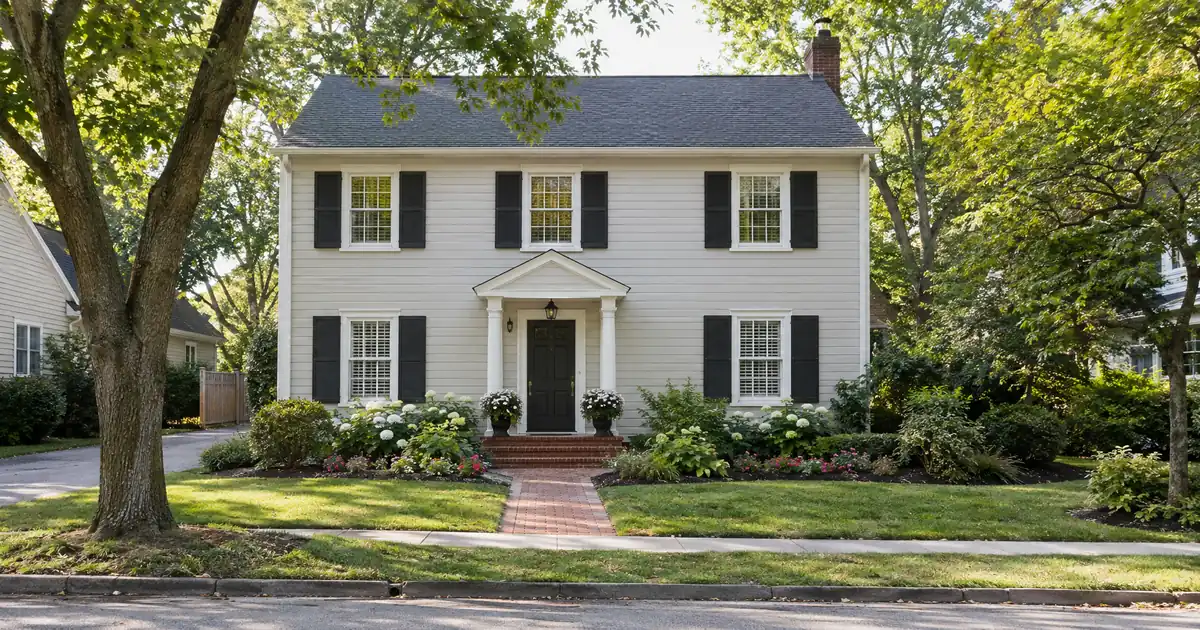
The Quick Read: The annual mortgage insurance premium on an FHA cash-out refinance runs for 11 years, or until the loan ends if the term is shorter than that. Term and loan size change how big the premium is, not how long it lasts. The “life of loan” label you may have heard applies only above 90% LTV, and a cash-out loan can’t get there. Terms vary by lender guidelines, property type, leverage, credit profile, and full file review.
Key Takeaways
- Cash-out is capped at 80% LTV (loan-to-value, the loan balance divided by the home’s appraised value), so it always sits in the “90% or below” duration bucket.
- That bucket means 11 years of annual premium. A term shorter than 11 years ends the premium when the loan ends.
- Term and loan amount set the premium percentage, which runs from 0.15% to 0.75% of the balance depending on the mix.
- A cash-out is a new FHA loan, so it starts a fresh 11-year clock.
- Paying extra principal or watching your home appreciate doesn’t change the schedule in the files Lendmire sees. Exact terms depend on the lender’s guidelines, property type, leverage, and a full review of the borrower’s file.
What Is Annual MIP, and How Is It Different From the Upfront Premium?
Annual MIP is a monthly charge for FHA mortgage insurance, calculated as a percentage of your outstanding balance. The upfront premium is a one-time charge of 1.75% of the base loan, usually financed into the loan. They are separate costs with separate rules.
Duration is an annual-premium question only. The upfront premium is paid once at the start and has no duration.
Here is how Lendmire sees it across the wholesale programs it places FHA files with. Borrowers fixate on the percentage and miss the clock. The percentage tells you what it costs each month. The clock tells you how many months you pay it. On a cash-out, the clock is the friendlier half of the deal. If you want the program basics first, start with Lendmire’s FHA cash-out refinance program page.
Why Does a Cash-Out Always Land in the 11-Year Bucket?
Because the 80% cap keeps every cash-out loan at or below the 90% LTV line, and that line decides duration. Two rules combine here. One caps the loan. The other sets duration by LTV. Every figure here varies by lender and program — guidelines, property type, leverage, and credit profile all apply.
- Rule one: an FHA cash-out refinance can’t exceed 80% of the home’s appraised value.
- Rule two: on a thirty-year loan above 90% LTV, annual premium lasts for the full term. At or below 90%, it ends after 11 years. Final terms depend on lender guidelines, property type, leverage, and the borrower’s complete credit picture.
Purchase loans are different. A buyer at 96.5% maximum financing with 3.5% down is far above 90%. That buyer pays the premium for the whole term. The cash-out borrower, with at least 20% equity left in the home, does not. These specifics are subject to lender guidelines and a full review of property, leverage, and credit.
How Do Term and Loan Tier Change the Picture?
They change the premium percentage, not the length. A shorter term (15 years or less) generally carries a smaller annual premium than a longer one. A larger base loan generally carries a bigger one. Duration stays at 11 years in each case, or the term if it’s shorter.
“Loan tier” here means a loan-amount threshold HUD ties to the conforming loan limit. County loan limits apply to FHA loans and change every year, so check the current figure with your loan officer. The table below is duration only. Premium percentages sit in a range from 0.15% to 0.75% depending on term, amount and LTV.
| Term | Loan amount tier | Cash-out LTV (80% max) | Annual MIP duration |
|---|---|---|---|
| Over 15 years | At or under threshold | 90% or below | 11 years |
| Over 15 years | Above threshold | 90% or below | 11 years |
| 15 years or less | At or under threshold | 90% or below | 11 years |
| 15 years or less | Above threshold | Either LTV sub-tier | 11 years |
Any term shorter than 11 years ends the premium when the term ends. A short-term cash-out is rare, but the rule is the same.
For contrast, here is where the duration changes:
| Original LTV | Term | Annual MIP duration |
|---|---|---|
| 90% or below | Any | 11 years, or the term if shorter |
| Above 90% | Thirty-year | The full term |
You’ll see the second row on purchase loans and some streamline-type transactions. You won’t see it on a cash-out.
How Is the LTV Measured on a Cash-Out?
The lender applies the 80% cap to the appraised value, not to what you paid for the home. Here is the underwriting path, step by step.
1. Eligibility. You must have owned and lived in the home as your principal residence for the 12 months before the case number is assigned. Your mortgage payments must be current.
2. Appraisal. The appraiser sets the value. HUD calls the figure Adjusted Value. The lender takes 80% of it as the ceiling.
3. Maximum loan. The new loan has to fit under that ceiling. If you have other liens, the first mortgage plus those liens can’t exceed the FHA nationwide mortgage limit, per HUD’s knowledge base on the cash-out maximum. County loan limits apply too.
4. Ratios. Lenders look at your debts against your income. The base pair is 31/43 (housing costs over income, then all debts over income) with no compensating factors. Documented compensating factors can reach 40/50 at the top tier. The automated finding governs most files.
5. Premium assignment. Three factors set the annual premium: term over or under 15 years, base loan amount against the threshold, and original LTV. The schedule sits in HUD Mortgagee Letter 2023-05. Lenders usually collect it in 12 equal monthly installments, recalculated on the balance.
6. Clock start. The 11 years run from the new loan’s case number and endorsement.
HUD’s cap came from Mortgagee Letter 2019-11, which lowered the cash-out maximum to 80% of Adjusted Value. Before that change, cash-out loans were allowed a higher LTV. Even then they stayed inside the 90% bucket, so the duration answer didn’t change.
What Do Worked Cash-Out Examples Look Like?
These use percentages only. The inputs are modeled assumptions.
Scenario one: standard term, full cash-out. Say you own a home outright-ish, with a balance near 50% of its appraised value. You take a thirty-year FHA cash-out to 80% LTV. The annual premium runs 11 years, or 132 monthly payments. The loan then runs another 19 years with no annual premium. Terms depend on the lender’s guidelines, the property type, the leverage, and a full review of the credit profile.
Scenario two: shorter term. Same home, same 80% LTV, but you choose a 15-year term. The premium percentage is generally lower. The duration is still 11 years, or 132 payments, out of 180. The premium disappears with four years of payments left.
Scenario three: smaller cash-out. You borrow to 70% LTV instead of 80%. The duration doesn’t change. Both 70% and 80% fall in the 90%-or-below bucket. Taking less cash may trim the premium dollars through a smaller balance, but it won’t shorten the clock. The exact numbers vary by lender and program and follow a full review of property, leverage, and credit.
Scenario four: a term under 11 years. A 10-year FHA cash-out pays premium for 120 payments, then it ends because the loan ends. The 11-year rule never gets the chance to apply.
The lesson: LTV matters at the 90% line. Below that line, nudging your LTV up or down doesn’t move the duration. Choosing a loan size is a payment-and-equity decision, not a duration decision.
Does a Cash-Out Reset the Clock?
Almost certainly, yes. A cash-out refinance is a new FHA loan with a new case number, so the old loan’s premium history doesn’t carry over. HUD doesn’t spell this out in a single sentence, so treat it as logic rather than a quoted rule.
Picture a borrower six years into an existing FHA loan. The annual premium has five years left. They take a cash-out. The new loan carries 11 fresh years of premium. They have traded five remaining years for eleven.
That doesn’t make the cash-out wrong. It makes it a trade. Ask three questions before you commit:
- What will you do with the cash, and does it earn or save more than the extra premium years cost?
- Does the new premium percentage, on the new balance, cost more or less per month than what you pay now?
- Could another tool, such as a home equity loan or line of credit, give you the cash without restarting the insurance clock?
Some borrowers also qualify for a partial upfront-premium credit when they refinance one FHA loan into another within a set window. Ask your loan officer how that applies to your file.
Where Does the General Rule Break?
The 11-year answer holds for nearly every cash-out. These edge cases are worth knowing.
- Hawaiian Home Lands (Section 247). These loans carry no annual premium. HUD’s 2023 schedule excludes them, and the 80% cash-out policy doesn’t apply to them either.
- Streamline refinances. These are not cash-out loans. The FHA Streamline refinances an existing FHA loan with no appraisal, a limited credit review and a net tangible benefit. The premium continues. Don’t borrow streamline rules for a cash-out.
- Loans from mid-2013 onward vs. older loans. HUD Mortgagee Letter 2013-04 set the fixed-duration structure and ended the old exemption for short-term, low-LTV loans. Older loans follow older schedules. A refinance today is a new loan under current rules, so this mostly matters if you’re researching the loan you already have.
- Loans endorsed before the latest premium cut. The reduction in a 2023 HUD mortgagee letter applies only to loans endorsed on or after its effective date. Older loans carry the older, higher schedule. HUD’s FY2024 data shows the cut saved borrowers real money, but only those who qualified for it.
- The 90% line. “Life of loan” lives above it. A cash-out can’t reach it, but a purchase can. Final terms depend on the lender’s guidelines, the property type, and the borrower’s complete credit picture.
Can Anything Shorten the 11 Years?
Not directly. The duration is set when the loan is endorsed. It doesn’t track your current equity.
- Equity and appreciation. Reaching 20% equity doesn’t cancel FHA premium the way it can end conventional private mortgage insurance.
- Extra principal. Prepaying lowers the balance, so the monthly premium shrinks. Extra principal does not end the premium early. Confirm with your servicer.
- Refinancing out. A refinance into a conventional loan can end FHA insurance. A conventional cash-out at or below 80% LTV typically carries no private mortgage insurance. That’s a general market point, not an FHA rule, and it depends on your credit, your home and the lender.
- Selling or paying off. Either one ends the loan and the premium with it.
How Do You Check That the Premium Ends on Schedule?
Servicers cancel annual MIP on schedule in the normal course, but errors happen. Do this:
1. Find the original case number date and loan term on your closing documents. 2. Count 132 payments from the first payment on the loan. 3. Read your monthly statement. It should itemize mortgage insurance. 4. If the charge continues past that payment, write to your servicer and ask for the cancellation schedule. 5. If you don’t get a clear answer, escalate in writing and keep copies.
Key Terms Defined
Annual MIP: the monthly FHA mortgage insurance charge, set as a percentage of your outstanding balance.
Upfront MIP: the one-time FHA premium, 1.75% of the base loan, usually financed.
LTV (loan-to-value): your loan balance divided by the home’s appraised value.
Adjusted Value: the appraised value HUD uses to apply the cash-out LTV cap.
Endorsement: the point when FHA insures the loan and the duration clock begins.
Compensating factors: documented strengths, such as savings, that can support higher debt ratios.
Frequently Asked Questions
How long do I pay annual MIP on an FHA cash-out refinance?
Eleven years, or the loan term if it’s shorter. The 80% cash-out cap keeps you at or below 90% LTV, which is the 11-year bucket. This follows from combining HUD’s cash-out cap with its duration schedule. Each figure is subject to lender guidelines and a complete review of property type, leverage, and credit.
Does a 15-year term shorten the MIP period?
No. A 15-year term generally lowers the premium percentage, but duration stays at 11 years. You pay the premium for 132 of 180 payments, then it ends.
Does my loan size change how long I pay?
No. Loan size sets which premium percentage applies, within the 0.15% to 0.75% range. Duration is the same across the loan-amount tiers on a cash-out.
Will a cash-out refinance restart my MIP clock?
Yes, in most cases. A cash-out is a new FHA loan, so the 11-year period starts again from the new loan. If you’re already part-way through an FHA loan, compare the years you have left against the new 11.
Can I get rid of FHA mortgage insurance by building equity?
Not on its own. Equity alone doesn’t cancel FHA annual premium. Paths out include waiting for the schedule to end, refinancing into a conventional loan, selling, or paying off the loan.
Weighing Your Next Step
If you are weighing a cash-out refinance against keeping the loan you have, Lendmire can help you compare the programs and the equity each one reaches. The mortgage insurance clock is one of several factors in that comparison. Program figures are subject to lender guidelines and a full file review, and nothing here is a commitment to lend.
For your own numbers, request a scenario review with Lendmire.
About Lendmire
Lendmire (NMLS# 2371349) is a mortgage broker licensed for consumer lending in 16 states. Lendmire arranges FHA, VA, conventional and jumbo purchase and refinance loans through wholesale lenders; every file is underwritten by the lender under the applicable program guidelines. Scotsman Guide named Lendmire a Top Mortgage Workplace in both 2025 and 2026.
Get Started
Ready to find the right loan for you?
In about 30 seconds you can review financing options available for your home or investment property. No commitment required.
Informational only. Not a Loan Estimate, approval, or commitment to lend. Program availability and eligibility are subject to lender guidelines, credit approval, property review, and underwriting.
References
1. HUD Mortgagee Letter 2023-05
2. HUD Mortgagee Letter 2019-11
3. HUD Mortgagee Letter 2013-04
This article is part of Lendmire’s FHA Loan series — every loan program’s qualification details, guidelines, and scenarios live on the loan options page.
Related reading: Refinancing An FHA 203(k) Loan After The Renovation Is Done · FHA Simple Refinance Vs FHA Streamline: The Appraisal Makes The Difference · FHA Cash-out Refinance Credit Requirements: The Floor And The Overlays Above It
Brandon Miller
Founder & CEO, Mortgage Loan Originator, Lendmire LLC
- Mortgage Loan Originator · NMLS# 1129696 · Verify on NMLS Consumer Access
- North Carolina Real Estate Broker · License# 343312 · Verify on NCREC
- North Carolina Insurance Producer · License# 19053198 · Property, Casualty, Life, Health · Verify on NAIC SBS
- Lendmire LLC · Firm NMLS# 2371349 · Verify firm licensure
Required disclosures. Lendmire (NMLS# 2371349) operates as a licensed mortgage broker, not a direct lender or depository. The discussion in this article is general in nature and should not be relied upon as financial, legal, or tax advice — every investment scenario is unique and should be reviewed by a qualified professional. Any loan inquiry is subject to lender underwriting, and this article is not a commitment to lend or a guarantee of approval. Mortgage rates, loan terms, and program guidelines vary by borrower, property, and state, and may change without notice. Equal Housing Opportunity. Verify licensure at NMLS Consumer Access.