
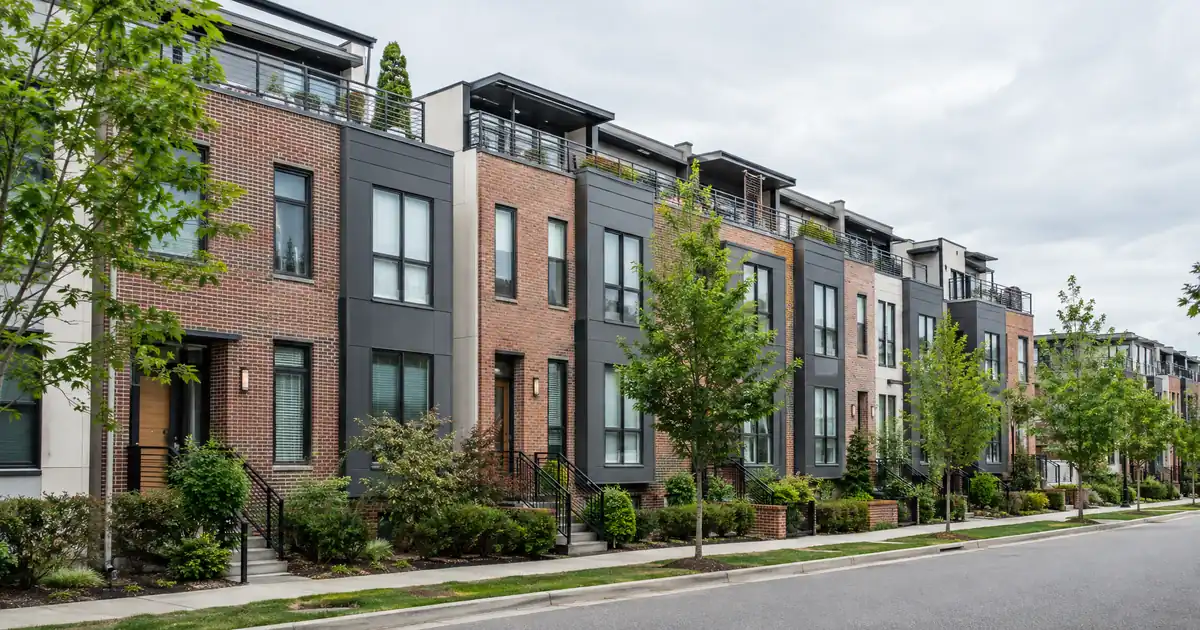
The Quick Read: Your existing FHA loan does not carry over to a cash-out refinance. The cash-out is a brand-new loan, so the condo has to qualify for FHA insurance again. That happens one of two ways: the building is on the FHA-approved list, or your single unit passes a separate unit-level approval. Either way, the new loan tops out at 80% of the home’s value, and the building’s health can decide the file even when your credit and equity are strong.
Does an Existing FHA Loan Change Condo Approval?
No. An existing FHA loan neither blocks the approval review nor replaces it.
Think of your current loan as a closed chapter. When you refinance for cash, the new loan pays off the old one. The lender then treats the condo as a fresh FHA request. It checks the building’s status today, not what it was when you bought.
That is the part many owners miss. A condo that was approved when you purchased may have since lapsed or changed. HOA finances shift. Owner-occupancy slips. A lawsuit gets filed. The review reads the building as it stands now.
Your existing FHA loan is part of the building’s FHA picture. Across the wholesale programs Lendmire works with, it does not earn you credit in the review, and it does not count against you by itself. The building’s current numbers decide.
The one route that skips the condo review is the FHA Streamline. It refinances an existing FHA loan with no appraisal and a limited credit review. But it cannot put meaningful cash in your pocket, so it is not a workaround for a cash-out. More on that below.
If you want the program basics before the condo details, Lendmire’s FHA cash-out refinance program page covers how the loan works for any property type.
Key Terms Defined
Cash-out refinance: A new mortgage that pays off your old one and gives you the extra equity as cash at closing.
Project approval: FHA’s sign-off on the whole condo building, so any unit in it can be financed with FHA.
Single-unit approval (SUA): A review of one unit in a building that is not on the approved list. It is sometimes called spot approval.
FHA concentration: The share of units in a building that already carry FHA loans. FHA limits it to manage risk.
Owner-occupancy percentage: The share of units lived in by their owners rather than rented out.
Adjusted value: The value figure used to cap a refinance. It is usually the appraised value, with a lesser-of test when the home was bought recently.
Net tangible benefit: A real, measurable gain the borrower gets from a Streamline, which is required on that program.
How a Cash-Out on an FHA Condo Gets Underwritten
Here is the path from start to finish.
1. Check the building’s status. The lender looks the project up on FHA’s condo list. A project shows as Approved, Expired, Rejected or Withdrawn. Only Approved lets the lender process unit loans in the normal way.
2. Approved building: ordinary cash-out underwriting. The lender moves straight to your file.
3. Not approved, or lapsed: the lender evaluates single-unit approval. This needs the lender’s willingness to take it on, plus documents from your HOA.
4. Appraisal. A cash-out requires one. The appraisal sets the value the 80% cap applies to.
5. Underwriting. Your credit, income, debts and occupancy history go through the automated finding or a manual review.
6. Closing and the cancellation window. You get a Loan Estimate early and a Closing Disclosure before closing. Funds are released only after the cancellation window runs out.
Five things decide the outcome:
- The project’s status and approval
- The project’s financial health, insurance and litigation
- FHA concentration and owner-occupancy
- Your own occupancy and payment history
- The 80% value cap
Notice that three of the five are about the building, not you. We see this often. A borrower with good credit and real equity gets stopped by the HOA’s finances.
HUD’s FHA condominium guidance is the source for the rule itself. A unit financed for purchase or refinance must sit in an FHA-approved project, or in a non-approved project that meets single-unit standards.
Project Approval vs. Single-Unit Approval
Both routes end in the same place: the unit becomes eligible for FHA financing. They differ in what gets reviewed and how certain the answer is.
| Factor | Project approval | Single-unit approval |
|---|---|---|
| What is reviewed | The whole building | One unit, plus a subset of building tests |
| Who applies | HOA or a lender | Your lender |
| Where it shows | FHA’s approved list | Not on the list |
| Certainty | Settled once approved | Case by case |
| Works for cash-out | Yes | Yes, if the building passes |
Per HUD’s FHA Connection condo help page, a project goes through one of two review routes. HUD reviews it directly in one. A qualified lender reviews it in the other. The same page says a single unit can be approved when the project never went through either route. It also allows this when the project’s status is Expired, Rejected or Withdrawn.
Single-unit approval is not automatic. The building must be complete and ready for occupancy. It must meet a minimum unit count, so very small buildings may fall outside it. Manufactured-housing condos are excluded. And the building must pass limits on FHA concentration, owner-occupancy and financial condition.
The lender also has to be willing to process it. Some are not. That is one reason a broker who places files with several wholesale lenders can matter on a condo.
What the Lender Checks About the Building
This is where condo files get won or lost. The reviewer is asking whether the building is a safe place to insure a loan.
| Building test | What the lender looks for | Red flag |
|---|---|---|
| FHA concentration | Share of units with FHA loans | Too many FHA-insured units |
| Owner-occupancy | Mostly owners, not renters | Heavy investor ownership |
| Reserves | HOA has a cushion set aside | Thin or underfunded reserves |
| Delinquent dues | Few owners behind on HOA fees | Many units in arrears |
| Insurance | Proper coverage on the building | Gaps or lapsed policy |
| Litigation | No active suits against the HOA | Pending lawsuits |
| Commercial space | Limited non-residential area | Large commercial share |
| Special assessments | None, or planned and funded | Large unexplained assessments |
The specific limits for the percentage tests are set in HUD’s rules and change when HUD updates its guidance. Your lender will quote the current ones, and your loan officer can confirm them before you rely on any figure you see elsewhere.
For single-unit approval, the lender submits Form HUD-9991 and supporting papers. HUD’s required documentation list names recorded legal documents, the HOA’s covenants and any financial distress resolution. The form also collects concentration, owner-occupancy, reserves, dues and assessments.
Streamline vs. Cash-Out in a Condo
Owners often ask whether the Streamline can dodge condo approval. For a rate-and-term change on an existing FHA loan, it can. For cash, it cannot.
| Factor | FHA Streamline | FHA cash-out |
|---|---|---|
| Existing FHA loan needed | Yes | No |
| Appraisal | None | Required |
| Condo eligibility review | Generally lighter | Full review again |
| Cash to you | No meaningful cash | Yes, up to the 80% cap |
| Documentation | Limited | Full file |
A Streamline needs a net tangible benefit, and the mortgage insurance premium continues. It does nothing for someone who wants equity. If you want cash and your building is not approved, you cannot use the Streamline as a side door.
Where the General Rule Breaks
A few situations bend the usual path.
An approval that has lapsed. Expired is a status, not a verdict on the building. HOAs sometimes miss a renewal. HUD’s help page says an Expired project can still use single-unit approval. Whether a lapsed status blocks a particular cash-out can depend on the lender, so ask early.
A project that was rejected or withdrawn. The same single-unit door applies in principle. But a building with an adverse determination is excluded. Ask your lender which applies to yours.
Inherited homes. Cash-out normally requires that you owned and lived in the home for 12 months before the case number is assigned. Older HUD guidance describes an exception for inherited property. Have your lender confirm it against the current rules before you count on it.
Second homes and rentals. A cash-out is for a principal residence only. Occupancy decides the leverage, and a second home or rental unit does not qualify for this program.
Rules change. HUD updates its guidance often, so a page you read last year may be out of date. Your lender works from the current version.
If Your Building Isn’t Approved
Do not write the loan off. Work through these in order.
1. Confirm the status. Look up the project on FHA’s condo list by state and county. Note whether it reads Approved, Expired, Rejected or Withdrawn.
2. Ask whether single-unit approval is possible. The building must meet the unit-count, completion and ownership tests. Lendmire’s piece on whether you can get an FHA cash-out without project approval goes deeper on this branch.
3. Ask the HOA about recertification. If approval lapsed, a renewal may fix the problem at the source.
4. Compare a non-FHA path. A conventional cash-out has its own condo rules and can have different leverage. Lendmire’s comparison of an FHA vs conventional cash-out for a condo with project approval issue lays out the tradeoffs.
5. Wait and fix. Some denials have causes you can solve: a litigation settlement, a reserve top-up, or fewer delinquent owners. Rebuilding the building’s numbers may take time.
HOA documents and questionnaires add cost and effort. If the review stalls, the whole file stalls with it. Ask your loan officer who orders the review, who pays for it, and what happens if the answer is no.
Pre-Screen Your Own Building
Do this before you pay for an appraisal.
- Find your project on FHA’s condo list and note its status.
- Ask the HOA for its current budget and reserve balance.
- Ask whether any lawsuit involves the association.
- Ask whether any special assessment is planned or in place.
- Ask the property manager roughly how many owners are behind on dues.
- Ask for the building’s insurance summary.
- Ask for a recent estimate of how many units are owner-occupied.
None of these answers guarantees an outcome. But if two or three look shaky, you will know to talk to a lender about options before you spend money.
What It Means for Your Loan
Once the building clears, the loan itself follows a familiar frame.
Leverage. The FHA cash-out reaches 80% of the home’s value, and the home must have been owned and occupied for 12 months before the case number. That leaves at least 20% equity in the home. HUD cut the cash-out cap to this level in an earlier mortgagee letter, and the cap applies to the adjusted value, not just the appraisal.
Mortgage insurance. The new loan carries an upfront premium of 1.75% of the base loan, which is usually financed into the balance. It also carries an annual premium between 0.15% and 0.75% of the balance, depending on term, loan amount and LTV. On a thirty-year loan at or below 90% LTV, the annual premium ends after eleven years. Because this is a new loan, the insurance is repriced from scratch.
Ratios. The base pair is 31/43, housing to total debt, with no compensating factors. Documented compensating factors can reach 40/50 at the top tier. The automated finding governs most files.
Credit. The wholesale programs we place FHA loans with start at a 580 decision score on purchases. Cash-out floors are set by the individual lender, and some set a higher floor. County loan limits apply, and they change every year.
Monthly cost. The new loan is usually larger than the old one, and the insurance is repriced. That means the monthly cost generally rises. Ask your loan officer for the full comparison on your Loan Estimate.
Your right to cancel. On a refinance of your primary home, the law gives you a short window to cancel after closing. The Consumer Financial Protection Bureau explains how that clock runs. A purchase loan has no such right. Funds are released after the window closes.
Using the cash. Paying off credit cards with a cash-out turns unsecured debt into debt secured by your home. That changes your risk if you fall behind. Tax treatment can depend on your situation; borrowers should speak with a qualified tax professional before relying on any deduction or credit.
A Worked Scenario
Picture an owner with an FHA loan on a condo bought several years back. She has lived there the whole time and has made every payment on time. Her home has gained value, and she wants cash for a kitchen and a roof assessment.
Her credit is solid, and her equity easily clears the 80% cap. On paper, the file looks strong.
Then the lender checks the building. FHA shows the project as Expired. The HOA missed its renewal. Meanwhile, owner-occupancy has drifted down as more neighbors turned units into rentals.
Her loan officer lays out the branches. The HOA could pursue recertification. If the building meets the unit-level tests, single-unit approval is possible. The Streamline is available but gives her no cash. A conventional cash-out is a third option with its own condo rules.
She asks the HOA for its budget, reserve balance and litigation status. The reserves look healthy, and no suit is pending. The owner-occupancy figure is the question mark. Her lender runs the single-unit tests and tells her where she stands.
The lesson is simple. Her borrower profile was never the problem. The building was, and the answer came from checking it first.
Where to Go From Here
If you are weighing a cash-out refinance against keeping the loan you have, Lendmire can help you compare the programs and the equity each one reaches. Lendmire is a mortgage broker licensed for consumer lending in 16 states, arranging FHA, VA, conventional and jumbo loans through wholesale lenders. Every parameter above is subject to lender guidelines and full file review, and nothing here is a commitment to lend.
Frequently Asked Questions
Can I do an FHA cash-out on my condo if the building is not on the approved list?
Sometimes. A single unit in a non-approved building may qualify through single-unit approval, if the building is complete and meets the ownership and financial tests. It is not automatic, and the lender must be willing to process it. Your loan officer can tell you which lenders will.
Does having an FHA loan today make a cash-out easier?
No. You do not need an existing FHA loan to get an FHA cash-out, and having one does not shortcut the condo review. The building’s current status and finances drive the decision, not the loan you hold.
How much cash can I take out of my FHA condo?
The new loan reaches up to 80% of the home’s adjusted value, so at least 20% equity stays in the home. The upfront premium of 1.75% of the base loan is typically financed into the balance. That reduces the cash you walk away with. Eligibility depends on lender guidelines and the appraisal.
What if my building’s approval expired?
Expired is a status, not a finding against the building. HUD allows single-unit approval for units in projects with an Expired status. The HOA can also pursue recertification. Ask your lender which route fits, and ask the HOA whether a renewal is already underway.
Can I use the FHA Streamline to avoid the condo approval step?
For a rate-and-term change on an existing FHA loan, a Streamline can skip the appraisal and a full condo review. But it does not provide meaningful cash. If your goal is equity out of the home, the Streamline does not help you.
For your own numbers, request a scenario review with Lendmire.
About Lendmire
Lendmire (NMLS# 2371349) is a mortgage brokerage serving homeowners and home buyers in 16 states. FHA, VA, conventional and jumbo purchase and refinance loans are arranged through wholesale lending channels; Lendmire brokers the financing and the lender underwrites each application. Scotsman Guide named Lendmire a Top Mortgage Workplace in both 2025 and 2026.
Get Started
Ready to find the right loan for you?
In about 30 seconds you can review financing options available for your home or investment property. No commitment required.
Informational only. Not a Loan Estimate, approval, or commitment to lend. Program availability and eligibility are subject to lender guidelines, credit approval, property review, and underwriting.
References
2. HUD — FHA Connection Condo Help
3. HUD: FHA Sua Condo Required Docs
4. HUD — Mortgagee Letter 2019-11
5. Consumer Financial Protection Bureau — Right of rescission timing
This article is part of Lendmire’s FHA Loan series — every loan program’s qualification details, guidelines, and scenarios live on the loan options page.
Related reading: How to Get a Condo Project Onto the FHA List for a Cash-Out · FHA Cash-Out Requirements for a Condo Project Not yet Approved · How Much the Upfront MIP Cuts an FHA Cash-Out on Your Existing FHA Loan
Brandon Miller
Founder & CEO, Mortgage Loan Originator, Lendmire LLC
- Mortgage Loan Originator · NMLS# 1129696 · Verify on NMLS Consumer Access
- North Carolina Real Estate Broker · License# 343312 · Verify on NCREC
- North Carolina Insurance Producer · License# 19053198 · Property, Casualty, Life, Health · Verify on NAIC SBS
- Lendmire LLC · Firm NMLS# 2371349 · Verify firm licensure
Compliance and disclosures. Lendmire (NMLS# 2371349) is a licensed mortgage broker and is not a direct lender, depository institution, financial advisor, or tax professional. Content in this article is general market analysis and educational information — not financial, legal, or tax advice for any specific situation. Lendmire does not guarantee loan approval; every transaction is subject to underwriting by the funding lender. Mortgage pricing and loan program guidelines are subject to change at any time without notice and vary by borrower characteristics, property type, and state regulations. Lendmire complies with Equal Housing Opportunity. Licensure verification: NMLS Consumer Access.