
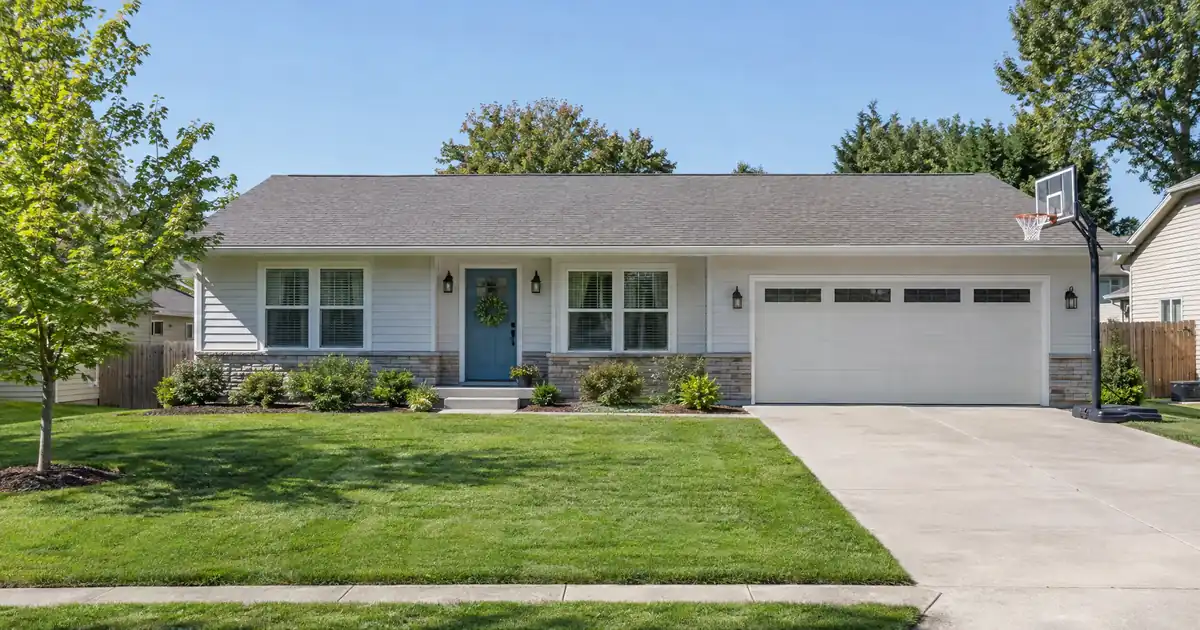
The Quick Read: FHA cash-out has one borrowing ceiling, 80% of your home’s appraised value, and your credit score does not move it. The score decides whether a lender can approve the file and how much documentation it needs. Think of the tiers as three layers: the program’s floor, the lender’s own rules, and the automated underwriting finding. A first-time equity borrower also needs to have owned and lived in the home for 12 months before the case number is assigned.
Key Takeaways
- The 80% loan-to-value cap is the same at every score. A higher score does not buy more equity.
- The wholesale programs Lendmire places FHA files with start at a 580 decision score.
- The score changes your debt-to-income room, which runs from 31/43 up to 40/50 with documented strengths.
- You must own and occupy the home as your main residence for 12 months first.
- Cash-out raises your loan balance, and the FHA premiums apply to the whole new loan.
What Is a First-Time Equity Borrower, and What Is FHA Cash-Out?
A first-time equity borrower is a homeowner who has never taken cash out of this home. Maybe you bought it, paid it down, and watched the value climb. Now you want some of that equity for repairs, debt payoff, or a big expense.
An FHA cash-out refinance replaces your current mortgage with a new, larger FHA-insured loan. The new loan pays off the old one and your closing costs. What is left comes to you as cash. The old loan does not have to be an FHA loan. Lendmire’s FHA cash-out refinance program works the same way whether you start with an FHA, conventional, or other mortgage.
The program reaches 80% of the home’s value on a home you have owned and lived in for 12 months before the case number. It applies to your main residence only. Everything below is subject to lender guidelines and a full file review, and none of it is a commitment to lend.
How Do the Credit Tiers Really Work?
There is no published ladder of “Tier 1, Tier 2, Tier 3” for FHA cash-out. What you meet is three layers stacked on top of each other.
Layer one is the program floor. FHA sets the minimum score the program allows. On a purchase, that program has a lower band at 500 to 579 with a bigger minimum investment of 10%. The wholesale programs Lendmire places FHA loans with do not reach below 580. Treat 580 as the practical entry point.
Layer two is the lender’s rules. Lenders can add their own requirements on top of the program floor. These are called overlays. Some lenders set a higher minimum score. Others look harder at recent late payments. This is why one lender can decline you while another approves the same file.
Layer three is the automated finding. Nearly every FHA file runs through an automated underwriting system. It returns either an approval-level finding or a “Refer,” which sends the file to manual underwriting. The finding governs most files, and it weighs your score together with your debts, your reserves, and your payment history.
So when you ask “what tier am I in,” the honest answer is a combination of all three layers.
Which Credit Score Does the Lender Use?
The lender uses one “decision score,” not your favorite of the three. Here is how the score is chosen.
The lender pulls your credit from all three bureaus. HUD’s Handbook 4000.1 glossary defines the Minimum Decision Credit Score. With three scores, the middle one counts. With two differing scores, the lower one counts.
If you apply with a co-borrower, each person gets a decision score. The lowest of those scores sets the file’s score. Check each person’s report before you apply. A single low score can pull the whole file down.
What Does Each Score Range Mean for You?
The 80% cap stays put, but your experience changes as the score moves. The ranges below describe how that works across the programs Lendmire works with.
| Range | What it means | Typical next step |
|---|---|---|
| Below 580 | Outside the wholesale programs Lendmire uses | Rebuild credit, then revisit |
| 580 to lender overlay | Program minimum met; lender rules decide | Ask which overlays apply |
| Higher scores | More room on ratios and findings | Use strengths to reach 40/50 |
Below 580. Program rules allow a lower band on purchases, but the wholesale network does not reach there. If your decision score sits here, the useful work is paying down card balances and fixing reporting errors, not shopping for a lender.
From 580 up to the lender’s own floor. You meet the program minimum, but some lenders want more. A file here often gets a closer look at payment history. It may land in manual underwriting, which means more documents and tighter ratios. The base pair is 31/43: housing costs near 31% of income and total debts near 43%. Without strengths to document, that is the box you work in.
Higher scores. A stronger score helps the automated finding. Documented compensating factors can stretch ratios toward 40/50 at the top tier. Examples include cash reserves, a long and stable job history, or a small increase in housing costs. These are subject to lender guidelines. The score does not buy extra equity. It buys easier approval and more breathing room on debts.
Why Does the Cap Not Move With Your Score?
The cap is a loan-to-value limit, and FHA applies it to everyone. HUD Mortgagee Letter 2019-11 lowered the maximum on cash-out refinances to 80% of value. HUD’s press release said the change was partly meant to align FHA with Fannie Mae and Freddie Mac.
Two details matter. First, the cap applies to “adjusted value” as HUD defines it, from an FHA appraisal. It does not apply to a listing price or your own estimate. Second, a second mortgage or home equity line counts toward the same 80% limit. Plan for the combined total.
This surprises people. Many assume a 740 score means a bigger check than a 600 score. On FHA cash-out, it does not.
Walking Through the Process Step by Step
Here is how a first-time equity borrower moves through the file.
1. Check eligibility. You need a principal residence you have owned and occupied for 12 months before the case number. The lender will look for proof of occupancy, such as pay records or utility bills.
2. Review payment history. The lender looks at how you paid the mortgage you are replacing. A clean recent record matters. Certain late-payment situations can push the file from automated to manual underwriting.
3. Pull credit. The lender gets a three-bureau report and sets the decision score.
4. Run automated underwriting. The finding comes back, and the lender decides what documents it needs.
5. Order the appraisal. An FHA appraisal sets the adjusted value. The new loan, plus any other liens, must fit within 80% of it.
6. Size the loan. The new loan must cover the payoff, closing costs, the financed upfront premium, and any debts being paid off. Cash to you is what remains.
7. Review your disclosures. Your Loan Estimate shows the costs and the cash to close. The CFPB’s Loan Estimate explainer walks through each line.
How Do Mortgage Insurance and Your Balance Change the Picture?
FHA charges two premiums. The upfront premium is 1.75% of the base loan, and most borrowers finance it into the balance. The annual premium runs between 0.15% and 0.75% of the balance, depending on the loan term, loan amount, and LTV. It is not a price Lendmire sets. It is a program fact.
How long the annual premium lasts depends on your LTV. On a 30-year loan above 90% LTV, it lasts for the term. At or below 90%, it ends after 11 years. Since cash-out loans cap at 80%, that second case is the usual one. Your Loan Estimate shows the exact amounts for your file. Terms vary by lender guidelines, property type, leverage, credit profile, and full file review.
Also remember this: the annual premium applies to the entire new balance, not just the cash you pulled out. The CFPB’s guide on using home equity points out that a cash-out refinance replaces your loan with a larger one. Your monthly payment may rise, and your loan terms reset. A cash-out does not automatically lower your payment.
Worked Example: Same Home, Three Scores
Run the numbers on one home. Say the appraisal sets adjusted value at 100%. You owe 55% of that value on your current mortgage. The cap is 80%, so you have about 25 points of value to work with before costs. Closing costs and the financed upfront premium come out of that room. What remains is your cash.
Now vary only the score.
Borrower A, decision score in the low 570s. The cap is still 80%, but the wholesale programs do not reach this score. The file does not get placed. The next step is a credit plan, not a loan.
Borrower B, a score just above 580. The cap is 80%. The file may run into lender overlays or a manual underwriting review. Ratios probably sit near the 31/43 base pair unless documented strengths help. Cash proceeds are the same as Borrower C’s, but the path is narrower.
Borrower C, a strong score with reserves. The cap is 80%. The automated finding is more likely to come back clean. Documented strengths can stretch ratios toward 40/50. Same proceeds, easier approval, more room on debts.
The pattern is simple. Proceeds come from value, liens, and costs. The score controls whether you get through the door and how comfortable the debt ratios are.
Where the General Rule Breaks
A few situations change the usual answers.
An inherited home. The 12-month occupancy rule is handled differently if you never treated the property as a rental. If you rented it out after inheriting it, you need to live there for 12 months first.
A manufactured home. It must have been permanently installed on its site for more than 12 months before the case number.
A second mortgage or HELOC. These count toward the 80% limit. Ask the lender how it counts a credit line before you assume it counts only the balance.
Income that cannot be used. Income from a non-occupant co-borrower generally cannot be used to qualify on a cash-out. Rental income from an accessory dwelling unit cannot be used either. This is stricter than on a purchase, where a non-occupant co-borrower is allowed.
A past credit event. HUD’s waiting periods are two years from a Chapter 7 discharge and three years from a foreclosure. Those are HUD’s rules, not a promise from any lender.
Special programs. Hawaiian Homelands and Native American loan guarantee loans use their own rules. Do not mix them with a standard FHA cash-out.
Other FHA refinances. If you already have an FHA loan, you have more than one path. The table compares how each one reviews your credit.
| Feature | Cash-out | Rate-and-term | Streamline |
|---|---|---|---|
| Max LTV | 80% | Up to 97.75% | Not applicable |
| Appraisal | Yes | Yes | No |
| Credit review | Full | Full | Limited |
| Cash to you | Yes | No | No |
| Needs FHA loan | No | No | Yes |
A Streamline continues the premium and requires a net tangible benefit. It is a different product, not a lighter cash-out.
What Do Lenders Mean When They Give Different Answers?
You may call three lenders and hear three minimum scores. That is normal. One is quoting the program floor. Another is quoting its overlay. A third is guessing from the automated finding.
A borrower with a decent score and one late payment on the current mortgage can get a different answer from a borrower with a lower score and a spotless record. Ask each lender which layer is driving its answer. Some lenders set a higher floor than the program does, and that is their choice.
How Can You Move Up a Tier Before You Apply?
If you sit just under a boundary, a few steps help most.
- Pay card balances down. Utilization moves scores faster than almost anything else.
- Dispute errors. A wrong late payment or a collection that isn’t yours can cost real points.
- Do not open new credit. New accounts and hard inquiries can pull a score down right before a pull.
- Keep the mortgage current. A clean recent history on the loan you’re replacing is part of the file.
- Build documentation. Savings, steady employment records, and proof of occupancy help when ratios are tight.
Give yourself time between fixing the report and applying. Lenders pull fresh scores, so the improvement has to show up in the bureaus first.
What Stays the Same at Every Score?
Some parts of the program do not change with your score:
- the 80% maximum loan-to-value
- the owner-occupied principal residence requirement
- the 12 months of ownership and occupancy
- the FHA appraisal
- the upfront premium of 1.75%
- county loan limits, which are set by county and change every year
Key Terms Defined
Decision score: the single credit score a lender uses for your file, taken from the middle of three bureau scores.
Overlay: a lender’s own rule that sits on top of the FHA program minimum.
Adjusted value: the property value FHA uses to measure your loan-to-value, based on an FHA appraisal.
Compensating factors: documented strengths, such as reserves or stable income, that can justify higher debt ratios.
Upfront premium: a one-time FHA mortgage insurance charge of 1.75% of the base loan, usually financed.
Manual underwriting: a human review of your file when the automated system returns a “Refer” finding.
Frequently Asked Questions
What credit score do I need for an FHA cash-out refinance?
The wholesale programs Lendmire places FHA loans with start at a 580 decision score. HUD’s own program has a lower band for purchases, but that band is outside this network. Some lenders set a higher minimum, so expect different answers from different lenders.
Does a higher score let me borrow more?
No. The 80% loan-to-value cap applies at every score. A higher score helps approval and gives you more room on debt ratios. Your cash depends on appraised value, existing liens, and costs.
Which score is used if I apply with a co-borrower?
The lowest decision score governs the file. Each borrower gets a decision score from the three bureaus, using the middle of three scores or the lower of two. The lender then uses the lowest of those scores for the file. Check both reports before you apply so a surprise on one does not hold up the file.
Do I need an existing FHA loan?
No. FHA cash-out can replace a non-FHA mortgage. You do need to have owned and lived in the home as your main residence for 12 months before the case number.
What if one lender turns me down?
Ask which layer caused it: the program minimum, the lender’s overlay, or the automated finding. If it was an overlay, another lender may approve the same file. If it was payment history or the score, work on those first.
Next Steps
If you are weighing a cash-out refinance against keeping the loan you have, Lendmire can help you compare the programs and the equity each one reaches. Start by checking your three scores and your payment record. Then ask about overlays before you spend money on an appraisal.
For your own numbers, request a scenario review with Lendmire.
About Lendmire
Lendmire — NMLS# 2371349 — is a mortgage broker that arranges FHA, VA, conventional and jumbo home purchase and refinance financing in 16 states through wholesale lenders. Every option is subject to the lender’s guidelines and full underwriting. Scotsman Guide named Lendmire a Top Mortgage Workplace in both 2025 and 2026.
For the program’s current guidelines, see FHA loan programs.
Get Started
Ready to find the right loan for you?
In about 30 seconds you can review financing options available for your home or investment property. No commitment required.
Informational only. Not a Loan Estimate, approval, or commitment to lend. Program availability and eligibility are subject to lender guidelines, credit approval, property review, and underwriting.
References
1. HUD Handbook 4000.1 glossary
2. HUD Mortgagee Letter 2019-11
3. HUD press release on cash-out refinance risk
4. CFPB Loan Estimate explainer
5. CFPB, Using home equity to meet financial needs
This article is part of Lendmire’s FHA Loan series — every loan program’s qualification details, guidelines, and scenarios live on the loan options page.
Related reading: FHA Cash-Out Credit Requirements for a 2-4 Unit Primary Home · Can You Get an FHA Cash-Out With a Thin Credit Profile? · FHA Cash-Out Income Documentation by Borrower Type and Income Source
Brandon Miller
Founder & CEO, Mortgage Loan Originator, Lendmire LLC
- Mortgage Loan Originator · NMLS# 1129696 · Verify on NMLS Consumer Access
- North Carolina Real Estate Broker · License# 343312 · Verify on NCREC
- North Carolina Insurance Producer · License# 19053198 · Property, Casualty, Life, Health · Verify on NAIC SBS
- Lendmire LLC · Firm NMLS# 2371349 · Verify firm licensure
Compliance and disclosures. Lendmire (NMLS# 2371349) is a licensed mortgage broker and is not a direct lender, depository institution, financial advisor, or tax professional. Content in this article is general market analysis and educational information — not financial, legal, or tax advice for any specific situation. Lendmire does not guarantee loan approval; every transaction is subject to underwriting by the funding lender. Mortgage pricing and loan program guidelines are subject to change at any time without notice and vary by borrower characteristics, property type, and state regulations. Lendmire complies with Equal Housing Opportunity. Licensure verification: NMLS Consumer Access.