
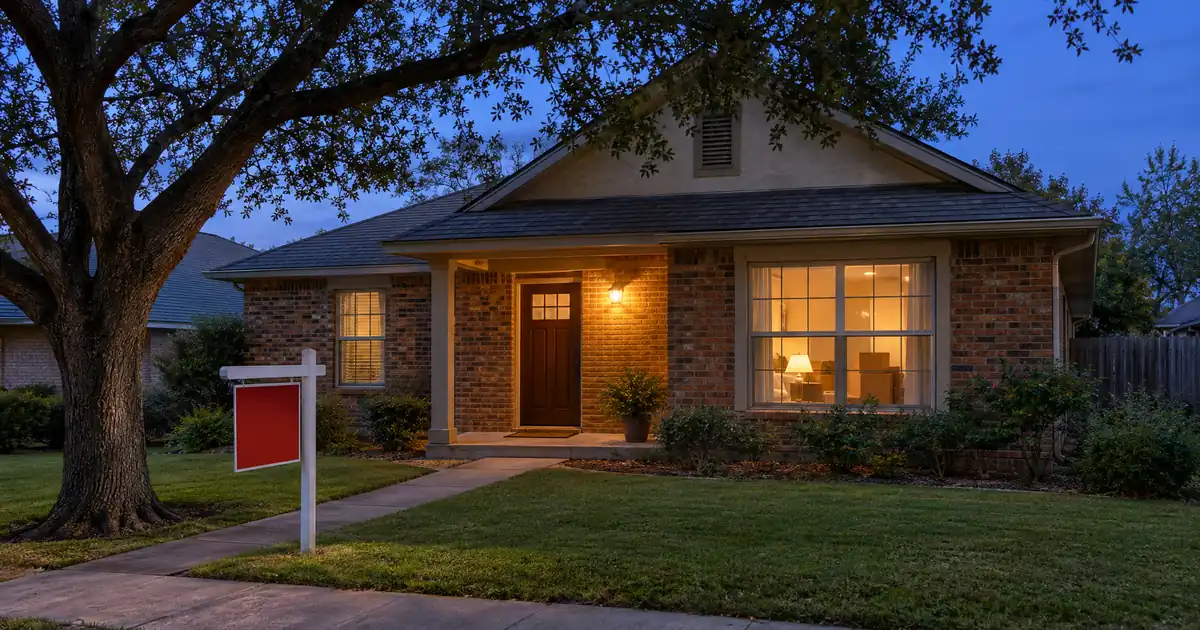
The Quick Read: An FHA cash-out on a Texas homestead rarely frees monthly payment, and in practice it is seldom available at all. A cash-out makes the loan bigger, so the new payment usually goes up. Texas law also adds fee limits that FHA premiums make hard to meet. Where the goal is a different loan structure, a different FHA tool often fits better.
What Is an FHA Cash-Out on a Texas Homestead?
An FHA cash-out refinance replaces your current mortgage with a larger FHA-insured loan and pays you the difference in cash. The FHA cash-out reaches 80% LTV on a home you have owned and occupied for 12 months before the case number. Terms are subject to lender guidelines and full file review.
Texas changes the picture. A cash-out refinance of a Texas homestead is a “Section 50(a)(6)” home equity loan under the state constitution. The Texas Attorney General’s opinion KP-0183 says so directly. People in the trade call it an “A6” loan or a “Texas cash-out.”
That label brings its own rules. They sit on top of whatever the FHA program requires. The result is that the question is not just “does FHA allow it?” It is “do both rule sets fit on the same file?”
Lendmire is a mortgage broker licensed for consumer lending in Texas and 15 other states. It arranges FHA loans through wholesale lenders, and the Lendmire FHA cash-out refinance program page covers the general mechanics. This article covers what changes on a Texas homestead.
Key Takeaways
- A cash-out creates a bigger loan. The payment usually rises unless a lower rate or longer term offsets it.
- Payment is “freed” only when the debts you pay off carried more monthly cost than the new payment adds.
- FHA and Texas both cap the new loan at 80% of value, so FHA gives no extra room.
- Texas also caps lender-controlled fees at 2% of the loan, and FHA premiums crowd that limit.
- Many Texas homeowners with an FHA loan are better served by an FHA Streamline, which pays no cash.
Key Terms Defined
Section 50(a)(6) loan: A Texas homestead cash-out loan governed by the state constitution, also called an “A6” loan.
Adjusted value: The value figure HUD uses to measure the loan-to-value cap on an FHA cash-out.
Combined loan-to-value (CLTV): The new loan plus all other liens, divided by the home’s value.
Mortgage insurance premium (MIP): The FHA charge made of an upfront premium and an annual premium.
FHA Streamline: A refinance of an existing FHA loan with no appraisal and no cash back.
Net tangible benefit: A real, measurable gain to the borrower that the refinance must deliver.
Can an FHA Cash-Out Be Done on a Texas Homestead?
It is legally possible but impractical, and the reasons are about arithmetic, not a flat ban.
VA is different. The Texas Attorney General’s opinion concludes that the ban on additional collateral prohibits a VA cash-out, because the VA guaranty counts as collateral beyond the homestead. FHA insurance has been analyzed differently. A Texas mortgage-law firm writes that FHA mortgage insurance is likely not prohibited additional collateral. That analysis comes from a law firm rather than from HUD, which has not been cited here as either permitting or banning an FHA Section 50(a)(6) loan.
The block is the fee cap. Texas limits lender-controlled fees to 2% of the loan. The same law-firm analysis says FHA mortgage insurance premiums must fit inside that cap, and calls that impractical without a large lender credit. The FHA upfront premium alone is 1.75% of the base loan, which leaves almost nothing under a 2% ceiling for anything else.
So when a lender says “no FHA cash-out in Texas,” that is a market reality. It is not language from HUD or the federal consumer-finance regulator. Whether any given wholesale lender will take such a file is a question for the full file review. Confirm before you plan around it.
What Decides Whether Payment Is Freed?
A cash-out almost never lowers the payment by itself. The new loan equals your payoff, plus any financed premium and rolled-in costs, plus the cash you take. A larger balance pushes the payment up unless the rate or term offsets it, as the CFPB’s home equity guide explains. The guide also notes that the payoff time may lengthen and that the rate and terms reset because the new loan replaces the old one.
The net effect is a simple subtraction:
1. Find the payment on the new loan.
2. Subtract the payment on the loan you are replacing. That is the increase.
3. Add up the monthly payments on the debts the cash will retire.
4. Compare the two figures. Payment is freed only if step 3 is larger than step 2.
Say a homeowner holds a low-cost first mortgage and a pile of card balances. Rolling the cards into a new larger mortgage retires the card payments, but the new loan also replaces a cheap first mortgage with a costlier one. The cards may have been the smaller part of the monthly burden, and the swap can come out flat or negative.
Now flip it. A homeowner with a high-cost first mortgage and large installment debts may see a real net drop. The deciding variable is the gap between the old and new first-lien terms, not the size of the cash.
Run your own file against actual quotes.
How Is a Texas Cash-Out Underwritten, Step by Step?
Here is the sequence a Texas homestead file moves through. Each step can stop the file.
1. Eligibility screen. The home must be your owner-occupied principal residence. On the FHA side, the home must have been owned and occupied for 12 months before the case number is assigned. A cash-out on a home you have owned for less than that is limited more tightly.
2. Texas notice clock. The state constitution sets a waiting period that must pass after application or after the required notice, whichever is later, before a home equity loan can close. Timing varies by file and lender. The text is on the Texas Constitution Article XVI, Section 50 page.
3. Appraisal. The value sets the ceiling. Texas counts all liens against fair market value. FHA measures against adjusted value.
4. Size the loan. Take 80% of value and subtract every other lien. That is the most the new loan can be. County loan limits also apply.
5. Fees. Lender-controlled fees must stay within the 2% cap. Items such as the appraisal, survey and title premium sit outside it. Check the exclusions carefully against your own file.
6. Mortgage insurance. FHA’s upfront premium is 1.75% of the base loan, financed. The annual premium runs between 0.15% and 0.75% of the balance, depending on term, loan amount and LTV. On a thirty-year loan above 90% LTV it lasts the term. At or below 90% it ends after eleven years. Final terms depend on the lender’s guidelines, the property type, and the borrower’s complete credit picture.
7. Disclosures and closing. A final itemized disclosure goes out ahead of closing, with timing that varies by file and lender. Closing happens at a lender, attorney or title company office. A federal right of rescission also applies to most primary-residence refinances.
Credit and ratios come from the FHA envelope. Across the wholesale programs Lendmire places files with, FHA starts at a 580 decision score. The base ratio pair is 31/43, and documented compensating factors can reach 40/50 at the top tier. The automated finding governs most files.
Does FHA Give You More Equity Than Texas Allows?
No. The numbers line up, so FHA adds no room.
HUD Mortgagee Letter 2019-11 cut the maximum LTV and CLTV on FHA cash-out refinances to 80% of adjusted value, for case numbers assigned on or after September 1, 2019. HUD’s press release says the cut was from 85% to 80% and that the new cap aligns with the government-sponsored enterprise maximum.
Texas separately caps the new principal plus all other liens at 80% of fair market value. Both ceilings are 80%. The stricter of two identical limits is still 80%.
One old belief is worth retiring. “FHA lets you borrow 85%” was true only before the September 2019 change.
The Edge Cases Where the Rule Bends
You already have an FHA loan and want a lower payment. This is the cleanest path. The FHA Streamline refinances an existing FHA loan with no appraisal, a limited credit review and a net tangible benefit. The premium continues. HUD’s Streamline page says closing costs cannot be rolled into the new loan amount. There is no cash out, and the Streamline carries no 80% LTV test. Each figure is subject to lender guidelines and a complete review of property type, leverage, and credit.
You already have a Texas home equity loan. Since 2018, Section 50(f)(2) lets an owner refinance out of an equity loan into an ordinary rate-and-term loan. The conditions are a one-year wait, no new money beyond costs, a fresh 80% LTV test and a specific notice. The state’s rule text is at 7 TAC §153.45. A law-firm FAQ says it knows of no rule barring such a loan from being FHA-insured, but flags the 80% combined limit as the issue. That document is old, so treat it as a lead and not a ruling. Leverage, reserves, and pricing vary by lender and program; the final terms follow the full file review.
You own the home less than 12 months. Cash-out is limited more tightly. Confirm the exact rule against HUD before you plan around it.
The property is not your homestead. Section 50(a)(6) applies to homesteads only. FHA cash-out is for an owner-occupied principal residence, so occupancy decides the leverage and the program.
Someone on the note does not own the home. A non-owner co-signer can raise an additional-collateral problem under Texas law. Raise it with the loan officer early.
What Else Changes Besides the Payment?
Four things shift even when the payment looks fine.
The term resets. A new thirty-year loan restarts the clock. A longer term can mean more total time in debt.
Premiums add a line. The financed upfront premium raises the balance. The annual premium recurs.
Unsecured debt becomes secured. Paying cards with mortgage debt puts the home behind the balance. The CFPB notes that paying non-mortgage debts with mortgage debt can raise foreclosure risk. It also reports that paying off other bills or debts was a common reason borrowers cash out.
You own less of the home. Taking equity out of a property means you own less of it afterward.
Texas adds protections on the other side. The loan is non-recourse absent fraud, requires consent of each owner and spouse, and only one such loan can exist at a time. A new one cannot close within a year of a prior one. Tax treatment can depend on your situation; borrowers should speak with a qualified tax professional before relying on any deduction or credit.
Which Option Fits Which Goal?
| Goal | Best-fit path | Payment effect |
|---|---|---|
| Lower payment, have an FHA loan | FHA Streamline | Can lower; no cash |
| Lower payment, have a Texas equity loan | 50(f)(2) conversion | Depends on new terms |
| Cash for debts, FHA available | FHA cash-out (rare in Texas) | Usually rises |
| Cash, any other loan | Conventional or other A6 | Usually rises |
Use the table as a starting screen, not a verdict. Each path still goes through lender review.
Common Mistakes on These Files
- Assuming the cash lowers the payment without comparing old and new first-lien terms.
- Counting only the first mortgage toward the 80% limit and forgetting other liens.
- Assuming every closing cost sits under the 2% cap.
- Planning around a closing date before the 12-day notice clock runs.
- Using FHA for a rate-and-term goal when a Streamline would avoid the appraisal and the Texas rules entirely.
Frequently Asked Questions
Can I get an FHA cash-out on my Texas homestead?
It is legally possible but seldom practical. The Texas fee cap of 2% sits against an FHA upfront premium of 1.75%, which leaves almost no room. Whether a wholesale lender will take the file is decided at full file review.
Will an FHA cash-out lower my monthly payment?
Usually not. The new loan is larger, so the payment tends to rise. It is lower only when the debts you retire cost more monthly than the increase on the new mortgage.
How much equity can I take out?
Up to 80% of value counting all liens, under both FHA and Texas rules. Take 80% of the appraised value and subtract every other lien. County loan limits also apply.
What should I do if I already have an FHA loan and want to cut my payment?
Look at the FHA Streamline. It needs no appraisal, pays no cash back and requires a net tangible benefit. HUD says closing costs cannot be rolled into the new loan.
Can I ever leave Texas home equity status?
Yes, under Section 50(f)(2), with conditions: a one-year wait, no new money beyond costs and a new 80% LTV test. Terms vary by lender guidelines, property type, leverage, credit profile, and full file review.
For your own numbers, request a scenario review with Lendmire.
About Lendmire
As a mortgage broker (NMLS# 2371349), Lendmire helps homeowners and home buyers in 16 states with FHA, VA, conventional and jumbo purchase and refinance loans arranged through wholesale lenders. Lendmire is never the lender; program terms are set by the lender and the agency guidelines. Scotsman Guide named Lendmire a Top Mortgage Workplace in both 2025 and 2026.
For the program’s current guidelines, see FHA loan programs.
Get Started
Ready to find the right loan for you?
In about 30 seconds you can review financing options available for your home or investment property. No commitment required.
Informational only. Not a Loan Estimate, approval, or commitment to lend. Program availability and eligibility are subject to lender guidelines, credit approval, property review, and underwriting.
References
1. Texas Attorney General Opinion KP-0183
3. Texas Constitution Article XVI, Section 50
4. HUD Mortgagee Letter 2019-11
5. HUD press release PR 19-114
6. HUD FHA Streamline Refinance
8. CFPB
This article is part of Lendmire’s FHA Loan series — every loan program’s qualification details, guidelines, and scenarios live on the loan options page.
Related reading: Texas FHA Cash-Out Requirements for a Homeowner With an Existing FHA Loan · How Much More Payment an FHA Cash-Out Allows on Thin Credit · How Much an FHA Cash-Out Costs a Homeowner Already in an FHA Loan
Brandon Miller
Founder & CEO, Mortgage Loan Originator, Lendmire LLC
- Mortgage Loan Originator · NMLS# 1129696 · Verify on NMLS Consumer Access
- North Carolina Real Estate Broker · License# 343312 · Verify on NCREC
- North Carolina Insurance Producer · License# 19053198 · Property, Casualty, Life, Health · Verify on NAIC SBS
- Lendmire LLC · Firm NMLS# 2371349 · Verify firm licensure
Legal disclosures. Lendmire (NMLS# 2371349) is a state-licensed mortgage brokerage that arranges financing through wholesale lender relationships. Lendmire is not a direct lender, depository institution, or registered financial advisor. The discussion above is general informational content about real estate financing — it is not financial, legal, or tax advice, and readers should consult licensed professionals for guidance on their individual circumstances. Loan inquiries are subject to lender underwriting; this article does not represent a commitment to lend. Loan terms, rates, and qualification standards vary by borrower, property, and state, and are subject to change at any time. Equal Housing Opportunity. NMLS Consumer Access: nmlsconsumeraccess.org.