
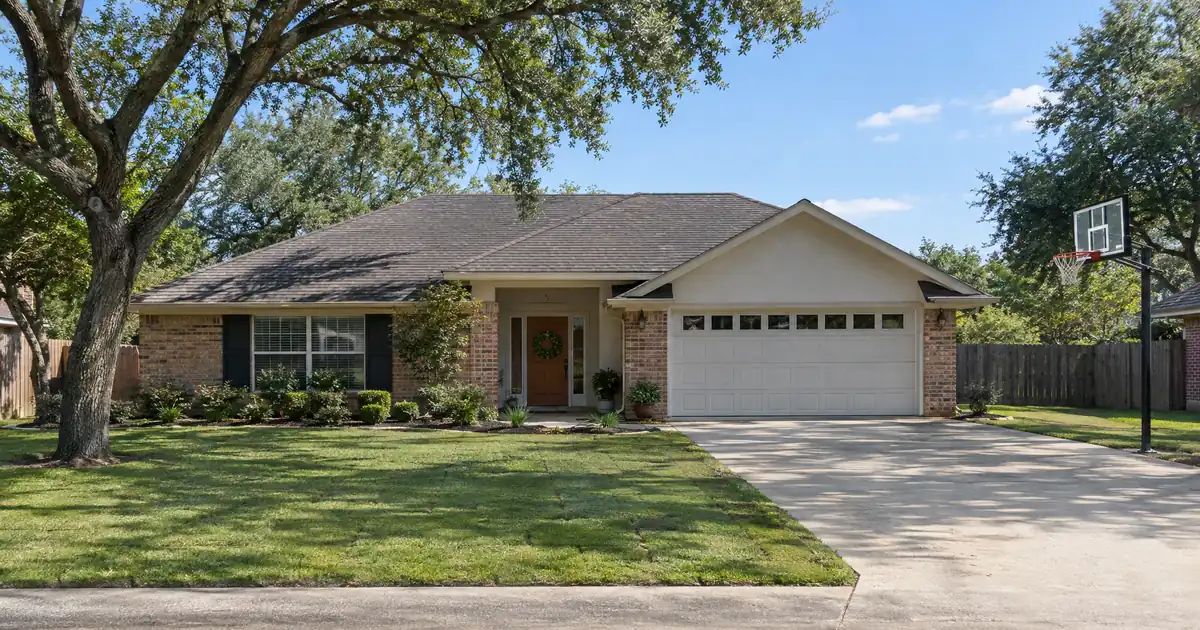
The Quick Read: No, not on a Texas homestead in practice. Texas treats any cash taken out of a homestead as a home equity loan under Section 50(a)(6) of its constitution, and FHA-insured cash-out loans are not offered under that structure. A homeowner with an FHA loan can keep it, do an FHA refinance with no cash back, or convert to a conventional Texas cash-out loan. Program details are subject to lender guidelines and full file review, and nothing here is a commitment to lend.
Why Do the Answers Online Disagree?
Three layers of rules get mixed together, and that is why one page says “banned” and the next says “available.”
Texas FHA cash-out estimate
Seeded with an example value, a balance to match, and a round cash request; change any field.
Editable benchmark: 7.40% as of October 15, 2026 · Freddie Mac 30-year average via FRED®. A conventional market reference, not an FHA cash-out refinance quote.
Illustrative starting assumptions: a $285,000 home value, a $157,000 current balance, the FHA cap on a principal residence with the upfront premium financed, a thirty-year term at the current Freddie Mac benchmark, and property taxes and insurance estimated at typical rates for Texas. Every field is editable.
An illustration, not a Loan Estimate, an approval, a quote, or a commitment to lend. The rate shown is the weekly Freddie Mac thirty-year conventional benchmark, used as a market reference; an FHA cash-out is priced by the lender at lock, and this is not an FHA cash-out refinance quote. HUD’s cap limits the base loan; the upfront premium is financed inside the Texas homestead cap; the monthly premium for the first year follows the snapshot’s schedule. Cash available means the base loan the cap permits less the balances retired, before closing costs, which this calculator leaves out. The line figure applies the line program’s combined loan-to-value ceiling to the same value and balance. Taxes and insurance are estimates you can edit. Licensed in sixteen states for consumer mortgages. On a Texas homestead the state constitution caps the whole loan, financed premium included, at the FHA figure and adds a waiting period, a prescribed closing location, and a fee cap.
The first layer is federal program policy. FHA allows cash-out refinances nationally, and the FHA cash-out refinance program works as designed in most states. The second layer is state law. Texas decides what counts as a home equity loan, and it writes strict terms for those loans. The third layer is lender practice. Wholesale lenders decide which loans they will buy, and many will not touch an FHA file with a Texas cash-out.
Here is the part most pages skip. HUD does not ban FHA cash-out in Texas. The block comes from Texas law meeting the way FHA loans are built. That is different from a federal prohibition, and it matters when someone tells you “FHA doesn’t allow cash-out.” It does, elsewhere.
Across the wholesale programs Lendmire works with, the practical result matches the legal one: a Texas homestead cash-out is not placed as an FHA loan. Lendmire is a mortgage broker, not a lender, so the lender’s guidelines on each file decide the final answer.
What Is a Texas 50(a)(6) Loan?
A 50(a)(6) loan is the Texas home equity loan. Any time a homeowner takes cash out of a homestead, the loan falls into this category, whatever the lender calls it.
The governing text is Article XVI, Section 50 of the Texas Constitution. Subsection (a)(4) covers a plain refinance of an existing homestead lien. Subsection (a)(6) covers the equity-extraction category. Home equity lending in Texas took effect on January 1, 1998, per the OCCC joint regulatory commentary.
The rules that matter most to an FHA borrower:
| Rule | Plain meaning | What it means for an FHA borrower |
|---|---|---|
| 80% combined cap | All liens on the home together stay at or under 80% of value | You keep at least 20% equity |
| 12-day wait | No closing before the 12th day after application and notice | A waiting period is built into the loan |
| 3-business-day rescission | You can cancel after closing | Funds do not move the day you sign |
| Authorized closing location | Lender, attorney or title office | No signing at the kitchen table |
| Lender fee cap | Texas limits lender fees on these loans | Clashes with FHA’s insurance structure |
| Homestead only | Your primary residence | No second homes or rentals |
The 80% cap is explained by the Texas Real Estate Research Center at Texas A&M: principal plus all other debts secured by the homestead cannot exceed 80 percent of fair market value on the date credit is extended. The cap counts every lien, not just the new loan.
Why Doesn’t FHA Fit the Texas Structure?
The short version is the fee cap. Texas limits the fees a lender can charge on a 50(a)(6) loan, and that limit counts mortgage insurance charges. FHA loans carry an upfront premium of 1.75% of the base loan plus an annual premium. Put those inside the Texas cap and the loan stops working economically.
Texas legal analysts also note that FHA insurance is likely allowed in theory. The problem is the math, not a flat legal ban.
VA works differently. The Texas position on VA cash-out turns on the guaranty being treated as additional collateral. FHA is insurance, not a guaranty, so the obstacle is the fee cap.
What Does This Mean If You Already Have an FHA Loan?
You have three realistic paths, and which one fits depends on whether you need cash.
Path 1: Keep the FHA loan. If your goal is cash, this path does not deliver it. If your goal is simply to stay put, it costs nothing to leave it alone.
Path 2: Refinance FHA with no cash back. Two versions exist. The FHA Streamline refinances an existing FHA loan with no appraisal and a limited credit review, but it requires a net tangible benefit, and the mortgage insurance premium continues. The FHA rate-and-term refinance uses an appraisal and reaches 97.75% LTV on a principal residence you have occupied for the previous twelve months. Neither puts cash in your hand. Both are subject to lender guidelines.
Path 3: Convert to a conventional Texas cash-out. This is the usual route to cash. You leave FHA, the FHA mortgage insurance goes away with the old loan, and you take a new conventional first lien under 50(a)(6) rules, capped at 80% combined loan-to-value.
Consider a homeowner who bought with the 3.5% minimum investment and has paid the loan down a few years. Their equity may sit well under the 20% the Texas cap requires after a cash-out. The cap applies to all liens combined, so thin equity can mean little or no cash is available. Run the equity test first.
Is an FHA Streamline Ever a Cash-Out Tool?
No. A Streamline is built to change the terms of an existing FHA loan. It does not return cash.
Texas adds a twist. The state defines the loan type, not the lender’s label. If you receive cash back at closing, even a small amount, the loan is a 50(a)(6). Lender guides also say a refinance of an existing 50(a)(6) loan cannot be labeled rate-and-term, even if no cash is taken. Those are industry descriptions, so treat them as a reason to ask, not a rule to memorize.
The common mistake: a borrower assumes a small surplus at closing keeps the loan in the no-cash-out lane. Texas does not see it that way. Ask the loan officer exactly how any surplus will be handled.
How Do the Options Compare?
| Option | Who it suits | FHA mortgage insurance | Key trade-off |
|---|---|---|---|
| Keep FHA as is | No need for cash | Continues | No equity access |
| FHA Streamline | Wants new terms, no cash | Continues | Net tangible benefit required |
| FHA rate-and-term | Needs appraisal-based refinance | Continues | No cash back |
| Conventional 50(a)(6) | Needs cash, has 20%+ equity after the loan | FHA insurance ends | Home equity rules, waiting period |
| Home equity loan or HELOC | Wants to keep the first loan | Existing FHA continues | Texas treats these as 50(a)(6) too |
A cash-out refinance replaces the first mortgage. Home equity loans and lines leave the first lien in place, as the CFPB’s research blog describes. In Texas, all of these equity products live under 50(a)(6).
The trade-off that surprises people sits in the conventional row. Moving off FHA for cash means giving up the loan structure you have, and the new loan generally changes your payment and terms. Whether that is worth it is a budget question, not a program question.
What Is the 50(a)(6) Exit Route?
Once a loan is a 50(a)(6), later refinances of it follow special rules. This is the “once equity, always equity” problem.
Since 2018, Section 50(f)(2) lets a borrower refinance a home equity loan into a non-equity loan when specific conditions are met. As lenders summarize it, those conditions involve an 80% loan-to-value test, no cash beyond the payoff and closing costs, and a notice period before closing. Read the constitutional text itself before relying on any summary.
There is also a seasoning edge case. Texas generally spaces home equity closings by a year, but joint agency guidance, hosted by the OCCC, references a disaster exception when the homestead sits in a declared disaster area.
One more trap. Under Credit Union Department Rule 153.14, a home equity loan and a later modification are treated as a single transaction, and new funds cannot be advanced by modification. A modification is not a back door to extra cash.
What Does FHA Cash-Out Look Like Outside Texas?
FHA cash-out is a normal program in other states. Across the wholesale programs Lendmire places FHA files with, it reaches 80% LTV on a home you have owned and occupied for 12 months before the case number. HUD cut the maximum from 85% to 80% for case numbers assigned on or after September 1, 2019, per HUD press release 19-114. Exact terms depend on lender guidelines, property type, and a full review of the borrower’s file.
It is for a primary residence only. It is not available for second homes or investment properties, and a non-occupant co-borrower’s income cannot be used. HUD’s Handbook 4000.1 is the authoritative FHA policy source. The Texas problem is not that FHA disallows cash-out. It is that Texas puts cash-out in a box FHA does not fit.
What Does the Texas Timeline Look Like?
The sequence for a conventional Texas cash-out runs in this order. The waiting mechanisms are built into the law.
1. Application and notice. The lender provides the required notice, and the 12-day clock starts after the later of application or notice.
2. Appraisal. It sets the fair market value used for the 80% test across all liens.
3. Underwriting. The lender reviews credit, income, the new payment and equity.
4. Closing. It must happen at an authorized location: the lender’s office, an attorney’s office or a title company.
5. Right to cancel. A 3-business-day rescission window follows. A Texas Bankers Association summary of home equity requirements notes the 12-day cooling-off is separate from this post-closing right.
6. Funding. Cash is released after the rescission period ends.
The point: two separate waiting mechanisms are built in, so plan around them.
What Does a Cash-Out Do to Your Budget?
A cash-out replaces your current mortgage with a larger one. The CFPB’s guide on using home equity notes that this may lengthen the payoff time and raise the monthly payment, and that the terms also change.
Closing costs matter too. A CFPB paper on cash-out refinances and non-mortgage debt says costs can be substantial and the cash is often used just to cover them. It also cautions that turning non-mortgage debt into mortgage debt can put the home at risk if payments become unsustainable.
Tax treatment can depend on your situation; borrowers should speak with a qualified tax professional before relying on any deduction or credit.
Mistakes to Avoid
- Assuming FHA bans cash-out everywhere. It does not. The limit is Texas-specific in practice.
- Blaming HUD for the Texas block. The cause is state law structure and the fee cap.
- Expecting a Streamline to pay out cash. It is not built for that.
- Taking a small cash back and calling it rate-and-term. Texas classifies by what happens at closing.
- Ignoring the combined-lien test. The 80% cap counts every lien.
- Forgetting the permanent classification. A 50(a)(6) loan changes how later refinances work.
Questions to Ask a Loan Officer
- Is this a 50(a)(6) loan, and how do you know?
- What is my combined loan-to-value after the new loan and any other liens?
- If I leave FHA, what happens to the mortgage insurance I pay now?
- Will any money come back to me at closing, even a small surplus?
- What are the exit conditions if I want out of 50(a)(6) later?
Key Terms Defined
50(a)(6) loan: The Texas home equity loan, created when cash comes out of a homestead.
50(a)(4) refinance: A Texas refinance of an existing homestead lien with no equity extraction.
Combined loan-to-value (CLTV): All liens on the home added together and divided by its value.
FHA Streamline: An FHA-to-FHA refinance with no appraisal and a limited credit review, requiring a net tangible benefit.
Rescission: The 3-business-day window after closing in which you can cancel.
Seasoning: A required waiting period, such as the time between home equity closings.
Frequently Asked Questions
Can I use an FHA loan to buy a home in Texas and later refinance for cash?
Not as an FHA cash-out. You can buy with FHA, later refinance with no cash back, or convert to a conventional Texas cash-out once you have enough equity. The 80% combined cap means you need at least 20% equity remaining after the new loan.
Does a Texas home equity loan still need an appraisal?
Yes. The appraisal sets the fair market value used for the 80% test, and that test counts all liens on the property together. Thin equity can leave little or no cash available.
Can a veteran do a VA cash-out in Texas instead?
Texas treats VA the same way in practice, but for a different reason. The state position is that the VA guaranty counts as additional collateral, which conflicts with 50(a)(6). Veterans generally look at a conventional cash-out or a no-cash-out refinance.
Once I have a 50(a)(6) loan, am I stuck with it?
Not permanently. Section 50(f)(2) allows refinancing into a non-equity loan when specific conditions are met, including a no-cash-beyond-payoff structure and an 80% test. Confirm the conditions against the constitutional text and with your lender.
Does the Texas rule apply to a rental or second home?
The Texas home equity rules are tied to the homestead. FHA cash-out is also limited to a primary residence, so occupancy decides which program and leverage apply.
If you are weighing a cash-out refinance against keeping the loan you have, Lendmire can help you compare the programs and the equity each one reaches. Call 828-256-2183.
For your own numbers, request a scenario review with Lendmire.
About Lendmire
As a mortgage broker (NMLS# 2371349), Lendmire helps homeowners and home buyers in 16 states with FHA, VA, conventional and jumbo purchase and refinance loans arranged through wholesale lenders. Lendmire is never the lender; program terms are set by the lender and the agency guidelines. Scotsman Guide named Lendmire a Top Mortgage Workplace in both 2025 and 2026.
Get Started
Ready to find the right loan for you?
In about 30 seconds you can review financing options available for your home or investment property. No commitment required.
Informational only. Not a Loan Estimate, approval, or commitment to lend. Program availability and eligibility are subject to lender guidelines, credit approval, property review, and underwriting.
References
1. Texas Constitution, Article XVI, Section 50
2. Texas Real Estate Research Center, Texas A&M
3. CFPB research blog on cash-out refinances
4. OCCC joint agency guidance on home equity seasoning
5. Credit Union Department Rule 153.14
8. Texas Bankers Association, home equity requirements
9. CFPB guide on using home equity
10. CFPB cash-out refinance paydown paper
This article is part of Lendmire’s FHA cash-out refinance program — full qualification details, guidelines, and scenarios live on the program page.
Related reading: Does a Late Payment on Your FHA Loan Block an FHA Cash-Out? · How to Get an FHA Cash-Out on a Paid-Off Texas Homestead · FHA vs Conventional Cash-Out for a Texas Homeowner Under the Homestead Cap
Guides: FHA Cash-Out Refinance in Texas
Brandon Miller
Founder & CEO, Mortgage Loan Originator, Lendmire LLC
- Mortgage Loan Originator · NMLS# 1129696 · Verify on NMLS Consumer Access
- North Carolina Real Estate Broker · License# 343312 · Verify on NCREC
- North Carolina Insurance Producer · License# 19053198 · Property, Casualty, Life, Health · Verify on NAIC SBS
- Lendmire LLC · Firm NMLS# 2371349 · Verify firm licensure
Legal disclosures. Lendmire (NMLS# 2371349) is a state-licensed mortgage brokerage that arranges financing through wholesale lender relationships. Lendmire is not a direct lender, depository institution, or registered financial advisor. The discussion above is general informational content about real estate financing — it is not financial, legal, or tax advice, and readers should consult licensed professionals for guidance on their individual circumstances. Loan inquiries are subject to lender underwriting; this article does not represent a commitment to lend. Loan terms, rates, and qualification standards vary by borrower, property, and state, and are subject to change at any time. Equal Housing Opportunity. NMLS Consumer Access: nmlsconsumeraccess.org.