
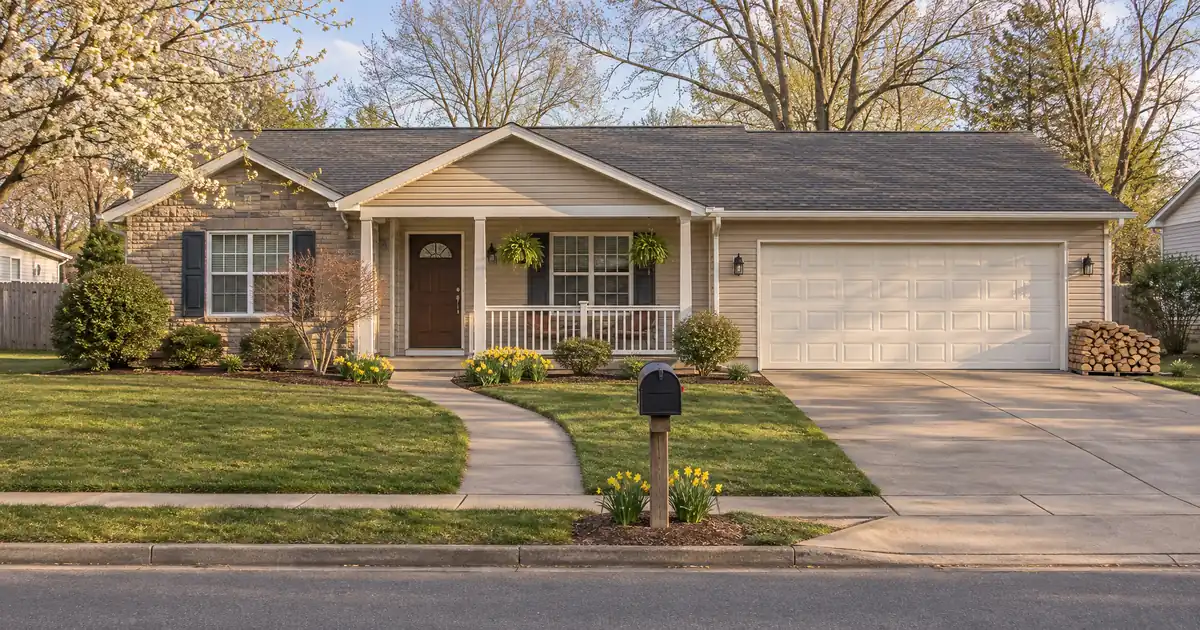
The Quick Read: The quitclaim deed does not change the lending formula. An FHA cash-out refinance reaches 80% of the home’s appraised value, with or without a deed in the file. What the deed can change is who qualifies and when, because at least one borrower on the new loan needs 12 months of owning and living in the home before the case number is assigned. Meet that test and the amount is the same 80% math everyone else gets, subject to lender guidelines and full file review.
What Does a Quitclaim Deed Actually Change?
A quitclaim deed changes who is on title. It does not change who owes the mortgage.
FHA cash-out estimate
Seeded with an example value, a balance to match, and a round cash request; change any field.
Editable benchmark: 7.18% as of November 5, 2026 · Freddie Mac 30-year average via FRED®. A conventional market reference, not an FHA cash-out refinance quote.
Illustrative starting assumptions: a $350,000 home value, a $193,000 current balance, the FHA cap on a principal residence with the upfront premium financed, a thirty-year term at the current Freddie Mac benchmark, and property taxes and insurance estimated at typical national rates. Every field is editable.
An illustration, not a Loan Estimate, an approval, a quote, or a commitment to lend. The rate shown is the weekly Freddie Mac thirty-year conventional benchmark, used as a market reference; an FHA cash-out is priced by the lender at lock, and this is not an FHA cash-out refinance quote. HUD’s cap limits the base loan; the upfront premium is financed on top of the capped base loan; the monthly premium for the first year follows the snapshot’s schedule. Cash available means the base loan the cap permits less the balances retired, before closing costs, which this calculator leaves out. The line figure applies the line program’s combined loan-to-value ceiling to the same value and balance. Taxes and insurance are estimates you can edit. Licensed in sixteen states for consumer mortgages.
A quitclaim passes along whatever ownership interest the signer holds. It makes no promises about the quality of that interest. Families use it constantly: adding a spouse after a wedding, moving a home from a parent to an adult child, or removing a name after a divorce.
The mortgage note stays exactly where it was. If you quitclaimed your name off the deed, you still owe the loan until it is paid off or refinanced. The person who stays on title is not automatically the person the lender can lean on, and the person who left title is not automatically free.
Here’s the catch for refinancing. A lender does not just look at the deed. It looks at the borrowers who will sign the new loan and asks what each one has done with the property. That is where a quitclaim starts to matter.
Key Terms Defined
Quitclaim deed: A deed that transfers whatever ownership interest the signer has, without guaranteeing that title is clean.
Title versus note: Title is who owns the home. The note is the promise to repay the loan. A deed moves the first and leaves the second alone.
Case number: The tracking number assigned to an FHA loan file. The 12-month ownership and occupancy count runs backward from the date it is assigned.
Principal residence: The home you live in as your main address. Standard FHA cash-out is only available on this kind of property.
Appraised and adjusted value: The appraiser sets the appraised value. The adjusted value is the figure FHA uses to apply its leverage cap. For a home owned a full year or more, it generally tracks the appraisal.
Combined loan-to-value (CLTV): All liens on the home, added together, divided by its value. A second lien counts toward the cap.
Does a Quitclaim Restart the FHA Clock?
No, not automatically. The test follows a borrower’s ownership and occupancy, not the date a deed was recorded.
The rule is simple to state. The home must have been owned and occupied as a principal residence by at least one borrower on the new loan for the 12 months before the case number. Manufactured homes carry a similar test tied to a permanent installation. That standard sits in HUD’s Handbook 4000.1, the agency’s single policy handbook for FHA single-family loans. Lenders should confirm the current section wording on any live file.
Two words in that rule do the heavy lifting: “at least one.” The 12 months do not have to belong to everyone on the loan. One borrower with a full year of ownership and occupancy can carry the file.
The clock also runs back from the case number date. It does not run from your application date or your closing date. A deed signed recently is not a problem if the borrower who stays on the loan has lived there for years.
For the program basics, including how the cash-out product works for a home you live in, see Lendmire’s FHA cash-out refinance program page. Lendmire is a mortgage broker and arranges these loans through wholesale lenders. It does not lend directly.
How Is the Loan Amount Built, Step by Step?
The loan amount is built from the appraisal down, not from the deed up. Here is the sequence.
1. The deed is identified. The lender reads what it did: who was added, who was removed, and whether anyone on the new loan lost or gained time on title.
2. The 12-month test is counted. The lender looks for one borrower who owned and lived in the home for the 12 months before the case number.
3. Occupancy is documented. The lender will ask for proof that a borrower lives in the home, such as employment records or utility bills.
4. Title is searched. The lender orders a title search and reads the recorded deed or the draft. Gaps in the chain of title get fixed before the loan moves on.
5. The appraisal sets the value. For a home owned a year or more, the adjusted value generally follows the appraised value. A shorter ownership history can pull that figure toward a lower, price-tied number, so the lender confirms how it applies to your file.
6. The payment history is reviewed. The mortgage you are refinancing needs a clean record. The lender confirms the exact lookback on your file.
7. The cap is applied. The loan cannot exceed 80% of the adjusted value. Your payoff, any second lien being paid off, financed costs and the cash you take all fit inside that ceiling.
That 80% figure comes from HUD Mortgagee Letter 2019-11, which set both the loan-to-value and combined loan-to-value limits for FHA cash-out at 80% of adjusted value. HUD’s announcement of the change says the earlier limit had been 85%, and that the new cap lines up with the maximum cash-out leverage Fannie Mae and Freddie Mac allow. The exact numbers vary by lender and program and follow a full review of property, leverage, and credit.
You may still see 85% or 95% quoted online. Those are out of date for cash-out.
A Worked Example in Percentages
Say your home appraises at 100% of its value (call that the baseline). You owe 60% of that value on the current FHA loan. No second lien. You are the original borrower and you have lived there for years.
The ceiling is 80% of value. Your payoff uses 60%. That leaves room for 20% of value to cover everything else: financed closing costs, the upfront mortgage insurance premium, and the cash you take out.
On FHA loans, the upfront premium is 1.75% of the base loan, and it is typically financed into the balance. The annual premium runs between 0.15% and 0.75% of the balance depending on the term, the loan amount and the LTV. A cash-out at 80% sits at or below 90% LTV, so on a thirty-year loan the annual premium ends after eleven years. Only a thirty-year loan above 90% LTV carries the annual premium for the full term. The lender’s Loan Estimate shows how the premium and costs count on your file.
Now add a quitclaim. Suppose a spouse was added to title last month. You are still the borrower with years of ownership and occupancy. The value is the same. The cap is the same. The cash is the same.
Change one fact. Suppose the original owner quitclaimed the home to an adult child last month, and the child is the only borrower on the new loan. The child does not have a year of ownership and occupancy. The 80% cap is still the cap, but standard cash-out may not be available at all. A no-cash-out refinance, which has its own leverage rules, may be the realistic path. That is the pattern: the deed rarely changes the amount, it changes whether you reach the amount.
Qualifying still takes more than the cap. The base debt-to-income pair is 31/43 (housing and total) with no compensating factors. Documented compensating factors can stretch toward 40/50 at the top tier, and an automated finding governs most files. Decision scores start at 580 on the wholesale programs Lendmire places FHA loans with. Some lenders set a higher floor. Everything here is subject to lender guidelines, credit approval, and a full file review, and none of it is a commitment to lend.
Deed Scenarios at a Glance
| Deed scenario | Clock affected? | What the lender checks |
|---|---|---|
| Spouse added; original owner stays on loan | Usually no | Original owner’s 12 months |
| Parent to child; child is only borrower | Often yes | Child’s own ownership and occupancy |
| Owner removed after divorce; ex stays off loan | Depends | Remaining borrower’s 12 months |
| Heir inherits and lives there | Special path | Handbook inheritance treatment |
| Heir inherits, then rents it out | Yes | 12 months of living there first |
The effect on cash follows the same logic. When the clock is not affected, you get the standard 80% math. When it is affected, standard cash-out may be unavailable until the borrower on the loan has the time, or the loan is structured as something other than a cash-out.
Deed First or Loan First?
The order matters more than most people expect. Here is how the two sequences compare.
| Sequence | Upside | Risk |
|---|---|---|
| Refinance first, deed later | Clock is untouched | A transfer after closing may need review |
| Deed first, refinance later | Title matches the household | Remaining borrower may lack 12 months |
| Deed and loan at the same closing | One closing | Title work and file review get heavier |
For most families, a refinance first and deed later is cleaner on the 12-month test, because the person who has the history signs the loan. But “deed later” has its own question. Federal law, the Garn-St Germain Act, generally limits a lender’s ability to call a loan on certain transfers, including transfers on death and divorce. The Consumer Financial Protection Bureau’s report on homeowners after divorce or death discusses that protection. Whether a transfer to someone outside those categories could trigger a call is a legal question. Ask the lender and a real estate attorney before you sign anything.
A good broker will not tell you which order is right without seeing your title, your loan and your goals. They will tell you to ask the question first.
Where the General Rule Breaks
Several situations bend the standard 12-month rule. Each deserves its own look.
Inherited homes. Handbook 4000.1 treats inherited property differently, exempting it from the minimum ownership and occupancy period as long as the heir has not treated it as an investment property since inheriting. If the heir rents it out, the 12 months of living there comes back. Have the lender confirm the current handbook wording on your file.
Non-occupant co-borrower. A parent or relative who does not live in the home cannot help you qualify for a cash-out. Income from a non-occupying co-borrower may not be used. This surprises people, because a non-occupant co-borrower can help on an FHA purchase. Cash-out follows a stricter rule.
Buying out a co-owner or ex-spouse. When one person pays another for their share of the equity, the file is a different transaction type from a plain cash-out. Older HUD guidance addressed these buyouts specifically. Current treatment should come from the lender, who will look at the divorce decree or the buyout agreement.
Gift of equity. This belongs to a purchase, not a quitclaim refinance. HUD allows a gift of equity only between family members, with a signed gift letter naming the donor, the relationship, the dollar amount, and a statement that no repayment is required. Use that as a test: if money is changing hands because a relative is selling at a discount, it is a purchase. If title is just moving, it is a quitclaim.
Second homes and rentals. Occupancy decides the leverage. A standard FHA cash-out is only for the home you live in.
Delayed financing. That is a conventional exception for recent cash buyers. It is not an FHA rule, so do not borrow its timelines. Conventional cash-out also measures seasoning differently, by title and first-lien age.
What a Deed Does to Your Liability
A quitclaim does not release anyone from the note. If a spouse or relative was removed from title, they may still owe the debt until the loan is refinanced or paid off. This is general practice, not a specific HUD rule, and it matters most in divorce.
The reverse also holds. Someone who receives a home from a spouse, parent or deceased relative can often be treated as a successor in interest by the servicer. Federal servicing rules define that term to include certain family transfers, and the CFPB’s report notes these successors should be able to get mortgage information once ownership is confirmed. If a servicer pushes a successor toward a new loan, that report encourages filing a complaint.
The Pre-Signing Checklist
Before you sign a deed or apply, get answers to these.
- Who will be the borrower or borrowers on the new loan?
- Does at least one of them have 12 months of ownership and occupancy before the case number?
- Is the mortgage you are refinancing current, with a clean recent history?
- Is there a second lien on the home, and would it be paid off?
- Is the deed drafted, signed or recorded, and does the title company agree on the chain of title?
- What documents prove you live there?
- Will anyone on the loan be a non-occupant?
- Does the appraisal need to support a specific cash amount?
Bring the deed, the current mortgage statement, proof of occupancy, and any divorce decree or probate papers. Having them ready helps the lender review your file.
Mistakes That Cost Borrowers Their Cash-Out
- Assuming the deed ends the waiting period. It does not. The remaining borrower’s own history decides.
- Assuming the deed ends the debt. It does not. The note stays.
- Using the online estimate instead of the appraisal. The appraisal sets your cash, not a website or your purchase price.
- Quoting old leverage numbers. The 85% and 95% caps are history for cash-out.
- Counting on a relative to co-sign. A co-borrower who does not live there cannot lift a cash-out file.
- Believing a free-and-clear home skips the clock. Some third-party sites claim a shortened window. The handbook does not contain one, so treat that claim as a caution.
- Treating the 80% cap as an approval. Credit, income, payment history and the appraisal all still decide the outcome.
How Does Cash-Out Compare With Streamline and Rate-and-Term?
Three FHA refinance paths exist, and they behave differently.
The cash-out reaches 80% of value, needs the 12-month test, and requires an appraisal. The rate-and-term refinance takes cash out of the picture and reaches 97.75% on a principal residence occupied for the previous twelve months. The streamline refinances an existing FHA loan with no appraisal, a limited credit review and a net tangible benefit to the borrower, and the mortgage insurance premium continues.
If the deed left the remaining borrower short of the 12 months, a rate-and-term or streamline may still fit, depending on your goals. Neither one puts cash in your pocket the way a cash-out does. Compare them side by side before you decide.
Frequently Asked Questions
Does adding my spouse to the deed delay an FHA cash-out?
Usually not. If you remain on the loan and have lived there for 12 months or more, you carry the ownership and occupancy test. Your spouse’s addition to title does not erase your history. The lender will still review the deed and title work as part of the file.
Can my parent quitclaim the house to me and then I take cash out?
Possibly, but not right away in many cases. If you are the only borrower and have not owned and lived in the home for 12 months, standard cash-out may be unavailable. If your parent stays on the loan and has the history, the file looks different. Ask a lender to review the specific facts before the deed is signed.
Does the appraisal or the deed set how much I can borrow?
The appraisal. The 80% cap applies to adjusted value, which for a home owned a year or more generally follows the appraised value. The deed affects eligibility. It does not change the percentage.
Does a quitclaim take me off the mortgage?
No. It changes title only. The note is a separate obligation, so you may still owe the debt until the loan is refinanced or paid off.
What if I inherited the home and want cash out?
Handbook 4000.1 provides a path for inherited property that is not treated as an investment. If you rent it out first, the 12 months of living there generally applies. Ask the lender to confirm the current wording for your file.
Weighing a Cash-Out Against the Loan You Have
If you are weighing a cash-out refinance against keeping the loan you have, Lendmire can help you compare the programs and the equity each one reaches. The right answer often turns on whose name carries the 12-month history, so bring the deed with you.
For your own numbers, request a scenario review with Lendmire.
About Lendmire
Lendmire (NMLS# 2371349) is a mortgage broker licensed for consumer lending in 16 states. Lendmire arranges FHA, VA, conventional and jumbo purchase and refinance loans through wholesale lenders; every file is underwritten by the lender under the applicable program guidelines. Scotsman Guide named Lendmire a Top Mortgage Workplace in both 2025 and 2026.
Get Started
Ready to find the right loan for you?
See your offer in seconds. No credit pull, no obligation.
Informational only. Not a Loan Estimate, approval, or commitment to lend. Program availability and eligibility are subject to lender guidelines, credit approval, property review, and underwriting.
References
1. HUD Housing Handbooks page (Handbook 4000.1)
2. HUD Mortgagee Letter 2019-11
3. HUD announcement on the cash-out LTV change (PR 19-114)
4. CFPB: Homeowners face problems with mortgage companies after divorce or death of a loved one
5. HUD: Does HUD Allow Gifts of Equity
This article is part of Lendmire’s FHA cash-out refinance program — full qualification details, guidelines, and scenarios live on the program page.
Related reading: VA Cash-Out vs FHA Cash-Out After a Quitclaim Deed: What Decides · How to Get an FHA Cash-Out When Conventional Costs Too Much · How Much Cash Comes Out of an FHA Cash-Out Refinance to Pay College Tuition?
Brandon Miller
Founder & CEO, Mortgage Loan Originator, Lendmire LLC
- Mortgage Loan Originator · NMLS# 1129696 · Verify on NMLS Consumer Access
- North Carolina Real Estate Broker · License# 343312 · Verify on NCREC
- North Carolina Insurance Producer · License# 19053198 · Property, Casualty, Life, Health · Verify on NAIC SBS
- Lendmire LLC · Firm NMLS# 2371349 · Verify firm licensure
Important disclosures. Lendmire (NMLS# 2371349) is a licensed mortgage brokerage. Lendmire is not a direct lender, depository institution, or financial advisor. All loan inquiries are subject to lender underwriting; this article does not constitute a commitment to lend. Rates, terms, and program guidelines are subject to change without notice and vary by borrower profile, property type, and state. Information in this article is general in nature and is not financial, legal, or tax advice. Equal Housing Opportunity. NMLS Consumer Access: nmlsconsumeraccess.org.