
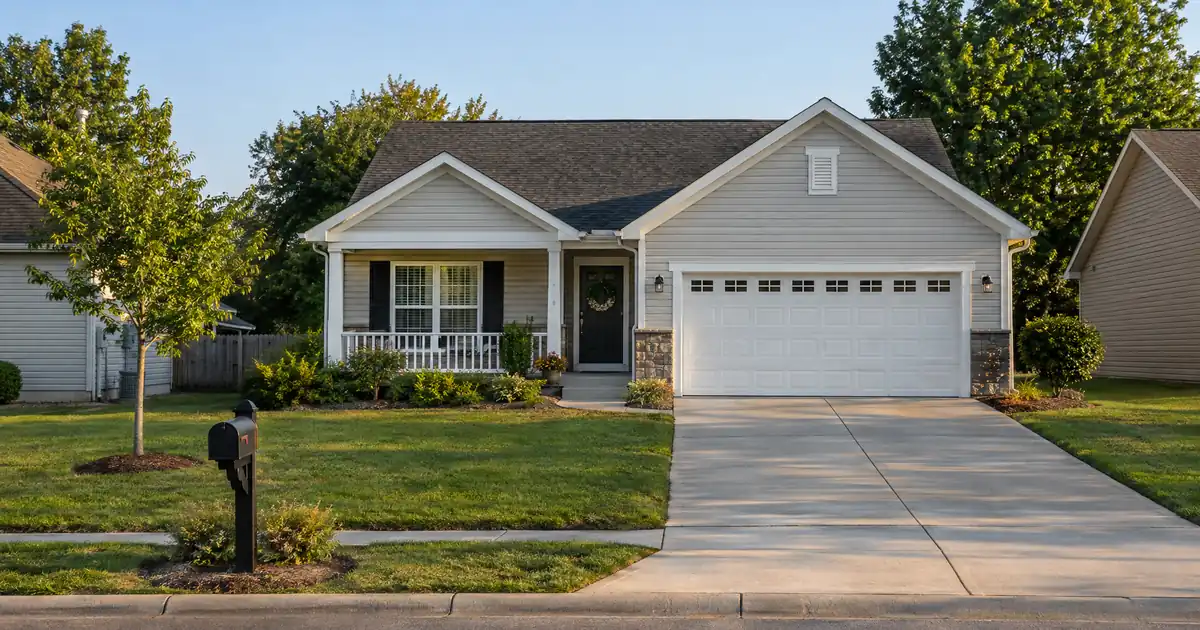
The Quick Read: FHA cash-out payment history requirements come down to one test. Every mortgage payment on the home must have been made within the month it was due. The lender looks back 12 months, or to the start of the loan if it is newer than that. One missed month can push a cash-out application out by up to a year. These rules reflect HUD policy and are subject to lender guidelines and full file review.
Key Terms Defined
Cash-out refinance: A new mortgage that pays off your current one and hands you part of your home equity as cash.
Payment history: The record of whether you paid each mortgage bill on time. Lenders read it from your credit report, your servicer, or bank statements.
Delinquent: HUD calls a payment delinquent if it is not paid within the month it was due.
Case number: The FHA identifier a lender assigns when your application starts. Several lookback windows count backward from this date.
Manual underwriting: A loan officer’s line-by-line review of your file instead of an automated approval. It is slower and stricter.
Seasoning: The waiting period a lender wants before you can refinance or take cash out, whether in payments made or months of ownership.
FHA cash-out estimate
Seeded with an example value, a balance to match, and a round cash request; change any field.
Editable benchmark: 7.40% as of October 15, 2026 · Freddie Mac 30-year average via FRED®. A conventional market reference, not an FHA cash-out refinance quote.
Illustrative starting assumptions: a $350,000 home value, a $193,000 current balance, the FHA cap on a principal residence with the upfront premium financed, a thirty-year term at the current Freddie Mac benchmark, and property taxes and insurance estimated at typical national rates. Every field is editable.
An illustration, not a Loan Estimate, an approval, a quote, or a commitment to lend. The rate shown is the weekly Freddie Mac thirty-year conventional benchmark, used as a market reference; an FHA cash-out is priced by the lender at lock, and this is not an FHA cash-out refinance quote. HUD’s cap limits the base loan; the upfront premium is financed on top of the capped base loan; the monthly premium for the first year follows the snapshot’s schedule. Cash available means the base loan the cap permits less the balances retired, before closing costs, which this calculator leaves out. The line figure applies the line program’s combined loan-to-value ceiling to the same value and balance. Taxes and insurance are estimates you can edit. Licensed in sixteen states for consumer mortgages.
What Is the Payment History Rule?
The rule is simple to state and strict to live with. For an FHA cash-out refinance, the lender must document that you paid all payments on all of your mortgages within the month due. The window is the previous 12 months, or since you got the loans, whichever is shorter. HUD’s Handbook 4000.1 sets this standard for both automated and manually underwritten files. Lendmire’s page on the FHA cash-out refinance program covers the program itself in more detail.
“All of your mortgages” matters. A second mortgage or home equity line on the same home counts too. A perfect first-mortgage record doesn’t help if the second lien shows a late month.
There is also a separate check near the finish line. Payments on the mortgages secured by the home must also be made within the month due for the month before the loan is disbursed. So the history that counts isn’t frozen at application. A slip while your file is in process can derail it.
One more floor applies to the loan you hold now. A home with a mortgage needs at least six months of payments on that current loan. If you bought or refinanced recently, you can’t take cash out yet.
What Does “Within the Month Due” Actually Mean?
It means the calendar month. If your payment is due on the first and you pay on the twenty-eighth, HUD does not call that delinquent. HUD Mortgagee Letter 2020-30 defines a payment as delinquent if it is not paid within the month due.
That is different from your servicer’s late-fee date. Many loans charge a fee after a short grace period, often around the middle of the month. A fee is not the same as a delinquency under the FHA standard. And a payment that clears in the month but shows as “30 days late” on a credit report is a different story. Credit reporting follows its own calendar.
Here’s the catch. The cushion is real but thin. Paying on the last day of the month works on paper and fails the moment a bank holiday or a processing delay pushes the payment into the next month. Treat the due date as the target and the month-end as the emergency margin.
In plain terms, lenders sometimes call this “0x30 in 12 months”: no 30-day lates over 12 months. That shorthand is a gloss on the HUD standard, not a separate rule.
How Does the Lookback Work, Step by Step?
Here is the sequence a lender follows on an existing FHA borrower’s file.
1. The clock starts at the case number. The 12-month payment lookback and the 12-month occupancy window both count back from the case number date. The pre-closing payment check is separate and tied to disbursement.
2. The lender pulls credit and mortgage tradelines. If your mortgage shows on the credit report in your name, that is the first evidence.
3. Missing tradelines get documented another way. If the mortgage isn’t on the report, or isn’t in your name, the lender must collect a verification of mortgage, bank statements, or other proof. It must show you made every payment within the month due for the previous 12 months.
4. Each payment is tested. One month, one test. There is no averaging.
5. The six-payment minimum is checked on the current loan.
6. Occupancy is verified. You must have owned and lived in the home as your principal residence for the 12 months before the case number. Lenders typically confirm this with employment records or utility bills.
7. The appraisal sets the value. For FHA cash-out, the maximum financing is 80% of the home’s value, counting all liens. That leaves you with equity you can’t tap.
8. Payments are re-verified before closing. The month-before-disbursement check is the last gate.
If you already hold an FHA loan, your servicer’s payment record is usually easy to pull. That is a quiet advantage. There is less guesswork than with a borrower who paid a private party or whose loan isn’t reporting.
What Happens If Your Automated Approval Gets Downgraded?
Most files start in an automated underwriting system. For a cash-out refinance, HUD requires that file be downgraded to “Refer” and manually underwritten in three situations. Any mortgage tradeline shows a current delinquency. There was any delinquency within 12 months of the case number. Or the borrower has made fewer than 12 consecutive payments since finishing a forbearance plan. All three come from the same HUD mortgagee letter.
“Downgraded” isn’t “denied.” Manual underwriting means a person reviews the file. The ratios drop to the base pair of 31/43 (housing to total income) unless documented compensating factors lift them. At the top credit tier, those factors can reach 40/50. Across the wholesale programs I place files with, a manual file is a harder path than an automated one, and a recent late payment tends to make it harder still.
Cash-Out vs. Streamline: Why the Rules Differ
Existing FHA borrowers often mix these two up. The tests are different, and the difference is large.
| Factor | FHA Cash-Out | FHA Streamline |
|---|---|---|
| Payment history | All within the month due, 12 months | Six months; one 30-day late allowed |
| Seasoning | 12 months’ occupancy; six payments | Six payments, six months, 210 days |
| Appraisal | Yes | No |
| Cash to you | Yes, up to the cap | None |
The streamline figures come from an FDIC summary of HUD policy. A streamline refinances an existing FHA loan with no appraisal and a limited credit review. It needs a net tangible benefit, and the mortgage insurance premium continues. It allows no cash out.
So “one 30-day late is OK” is true only for the streamline. Some consumer sites blur the two. For cash-out, plan on none.
The leverage differs as well. The FHA rate-and-term with an appraisal can reach 97.75% on a principal residence you’ve occupied for the previous 12 months. The FHA cash-out reaches 80% LTV (loan-to-value, the loan as a share of the home’s value) on a home owned and occupied for 12 months before the case number. Different goals, different gates. Each figure is subject to lender guidelines and a complete review of property type, leverage, and credit.
Worked Examples
These are scenarios in words, with no dollar figures.
Clean record, loan older than a year. You’ve paid on time for three years. The lender checks 12 months of payments, finds no delinquency, and moves to occupancy and equity. Payment history is a non-issue.
Newer loan. You closed your current FHA loan eight months ago and have never been late. The window is “since you obtained the mortgage,” so eight months of clean payments covers the history test. But occupancy for 12 months and the six-payment minimum still apply, so check the occupancy clock separately.
One late payment. You paid a month late five months before your case number. That is inside the 12-month window, so the file is downgraded to manual underwriting. Eligibility under the standard approach opens about a year after that missed month. Waiting until the late payment is 12 months old is often the cleaner path.
Forbearance finished earlier. You were granted payment forbearance and completed the plan on this home. Cash-out needs at least 12 consecutive payments within the month due since you finished it. HUD’s letter gives a shorter three-payment standard for purchase and no-cash-out loans. Cash-out gets the longer one.
What Counts and What Doesn’t
All mortgages on the home count. First lien, second lien, home equity line. If it is secured by the property, it is in the test.
Free-and-clear homes qualify as cash-out. A home with no mortgage can still be refinanced for cash. There is no payment history to test, but the occupancy and 80% leverage limits still apply. Leverage, reserves, and pricing vary by lender and program; the final terms follow the full file review.
Other debts are not in this test. Credit cards and auto loans matter for your credit and income review. They don’t enter the mortgage-payment lookback.
Credit reports aren’t the only record. If your mortgage doesn’t report, you can’t skip the test. The lender gathers bank statements or a verification of mortgage instead.
Where the Rule Bends
A few edge cases change how the clocks run.
- Inherited homes. You needn’t meet the 12-month occupancy period for a home you inherited, provided you never treated it as an investment property since inheriting it. If you rented it out after inheriting, you must live in it as your principal residence for 12 months first.
- Military families. An active-duty borrower who can’t physically live in the home may still be treated as an owner-occupant if a family member occupies it or the borrower intends to return. Check the specifics with your lender before relying on this.
- Hawaiian Home Lands. The 80% cap change doesn’t apply to Section 247 mortgages.
- Occupancy type. FHA programs are generally for one-to-four-unit principal residences. Cash-out is an owner-occupant product. If the home is a second home or a rental, occupancy decides the leverage, and FHA cash-out is not the route.
Equity, the 80% Cap, and the Old 85% Number
Payment history gets you to the door. Equity decides how much cash walks out with you. HUD cut the maximum LTV and combined LTV for cash-out from 85% to 80% for cases assigned on or after September 1, 2019. HUD’s announcement described the change as aligned with industry standards and meant to strengthen equity positions.
Some older web pages still say 85%. Skip them. The cap is 80% of the home’s value, and it covers every lien, not just the new loan. It doesn’t rise with a better credit score.
County loan limits also apply to the new loan amount. Those limits change every year, so check your county’s current limit with a loan officer.
What About Cost and Risk?
Cash-out has costs beyond the loan balance. FHA charges an upfront mortgage insurance premium of 1.75% of the base loan, usually financed. It also charges an annual premium between 0.15% and 0.75% of the balance, depending on term, loan amount and LTV. How long the annual premium lasts depends on LTV. On a thirty-year loan above 90% LTV, it lasts for the term. At or below 90% LTV, it ends after eleven years. An FHA cash-out is capped at 80% LTV, so its annual premium ends after eleven years rather than lasting for the term of the loan. These are program mechanics, and your Loan Estimate shows how they apply to your loan.
Then comes the risk. The CFPB notes that cash-out refinances can raise foreclosure risk. They often carry higher balances and can turn unsecured debt, like credit card balances, into debt secured by your home. That is the trade when you consolidate debt, and the CFPB reports it is a common reason borrowers cite for taking cash out.
When you compare options, compare payments on the same basis. Principal and interest alone against a payment that includes taxes and insurance is not a fair match.
Tax treatment can depend on your situation; borrowers should speak with a qualified tax professional before relying on any deduction or credit.
If You’ve Been Late: A Practical Plan
Start by finding the date. Pin down the month of the late payment, and count 12 full months forward from it. That is the earliest date the lookback stops catching it, measured against the case number.
Then check your record. Pull your credit report and your servicer’s payment history. Look for errors, such as a payment posted to the wrong month. A mis-posted payment can often be corrected with a servicer letter and bank proof.
Next, protect the clean streak. Set autopay for the due date, not the month-end. A single slip during processing can sink a file, given the pre-closing check.
If you can’t wait, ask whether a manual file with compensating factors is realistic. Documented reserves, low debt, and stable income are the kinds of factors that can help, subject to lender guidelines and full file review.
Finally, consider the alternatives. A streamline allows one 30-day late in six months, but it provides no cash. If your goal is a lower balance or term change rather than cash, it may fit better.
Where Payment History Sits Among the Other Requirements
Payment history is one gate of several. Here is the full set for an existing FHA borrower. Each is subject to lender guidelines.
- Credit score: the wholesale programs Lendmire places FHA loans with start at a 580 decision score. Some lenders set higher floors.
- Debt ratios: base 31/43, reaching 40/50 with documented compensating factors at the top tier.
- Occupancy: 12 months of owner-occupancy before the case number.
- Equity: the 80% cap on LTV.
- Appraisal: required for cash-out.
The CFPB’s home-equity guide adds that lenders typically want you to keep at least 10% to 20% of your home’s value as equity, which is a useful gut check even outside FHA.
Frequently Asked Questions
Do I need an existing FHA loan to do an FHA cash-out refinance?
No. FHA cash-out is open to qualifying owner-occupants with other loan types, or no loan at all. The rules cover all mortgages on the home. An existing FHA borrower simply has a servicer record that is typically easy to document.
Does one late payment disqualify me?
For cash-out, a delinquency inside the 12-month window triggers a manual-underwrite downgrade. It doesn’t automatically end your chances, but it makes the file harder. Many borrowers wait until the late month is more than 12 months old. A streamline is more forgiving, but it provides no cash.
Does a grace period count as on time?
It can, in some cases. HUD defines delinquent as not paid within the month due. A payment made after your servicer’s fee date but within the same calendar month isn’t delinquent under that definition. Credit bureaus and servicers may still report it differently, so verify your reported history.
What if my loan is newer than 12 months?
The window is the previous 12 months or since you obtained the mortgage, whichever is less. But the current loan needs at least six months of payments, and you need 12 months of occupancy. A new loan can pass the history test and still fail the seasoning tests.
What about forbearance?
Finish the plan, then make at least 12 consecutive payments within the month due. That longer standard applies to cash-out. A shorter three-payment standard applies to purchase and no-cash-out loans.
If you are weighing a cash-out refinance against keeping the loan you have, Lendmire can help you compare the programs and the equity each one reaches.
For your own numbers, request a scenario review with Lendmire.
About Lendmire
As a mortgage broker (NMLS# 2371349), Lendmire helps homeowners and home buyers in 16 states with FHA, VA, conventional and jumbo purchase and refinance loans arranged through wholesale lenders. Lendmire is never the lender; program terms are set by the lender and the agency guidelines. Scotsman Guide named Lendmire a Top Mortgage Workplace in both 2025 and 2026.
Get Started
Ready to find the right loan for you?
In about 30 seconds you can review financing options available for your home or investment property. No commitment required.
Informational only. Not a Loan Estimate, approval, or commitment to lend. Program availability and eligibility are subject to lender guidelines, credit approval, property review, and underwriting.
References
1. HUD Mortgagee Letter 2020-30
2. FDIC summary of FHA streamline refinance rules
3. HUD press release on the cash-out LTV change
4. CFPB on cash-out refinance risk
This article is part of Lendmire’s FHA cash-out refinance program — full qualification details, guidelines, and scenarios live on the program page.
Related reading: FHA Cash-Out Buyout Requirements for a Paid-Off Home · FHA Cash-Out Buyout Documentation for an Existing FHA Loan · FHA Cash-Out Approval Requirements for a Condo Unit
Brandon Miller
Founder & CEO, Mortgage Loan Originator, Lendmire LLC
- Mortgage Loan Originator · NMLS# 1129696 · Verify on NMLS Consumer Access
- North Carolina Real Estate Broker · License# 343312 · Verify on NCREC
- North Carolina Insurance Producer · License# 19053198 · Property, Casualty, Life, Health · Verify on NAIC SBS
- Lendmire LLC · Firm NMLS# 2371349 · Verify firm licensure
Legal disclosures. Lendmire (NMLS# 2371349) is a state-licensed mortgage brokerage that arranges financing through wholesale lender relationships. Lendmire is not a direct lender, depository institution, or registered financial advisor. The discussion above is general informational content about real estate financing — it is not financial, legal, or tax advice, and readers should consult licensed professionals for guidance on their individual circumstances. Loan inquiries are subject to lender underwriting; this article does not represent a commitment to lend. Loan terms, rates, and qualification standards vary by borrower, property, and state, and are subject to change at any time. Equal Housing Opportunity. NMLS Consumer Access: nmlsconsumeraccess.org.