
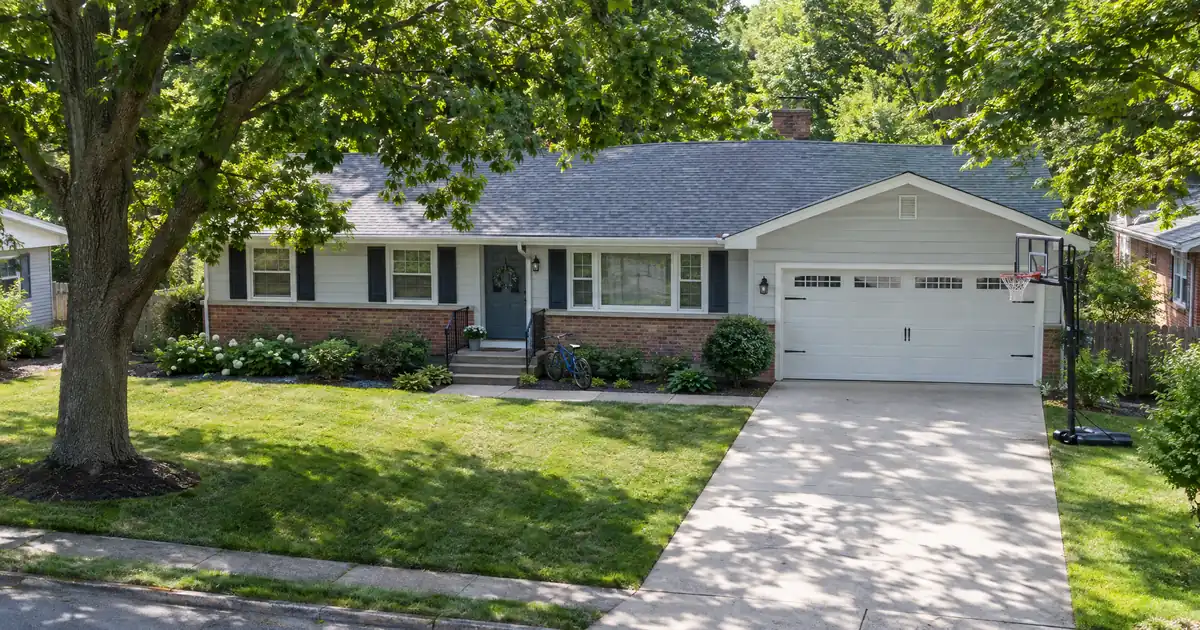
The Quick Read: An FHA cash-out refinance lets a retiree borrow up to 80% of the home’s value, but only on documented income that is likely to continue. A large savings balance does not count as income on its own. The file is built on Social Security, pension, retirement-account distributions, and interest or dividends, each with its own documentation test, subject to lender guidelines and full file review.
- The new base loan is capped at 80% of the home’s value. The cap applies to the whole loan, not just the cash you take out.
- The home must be your principal residence, owned and lived in for 12 months before the case number.
- Each income stream needs proof, and the underwriter asks whether it will last.
- Money you spend on closing costs can shrink the income your portfolio produces.
What Is an FHA Cash-Out Refinance?
It is a new, larger FHA mortgage that pays off your current loan and hands you the difference in cash. The CFPB’s older-adult guide to using home equity describes a cash-out refinance the same way and warns that it can lengthen your payoff time and raise your monthly payment.
FHA cash-out estimate
Seeded with an example value, a balance to match, and a round cash request; change any field.
Editable benchmark: 7.24% as of October 29, 2026 · Freddie Mac 30-year average via FRED®. A conventional market reference, not an FHA cash-out refinance quote.
Illustrative starting assumptions: a $350,000 home value, a $193,000 current balance, the FHA cap on a principal residence with the upfront premium financed, a thirty-year term at the current Freddie Mac benchmark, and property taxes and insurance estimated at typical national rates. Every field is editable.
An illustration, not a Loan Estimate, an approval, a quote, or a commitment to lend. The rate shown is the weekly Freddie Mac thirty-year conventional benchmark, used as a market reference; an FHA cash-out is priced by the lender at lock, and this is not an FHA cash-out refinance quote. HUD’s cap limits the base loan; the upfront premium is financed on top of the capped base loan; the monthly premium for the first year follows the snapshot’s schedule. Cash available means the base loan the cap permits less the balances retired, before closing costs, which this calculator leaves out. The line figure applies the line program’s combined loan-to-value ceiling to the same value and balance. Taxes and insurance are estimates you can edit. Licensed in sixteen states for consumer mortgages.
Lendmire’s FHA cash-out refinance program page lays out the program. Across the wholesale programs we place FHA files with, the cash-out option reaches 80% of the home’s value on a home you have owned and occupied for 12 months before the case number. It is a full-qualification loan. That means a full appraisal, a credit review, and income documentation. It is not the FHA Streamline, which refinances an existing FHA loan with no appraisal and no meaningful cash back.
Key Terms Defined
Case number: The FHA identifier assigned to your loan file. Its date starts the 12-month ownership and occupancy lookback.
Effective income: The income an underwriter is allowed to count toward qualifying.
Continuance: Evidence that an income stream will keep arriving for at least the first three years of the new loan.
Adjusted value: The property value the 80% cap is applied to.
Upfront premium: The one-time FHA mortgage insurance charge, 1.75% of the base loan, usually financed into the balance.
What Are the Core Requirements?
The core requirements are owner occupancy, 12 months of ownership, 80% maximum financing, a full appraisal, and income that passes the continuance test. Equity alone does not decide the file. Income documentation does.
| Requirement | What it means for a retiree | What to bring |
|---|---|---|
| Principal residence | Home is where you live now | Proof of address |
| 12 months owned and occupied | Lookback runs from the case number | Deed, statements |
| 80% maximum LTV | At least 20% equity stays in the home | Appraisal result |
| Credit | Decision score of 580 or higher on the programs we place with | Credit report |
| Debt ratios | Base pair 31/43, up to 40/50 with documented factors | Debt statements |
| Documented income | Each stream proven and likely to continue | See the income table below |
HUD’s rule cutting the cap is public. The HUD announcement states that FHA lowered the maximum from 85% to 80% after an earlier cut from 95% to 85% in 2009. Older web pages still quoting 85% are out of date. A higher credit score does not lift the 80% cap.
Occupancy rules come from HUD Handbook 4000.1. Standard cash-out is limited to owner-occupied principal residences. A borrower who rents out an inherited home must live in it for 12 months before cash-out is available.
Every figure here is subject to lender guidelines and full file review. Nothing is a commitment to lend.
Which Retirement Income Counts?
Social Security, pensions, retirement-account distributions, and interest or dividends can all count, but each is tested differently. The underwriter sorts your income into those buckets first. HUD’s Handbook glossary defines retirement income as pensions, 401(k) distributions and Social Security. It defines investment income as interest and dividends from accounts such as CDs, mutual funds, stocks, bonds and savings.
| Income type | What proves it | The continuance question |
|---|---|---|
| Social Security | Award letter, bank deposits | Does the letter show an end date? |
| Pension | Pension statement, deposits | Is it likely to last three years? |
| IRA/401(k) distributions | 1099-R, recent statement | Can the balance sustain three years? |
| Interest and dividends | Statements, tax returns | Does the asset survive closing? |
The general rule for forward FHA loans is that effective income must be reasonably likely to continue for at least the first three years of the mortgage. A benefits letter with no stated end date generally supports continuance.
Distributions that rise and fall are averaged. The lender uses the prior two years. A new retiree with less than two years of history is averaged over the time the money has been received. Income with an end date inside three years cannot be used.
Typical documents include an award letter, a pension statement, a 1099-R, the latest retirement-account statement, bank statements showing the deposits, and tax returns where investment income is claimed.
Can Assets Count as Income?
Not as a simple formula. A big portfolio does not convert itself into monthly income.
Some web pages say FHA allows “asset depletion.” HUD’s own definitions tie asset-dissipation calculations to reverse mortgages and certain other programs, not to the standard cash-out refinance. Lenders also vary in how they treat it, so no borrower should be promised that approach. What does count is income the assets actually produce: interest and dividends, and distributions that are documented and likely to continue.
One more rule catches retirees off guard. Before the lender calculates interest or dividend income, it subtracts any assets you use to close from the liquid assets. Paying closing costs from the same portfolio that generates your qualifying income can reduce that income. Think about which account pays the costs before you apply.
A separate rule concerns the asset side of the file. In manual underwriting, lenders may count up to 60% of a retirement account’s value, less any loans against it, as an asset. That helps with reserves. It is not income.
How Does the File Get Underwritten?
The deal works through the same steps whether you are 62 or 82.
1. Eligibility screen. The underwriter confirms the home is your principal residence and that you have owned and lived in it for 12 months before the case number. Some lenders add their own payment-history requirements on the current loan.
2. Case number and appraisal. The case number date anchors the lookback. A full appraisal sets the adjusted value, and 80% of it caps the whole new base loan, not just the cash portion.
3. Income classification. Each retirement income stream is sorted and documented on its own test.
4. Continuance test. The underwriter asks whether each stream lasts at least three years after closing.
5. Closing-cost adjustment. Assets used to close come out of the pool before interest and dividend income is figured.
6. Debt ratios. The new housing payment, including mortgage insurance, plus your other debts are compared to effective income. The base pair is 31/43. Documented compensating factors can reach 40/50 at the top tier. The automated finding governs most files.
7. Mortgage insurance. The upfront premium is figured on the base loan and is usually financed. The annual premium varies with term, loan amount and LTV. On a thirty-year loan above 90% LTV it lasts for the term. At or below 90% it ends after eleven years. HUD’s Mortgagee Letter 2023-05 addresses the annual premium.
How Much Cash Can You Take?
Cash out is what remains after the new base loan pays off your current mortgage and costs, within the 80% cap. Think in percentages. A home with a mortgage already near 70% of value leaves little room. A home with no mortgage leaves the most.
A paid-off home is not a shortcut around income rules. The loan is still new, so full qualification applies, including the income and continuance tests above.
Where Does the General Rule Break?
These edge cases come up on retiree files:
- Inherited and rented homes. Not eligible until you have lived in the home for 12 months.
- Manufactured homes. Lenders typically require the home to have been permanently installed on its site for more than 12 months before the case number. Confirm the details with the lender.
- Section 247 Hawaiian Home Lands loans. These are exempt from the 80% cut, which matters to very few readers.
- First-year retirees. Less than two years of distribution history means averaging over the months received.
- Rate-and-term instead of cash-out. An FHA rate-and-term refinance can reach 97.75% on a principal residence occupied for the previous twelve months. If you only want to change your loan terms and not take cash, the leverage is very different.
- Second homes and rentals. Occupancy decides the leverage, and this program is limited to the home you live in.
- Mostly assets, small income. If your qualifying income is thin, the file may fail on debt ratios even with real wealth behind it. Some retirees in that spot compare other products instead.
Is It the Right Move for a Fixed Income?
A cash-out refinance turns equity into debt. The payment can rise and the payoff can stretch. Look at the new payment, the mortgage insurance, and the term reset together.
A short checklist helps:
- Will the new payment fit comfortably on your fixed income after taxes and living costs?
- Are you restarting a long term on a loan you were close to paying off?
- Does the cash have a clear purpose, such as repairs or paying off higher-cost debt?
- Will paying closing costs weaken the portfolio that generates your income?
Tax treatment can depend on your situation; borrowers should speak with a qualified tax professional before relying on any deduction or credit.
| Option | Best fit | Main trade-off |
|---|---|---|
| FHA cash-out | Needs cash, has documented income, lower credit score | Mortgage insurance on whole loan |
| FHA Streamline | Existing FHA loan, no cash needed | Little to no cash back |
| FHA rate-and-term | Change terms with higher leverage | No meaningful cash out |
| Keeping your loan | Current terms work | No access to equity |
Documentation Checklist
Gather these before you apply:
- Social Security award letter and recent deposits
- Pension statement or benefits letter
- Most recent IRA or 401(k) statement and 1099-R
- Bank and investment statements
- Two years of tax returns where investment income is claimed
- Current mortgage statement and homeowners insurance
- Proof of the 12-month occupancy period
Files stall most often on the continuance proof and on gaps between a statement and the deposits that back it up.
Frequently Asked Questions
Can I qualify with no job?
Yes, if you have documented income that is likely to continue. Social Security, pensions, retirement-account distributions, and interest or dividends can all count, subject to lender guidelines and full file review. Having no paycheck is not the issue. Missing proof is.
Does my age matter?
Age itself is not a qualifying factor. The file is judged on equity, credit, debt ratios, and whether your income will last at least three years.
Can my IRA balance count as income?
Not as a balance. Distributions you actually receive can count if they are documented and likely to continue for three years, and fluctuating amounts are averaged over two years. Lenders vary on how they treat any depletion-style calculation, so do not assume it.
Do I need an existing FHA loan?
No. The cash-out refinance is available on a qualifying home whether or not the current loan is FHA. The Streamline is the product that requires an existing FHA loan.
Can I use cash-out on a paid-off home?
Yes, if you meet the occupancy and income rules. Maximum financing stays at 80% of the value, and you must still qualify on income and credit.
If you are weighing a cash-out refinance against keeping the loan you have, Lendmire can help you compare the programs and the equity each one reaches.
For your own numbers, request a scenario review with Lendmire.
About Lendmire
As a mortgage broker (NMLS# 2371349), Lendmire helps homeowners and home buyers in 16 states with FHA, VA, conventional and jumbo purchase and refinance loans arranged through wholesale lenders. Lendmire is never the lender; program terms are set by the lender and the agency guidelines. Scotsman Guide named Lendmire a Top Mortgage Workplace in both 2025 and 2026.
Get Started
Ready to find the right loan for you?
See your offer in seconds. No credit pull, no obligation.
Informational only. Not a Loan Estimate, approval, or commitment to lend. Program availability and eligibility are subject to lender guidelines, credit approval, property review, and underwriting.
References
1. CFPB Older Americans Housing Guide
2. HUD Press Release: Reduce Risk from Cash-Out Refinance Lending
4. HUD Handbook 4000.1 Glossary
5. HUD Mortgagee Letter 2023-05
This article is part of Lendmire’s FHA cash-out refinance program — full qualification details, guidelines, and scenarios live on the program page.
Related reading: FHA Cash-Out Refinance Requirements With No Mortgage · FHA Cash-Out Refinance Requirements for Consolidating Credit Cards
Brandon Miller
Founder & CEO, Mortgage Loan Originator, Lendmire LLC
- Mortgage Loan Originator · NMLS# 1129696 · Verify on NMLS Consumer Access
- North Carolina Real Estate Broker · License# 343312 · Verify on NCREC
- North Carolina Insurance Producer · License# 19053198 · Property, Casualty, Life, Health · Verify on NAIC SBS
- Lendmire LLC · Firm NMLS# 2371349 · Verify firm licensure
Required disclosures. Lendmire (NMLS# 2371349) operates as a licensed mortgage broker, not a direct lender or depository. The discussion in this article is general in nature and should not be relied upon as financial, legal, or tax advice — every investment scenario is unique and should be reviewed by a qualified professional. Any loan inquiry is subject to lender underwriting, and this article is not a commitment to lend or a guarantee of approval. Mortgage rates, loan terms, and program guidelines vary by borrower, property, and state, and may change without notice. Equal Housing Opportunity. Verify licensure at NMLS Consumer Access.